
Frontmezzjunkies reports: Theatrical Release of Chloé Zhao’s “Hamnet.“
By Ross
“From the first image of Agnes curled against her mother’s tree, Hamnet casts a spell that never lets go.”
Chloé Zhao’s “Hamnet“opens this Thanksgiving in select cities, with a wider release on December 5 — and I couldn’t be more thrilled. It’s my favourite film of the year. I saw ir first (and a second time) at TIFF50, where it deservedly won the People’s Choice Award, and I’ve been thinking about it ever since.
“History breathes, grief burns, and love soars higher than all in Chloé Zhao’s Hamnet.”
Jessie Buckley and Paul Mescal give two of the finest performances I’ve seen on screen in years: tender, elemental, and almost mythic in their emotional clarity. Zhao, working with cinematographer Łukasz Żal, crafts a world that feels dewy, earthen, wind-touched; a film that breathes as much as it grieves. It’s an adaptation that doesn’t just reinterpret Maggie O’Farrell’s novel — it reclaims history itself.
“Buckley’s Agnes is luminous — the film’s heartbeat, its earth, its wind, its warning.”
“Mescal delivers the clearest, most fragile Shakespeare ever put on screen: a man drowning in words he hasn’t yet found.”

Below is a condensed version for those who prefer a quicker read of my original TIFF review:
Chloé Zhao’s “Hamnet “is one of the most achingly beautiful films of the year — a lyrical, wind-touched meditation on love, loss, and the hidden half of Shakespeare’s life. Winner of TIFF’s People’s Choice Award, it’s a film that feels grown from the soil rather than staged on top of it, alive with breath, grief, and the pulse of the natural world.
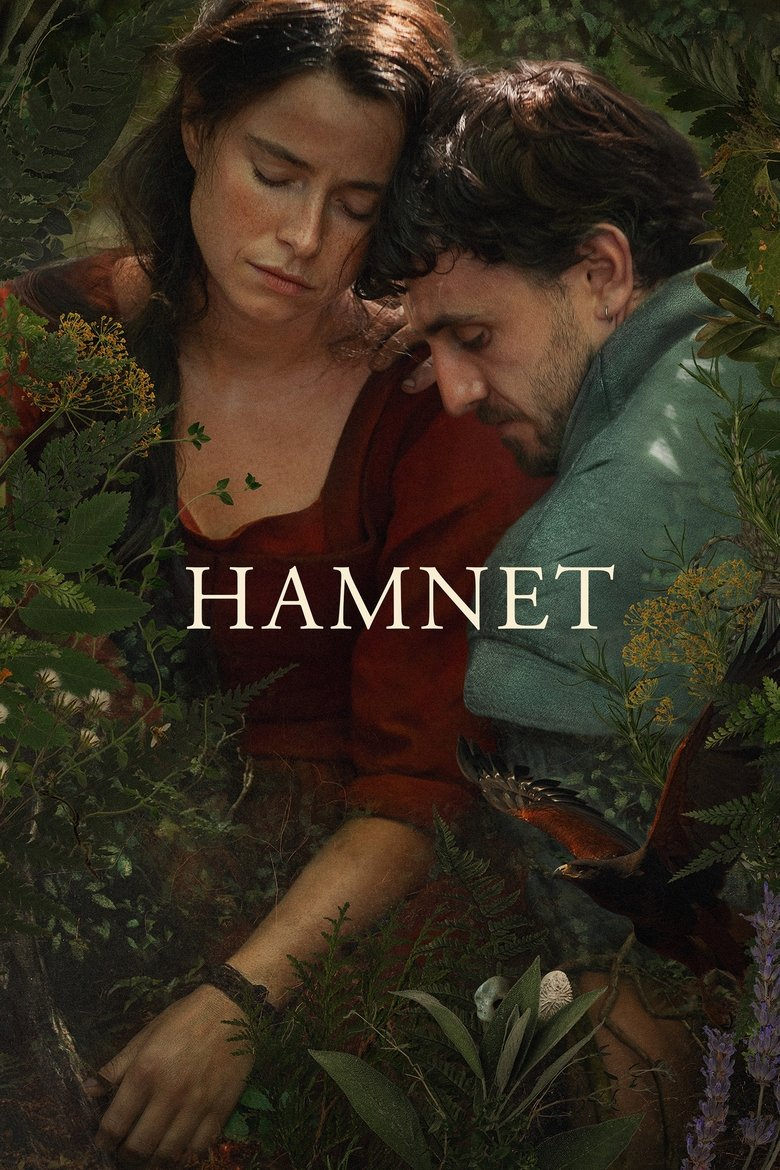
From the opening moments — Agnes curled against her mother’s tree, waking the hawk that is both companion and metaphor — Zhao establishes a world where history isn’t recited but felt. Jessie Buckley (West End’s Cabaret; Netflix’s The Lost Daughter) gives the performance of her career: grounded, radiant, and interior in ways that resist centuries of misogynistic distortion. This Agnes is not the shrew history imagined but a healer, a visionary, a woman whose knowledge runs deeper than literacy ever could.
Paul Mescal (BAM’s A Streetcar Named Desire; Searchlight’s “All of Us Strangers“) as Shakespeare is just as revelatory: brilliant yet terrified, bursting with stories but unable to speak plainly until Agnes coaxes something to open within him. Their early courtship is electric — earthy, erotic, and full of the mythic pull of two people who somehow already recognize each other.
When the story turns toward tragedy, Zhao (“Nomadland“) handles the death of their son Hamnet with devastating restraint. The grief is not decorative; it is a force that reshapes two lives and, ultimately, reshapes art. The film’s final movement — Shakespeare writing and performing in Hamlet and Noah Jupe stepping into the role — is astonishing in its emotional clarity. Grief becomes text, performance becomes resurrection, and Agnes’s presence hovers over everything like a breath.
Shot by Lukasz Zal (“The Zone of Interest“) with an elemental beauty filtered through folklore, “Hamnet” is both intimate and epic. Zhao rejects the idea that child mortality was too common to matter; she insists that grief leaves marks on history, on marriage, on art.
Among all the films I saw at TIFF, “Hamnet” stands above the rest — tender, fierce, and necessary.
“Zhao roots Shakespeare’s genius not in mythic genius, but in a domestic grief too human to ignore.”
 front mezz junkies