
The Broadway Theatre Review: How To Dance in Ohio
By Ross
Walking out of this new musical, How To Dance in Ohio, I was thinking about how charming this story is about a therapy group of autistic young adults preparing for their first spring formal dance. It was sweet-natured and kind, at least to these seven performers at the center of it, but also that the fully formed show doesn’t really find its actual precise and clever footing on the big Broadway Belasco Theatre stage. With a book and lyrics written somewhat clumsily by Rebekah Greer Melocik (The Last Queen of Canaan) alongside some fine music created by Jacob Yandura (Wringer), the new musical tries with a strong earnestness to remain true to its ultimate stance. Unfortunately, it stumbles somewhat with its sense of focus and storytelling awareness, especially around the role of the imperfect therapist, Dr. Amigo, who is given a stolen focus, a shifted perspective, and some unnecessary drama. For reasons unknown.
Based on the documentary, “How to Dance in Ohio” by Alexandra Shiva (MTV’s “Each and Every Day“), the musical attempts to tell the tale of seven autistic young adults preparing themselves for the ultimate high school rite of passage, a spring formal dance. It’s a compelling idea, although not fully scrutinized, organized and designed by Dr. Amigo, played by Caesar Samayoa (Broadway’s Come From Away), the lead therapist at the Amigo Family Therapy Center, so that they, like so many young adults, can greet and engage with the real adult world with confidence. The idea is formulated on the spot by the determined Dr. Amigo to help the group, but in particular, one of the members, a young man named Drew, played strongly and with connection by Liam Pearce, a strong actor and singer making his Broadway debut, just like many of those involved with this musical. Pearce’s Drew is a smart gentle student who, after being accepted into a highly regarded college out-of-state, is unsure if he wants to leave Ohio to go to school elsewhere. Dr. Amigo has set his personal success-laden ambitions of being a good therapist on the idea that Drew should go to this higher-ranked college out of state, even as Drew expresses quite clearly his personal doubts and reservations. The doctor, unmoved and steadfast, completely sure he is doing the right thing, decides that he has to find a way to push Drew forward, and believes that a spring formal dance is the way to sway him to, what he believes is, the right decision. Regardless of what Drew says. He’s just scared, thinks the doctor, and I will help him see the way forward.

We all see the problem, right off the bat. And it doesn’t help that, as written, the thankless roles of Drew’s parents (Marina Pires, standing in for Darlesia Cearcy; Carlos L. Encinas; as well as the other actors playing the other parents: Haven Burton; Nick Gaswirth; Melina Kalomas), only muddy the waters with their pushy theatrics, concerns, and aspirations. On the other hand, Pearce finds all the right steps, flying true and clear above the clumsiness of the narrative, and gives the musical its one big moment that fills the theater with hope and goodwill. His well-crafted “Building Momentum” is the definitive show stopper, but somehow the number only shines a brighter light on the simple and somewhat lackluster material the show has, up to the final moment, rotated out to us.
On that very polished stage rotating and sliding out before us, designed cleverly by Robert Brill (Broadway’s Thoughts of a Colored Man), with showy costuming by Sarafina Bush (Broadway’s Pass Over), a straightforward lighting design by Bradley King (Broadway’s Hadestown), and a clear sound design by Connor Wang (Ass’t/Broadway’s The Cher Show) – attempting to be sensory friendly, there’s an awkward sidestep showcasing complicated family dynamics and conflict between an oblivious Dr. Amigo and his daughter, Ashley, played compassionately by Cristina Sastre (Round House’s Spring Awakening). Yet, there is an even more misguided stumble, at least in my eyes. The creatives have altered the sexual orientation of Dr. Amigo so he may uncomfortably mistake a further meeting with a well-regarded and pretty female reporter (Kalomas) who shows some interest in writing this feel-good story, as a romantic date. She respectfully corrects him and leaves (not to be heard from again), but the creation stays uncomfortably within me. It’s unclear why they had to shift that perspective and add that moment. Was it just to add an emotional cue for us to feel a sad care for the recently divorced dad so we may stay somewhat on his side as he makes every possible misstep during this overly long musical? I’m not quite sure, but it did leave me questioning the authentic determination of the writers and producers of this show. And what they as a community decided were the important aspects of this story to tell.
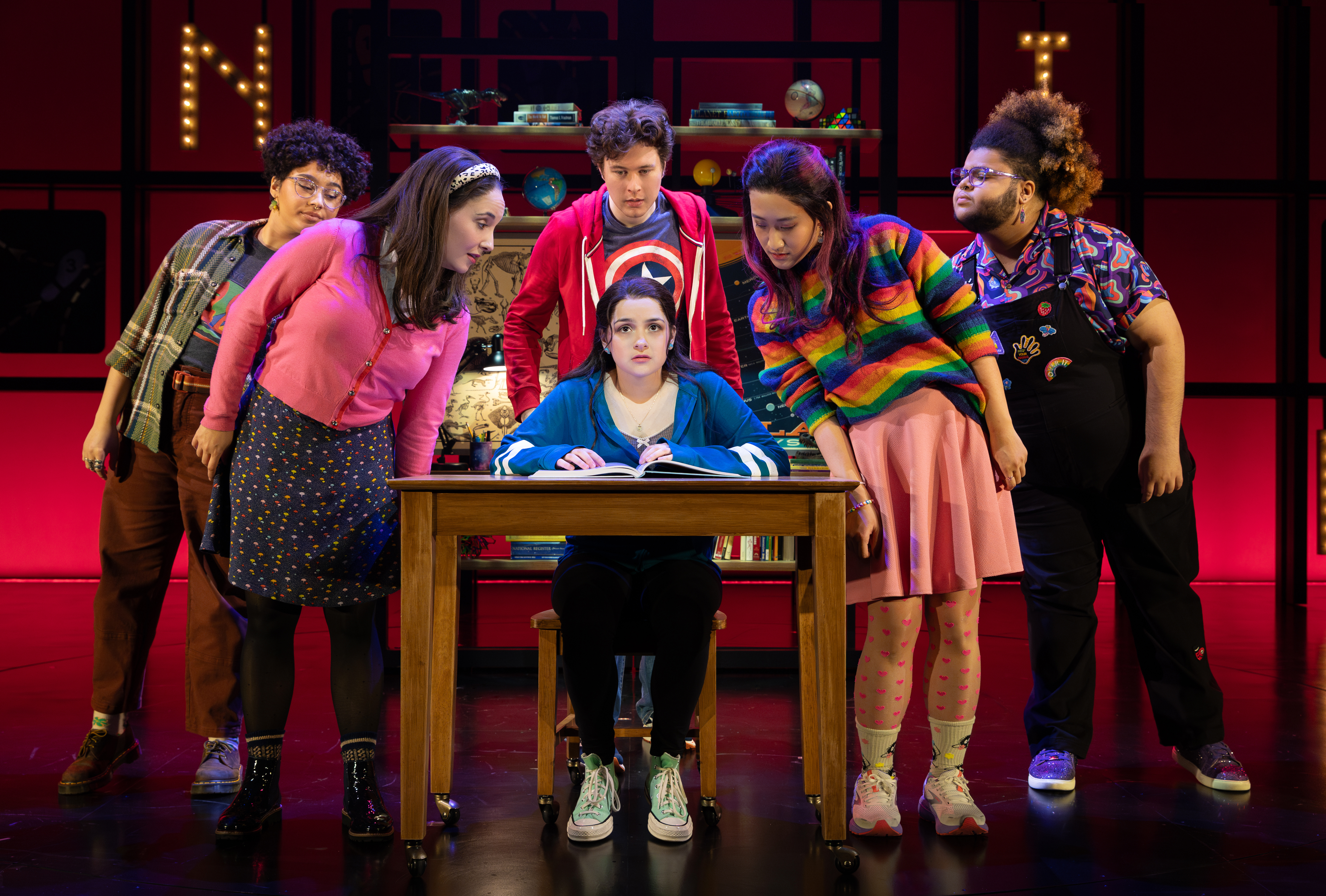
The central seven; Desmond Luis Edwards as Remy; Amelia Fei as Caroline; Madison Kopec as Marideth; Pearce as Drew; Imani Russell as Mel; Conor Tague as Tommy; and Ashley Wool as Jessica; – all making their Broadway debut; deliver forth their stories with an energy that is effective and engaging. Their “So Much in Common” and “The Second Chance Dance” carry a strong emotional sensibility with a lot of engaging energy, as does Kopec’s tenderly felt delivery of Marideth’s “Drift” and “Unlikely Animals“. As directed with care by Sammi Cannold (NYCC’s Evita), each of the seven is given a moment to shine and unpack, but the fact – and we do love a good fact, states Kopec’s detailed and finely crafted Marideth, is that the production and story move the spotlight too often away from the well constructed seven, and here lies the problem that lives inside and out of How To Dance in Ohio.
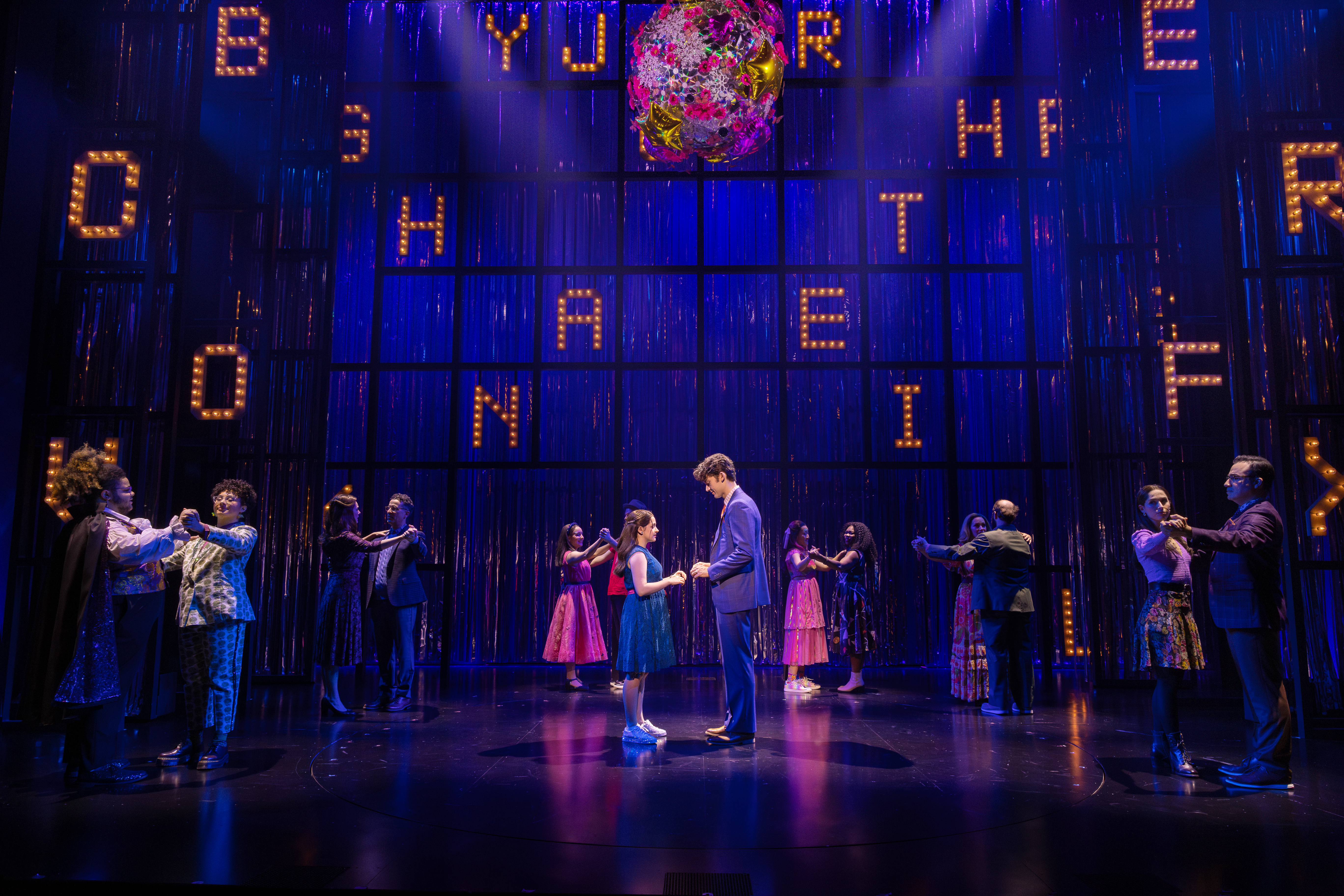
A second reporter (Encinas) is invited in, alongside the other, for an interview with the ‘good’ doctor about the upcoming event, answering their questions while also trying to reframe the verbiage used. But the second reporter breaks their agreement and posts his horribly uninformed and poorly written blog before the event, using the verb “suffer” to describe the lives of Dr. Amigo’s clients. It’s a difficult, emotionally filled moment to witness, as the seven stand in a line reading the post that ignores them, while making a hero out of the doctor. The ultimate idea that the show is putting forth is a great one, and only in the last few moments, the show finds its way to tell that story fully. The ‘good’ doctor has only himself and his obliviousness to blame since he failed to notice that he didn’t include the real stars of this show in the interview with the two reporters. It takes the show a while to get to that place, with numerous missteps and side steps taking the spotlight away from the heart of the tale, even with the fine work done by choreographer Mayte Natalio (Public’s Measure for Measure), guiding the cast forward into the light. But finally, in those last moments, How To Dance in Ohio comes together, pushing out of the spotlight those other storylines that danced around the doctor. And refocusing on the true stars of this show who finally got the dance they deserve.
 front mezz junkies
[…] Kitchen. Designed with energy and a vibrant life of its own by Robert Brill (Broadway’s How To Dance in Ohio), with sharp lighting by Natasha Katz (Broadway’s Some Like it Hot), exacting sound design by […]
LikeLike
[…] worthy of the abstractionisms on display here. Costumed by designer Sarafina Bush (Broadway’s How to Dance…), the robotic units keep the formula moving at a sharp pace, giving off a creepy Squid Game vibe […]
LikeLike
[…] to this musical interlude choreographed with charm and focus by Mayte Natalio (Broadway’s How to Dance…), and as history and Suffs inform us, becomes a significant member of the movement, shifting his […]
LikeLike
[…] Kitchen. Designed with energy and a vibrant life of its own by Robert Brill (Broadway’s How To Dance in Ohio), with sharp lighting by Natasha Katz (Broadway’s Some Like it Hot), exacting sound design […]
LikeLike
[…] KitchenKelli O’Hara, Days of Wine and Roses, Atlantic Theater CompanyLiam Pearce, How to Dance in OhioGayle Rankin, Cabaret at the Kit Kat ClubBen Levi Ross, The Connector, MCC TheaterRicky […]
LikeLike
[…] Kitchen🏆 Kelli O’Hara, Days of Wine and Roses, Atlantic Theater CompanyLiam Pearce, How to Dance in OhioGayle Rankin, Cabaret at the Kit Kat ClubBen Levi Ross, The Connector, MCC TheaterRicky […]
LikeLike
[…] Exum (Broadway’s The Book of Mormon) as Alpha Smith, and Darlesia Cearcy (Broadway’s How to Dance in Ohio) as Lucille Wilson, who together as a force keep this train ride going strong, along with Dewitt […]
LikeLike
[…] His brother is his true companion in the tight, dark spot he finds himself, but it’s also the young reporter, Skeeter, who manages to shimmy his way in and who seems like he might actually be able to rescue him. This is coming from someone who never heard the score nor knew the story before walking into the theatre. Everyone in the know kept telling me that the Floyd Collins score was their all-time favorite, and that the music truly is spectacular, albeit difficult, filled to overflowing with emotional truths and captivating engagements. And it truly is a piece of musical theatre art, thanks to the magical work done here by the music director, Ted Sperling (LCT’s My Fair Lady), with the deep, organic orchestrations by Bruce Coughlin (Broadway’s How to Dance in Ohio). […]
LikeLike