
The Montreal Theatre Review: Centaur Theatre’s Sakura – After Chekhov
By Ross
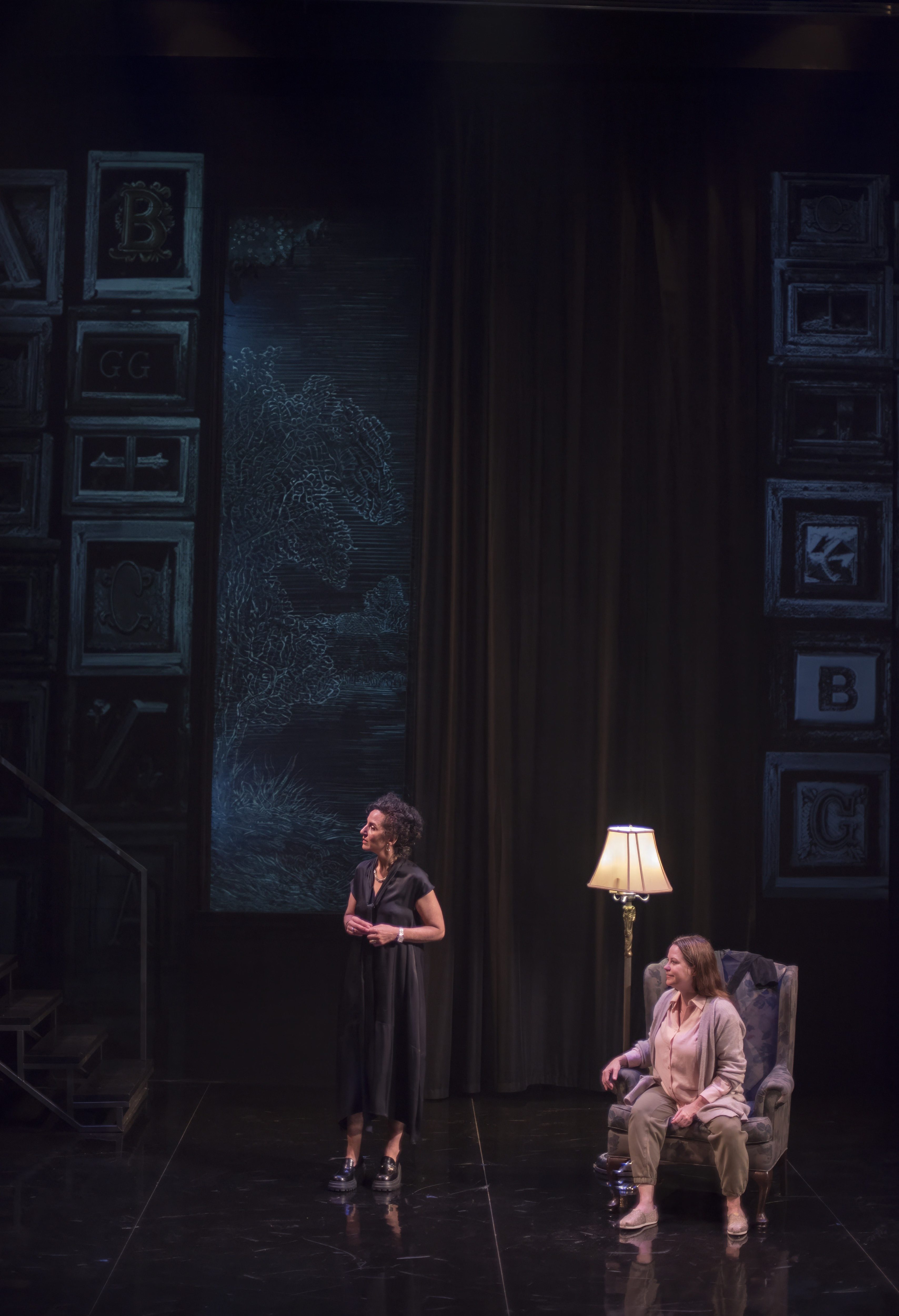
With ever-changing framing and falling cherry tree petals, Anton Chekhov’s masterpiece, The Cherry Orchard, has been majestically reshaped and defined into something uniquely powerful and transcendent by Montreal playwright Harry Standjofski (2005s Here & There). Filled with dynamic spaces of thought and accumulated tension within the depths of all those moving curtains, his Sakura – After Chekhov fascinates and intrigues in its distinctiveness, and the payoff is surprisingly deep, playful, funny, and intricate. It unpacks urgency in the family’s hesitancy and as directed with a quick eye by Centaur Theatre‘s own Artistic & Executive Director, Eda Holmes (Shaw’s Arcadia), the remodeling delivers a sharp unwillingness in the family fold to look into the face of a tumultuous unknowing future, and make, or even listen to, a plan for moving forward.
This tragic, tight, and witty comedy, elevated by the wide-open stunning visuals created with clever insight by set and costume designer James Lavoie (Factory’s The Tashme Project), with deft lighting by Tim Rodriguez (Soulpepper/Segal’s English), compelling sound and music by Torquil Campbell (Arts Club/Vancouver’s Angels in America), and a strong vibrant video projection design by Charlotte Baker (NTS’s Metamorphoses), unwraps with assurance this privileged family who is struggling to make financial decisions about their estate and inheritance brought to the edge of selling by debts that have accumulated from years of mismanagement and decades of decadence. Both of these attitudes are layered in abundance on the two oldest siblings; the self-absorbed Freya, played to perfection by Deena Aziz (Grand’s A Thousand Splendid Suns), and her easily distracted and equally absorbed brother, Guy, portrayed diligently by Howard Rosenstein (Infinithéâtre’s Kafka’s Ape), who float about and above the estate. They arrive late into the night and remain long enough after to take action, but that would require an honest evaluation and a focused mind. And neither of these qualities lives strong inside these two.

Freya’s petulant and narcissistic persona creates a space between the curtains that allows her to wander amongst the trees as if in a Merchant/Ivory film, refusing to accept the truth of her past and her future. This is her downfall throughout the play, running away from responsibility in Paris and living presently in an illusion of the past. Guy is too busy feeling put upon by life and divorce to do much of anything that may help, nor does he want to. In a way, they both hate God for trying to teach them this important lesson, giving Sakura a solidly comical landscape to follow the unraveling with a clear mind and layers of nostalgia and existential angst thrown in for good comic measure. It delivers forth aspects of Chekhov beautifully, including his knack for writing tragedy and comedy into the same breath and line, asking all the right questions but with a Montreal flair and humor packed purposefully inside the solid performances.
The excellent cast, made up of Aziz, Rosenstein, a layered Stefanie Buxton (Imago’s If We Were Birds) as Vania; a forceful Ravyn R. Bekh (Geordie Theatre’s Poof) as Annie; a clever Marcel Jeannin (Centaur’s God of Carnage) as Marc Lowe; a comedic Marc-Antoine Kelertas (CBS’s series Ghosts) as Peter Tee; and an enjoyable Paul Van Dyck (Rabbit in a Hat’s Paradise Lost) as Firs; engage and retreat, into denial, drink, distraction, and frustration, occupying their own instincts while attempting to understanding something about life and their personal connection to this place on the wild St. Lawrence River below.
It’s sharply tuned in to the storm approaching, but even as we feel the danger in the air, we are also laughing at the absurd reactions of this aristocratic family who are stuck in their privilege, thinking it will save them, even when they do nothing to alter the course. That storm, they believe, can’t hurt them, even if they do little to shelter themselves from its destruction. It’s only in Jeannin’s Mark that we see foresight and an understanding of how action is required in this world so we don’t become as diseased as the trees around them. Kelertas’ Peter also delivers a strong speech about how “our blood doesn’t say Canadian“, unpacking an idea around nationality and ‘bottom feeders‘ that brings up something deep and meaningful from the depths, as we watch with focus the siblings ignore the approaching loss and the destruction of all the parts that they say matter to them. When Mark finally announces his purchase, of the land that his family worked on, from the family who didn’t listen to his instructions, the roots of The Cherry Orchard, and all its themes around cultural and social futility, heritage, loss, and the ever-present passage of time, feel revitalized by Standjofski’s Sakura – After Chekhov. We feel blessed by the modern twists of this upturned classic construction, and welcome the humor and framing of his creative Quebec reimagining.

Centaur Theatre’s Sakura – After Chekhov runs from September 17 to October 6, 2024. Click here for more information.
 front mezz junkies
[…] wisely, but maybe a bit too loosely, by Eda Holmes (Centaur Theatre’s Sakura – After Chekhov), the devious pair work hard to “figure it all out“, while their long legs delightfully […]
LikeLike
[…] hands of adapter and writer Dimitrijevic and the production’s design team (scenic consultant James Lavoie; costume designer Judith Bowden; and lighting designer Kevin Lamotte), faltered almost immediately […]
LikeLike
[…] Directed by Eda Holmes (Centaur Theatre’s Sakura – After Chekhov) […]
LikeLike