A Front Mezz Interview: Mark Shanahan Discusses the Westport Country Playhouse
If running a theater is anything like hosting a dinner party, Mark Shanahan has found himself presiding over the longest, most unpredictable meal in Connecticut. As Artistic Director of the Westport Country Playhouse, a onetime summer barn that’s been converting hay into standing ovations since 1931, Shanahan plays maître d’, ringmaster, and air-traffic controller all at once. Between overseeing a century-old institution, writing plays of his own, and occasionally stepping back into the director’s chair, he’s the sort of man who probably answers emails while blocking a scene and mentally noting to refill the lobby’s hand sanitizer.
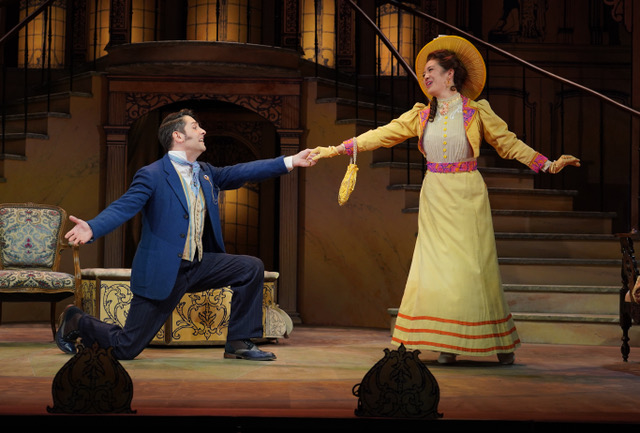
A longtime fixture in American theater, Shanahan’s résumé reads like the fever dream of someone torn between becoming Moss Hart or Groucho Marx—and ultimately deciding that both looked rather fetching in a spotlight. His artistic sensibility (wry, humane, and just subversive enough to make propriety blush) fits the Westport Country Playhouse like a well-tailored smoking jacket. Under his stewardship, the theater feels less like a museum of its own glory and more like a lively salon, where legacy and mischief exchange knowing glances across the footlights. Now under the deft direction of Melissa Rain Anderson, The Importance of Being Earnest brings Oscar Wilde’s razor-edged repartee and champagne effervescence to Westport’s storied stage. It’s a perfect marriage of intellect, irony, and cucumber sandwiches.
Westport Country Playhouse has weathered Depression-era austerity, Broadway glory, and even a pandemic plot twist no one auditioned for. Its first act was about survival; this one seems to be about conversation—between past and present, between artist and audience. And like all good theater, it begins with someone brave enough to say, “Let’s begin again.”
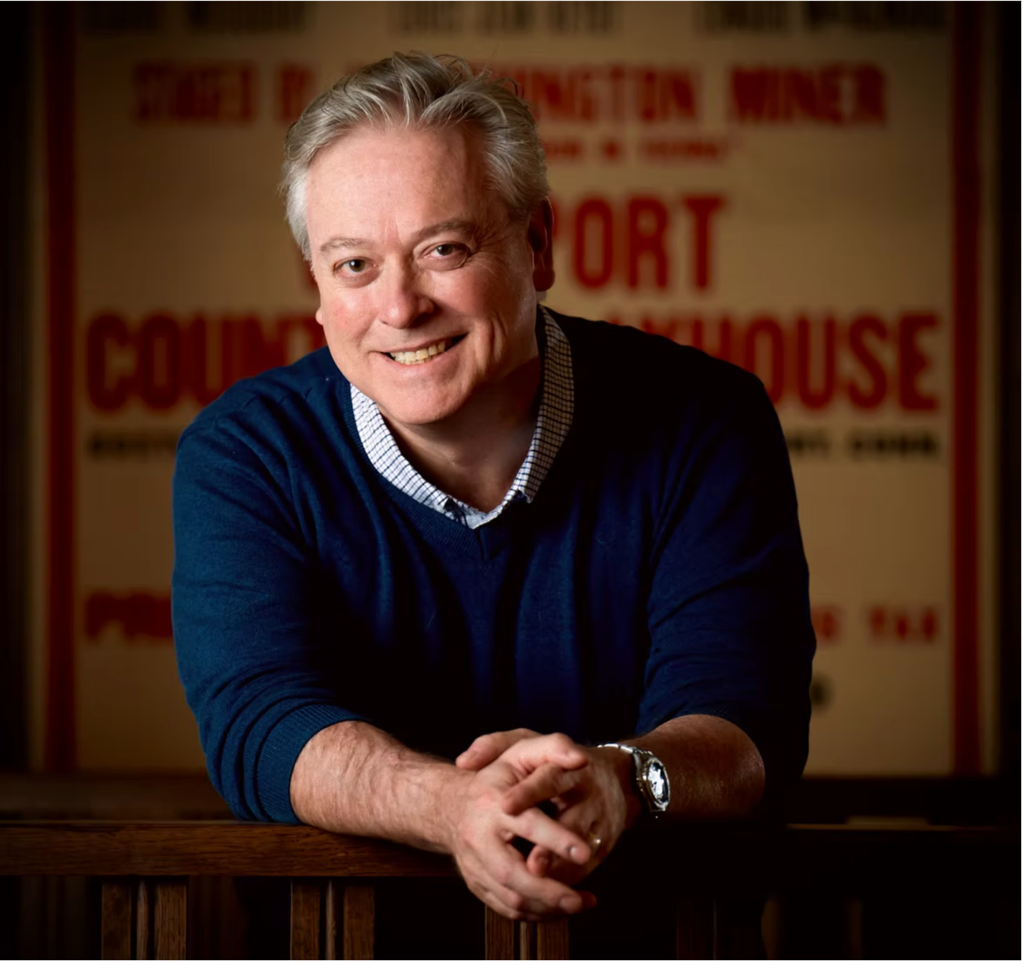
FRONT MEZZ: The Playhouse has such a storied past. When you first took on the role of Artistic Director, how did you approach honoring that legacy while steering the theater toward a new chapter?
MARK SHANAHAN: I stepped into this role in the summer of 2023, after a really challenging period for the Playhouse. At ninety-three years old, it had come close to closing its doors, thanks to a mix of circumstances, including the pandemic. But the community rallied, and our staff and board, led by Athena Adamson, are committed to keeping this theater going strong. We pivoted from a summer theatre to a year-round performing arts venue that has not only a season of plays spread throughout the year, but numerous events performed almost every week.
I’ve loved this place since I first performed here in Journey’s End many years ago. It has been a creative home to me over the years, and I watched and learned from incredible artistic directors starting with Annie Keefe and Joanne Woodward. The history of the Playhouse has always made a huge impression on me. The Playhouse has a continuity that’s rare. Last year, Michael Wilson directed a reading of Horton Foote’s A Trip To Bountiful, which first premiered at the Playhouse in 1952. That night, an audience member told me he had seen that original production and had come back for this presentation. We took a picture of him holding the original program and one from that night! You don’t get that kind of experience at many theaters.
FM: You really don’t!
MS: But the Playhouse has to keep evolving, changing. Our small but mighty team has committed itself to investing in new work, exploring fresh approaches to classics, and creating programs that welcome new audiences. It’s a balance between respecting the legacy and building something new that feels exciting and relevant today.
FM: Westport Country Playhouse has long been a home for bold reinterpretations of classics. How does The Importance of Being Earnest fit into that tradition, and what drew you to this particular production?
MS: It’s astounding to think that in nearly a century, the Playhouse has never staged The Importance of Being Earnest! Wilde’s play is one of the most perfect comedies ever written. What drew me to it was the chance to let our audience see a classic in a new light. With Melissa Rain Anderson as director, our production leans into a sense of theatrical magic.
FM: How did you come across Melissa? What does her work on Earnest mean to you?
MS: Melissa and I have been circling around each other for years, and our paths have crossed through colleagues and theaters, but the timing had never quite lined up. She’s known around the country for creating a happy rehearsal hall and for directing joyous, colorful comedies with heart. I think she’s worked at just about every theatre I’ve ever heard of! When I asked if she’d be interested in directing Earnest, she immediately said, “That one’s on my bucket list. It’s right in my wheelhouse!” She has enormous admiration for the play and for Wilde’s wit, and that respect shines through in her approach. It’s really easy to send this play up. Melissa balances the highly stylized outrageousness of it all with a need to let the characters feel fully human.
FM: What about the visual component of the show?
MS: When the curtain rises, it revels James Fenton’s detailed set that feels like an illustrated book come to life, and the audience applauds! It gives me goosebumps. And Christine Pedi’s Lady Bracknell is worth the price of admission alone! The entire cast is first-rate. As often happens, the ensemble has become a family. They love playing with each other, and the joy they share onstage is infectious. Ultimately, this is a play about double lives, deception, love, and truth.
FM: Speaking of Christine Pedi, she is known for her comic brilliance and uncanny vocal impressions. However, Lady Bracknell is a character whose authority comes from sheer presence. What intrigued you about having someone so adept at mimicry inhabit a role defined by singularity—and how has Christine made Lady Bracknell entirely her own?
MS: Christine is indeed a remarkable mimic. She can channel countless voices. But what makes her so special is that she always comes from a place that’s purely her own. She’s played this role before, and even portrayed a different version of Lady Bracknell in a New York sequel to Earnest, so she approaches it almost like a caretaker of the character. Christine loves Lady Bracknell deeply, and you can feel that affection and insight in her performance. She’s got a tremendous fan following from her Broadway work and from her daily Broadway show on SiriusXM, but in person, she’s all about the work. She lives and breathes for the stage. Her Bracknell is both formidable and vulnerable, never cartoonish or foolishly stodgy. She brings incredible heart to the role, along with an unerring sense of comic timing. There’s a reason Christine is so beloved in the theatre community: she knows how to light up the stage like few can.
FM: Oscar Wilde’s wit and subversive humor have never gone out of style. In what ways do you think this play speaks to today’s audiences—especially in the context of Westport’s community and the wider theatrical landscape?
MS: The world today feels noisy and complicated, full of double-talk, social hierarchies, and hypocrisy, and Wilde’s play reminds us to laugh at ourselves while making us think about our own behavior. The humor is timeless because we can see ourselves in the characters – their absurdities, their deceptions, their loves and fears. The play asks us, “Who are we when we’re not performing?” Of course, it’s also just really funny. People behave in the most ridiculous ways when they’re in love – and this play lets us have fun with that. For our Westport audiences, who are smart, curious, and always up for a good laugh, it’s the perfect mix of being sharp and fun with a healthy dose of social commentary.

FM: The Playhouse has weathered many eras—economic downturns, cultural shifts, even a global pandemic. What do you feel is the role of a regional theater like Westport’s in this moment of American theater’s evolution?
MS: That’s a big question, and one I think about a lot. Working in the theatre means you always have to reinvent yourself. Theaters around the country are finding new business models, new ways to supplement their programming, and a desire to reach out to new audience members. At the Playhouse, we’re doing that, too. Our hybrid model, mixing our own productions with presented works, readings, concerts, children’s theater, and special events throughout the entire year – all of it has really energized what we do. The purpose of any regional theater is to serve its audience. That’s the gig! And in a world that feels more divided than ever, a theatre is a place where people can come together and connect. I always joke that the theatre feels even more special these days because it’s one of the last “non-downloadable” experiences you can have. You have to be there to experience it.
FM: Westport Country Playhouse has always had a strong relationship with its community. How do you envision deepening that relationship in the coming years, particularly as audiences’ habits and expectations continue to change?
MS: The other night after a performance, an audience member came up to me and said, “I’ve been coming to the Playhouse since my grandparents brought as a little girl!” A moment later, a young family with two kids in tow told me they’d never been to the Playhouse and loved knowing there was a great theatre so close to their home. Those kinds of moments remind me how much this place means to our audience, and that there are always new people looking for exactly what the Playhouse can offer.
FM: That’s what makes this place so special, right?
MS: I love that we can often draw on high-caliber work from Connecticut-based artists, too, whether they are joining us for our Main Stage shows or trying out new work with smaller events in our Barnstormers series. These artists help create a true sense of community. But yes, old ways of doing things are changing- and that’s true at theatres all around the country. Audiences are much more likely to buy tickets last minute, which can make it hard to plan in advance. And, we have a lot more competition for people’s attention.
FM: It’s all for the audience, right?
MS: We’re always listening to our audience, figuring out how best to serve them. A good balance of programming helps us reach new and old audience members alike. You can’t please everyone all the time, of course, but you can try to reach out to as many people as possible with a wide variety of experiences – with something for everyone throughout the year.
FM: Finally, on a personal note, what does success look like to you in this role? When you look back years from now, what kind of mark do you hope your tenure leaves on the Playhouse and its legacy?
MS: I want this place to last forever! I hope to leave the Playhouse in strong creative and financial shape for the next artistic director, and the one after that. Ticket sales don’t keep a theatre open, and our government doesn’t support the arts, so we will always need to rely on the support of generous donors in our community. My job is to offer experience that makes it clear how valuable the Westport Country Playhouse truly is to everyone. There are so many things I hope we will have the support to do. I want to present world premieres on our stage. I want to create a production of Every Brilliant Thing, a one-person show about mental health and suicide prevention that can be performed off campus. I want to further develop an education department to encourage the next generation of theatre makers. I want help to develop new work. But more than that, I will feel successful if, along the way, our audience is pleased by the work, and that great artists proudly say they love working at the Playhouse and can’t wait to return. Because I know that feeling firsthand.

For more information about Westport Country Playhouse, visit https://www.westportplayhouse.org/
 front mezz junkies
[…] Quaintance is producing it for the second year in a row. He is even pairing it in repertory with Mark Shanahan’s A Merry Little Christmas Carol, a cousin in tone and structure, and audiences are greeting […]
LikeLike