The Toronto Theatre Review: The Far Side of the Moon at Bluma Appel Theatre, Toronto
By Ross
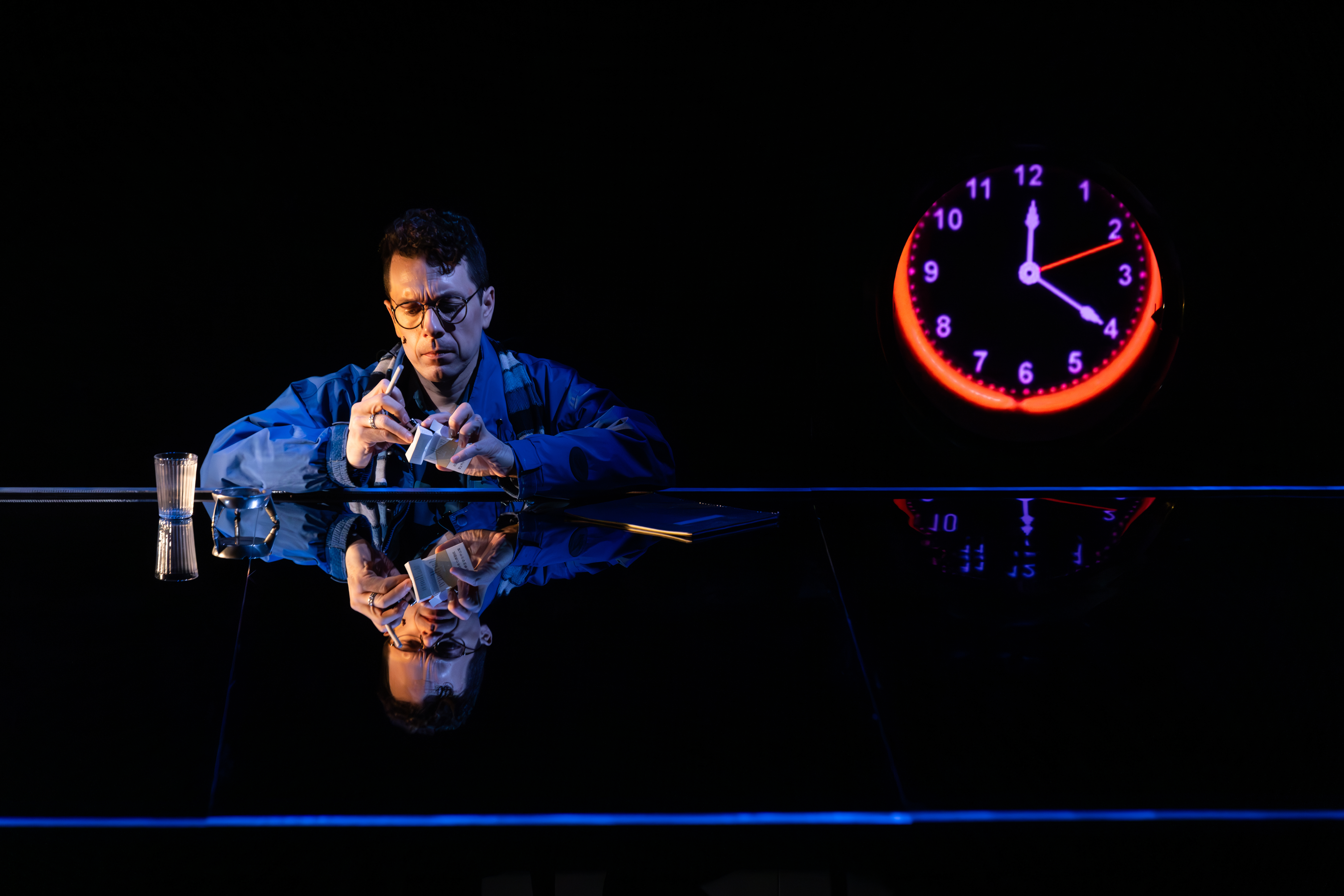
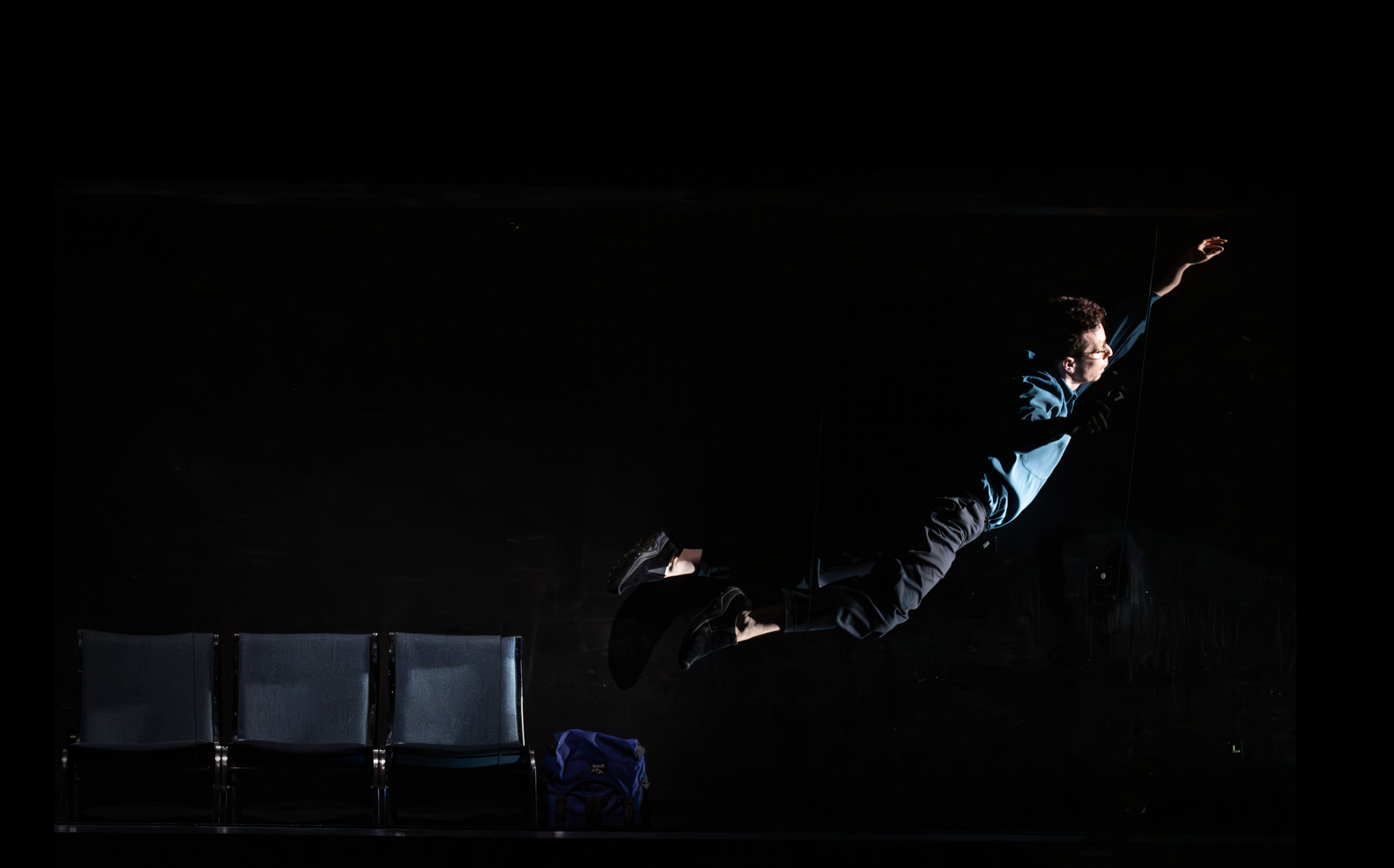
Robert Lepage, who masterfully brought motorcycles and mayhem to his Stratford Festival production of Macbeth, has long been regarded as an innovator. He’s seen as an artist who can merge theatrical forms in ways that feel both intimate and expansive. In The Far Side of the Moon, revived by Ex Machina, the auteur leans into his signature blend of multimedia visuals and philosophical musing. At times, the production still glimmers with quiet wonder etched in dreamy asides. There are floating astronauts, cleverly lit reflections, and Laurie Anderson’s haunting score that evoke a dream-state where familial memory and the vast cosmos blur. But as the two-hour runtime wears on, the open space between these moments widens into something less hypnotic and more numbing to the imagination.
What’s frustrating about The Far Side… is that the emotional architecture for something profound is there, hidden in the quiet ache of two brothers circling around loss, using the vast loneliness of space as a mirror for human isolation. Lepage flirts with transcendence, transporting those floating bodies and mirrored reflections as hints at grief suspended between earth and orbit, but he never lets us inhabit the feeling long enough for it to matter
The structure shifts illogically between the story of these estranged brothers: Philippe, an introspective academic, and André, a self-absorbed weatherman, both played with a solid, sincere but subtly stilted effort by Olivier Normand (Hong Kong Arts Festival’s Courville). While Normand manages thoughtful transitions between the two, the dialogue that fills the scenes rarely gathers a forceful energy or forward motion. Ideas are posed haphazardly, but rarely pursued or expanded upon; emotion is suggested, but rarely felt. Scene follows scene with a kind of smooth, choreographed inertia, each lasting several minutes more than needed, and sometimes their entire need is questionable, floating out with a contemplative pacing that invites detachment more than depth.

Some sequences, like a protracted exercise routine using a household ironing board, seem to try to suggest metaphor, something about repetition, emptiness, or the absurdity of life. But in practice, they come across as meaningless and oddly indulgent. They feel like fillers when there is no need, much like many of those phone call conversations that are half-filled with unnecessary questions and answers that drag the already slow tempo of the piece to an almost zero-gravity halt. Luckily, the sporadic use of puppetry (by designers Pierre Robitaille & Sylvie Courbron) and inversion reflective staging is visually appealing, but they aren’t quite enough to rescue a show that confuses silence for substance, and stillness for profundity.
Even when the play finally nods toward its philosophical thesis, the intersection of narcissism and space exploration, it feels too late and too feeble. Philippe’s trip to Moscow, where he arrives too late to deliver his speech due to a time-zone mishap, should feel like a turning point or revelation. Instead, it lands as a clever distant idea about melancholy: the ache of missed connections, and the sorrow of human smallness against the infinite. Yet, what remains is an academic exercise in wonder in a long line of disconnected ones. The moment is stripped of its heart and fails to conjure up an emotional response. At least to this theatre junkie. I had already checked out by that point in the show, struggling to resist the urge to check the time on my phone (my neighbor next door checked it regularly enough for me to keep track of the minutes ticking forward), and even though the piece’s larger ambitions about ego, mortality, and cosmic meaning are present, displayed in the artistry, they never unite into a dramatic whole.
There is clear artistry behind The Far Side of the Moon. The visuals, the soundscape, and the occasional moment of theatrical ingenuity are well-designed and intentioned. But as a narrative, it drifts. Lepage’s gift for merging theatre and myth sometimes delivers transcendent and inventive imagery and aura, like his Macbeth production I saw this summer. There, the text laid out a solid groundwork for him to expand the classic with his majestic, magical, and poetic framings, backed solidly with clear storylines and dialogue that never waver. That clarity gave his visual language somewhere to land emotionally, tethering itself to human feeling. The Far Side of the Moon, by contrast, seems to drift too far from its own pulse. It floats, lost like an echo in the void, an elegant argument about ego and a bitter abstraction over connection, with cleverness taking precedence over clarity. For some, that may be enough. For others, including myself, it was like being trapped inside someone else’s dream, exquisitely designed, but too distant to fully feel.
 front mezz junkies