The Toronto Theatre Review: Dandelion Theatre’s An Orchid and Other Such Lilies and Lies
By Ross
Truth be told, I love going to the Red Sandcastle Theatre on Queen Street East in Toronto because you truly never know what you’re walking into. One night, it’s a puppet horror fever dream about demons and witches, another it’s a reimagined modern Merchant of Venice, and another still is a reconciliation narrative that confronts the country’s historic wounds.
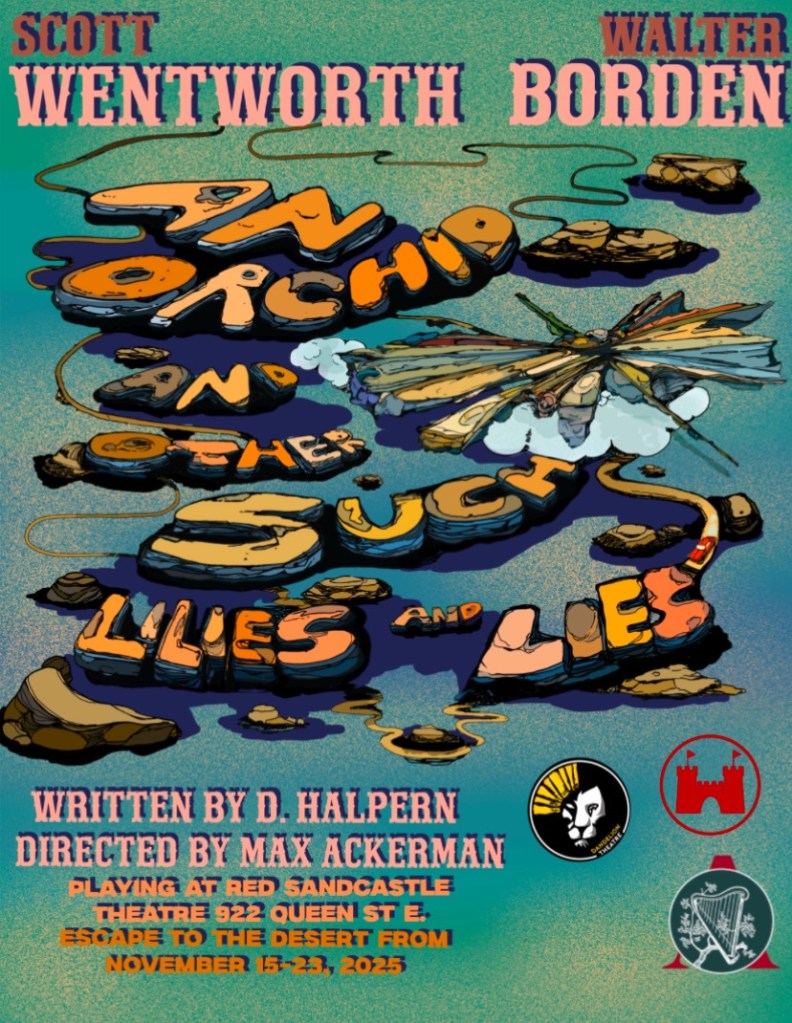
The place seems to always offer something unexpected, and last night, it gifted us with an intimate two-hander that felt as though it was speaking quietly in your ear about what might exist in the hereafter. Dandelion Theatre’s world premiere of D. Halpern’s An Orchid and Other Such Lilies and Lies is that surprise we didn’t know we needed; thoroughly tender, unruly, earnest, and deeply human.
The play begins not exactly in the theatre, but in memory, delivered through a beautifully crafted cinematic sequence that feels like a vintage coming-of-age reel unearthed from an attic. Teenagers, restless and mischievous, stumble toward each other in the dark, laughing and drinking, while forging connections that exceed friendship. There is an intimacy in that projection that, for these two slow-dancing boys, will remain unspoken for decades. Their “ghosts” are crucial and ever so relevant, teetering and tethering us emotionally to the two older men who sit side by side onstage, trying to reconnect and stay awake, especially on a night like this. Now eighty-three years old, they have been worn by time, marriages, loss, widowhood, divorce, anger, and everything else they survived without ever quite saying how they truly feel about one another. That opening film plants that ache early on, and its return near the end breaks something open.
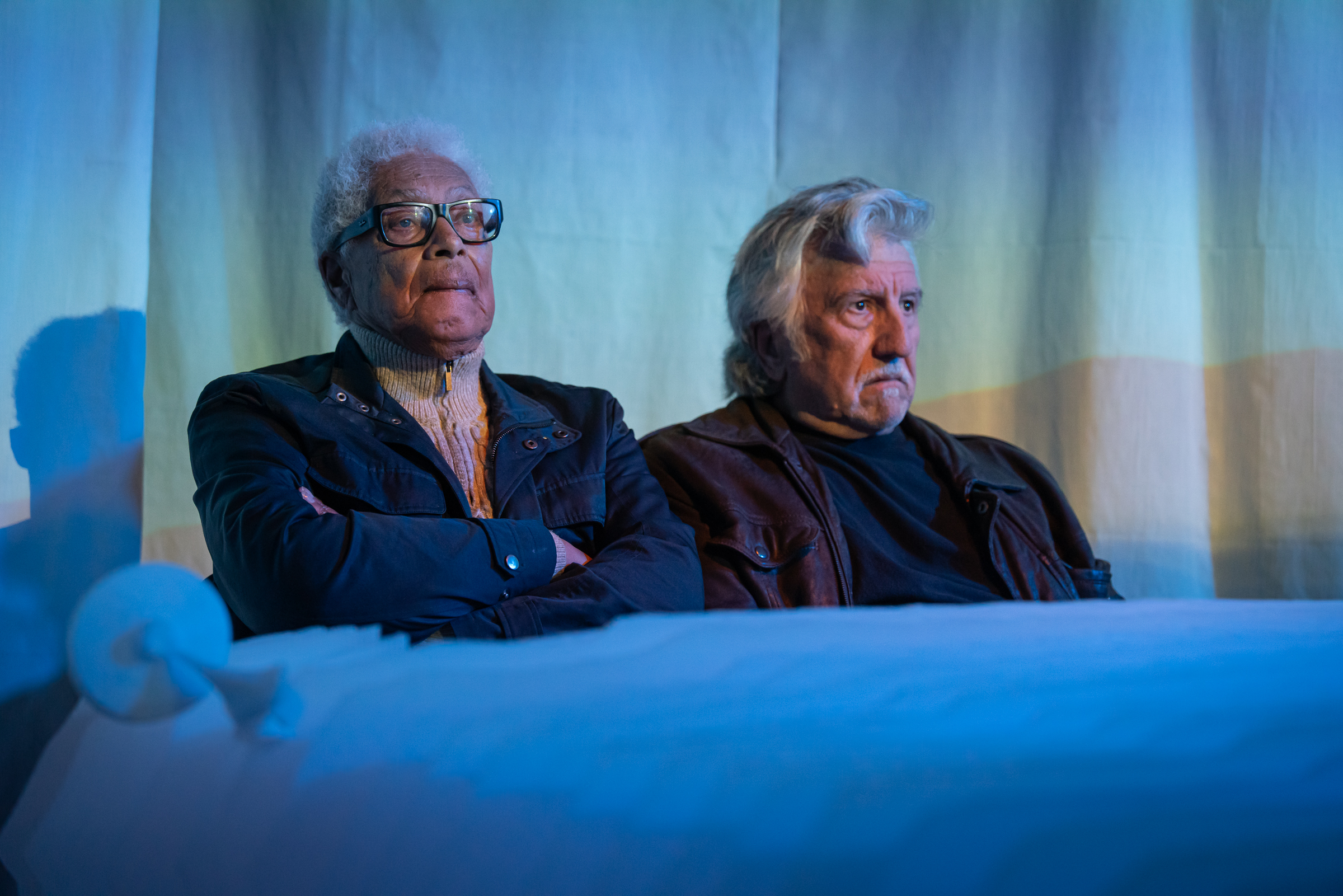
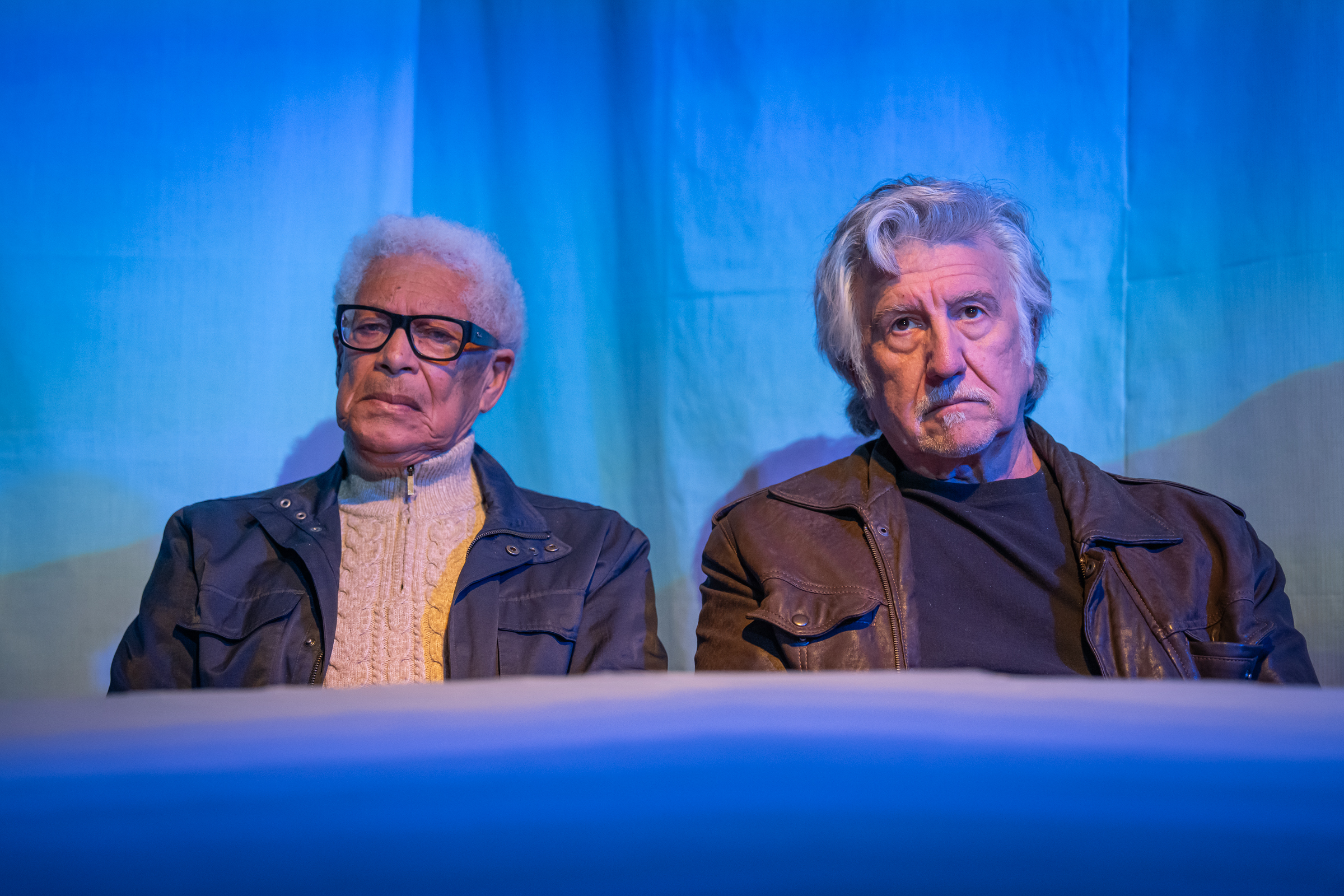
Walter Borden (Tarragon’s The Last Epistle of Tightrope Time) and Scott Wentworth (Stratford’s Twelfth Night) carry the weight of that history with the kind of simplicity only actors of great depth can achieve. There are no false notes between them. They inhabit the long, cracked timeline of a friendship that has held joy, abandonment, anger, disappointment, devotion, and a slow-dance romance left suspended in the dry desert air between them for half a century. There is the kind of unspoken grief that rearranges a life, for better or worse. They are compelling companions on this strange final road trip through the desert, driving in a time-lost loop for days or maybe only hours, to their chosen site for their final act, a reckoning of sorts, and perhaps a release.
Director Max Ackerman (Fuschia’s String of Pearls) handles the material with a gentle, steady hand, guiding the piece with sensitivity even when the script itself drifts off into the night air. The text by D. Halpern (The Immaculate Perfection…) contains gorgeous insights and potent metaphors, but it also gets tangled at times in its own digressions. The interactions often move like a communion, yet sometimes like two people talking past each other for miles; not listening, but still wanting to be heard. Several monologues feel overwritten, looping, and overlapping like the long desert highway stretching behind them. With a sharp edit and a stage with more width to hold its emotional breadth, the piece could breathe more cleanly. But even in its excesses, it remains earnest and searching.
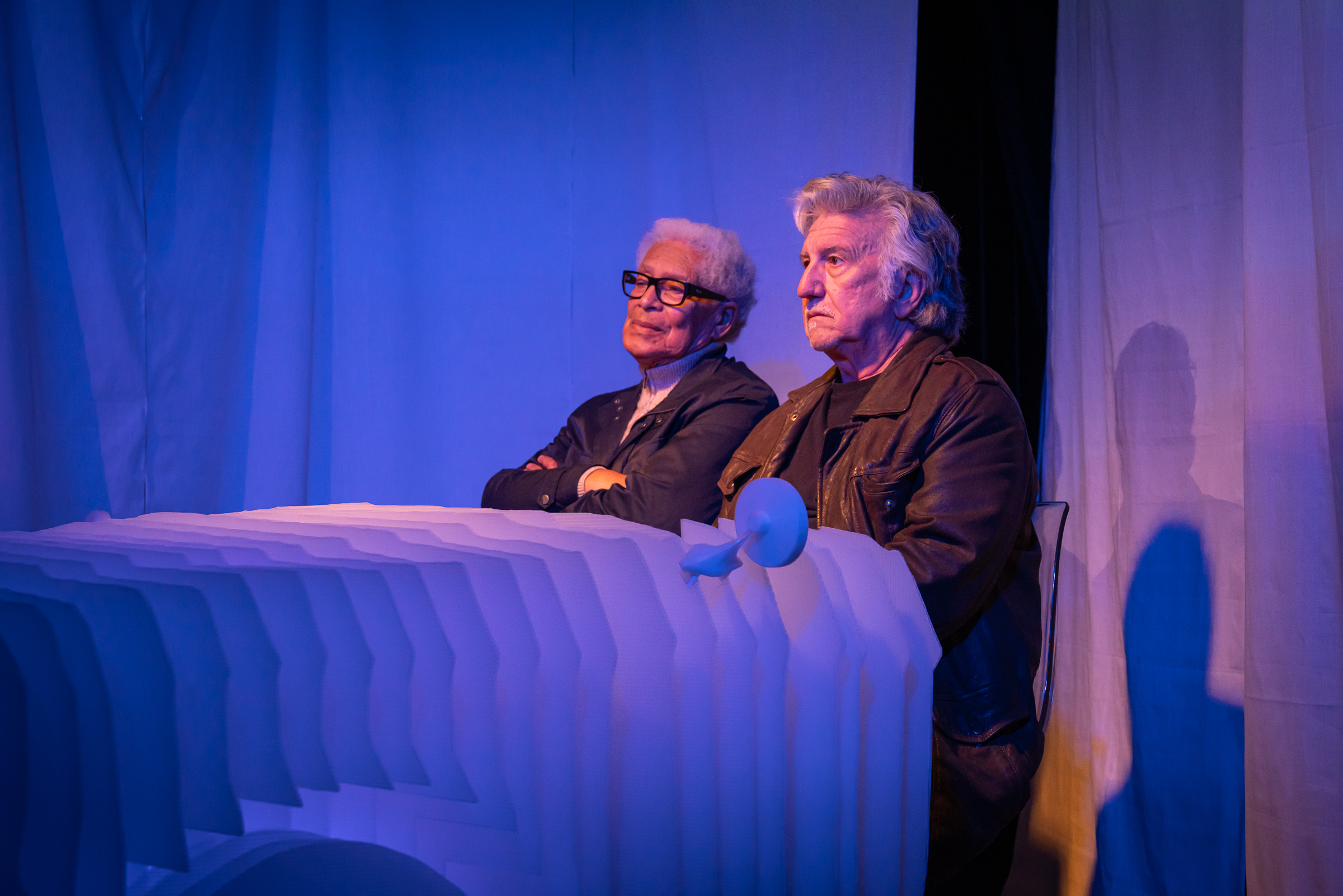
The design team: Sahana Dharmaraj and Kevan Cress (set and projections), Lidia Foote and Cress (lighting), and Ashley Naomi Skye (sound), builds a desertscape that blurs reality and recollection. The car sits against a projected horizon of stars and sky, a space where time folds in on itself and memories stutter, repeat, re-edit, or dissolve. The shifting projections don’t overwhelm the performances; instead, they create a visual echo chamber where memory and present moment blur.
And like the often mentioned art of Georgia O’Keeffe, it holds a kind of austere sensuality, a beauty carved out of old bones and emptiness, charged with the ghosts of what was never said. The references to O’Keeffe and her Ghost Ranch are not just aesthetic nods; they echo the characters’ own isolation and creative misremembering in the way we all revise the past to survive it.
There is sly humour in the desert darkness. A bag of drugs and medications is revealed like a chaotic geriatric picnic basket, paired with complaints about aging bodies and minds, and the dry banter of two men who have loved and irritated each other for a lifetime. At times, their desert odyssey evokes psychedelic flashes of Hunter S. Thompson and his “Fear and Loathing…” not in tone, but in the sense of two travellers using substances and chaos as a vehicle to confront American mythologies and their own personal failures.
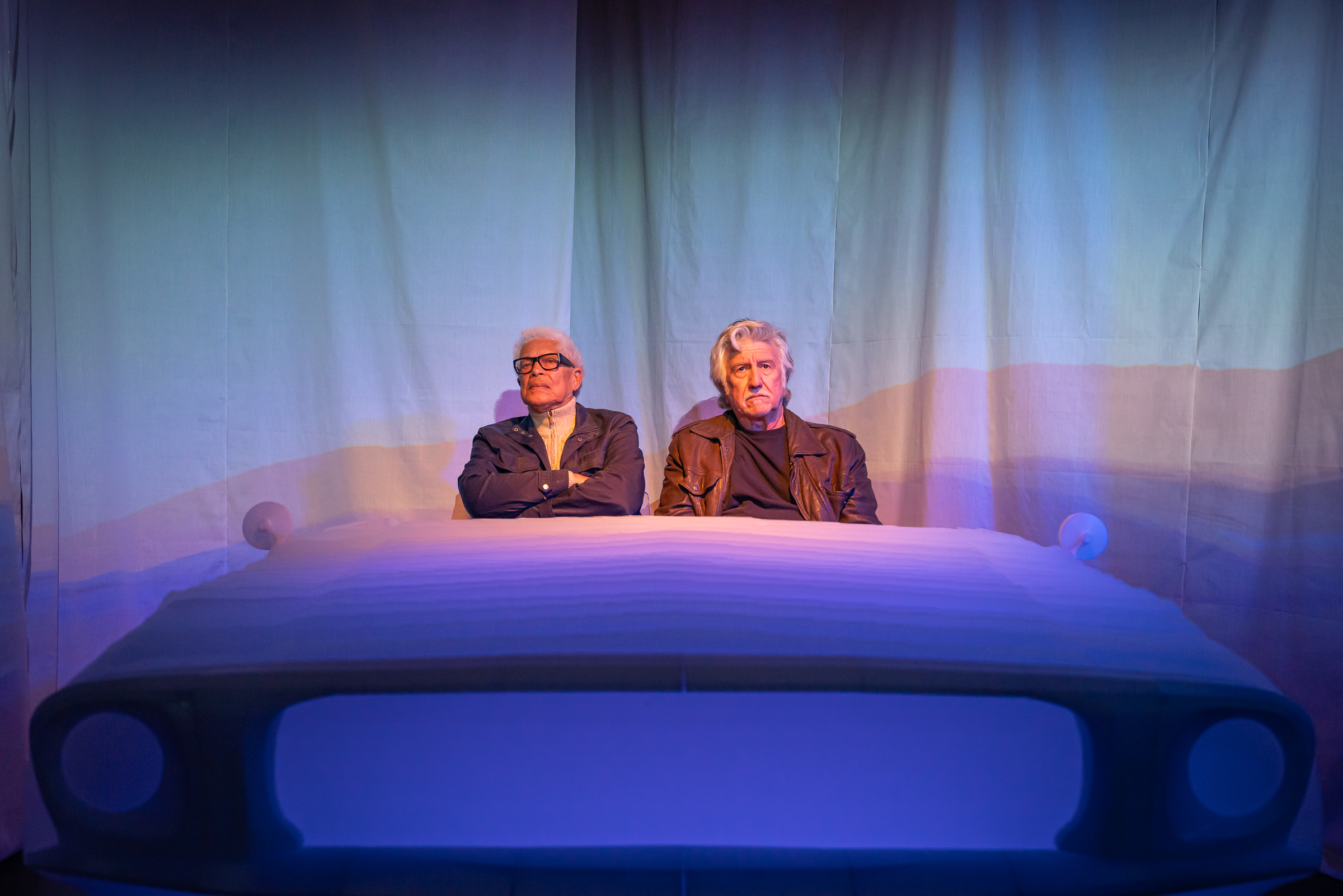
And then Borden speaks that fragile, off-kilter prayer to a God he doesn’t quite understand or know how to talk to. The moment lands with an awkward sincerity that becomes the play’s thesis in a way. It’s an offering from a man who has never had the right words but still tries, even at the edge of his own ending.
An Orchid and Other Such Lilies and Lies is not a perfect play, but it is a beautiful one. A flawed, wandering road trip that nevertheless finds its way to something profoundly tender. It’s a portrait of friendship, boyhood, aging masculinity, internalized homophobia, and the terrifying freedom of deciding how your story ends. It left me moved, unsettled, and oddly grateful. The desert is vast, the memories uncertain, the journey uneven, but the humanity in the stars is unmistakable.
“God speed, amen, with love and respect.”
 front mezz junkies