
The Toronto Theatre Review: debbie tucker green’s a profoundly affectionate, passionate devotion to someone (-noun) at Tarragon’s Mainspace
By Ross
With no apologies, debbie tucker green’s a profoundly affectionate, passionate devotion to someone (-noun) arrives at Tarragon’s Mainspace like a roundabout, repeating lightning storm; dangerous, alive, and impossible to look away from. Her writing is beyond phenomenal: intricate without being ornamental, entirely engaging, and propelled by an instinctive rhythm that makes us lean in to every unfinished and unspoken thought. The dialogue layers itself inside arguments, half-formed questions, evasions, and emotional detonations. Lines cut off mid-sentence are completed later inside our spectating minds, but only if we’re paying close enough attention. The writing trusts us to keep up, and rewards us with a level of clarity that feels earned rather than handed over and out.
Directed with rigorous sensitivity and understanding by Mumbi Tindyebwa Otu (Obsidian/CanStage/NecAngel’s Is God Is), this triptych of relationships unraveling finds its heartbeat in the tight tension between what is said, what is withheld, and what erupts despite our best defensive postures. These characters seem to be fighting for their lives within their relationships. The looping refrain of “I know you, making conclusions” seems to sit in collusion, just beneath almost every argument, said or unsaid, throwing us forever into the repeated spin cycle of accusations and the folded longings that never quite resolve. Questions splinter, answers divert, and emotional truths reveal themselves sideways. At moments, the audience can barely remain silent, as the production almost invites a kind of mid-performance talk-back energy that usually hangs around until after. But the energy feels empowering and electric, as if the room must process aloud the volley of truths being thrown about within it.
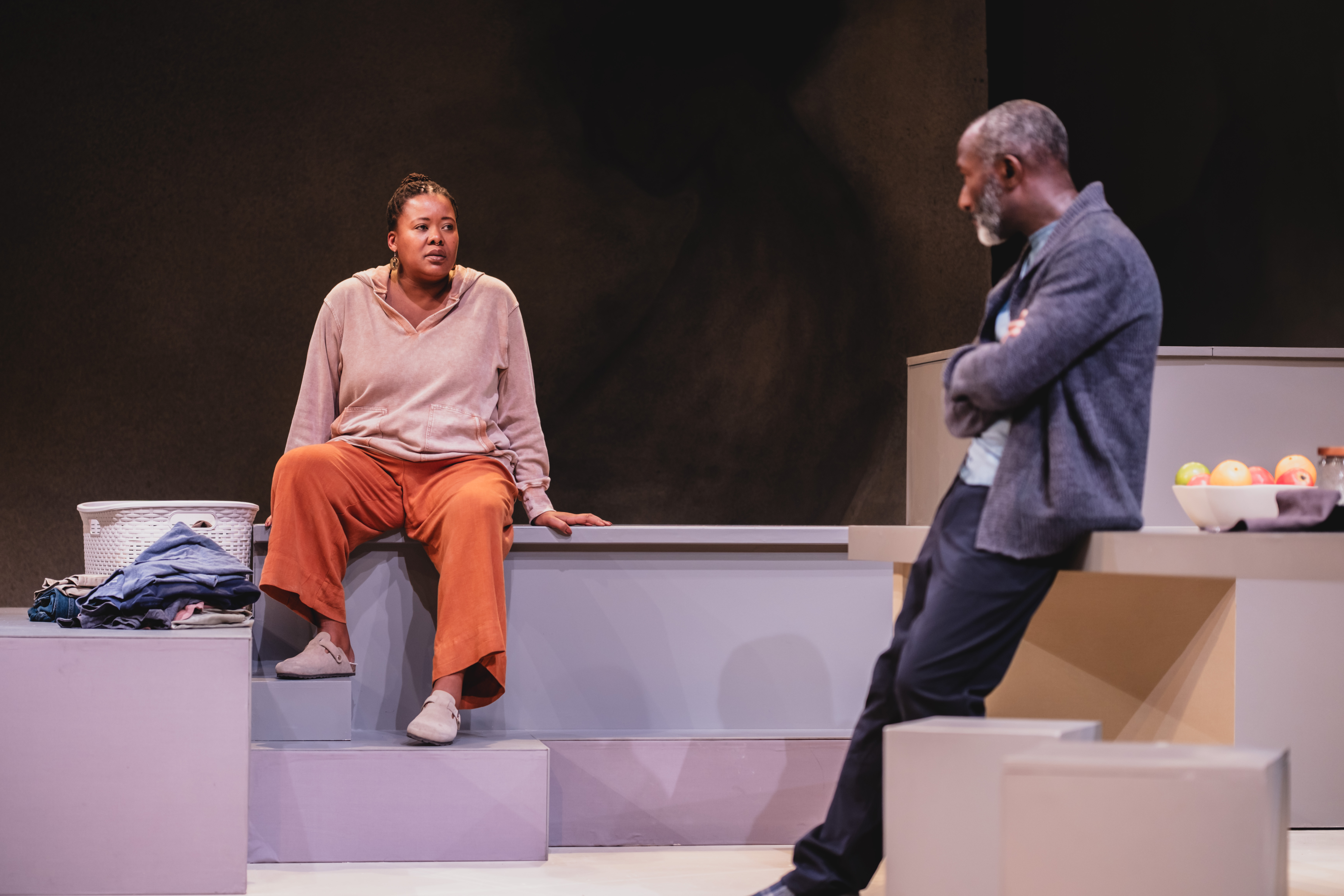
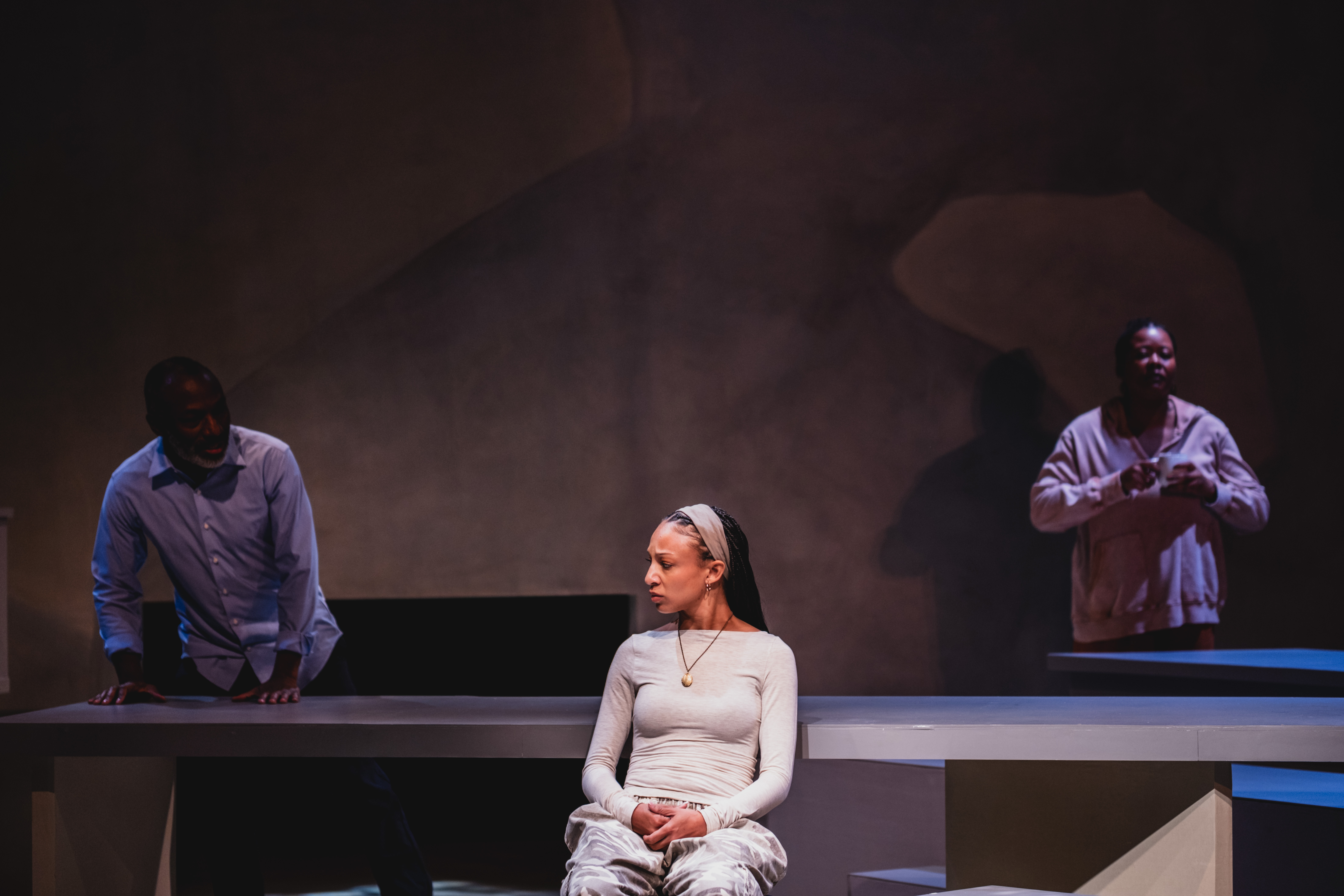
The design mirrors that poetical shit-talking complexity. Jawon Kang’s set is a textured, multi-layered space that holds shadows of desire, intimacy, isolation, and disappointment side by side. It’s filled with metaphorical containers for unpacked emotional baggage (and actual props) tucked into drawers and recesses that echo the script’s themes and concepts. The costumes by Arianna Moodie (Shaw’s Ella & Louis) carry a lived-in tonal precision, while Raha Javanfar’s lighting sculptures intimacy and rupture with equal insight. And Jacob Lin 林鴻恩’s solid sound design threads intentional silent spaces through the evening, giving the verbal architecture a subtle undercurrent and vibration. With movement and intimacy direction from Lisa Karen Cox (Tarragon’s Post-Democracy), the physical language of these characters becomes another layer of combative communication, etched in strategic, revealing, and sometimes brutally honest declarations.
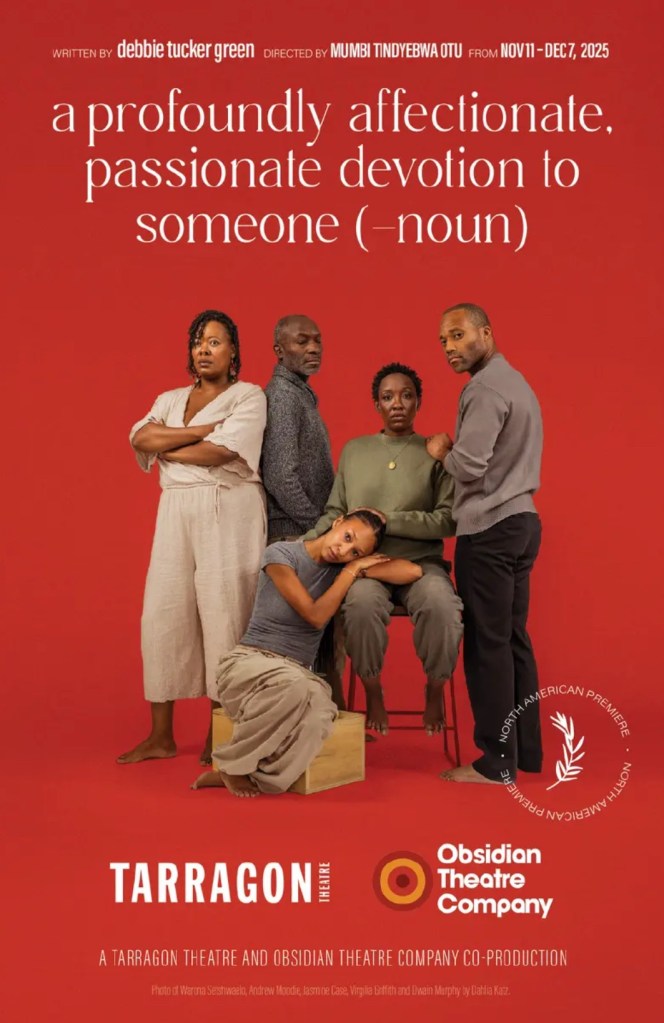
Within this instinctual framework, the cast delivers performances of astonishing immediacy. Jasmine Case (Obsidian/Crow’s seven methods of killing kylie jenner) and Andrew Moodie (Stratford’s Amadeus) craft nuanced, shifting portraits of people trying, and failing, and trying again, to articulate what they need and what they want, against all odds. Warona Setshwaelo (Segal’s Small Mouth Sounds) brings brittle clarity that cuts through even the most circuitous exchanges, making us feel the tangled smart bag of confusion and pain. But it is the pairing of Virgilia Griffith (Crow’s Rosmersholm) and Dwain Murphy (CBC’s “Diggstown“) that defines the production’s core. Their dynamic is riveting: tender one moment, devastating the next. They rise fully to green’s jagged syntax, locating the focused ache inside each fragment and the danger inside each silence. Their scenes, the best of the lot, feel like the emotional axis on which the entire triptych spins, and we can’t help but be pulled in.
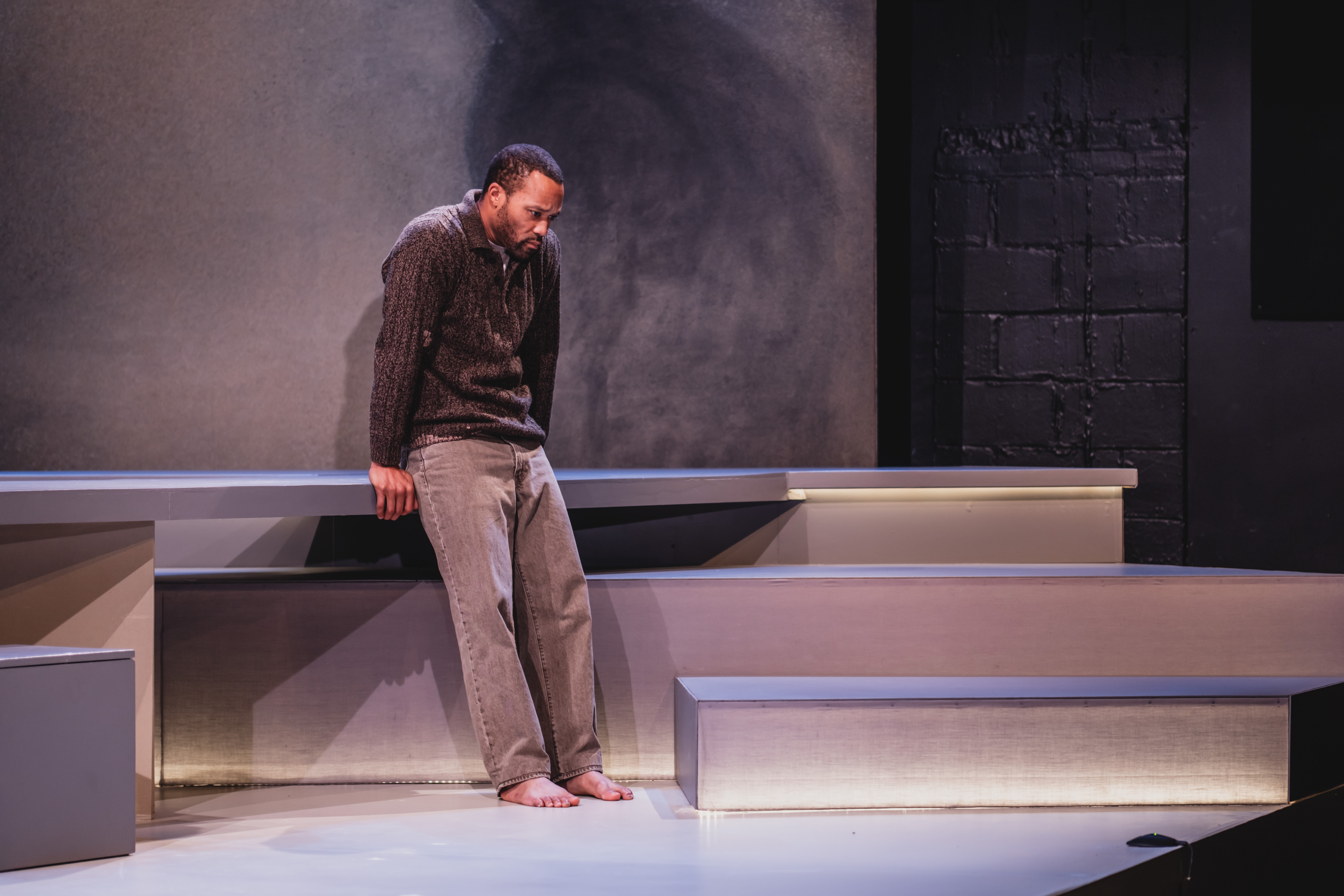
The play’s ideas, while occasionally nestled within standardized heteronormative frameworks, extend far beyond them. Themes of longing, miscommunication, gendered expectation, cultural patterning, and unspoken grief circulate through each encounter. The surprises aren’t built to shock; they’re built for recognition. By the end, green (ear for eye) has delivered us characters that aren’t so much transformed as revealed. Their betrayals, evasions, and moments of surrender coalesce into something that feels emotionally coherent even if structurally unresolved. The play leaves space for ambiguity without feeling incomplete.
What remains afterward is a feeling of being cracked open. We’re not left happy about the ways we couple, uncouple, or cling, but we do feel somehow completely seen. green’s work refuses to comfort us with tidy answers; instead, it lets contradiction and emotional truth coexist. It’s a “bag of confusion,” but one filled with acute insight. These are the traps we fall into, the lies we tell, the instincts that save us, and the intimate devastation that comes with truly hearing, or failing to hear, the person beside us who’s reaching out, pushing away, or merely wanting more. The result is messy, fascinating, and unmistakably human, and the feeling of being recognized, both positively and negatively, hangs around, unfinished, long after the play ends.
 front mezz junkies
[…] in (although sometimes a bit too clumsily), while the lighting by Raha Javanfar (Tarragon’s a profoundly…) magnificently catches the edges of fear, hope, and uncertainty with striking precision. […]
LikeLike
[…] DeGrow, sound design by Romeo Candido and Christine Lee, and evocative set and costume design by Jawon Kang, the world of the play is rendered with precision and restraint, supporting a narrative that moves […]
LikeLike