The Toronto Theatre Review: Kanika Ambrose’s Moonlight Schooner
By Ross
A ship and its crew at sea trying to survive a storm is a powerfully terrifying and engaging beginning of almost any play, just ask Shakespeare. And in Moonlight Schooner, playwright Kanika Ambrose (our place) finds that same dramatic power in those first few moments. She casts her rear-view gaze on the Windrush Caribbean sailor, desperate men caught between myth and material need, forever dealing with the possibility of death, but also with the cost of staying alive. This Necessary Angel Theatre Company production, created in association with Canadian Stage and Tarragon Theatre, carries that sense of chronicled care and conflict in its fascinating handling of colonial history and the fractures it creates.
Set on May Day 1958, when a band of Black sailors find themselves stranded on St. Kitts after a brutal storm, the play sets itself up as a crossroads story, fueled by booze and sexual energy, laced with morality tensions and poetry. The men, who almost died the night before, hang in a suspended frame. They wait to begin repair work on their damaged ship, battered by torrential forces not unlike the ones reshaping their futures, and we feel those waves pounding against their personal shores. Yet for all the play’s carefully constructed ambition, the emotional storm never fully pulls the audience under its rollicking surface. The play gestures at the deep, dark depths of the ocean floor, but that navigation remains just out of reach, leaving us floating on the surface without ever really knowing what dangers lurk below.
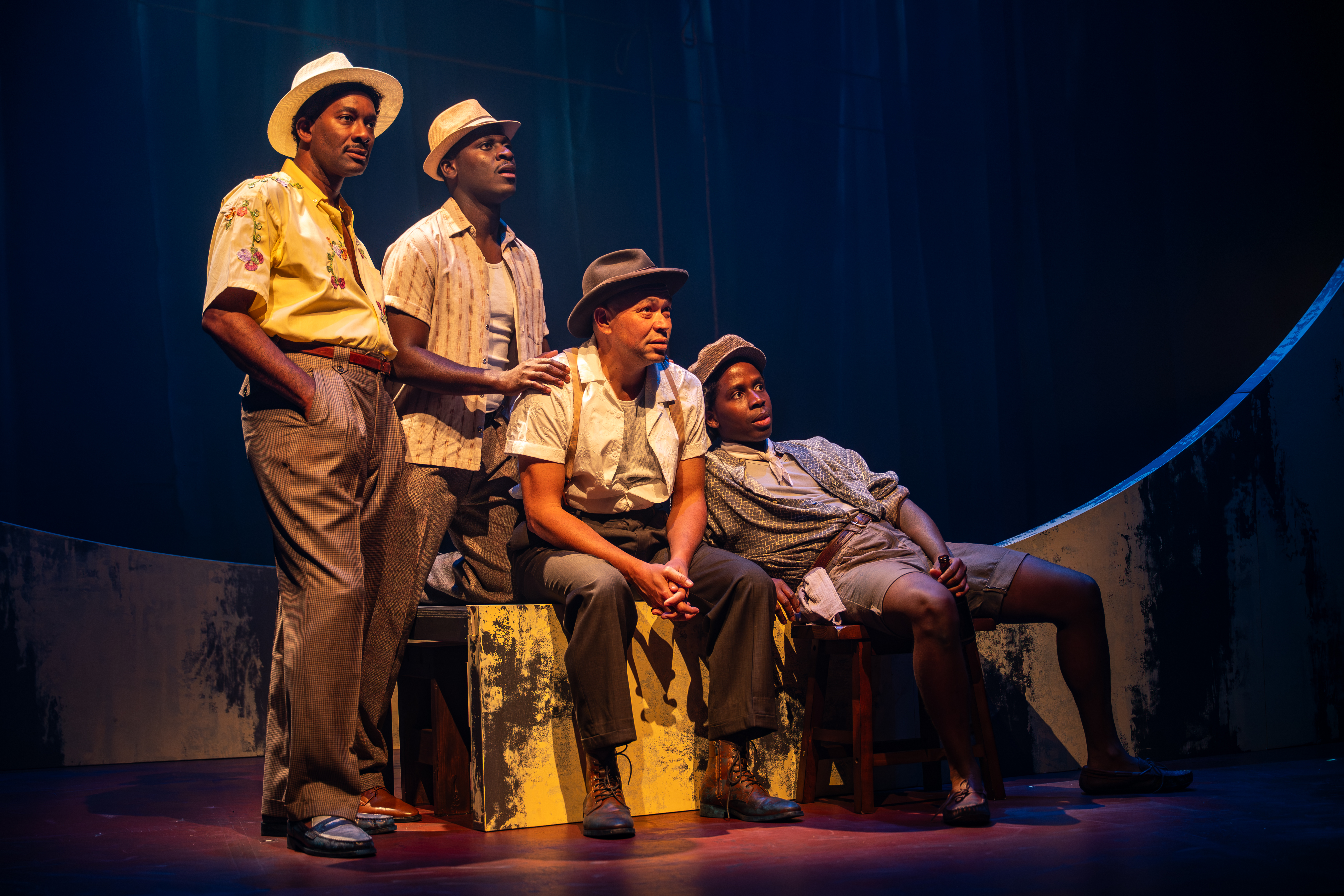
The ensemble, directed with a wide open ease by Sabryn Rock (Mirvish/MSC’s Fun Home), works hard to fill in that fearful emotional space. Daren A. Herbert (Soulpepper’s Jesus Hopped the ‘A’ Train) as Timothy, Tony Ofori (Soulpepper/Obsidian’s Three Sisters) as Lyle, danjelani ellis (Buddies’s speaking of sneaking) as Vincy, and Jamie Robinson (CS’s Much Ado About Nothing) as the central figure, Shabine, create a textured sense of chaotic camaraderie and tense rivalry. Each actor finds pockets of truth that reveal the strain of trying to prove themselves seaworthy and manly enough to survive in a world determined to pit them against one another, and ultimately, sink them. Yet the scenes that should cut the deepest often just skim the surface, like those annoying mosquitoes looking for something to feast on.
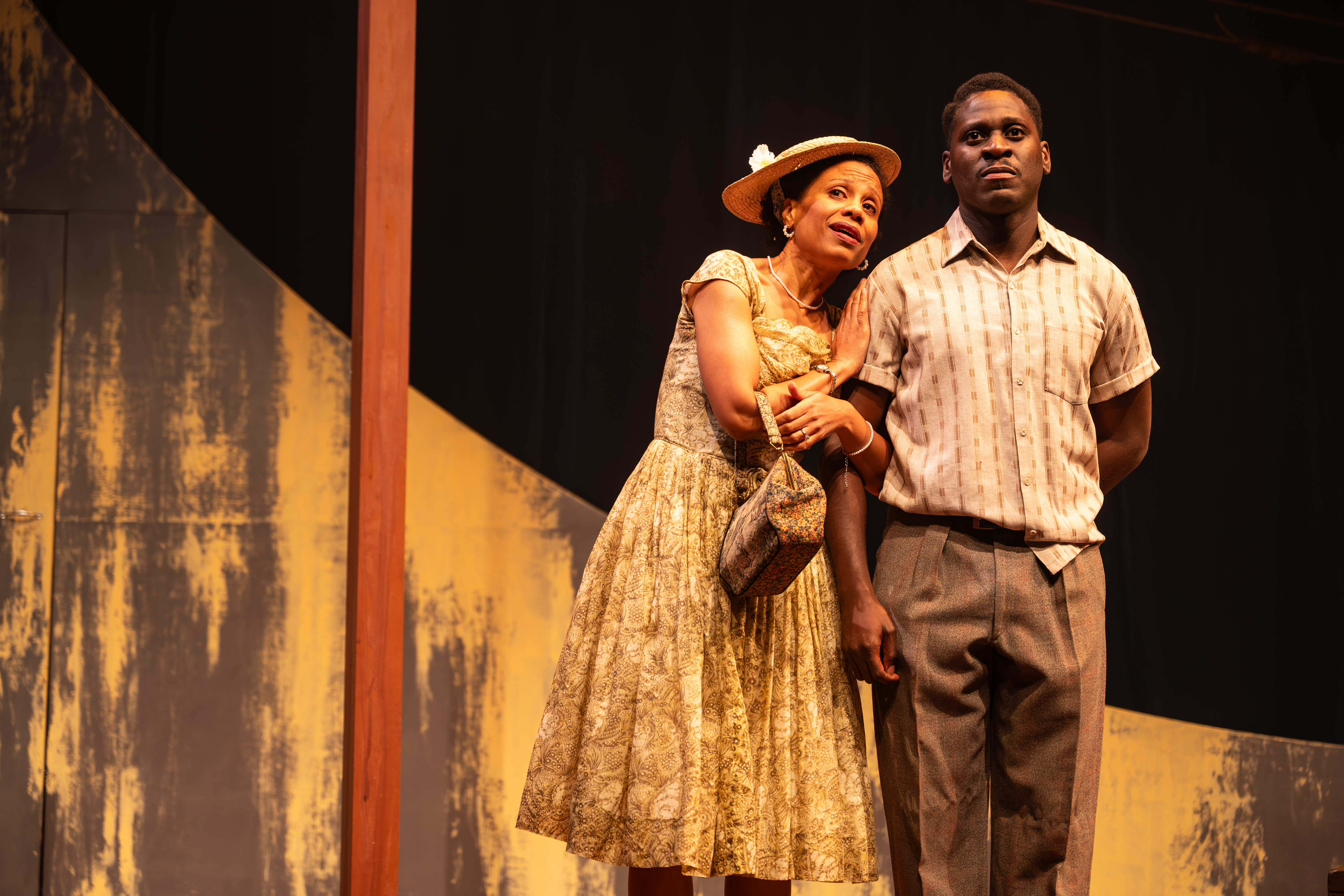
When the actors slip into the roles of women and children, the tonal shift of the play tilts toward overt caricature, sidestepping more serious questions about misogyny, violence, desire, and the cycles of poverty that shape these families. Nehassaiu deGannes (Shaw Festival’s Gnit), as the sole female, Janine, underused and sidelined, grounds the play with some form of well-spoken dignity and maternal force, but her mother figure and the unresolved figure of the unseen woman hover like a complex, disturbing dark cloud that the production never fully chooses to confront or even see as a threat. Does she not want to see what this young woman has been through the previous night? It feels like she truly believes, somewhat caringly, that this is just the way women are mistreated in this world, reminding Janine of a similar, but undefined, and possibly brutal way she met her own husband so many years ago. I couldn’t quite figure that framing out, but I did find myself yearning to know these complex women more intimately, and almost wishing the play had turned its full attention toward them.
There is, however, a flicker of something raw and unresolved in the character of Shabine, the older, light-skinned sailor whose racial ambiguity puts him on unstable footing among the others. The play extends its toes only slightly into the salty, murky water, into how his education and complexion strike a nerve within the other men, creating an ‘otherness’ tension the group cannot name. There is a sense that he is neither fully inside nor safely outside the social structures that bind them all to the ship. References to why he does not hold a more respectable (aka more white man’s) job, and the suggestion that his many children keep him tethered to a life he cannot escape, hint at a much deeper conversation about the intersections of poverty and racial hierarchy in Caribbean life. Yet those questions rise and fade as fast as the waves breaking against the shore. The production seems content to acknowledge the turbulence, without ever steering right for it.
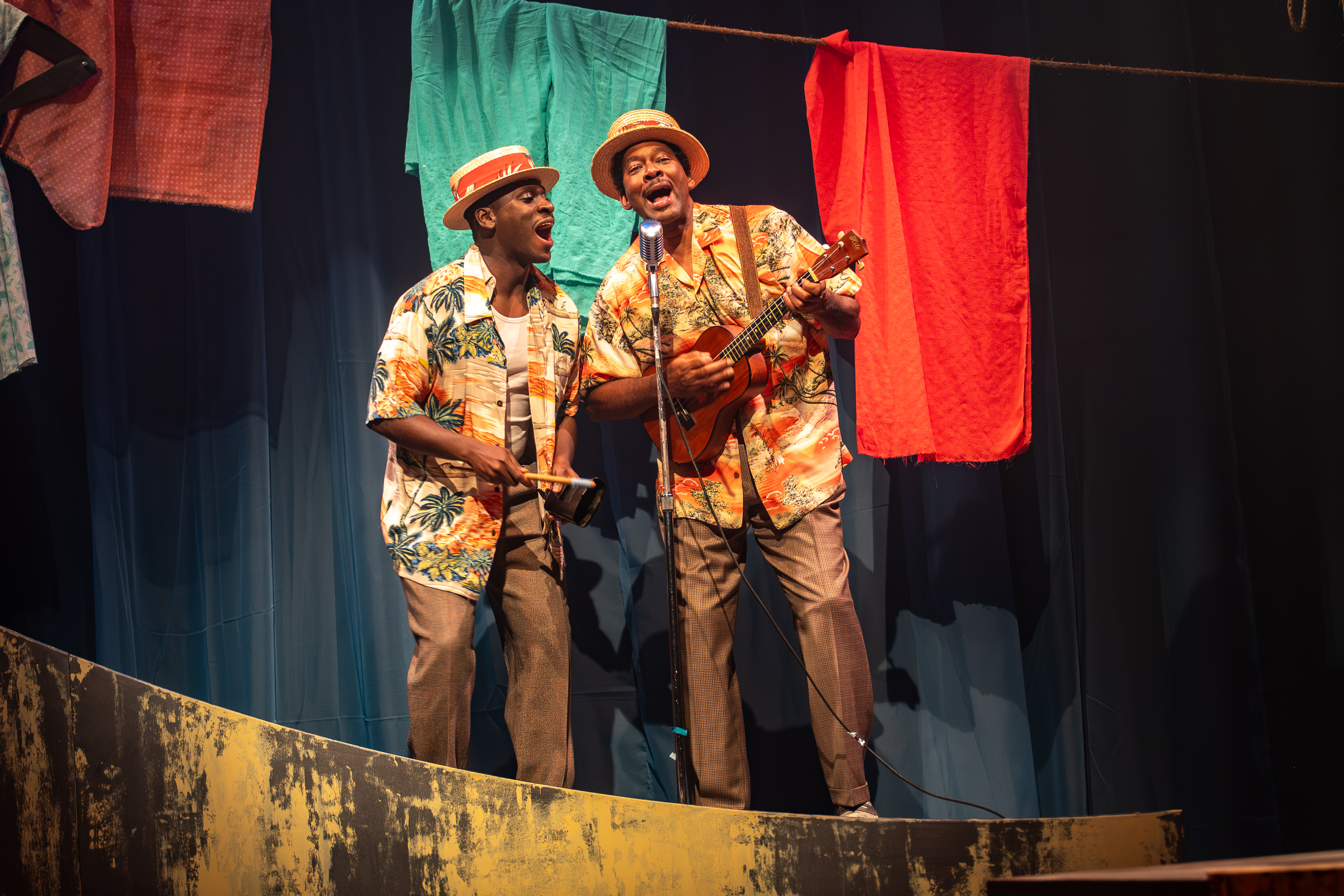
Sabryn Rock’s direction has moments of combustible energy, moments in which the staging feels as unsettled as the storm that has thrown these men off course. The design elements are often required to carry the emotional weight that the script does not. The spare geometric set, designed by Shannon Lea Doyle (Soulpepper’s The Comeuppance), creates space for imagination to wash in (although sometimes a bit too clumsily), while the lighting by Raha Javanfar (Tarragon’s a profoundly…) magnificently catches the edges of fear, hope, and uncertainty with striking precision. Des’ree Gray‘s costumes and Thomas Ryder Payne’s sound design lean into the stormy atmosphere, filling the theatre with the rumble of weather and the murmur of distant and dangerous waters. The two calypso songs bring an unexpected vibrancy to the piece, a surge of life that briefly shifts the winds. Those musical moments made me wish the rest of the production rode that same spirited current to its destination, but that change of course would have created something very different indeed.
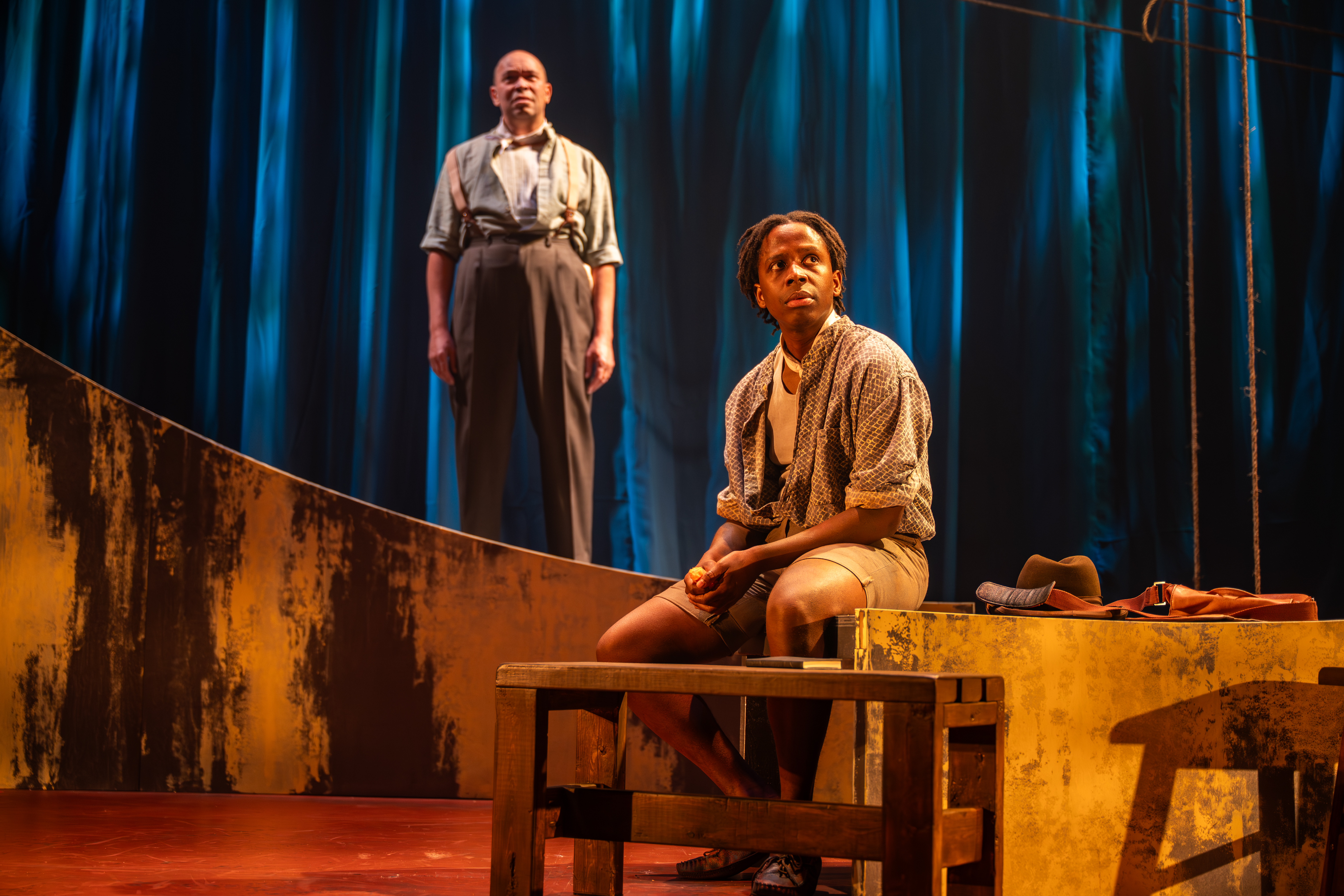
Ambrose’s script wrestles with desire, ambition, and the ache of striving for a life free from the burdens of poverty and inherited trauma. These men want to be employed; to be seen, to feed their families, and to lift themselves beyond the limits of a colonial system that shapes their every decision. They, like their storm-battered ship, are damaged yet repairable. There is something profoundly moving in this portrait of the hopeful and the forsaken, descendants of the slave trade who feel history pressing against their backs each time they try to stand upright on the unsteady deck of a ship battling a storm. The playwright has said she was inspired by Derek Walcott’s The Star-Apple Kingdom, and the poetry of that influence is most clearly felt in Shabine. At times, the play seems to brush against the very edge of Walcott’s vision: that “scream which would open the doors to swing wildly all night,” a line from his poem that casts its own shimmer of beauty and disorder across the production, even when the emotional arc cannot quite sustain the storm it summons.
Moonlight Schooner, running ninety minutes without intermission at Canadian Stage‘s Berkeley Street Theatre, offers a window into a turbulent world but rarely dives beneath its own surface. The production handles colonial history with responsibility and compassion, and the actors find resonance in the roles they inhabit, yet the emotional anchoring remains partial. The show captures the weather around these men, but not always the storm inside them. There is great promise in the imagery, the design, and the performances, but the piece left me stranded between shores, adrift in search of the fuller truths it keeps sailing around. I wanted more depth, more risk, and perhaps a clearer willingness to question which stories are placed at the center and which are relegated to the periphery. Those were the waters that felt the most compelling, and the ones left largely unexplored.
 front mezz junkies