
The Off-Broadway Theatre Review: Picnic at Hanging Rock
By Ross
As a gentle piano ushers us in, the dreamer and the dream disappear into the night. There’s a quiet but decisive shift in the final moments of that first song, opening our eyes to a crowded school overflowing with girls giddy over the promise of a Valentine’s Day picnic at Hanging Rock. It’s chaotic and compelling, arriving on the doorstep of this new musical, Picnic at Hanging Rock, now playing at the Greenwich House Theatre, and it immediately establishes its dream logic and melody. This is a world where time blurs, memory slips, and meaning is felt rather than explained. And we feel it in our bones as we watch a poignant connection formed early between a poor First Nations Australian girl (Sarah Walsh) taken from her family and dropped into this school against her wishes, and Bertie, the pretty, popular student (Gillian Han) who quickly becomes her entire emotional universe. A gift is exchanged, love is declared, and then Bertie is whisked away to the Rock while her desperate friend is left behind, practicing scales and quietly unraveling. It is a tender, haunting beginning that suggests emotional depth and large thematic ambition, and had the musical stayed rooted in the emotional devastation of these two girls’ bond, the mystery of the Rock might have felt like loss rather than a schizoid spectacle.

Composer Greta Gertler Gold’s music and lyrics are mystical and mysterious, creating an atmosphere of reflection and unease that mirrors the unknowable pull of the Rock itself. The score is often hypnotic, making the landscape feel as though it is watching and listening without ever revealing its secrets. At its best, the musical feels like an invocation, attempting to summon something ancient and unresolved, but it also feels muddled and muddy, awash in too many themes and mysteries to really do justice to any of them. While Picnic at Hanging Rock, like the celebrated film of the same name, consistently holds interest, the musical version rarely achieves full emotional engagement with its characters or plot. The cast works hard and sings well, and the intention to create mystery and intrigue is clear. But the production never quite draws us deeply enough into the inner lives of any of the girls to make their disappearance devastating rather than merely curious, when a larger, more expansive production might allow the material the space it needs to live and breathe.
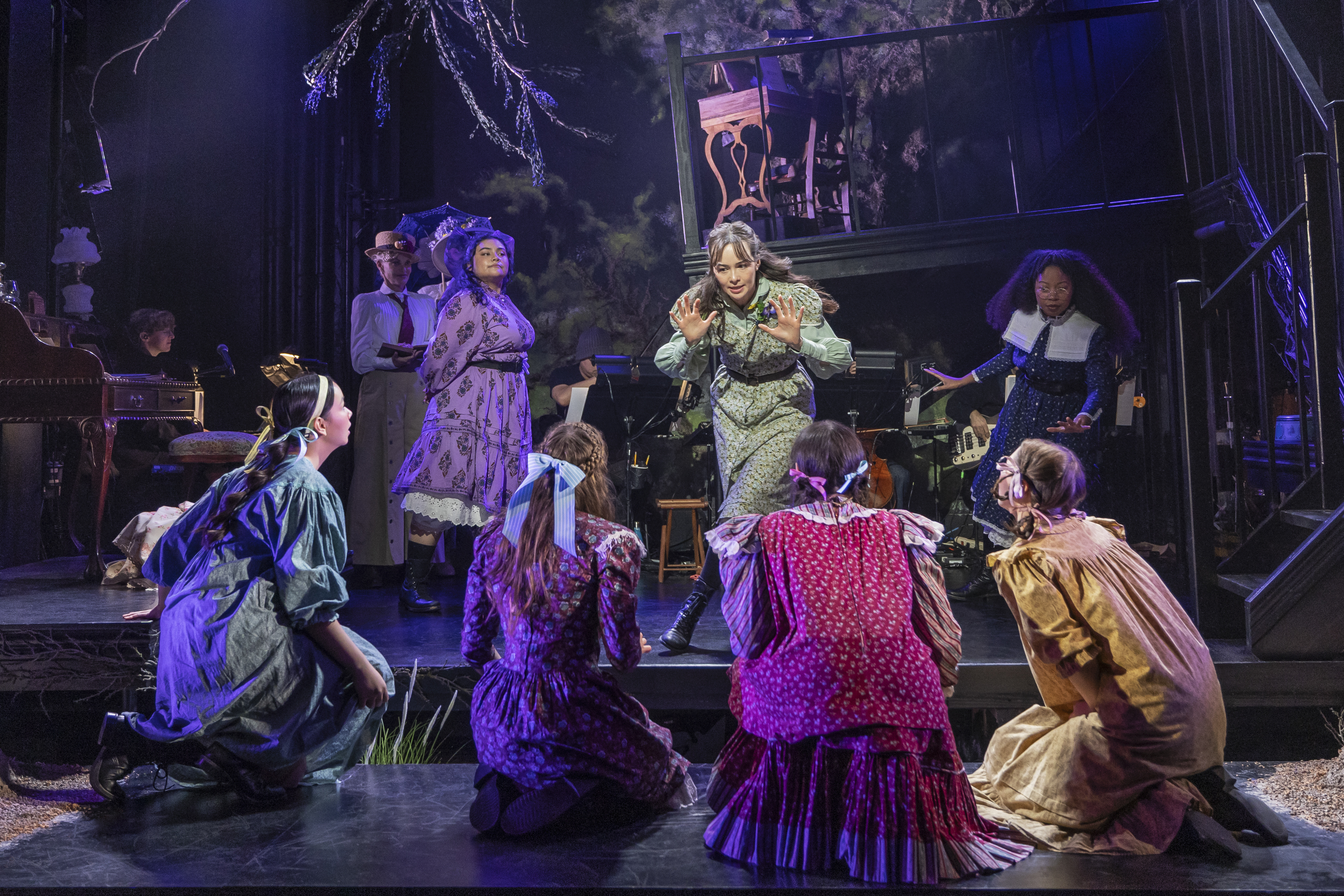
That sense of limitation is felt most acutely in the staging. Directed by Portia Krieger (2ST’s Friend Art) with choreography by Mayte Natalio (Broadway’s Suffs), the production attempts to deliver a multitude of voices, stories, and perspectives, particularly through the promised First Nations lens, but the sheer number of narratives overwhelms the stage. The Greenwich House Theatre feels too tight for a story this wide and wild. The large cast is perpetually crowded, and though the performers move skillfully through the space (and occasionally into the auditorium), the effect is one of constant compression, when it should be the wide-open Australian opposite. The staircase and leaning second-level platform dominate the set while offering little flexibility, ultimately feeling more like an obstacle for the cast to mount rather than an asset.
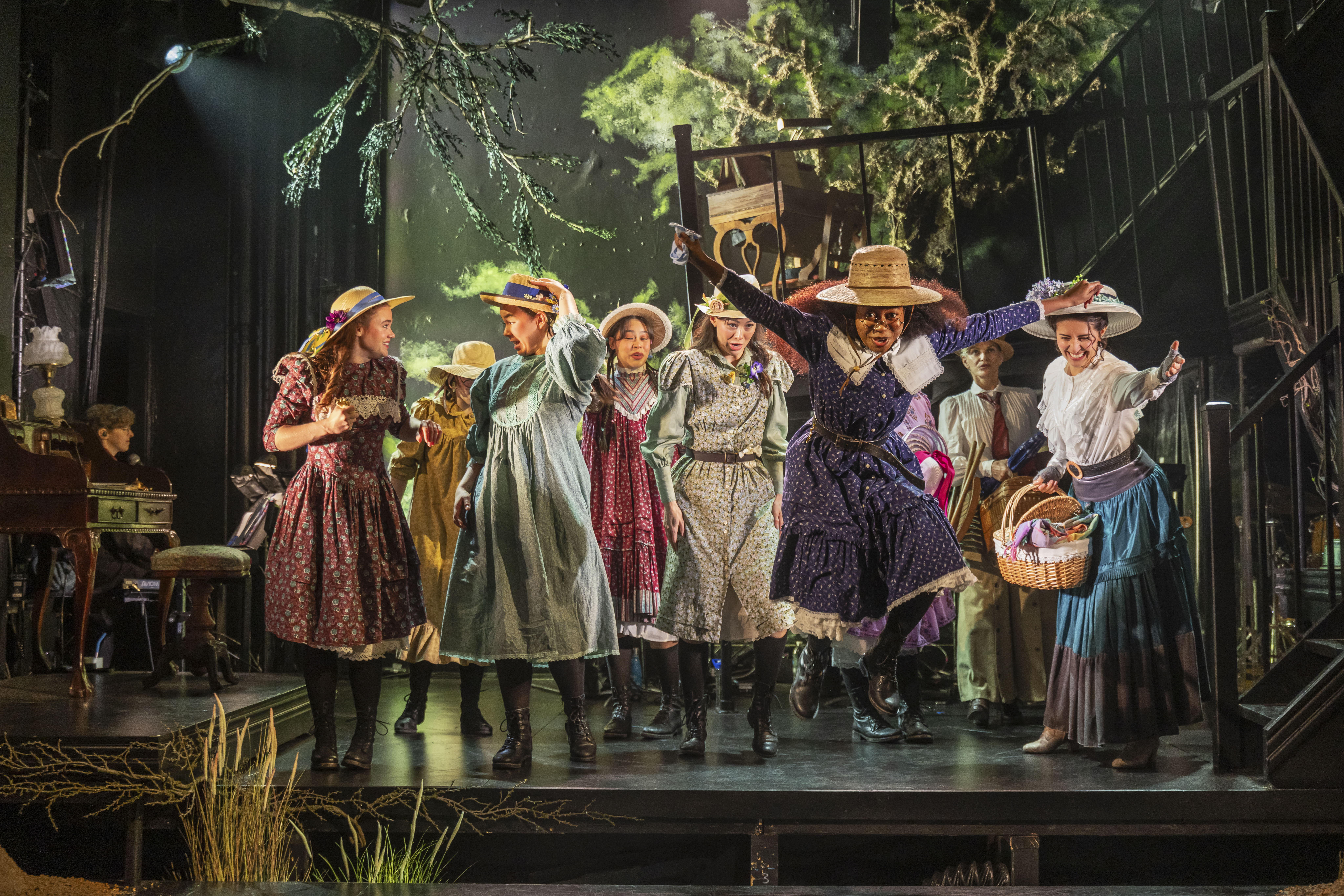
Inside Hilary Bell’s book and lyrics, this overcrowding of ideas, emotional, physical, and mythic, also causes some of the musical’s most compelling threads to fade into obscurity. The story of the First Nations brother turned tracker (Bradley Lewis), searching for his sister who was taken into the school system, teases some real emotional weight and echoes the histories of Indigenous children displaced in Australia, Canada, and the United States. By failing to center this thread, the production misses an opportunity to anchor its mystery in lived historical trauma rather than abstract symbolism.
Yet this thread is sidelined by the frantic energy devoted to other storylines, particularly the school leadership’s obsession with reputation over proactive responsibility. Erin Davie (Broadway’s Sunday in the Park…) as Mrs. Appleyard repeatedly invokes “blood and scandal,” an apt refrain, but her narrative, and the ghostly masculine severity of the fascinating Miss McCraw, played intensely by Kaye Tuckerman (Off-Broadway’s Come Light My Cigarette), ultimately feel overemphasized, even when it piques our interest. Albert (Bradley Lewis) and Michael (Reese Sebastian Diaz) are also repeatedly thrust into the action, credited with movement and discovery, yet given surprisingly little to do beyond a faint narrative tether to Walsh’s missing sister and Michael’s colonial entitlement. Their frequent entrances underscore how crowded the storytelling becomes without deepening its emotional stakes. These figures loom large without need, crowding out the quieter, more devastating trauma at the heart of the girls’ experience. “Don’t forget me, Bertie,” becomes less a plea and more an unfulfilled promise of emotional focus.
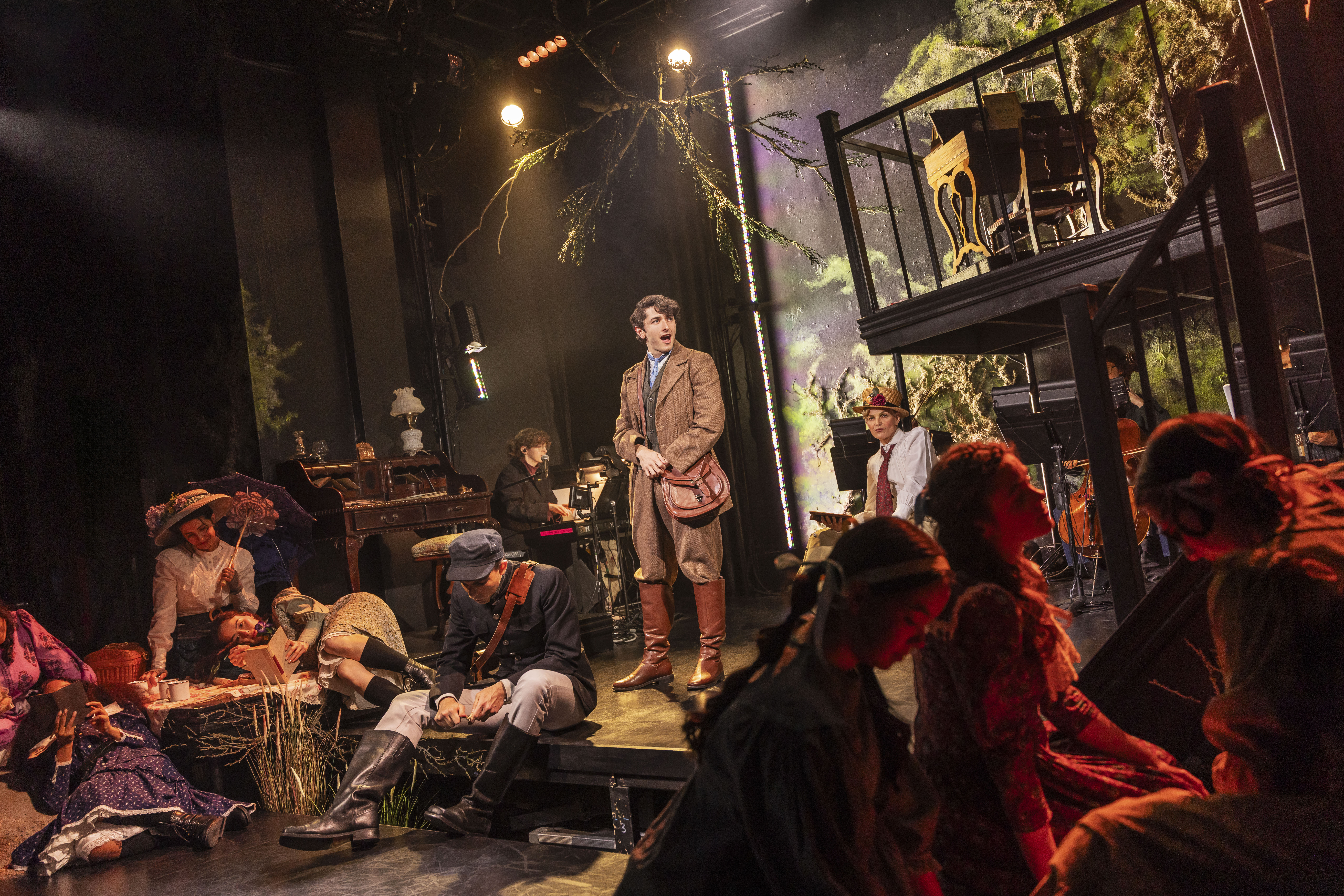
Musically, Picnic at Hanging Rock is compelling but ultimately unmemorable. The score mirrors the visual density of the production, rich, busy, and constantly shifting, without leaving behind melodies that linger once the curtain falls. Still, there is undeniable ambition here, and moments of genuine beauty surface amid the clutter. This musical understands the power of ambiguity and refuses easy answers, honoring Joan Lindsay’s unresolved tale and Peter Weir’s eerie cinematic legacy (maybe a bit too much, as this isn’t a true story where details are required). What it lacks is clarity of focus. The Rock may remain mysterious by design, but the production itself could benefit from a sharper sense of what, and whom, it most wants us to mourn.
 front mezz junkies