The Off-Broadway Theatre Review: IRT’s The Honey Trap
By Ross
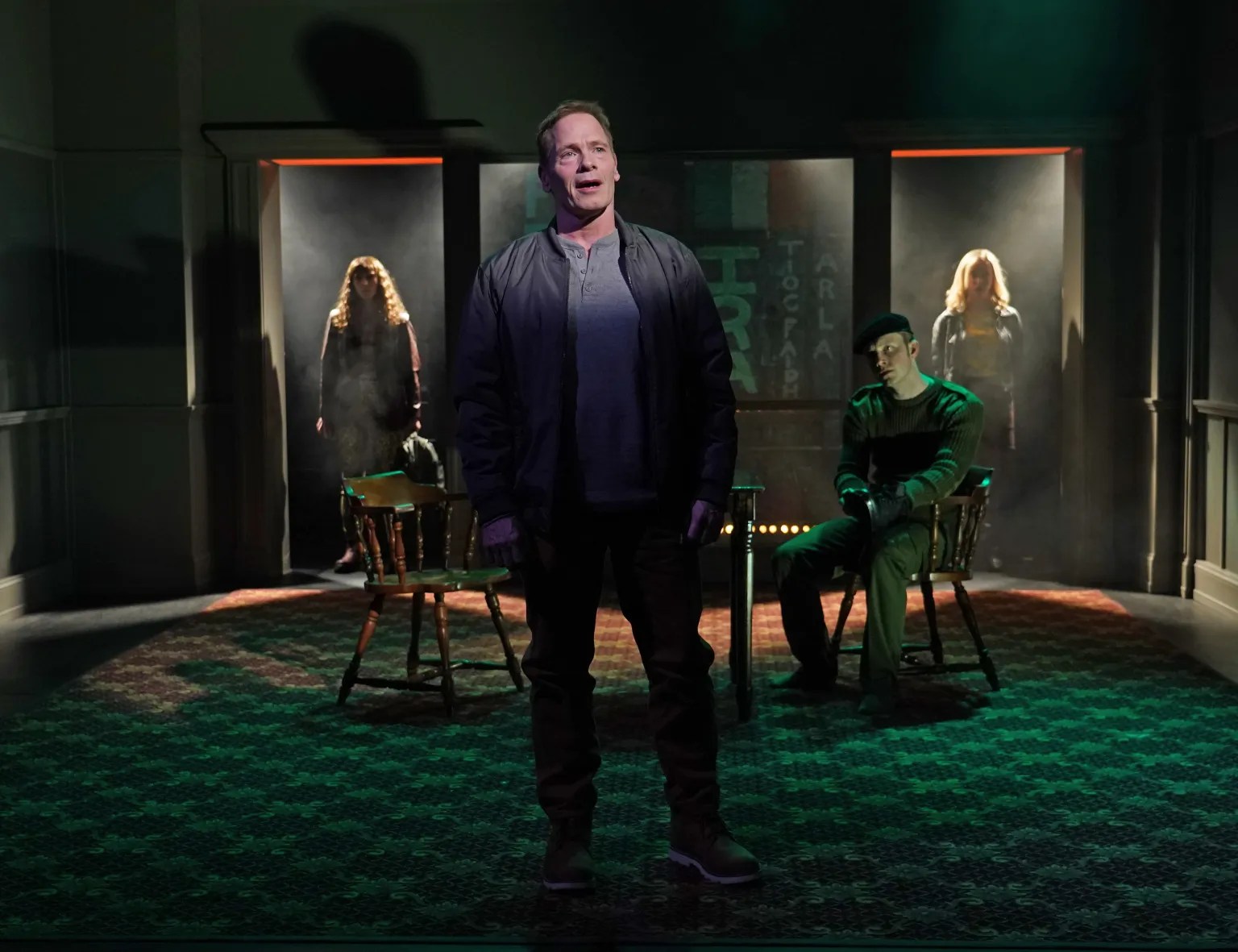
The lights shift in the first moments of Irish Repertory Theatre’s The Honey Trap, and a smoky memory drifts in, revealing armed conflict behind our central figure: a British soldier and an unseen enemy. Dave is forever haunted by a trap he nearly fell into, one that cost his friend’s life after a night at a Belfast pub. What began as a few pints and drinking games full of push-ups, bravado, and saying what was on their minds to a group of pretty Irish girls ended in violence he still cannot release. It is Dave who holds on to the feeling that he pressured his younger fellow soldier, Bobby, to come along, and the guilt of that decision hangs over him, heavy and unresolved, from the very first beat.
Returning to the same stage it first occupied last fall, The Honey Trap remains a profoundly captivating unraveling, one that seeps into the bloodstream, quickening the pulse, and tightening the chest as it hurtles toward an inexorable climax. The play by Leo McGann (In The Moment), directed with nerve-jangling precision by Matt Torney (Theatrical Outfit’s The Lehman Trilogy), unfolds like a troubled memory you don’t want to touch but cannot stop replaying. It is unnerving, meticulous theatre: layered in time, haunted by regret, and propelled by the terrifying consequences of a single night that none of its characters fully understood until it was far too late.
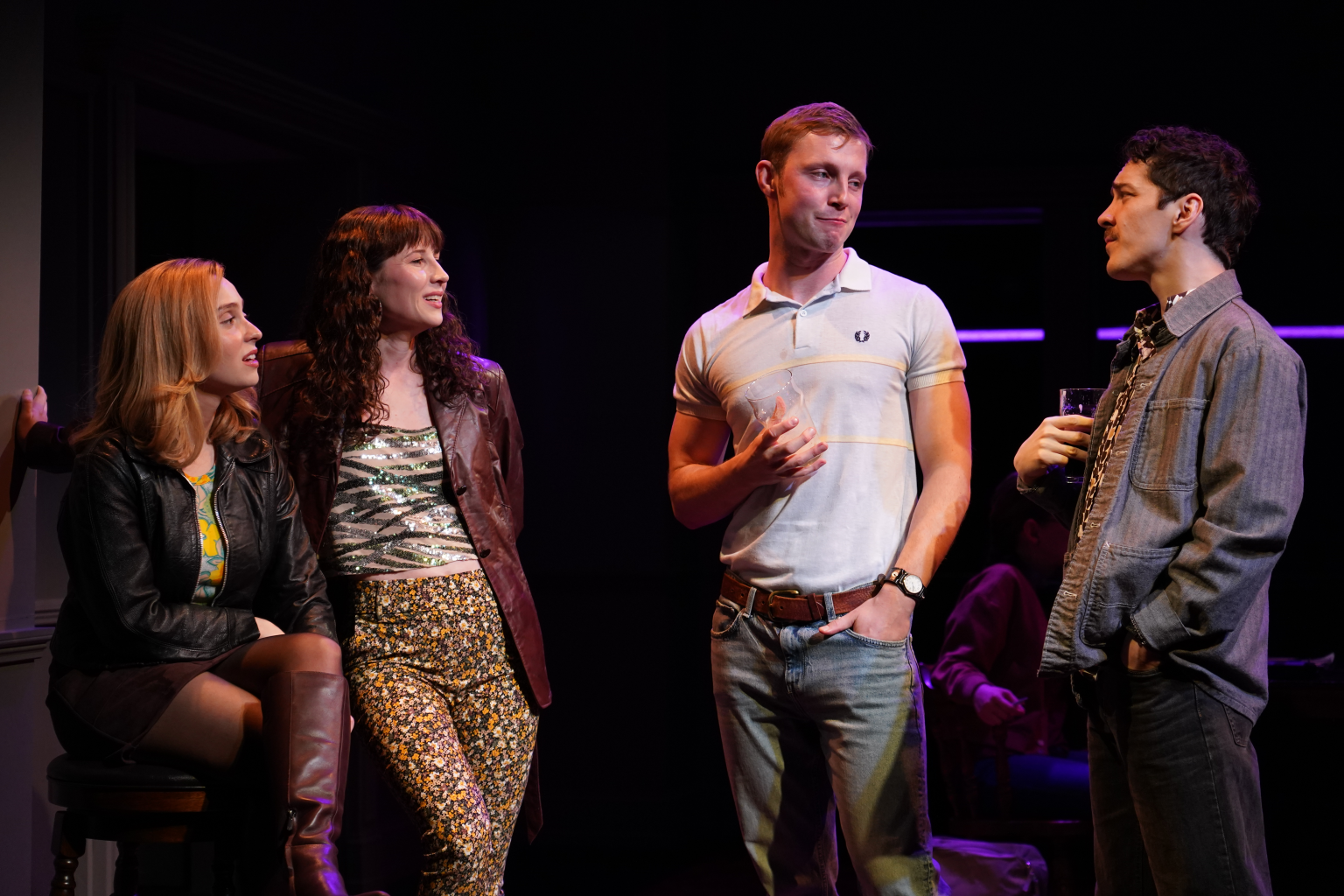
Following the memory invasion, Dave, a former British soldier, is about to begin an interview for an American oral history project about Belfast’s ‘Troubles‘. What initially appears to be a combative and sexist interview dynamic, largely due to Dave’s manner and manipulation, slowly reveals its purpose as past and present begin colliding with mounting force. Overhead audio loops contextualize the IRA and British military presence in Northern Ireland, but McGann wisely keeps the focus on the human cost rather than political abstraction. “No one comes to Belfast for the weather… or compliments,” one character dryly observes later in Act Two, a line that lands with a bitter wit in a play saturated with mistrust, bravado, and suppressed fear.
The ensemble work here is exceptional, with younger and older versions of a few of the characters layering together a story of innocence lost and guilt calcified. Michael Hayden (Broadway’s Elf) as Dave is completely abrasive, charismatic, and deeply unsettling, a man whose confidence masks destruction rather than strength. As Young Dave, Daniel Marconi (IRT’s Made By God) mirrors that swagger with alarming ease, while Bobby, as portrayed beautifully by Harrison Tipping (“Protocol 7“), is heartbreakingly open and decent, carrying his innocence on his chin and in his hopeful smile. With “the voice of an angel,” Tipping’s puppy-dog warmth makes Bobby’s fate feel especially cruel, and his repeated refrain, “They despise us,” echoes a complicated stance long after the moment passes. The older, higher-ranking Dave may protect Bobby in the streets, but he is also the one who pressures him into danger, and the play never lets him escape that truth.
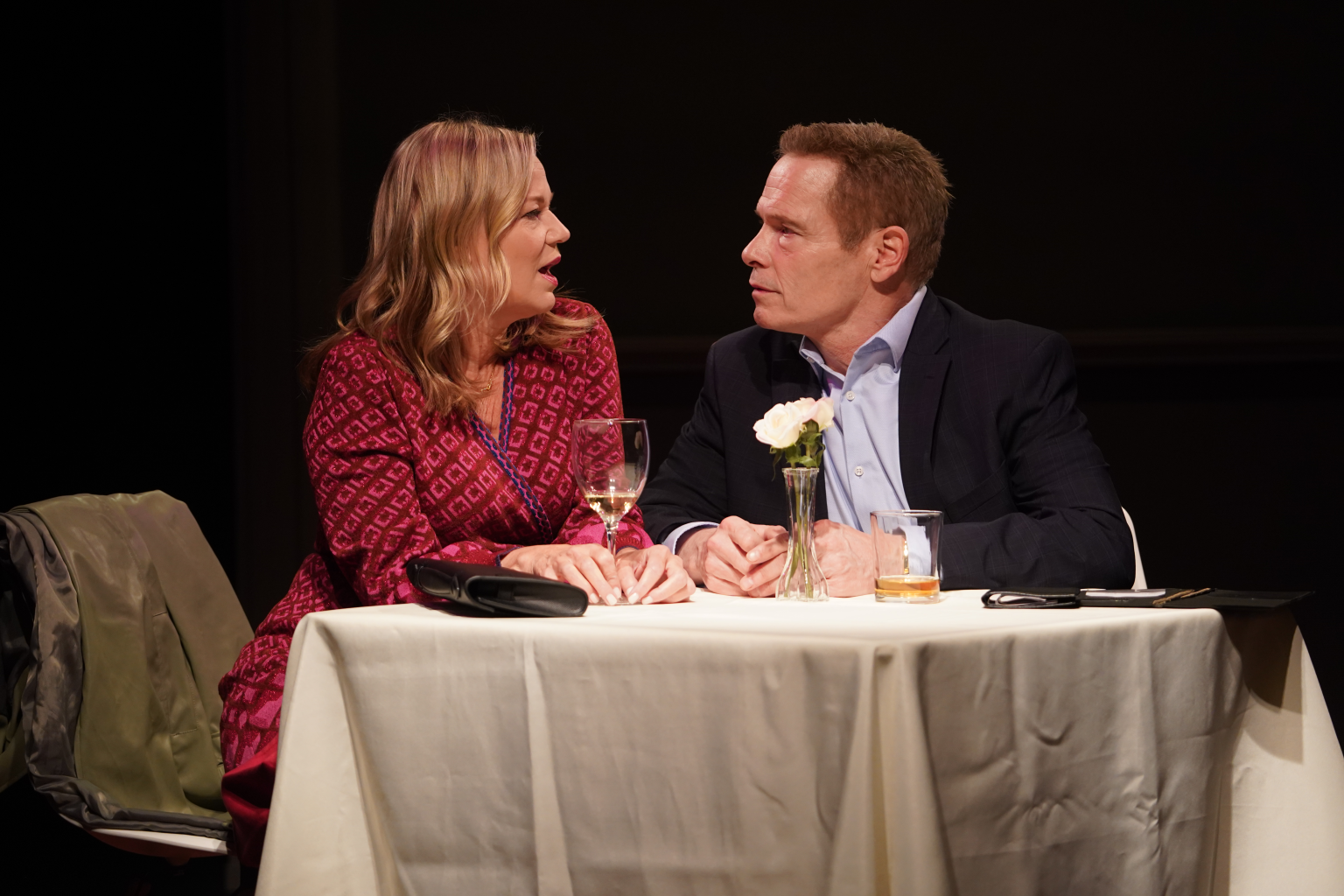
Samantha Mathis (2ST’s Make Believe) is quietly devastating as Sonia, a woman forced to reopen a past she has carefully sealed away. Her reluctance to trust, her halting disclosures, and her restrained grief give the play its most human ache, and we feel it in every move she makes. Mathis allows Sonia’s vulnerability to surface in fragments, making each revelation feel earned and deeply personal. Doireann Mac Mahon (LCT’s Corruption) as Kirsty and Annabelle Zasowski (HBO’s “Divorce“) as Lisa further complicate the moral terrain, while Rebecca Ballinger (Studio’s Summertime) brings a steady, probing intelligence to Emily, the interviewer whose outsider status gradually becomes both an asset and a provocation.
As The Honey Trap tightens its grip, time folds in on itself, and the past slams violently into the present. The final convergence lands with shocking force, leaving devastation in its wake. Charlie Corcoran’s smart, efficient scenic design, paired with Michael Gottlieb’s shadow-sliced lighting and James Garner’s unsettling soundscape, amplifies the danger and dread, without ever feeling melodramatic or overly simple. What lingers is not resolution or justice, but the unbearable knowledge of how easily loyalty, desire, and silence can be weaponized, and how long the damage refuses to stay buried. Riveting and tender even in its aggression, Irish Rep’s return engagement of The Honey Trap understands that reconciliation is not the same as healing, and that some traps, once sprung, never fully release their hold.
 front mezz junkies