The Toronto Theatre Review: Pu Songling: Strange Tales
By Ross
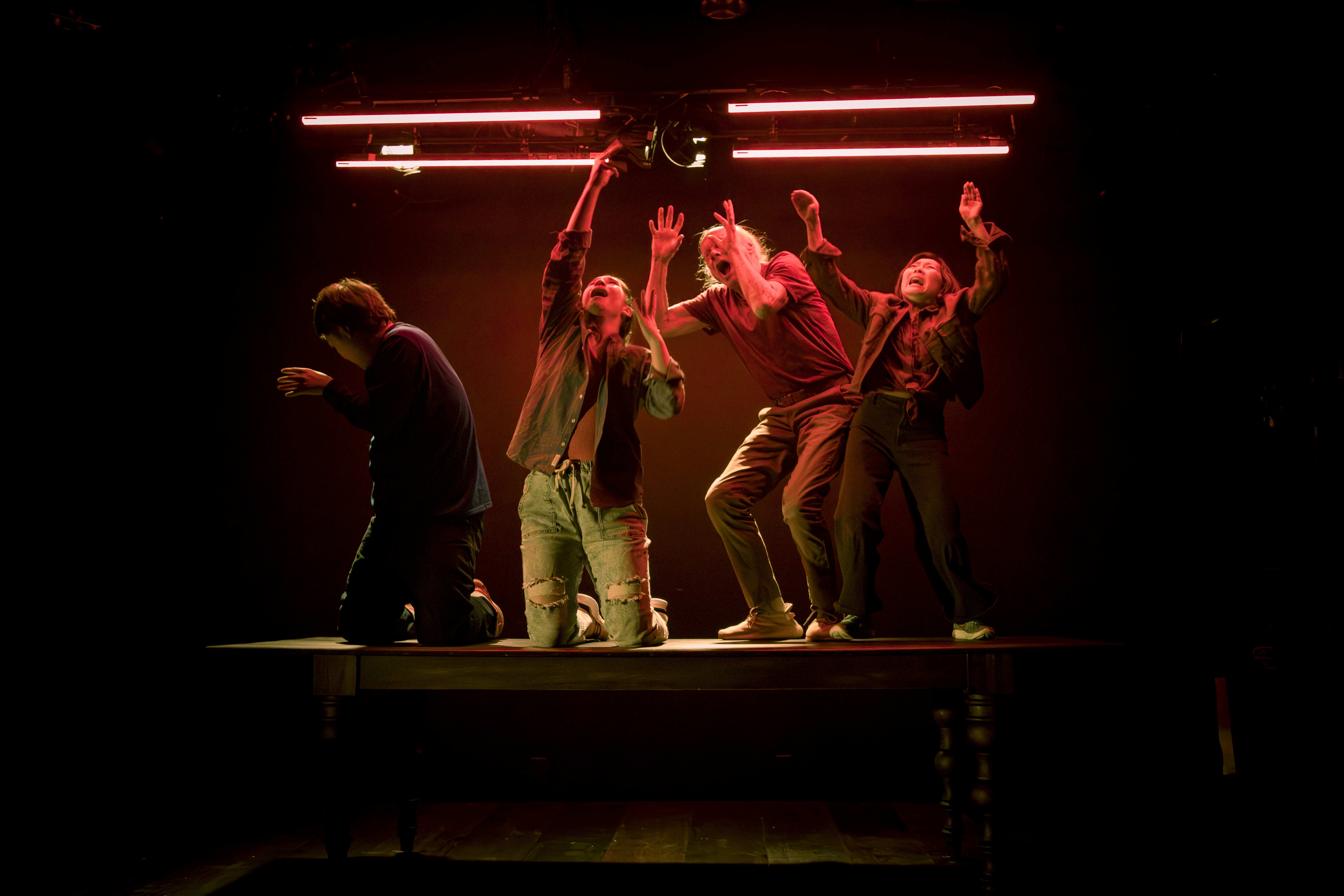
It starts out sweet and conversational, from the sidelines, offering an easy entry point into storytelling before we are invited to dive into a pool of tales using little more than a few chairs and a table. It’s quite the undertaking, this unraveling of Pu Songling: Strange Tales at Crow’s Theatre, yet this gentle, thoughtful evening is a god-sent invitation to all of us trying to survive these chaotic days, asking us to listen closely, imagine freely, and meet the world with care. Presented by Theatre Smith-Gilmour in the English-language world premiere of this adaptation, the production draws from the work of Pu Songling, the 17th-century Chinese writer whose Strange Tales from a Chinese Studio blends folklore, satire, and moral inquiry. Pu’s stories are often populated by ghosts, fox spirits, and reincarnated souls, not for shock value, but as a way of examining human weakness, compassion, and survival within rigid social systems. That spirit of curiosity and generosity weaves itself into this adaptation, even when its overarching themes remain lightly sketched rather than forcefully driven.
Adapted by Michele Smith, John Ng 伍健琪, 郝邦宇 Steven Hao, and Dean Gilmour, with Diana Tso 曹楓 and Madelaine Hodges 賀美倫 joining them in performance, the piece unfolds as a series of supernatural vignettes directed with warmth and restraint by Michelle Smith-Gilmour. The storytelling concludes with a simple knock on a table, a quiet punctuation that signals transition and transformation rather than a traditional climax. While I occasionally longed for a moment of greater impact or surprise, the choice ultimately reinforces the show’s modest, storybook tone. This is theatre that trusts suggestion over spectacle, allowing meaning to accumulate slowly rather than announcing itself loudly.
The cast finds eloquence within that simplicity. Gilmour, Ng, Tso, Hao, and Hodges each bring distinct physicality and emotional clarity to multiple characters, shifting seamlessly between humour, melancholy, and wonder. Their performances feel carefully offered rather than performed at us, rooted in clear storytelling and shared attention. There is a quality here that recalls children’s theatre, but scaled for adults, not in its ideas but in its sincerity, its playfulness, and its belief that imagination is a serious tool for understanding the world, and something we need more of these days.
The design work supports this approach with quiet effectiveness. Ting – Huan 挺歡 Christine Urquhart’s set and costumes suggest a fluid, dreamlike space without overwhelming the performers, while Noah Feaver’s lighting gently shapes mood and transition. Pu Songling: Strange Tales may not radically reshape one’s understanding of theatre or storytelling, but it offers something arguably rarer: a generous, sweet encounter that slips inside the soul without demanding anything in return. It asks us to listen, to imagine, and to consider how we navigate a strange world, simply to get by and get through.
 front mezz junkies
[…] Known for his sensitive, actor-centred work and his ability to navigate complex emotional terrain, Hao brings a measured, contemporary eye to Bartlett’s tightly coiled script. I spoke with Hao about […]
LikeLike