
Frontmezzjunkies interviews: Gus Kaikkonen on Remember This
Gus Kaikkonen approaches REMEMBER THIS: THE LESSON OF JAN KARSKI with the steady hand of an artist who understands that some stories do not need embellishment, only care, precision, and trust. His work is marked by a deep respect for language and for the audience’s intelligence, allowing the weight of history to arrive without theatrical excess. In a piece built on testimony and moral urgency, Kaikkonen’s direction creates space for listening, real listening, inviting the audience into a shared act of remembrance that feels both intimate and unavoidably present.
That sensibility finds a natural home at Sarasota Jewish Theatre, a company whose mission has long centered on storytelling that engages memory, identity, and responsibility. In bringing REMEMBER THIS to their stage, SJT continues its commitment to work that is not merely timely, but necessary; work that honors the past while insisting on its relevance now. Together, Kaikkonen and Sarasota Jewish Theatre offer a production that resists spectacle in favor of truth, asking us not only to witness Jan Karski’s story, but to reckon with what it demands of us today.
Written by Derek Goldman and Clark Young, the play is set to begin performances on February 4th, running through February 15th.
FMJ: REMEMBER THIS: THE LESSON OF JAN KARSKI lives at the intersection of history, testimony, and theater. As a director, how do you balance fidelity to historical truth with the need to create a living, immediate experience for a contemporary audience?
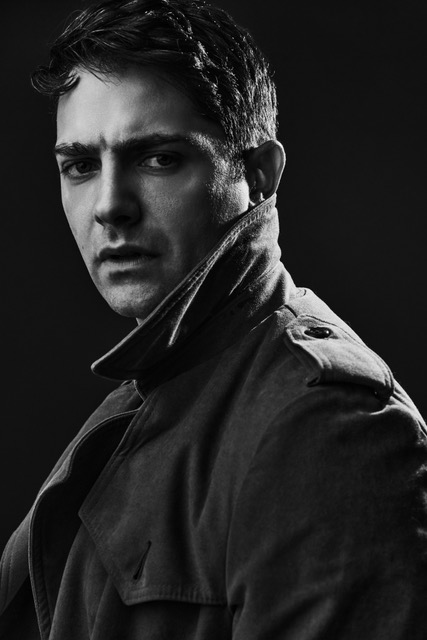
Gus Kaikkonen: Karski says of the Holocaust, “I saw it, and it was true.” What fascinates me about the theater, and has all of my life, is that we in the audience see something happen in front of our eyes. A minimum of technology separates us from the performer. The simple ancient format, together with a gifted actor, has the power to suspend disbelief. Our minds put us in the middle of the events on the stage. Time ceases to exist. The experience is visceral and stays with us long after we leave our seats. Mssrs. Young and Goldman have constructed REMEMBER THIS with great fidelity to Jan Karski’s words and the events of his life, and Michael Raver brings it to virtual life.
FMJ: Jan Karski is a witness who was not believed in his own time. How did that tragic irony shape your directorial approach, particularly in moments where the play confronts silence, denial, or indifference?
GK: The disbelief–or refusal to believe the horrors of the Holocaust in Poland is the point. Powerful and distinguished people were informed of the truth and found it unbelievable. As Karski says, “If they did not know it was because they did not want to know.” The truth can sometimes be too horrible to be believed.
FMJ: The piece asks the audience not just to remember, but to respond. How do you think about the director’s responsibility when staging work that carries a moral imperative, especially in today’s political and cultural climate?
GK: Well, happily for all of us involved in REMEMBER THIS, the production of the play allows us to believe–at least we’re doing this. The question, “What can we do?” is the major question of the play.
FMJ: This play is often described as both spare and emotionally overwhelming. What role did restraint play in your staging, and how do you decide when less becomes more powerful than overt theatricality?

GK: An excellent question. The usual test for me is “recognizable human behavior“. If the audience does not recognize the behavior of the character on stage, they are off the emotional hook. But if they say to themselves–that’s exactly what my brother-in-law would do in that situation, they will be engaged and forced to care–no matter what they think of their brother-in-law.
FMJ: REMEMBER THIS resists easy catharsis. Was that something you leaned into intentionally, and what do you hope audiences sit with after the final moments rather than resolve?
GK: Catharsis is not easily achieved. Well, I guess, pop music can occasionally provide relief and a release of repressed emotion. But catharsis is what I look for when I go to the theater. I want to be smarter and more human when I leave. I want to understand myself and my brother-in-law a little better than I did when the play began. I think REMEMBER THIS provides that opportunity in a major way.
FMJ: How did bringing REMEMBER THIS to Sarasota Jewish Theatre influence your interpretation of the work, and what conversations do you hope it sparks beyond the walls of the theater?
GK: I’d like to celebrate Sarasota Jewish Theatre for having the guts to do this piece, just as it is written. It’s a brilliant play, brings to life a time in our history that many have tried to ignore or deny, and shines a very bright light on today as well.
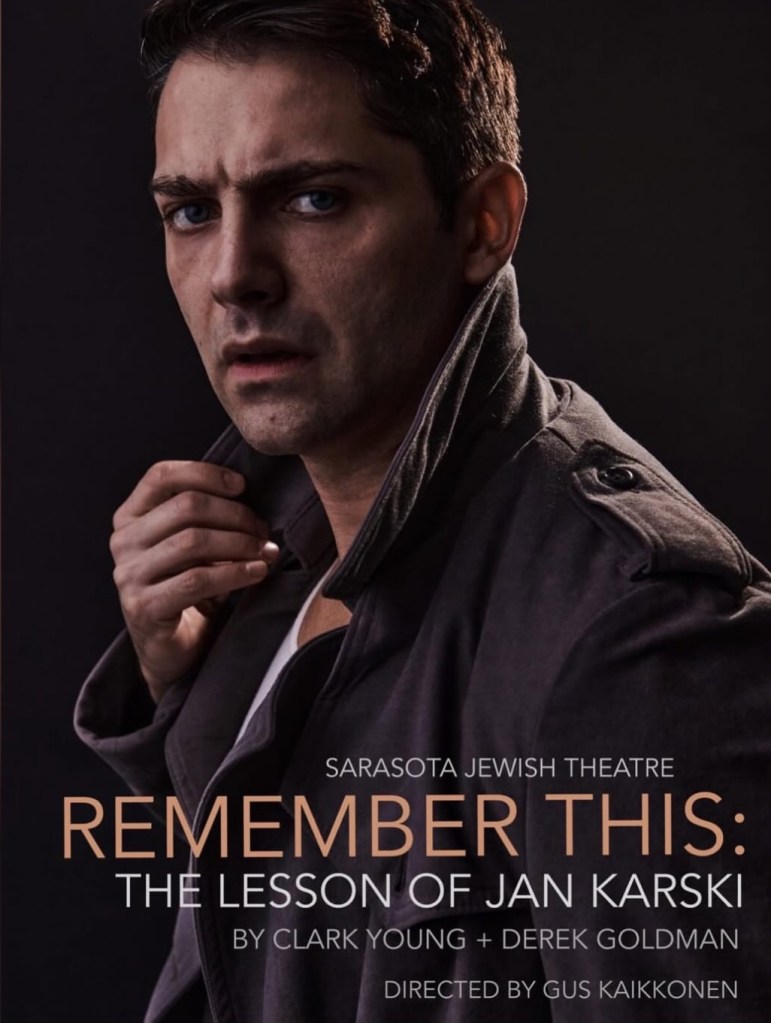
For tickets to REMEMBER THIS: THE LESSON OF JAN KARSKI, visit www.sarasotajewishtheatre.com
 front mezz junkies