An Izzy Ontario Theatre Review: Grand Theatre’s Piaf/Dietrich
By Izzy Siebert
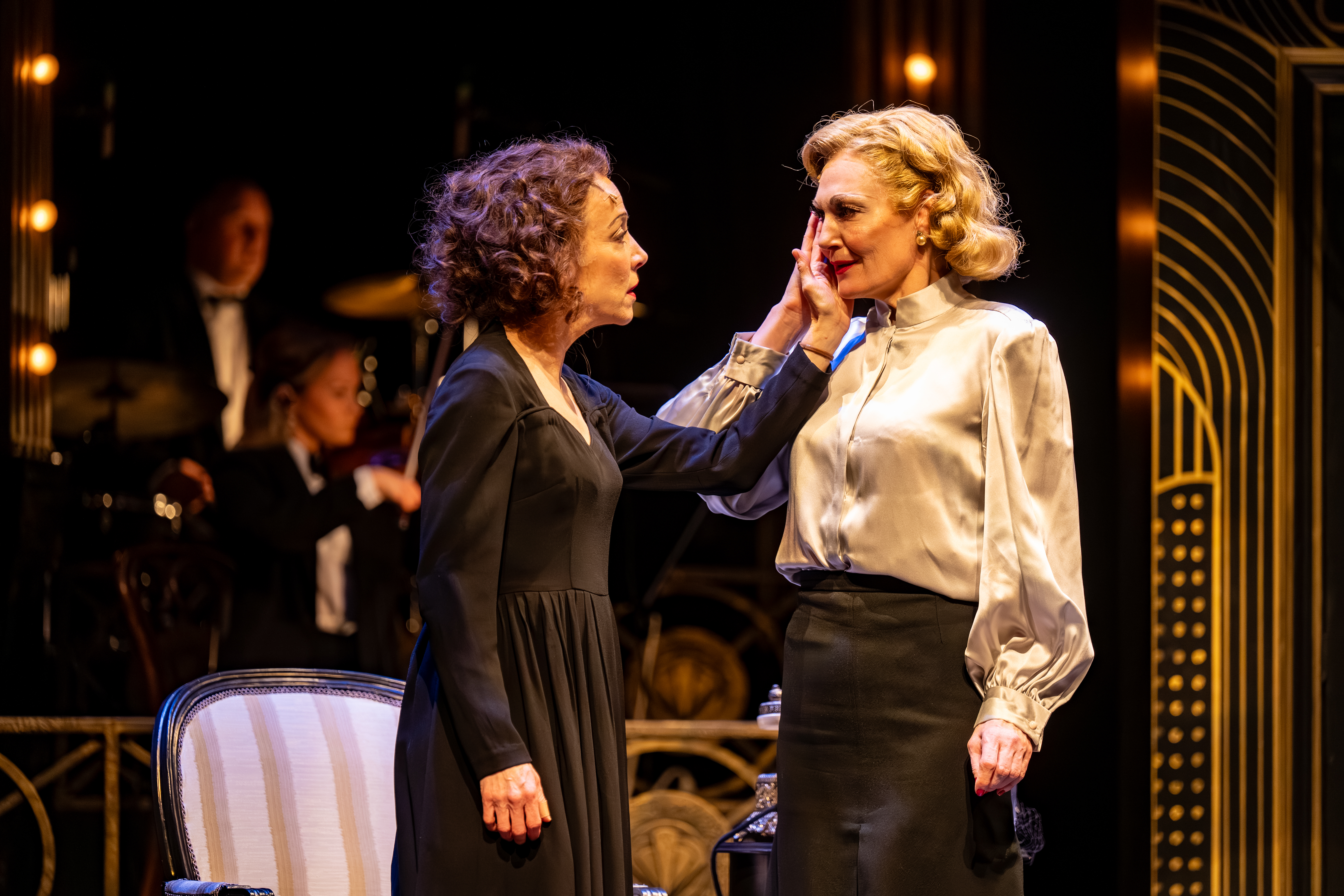
At first, the red velvet curtains strung across the Grand Theatre’s stage seem lush and impenetrable. Lit from behind, they turn translucent, offering a glimpse of the glittering world beyond. It’s a fitting image for a production that shines a spotlight on the towering stage presences and hidden pains of two legends: Édith Piaf and Marlene Dietrich.
Directed by the Grand Theatre’s artistic director, Rachel Peake, Piaf/Dietrich traces the real-life friendship between the French singer and German film icon, each a generational talent in her own right. The bio-play follows their intimate and tumultuous relationship as it unfolds on and off stages around the world in the mid-20th century, particularly as the icons seek to translate their successful careers to an American audience.
The concept of translation preoccupies not only the artists but also myself as an audience member. Described as a musical drama, Piaf/Dietrich weaves more than 20 musical performances into its storytelling, many sung in Piaf’s native French. Although I felt the limits of my own language barrier, this production demonstrates what its stars insist upon: that art allows emotion to transcend language.
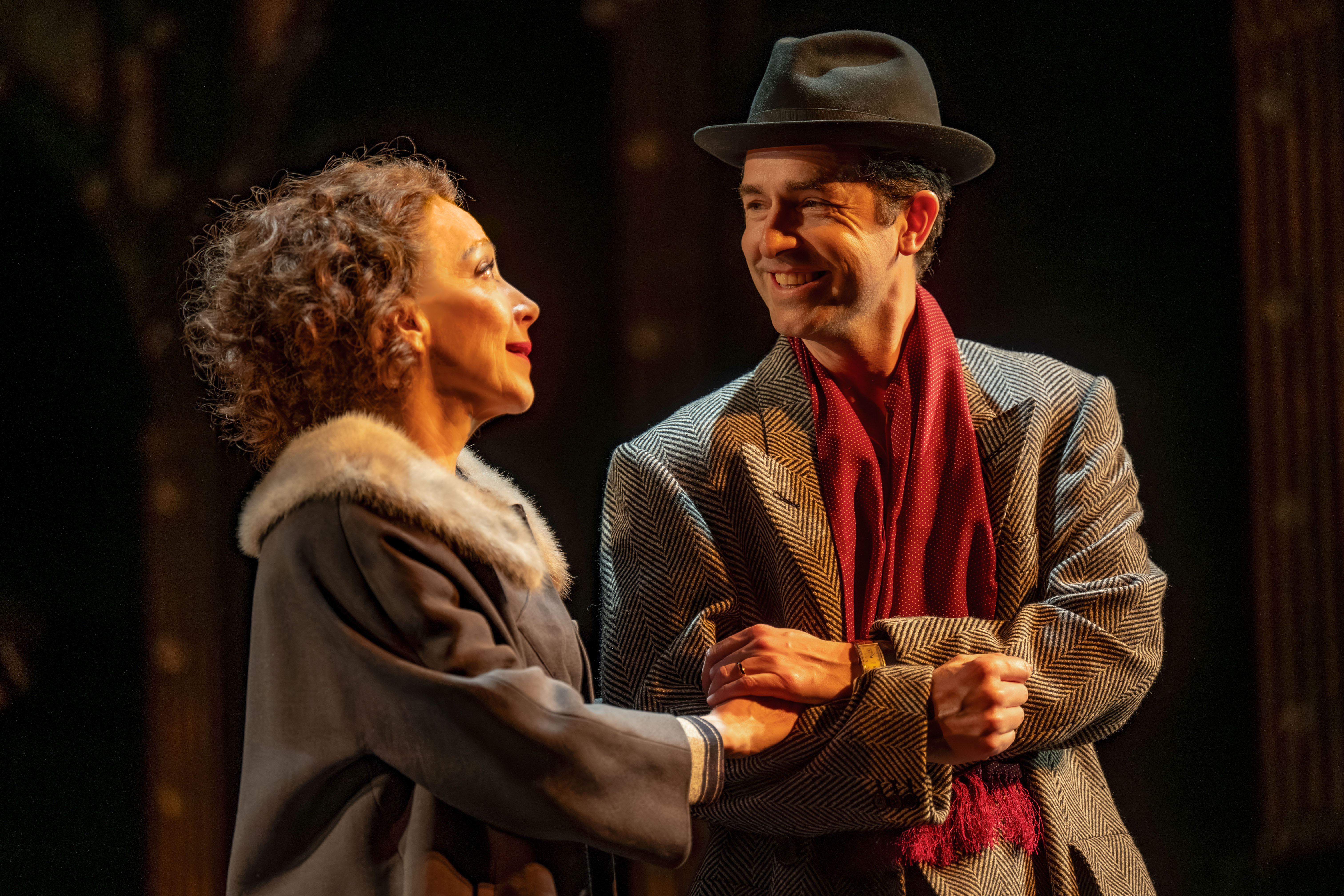
Deborah Hay and Terra C. MacLeod’s powerhouse performances are proof of this. From her opening rendition of “La Vie En Rose,” Hay (Stratford’s London Assurance) channels Piaf’s extraordinary ability to lay emotion bare. Even amid the pain of loss and substance abuse, Piaf’s passion shines through her performance. Hay strikingly embodies the tension between the woman’s emotionally expansive vocals and the tightly coiled restraint of her body.
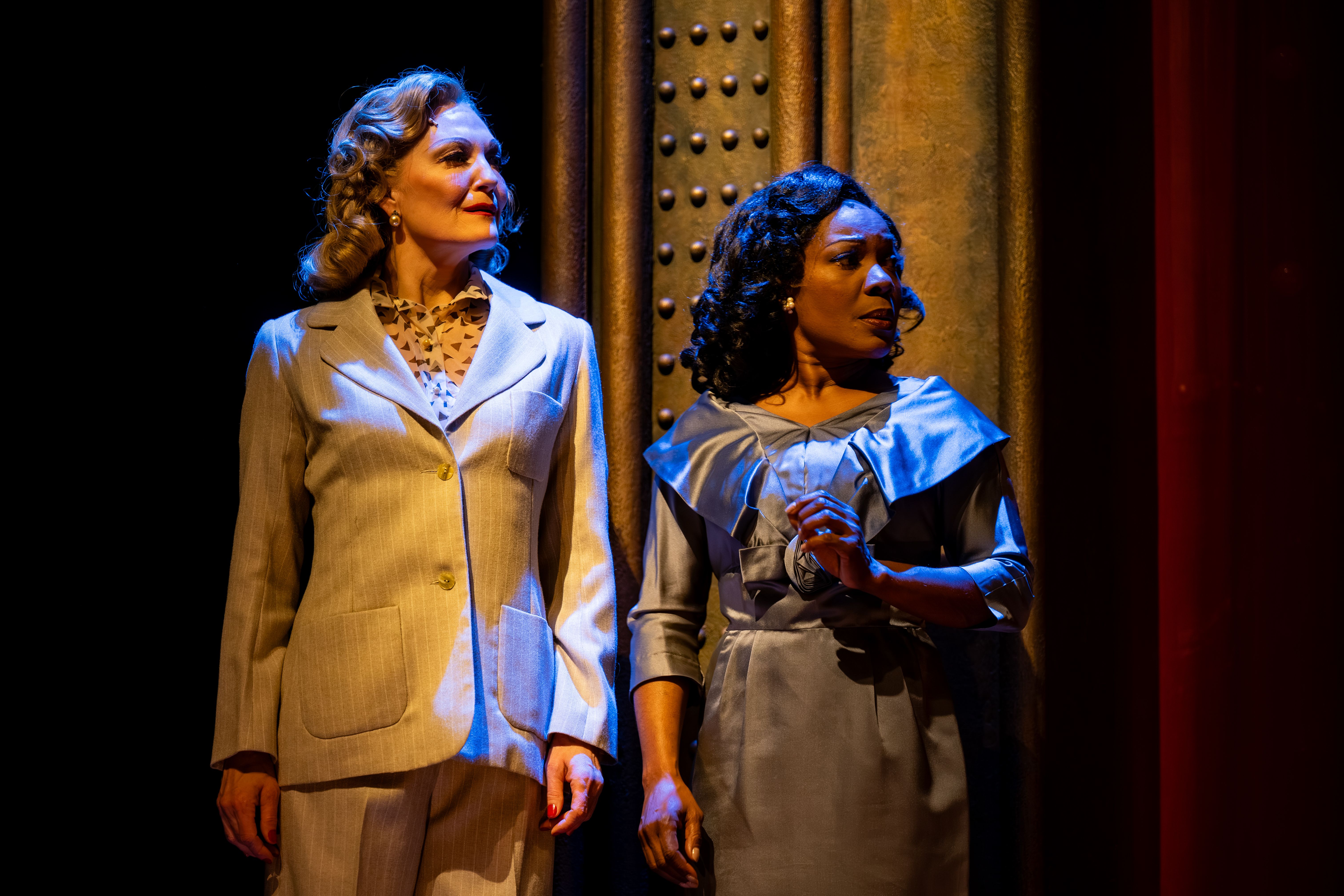
Piaf’s early wide-eyed naivety contrasts wonderfully with Dietrich, who commands every room as if it were a stage. Wrapped in the sparkles, furs, and well-tailored elegance of Ming Wong’s costume designs, Dietrich radiates glamour, yet MacLeod (Goodspeed’s Cabaret) deftly teases out the complex layers beneath this image. We see the cool confidence of the femme fatale, the precision of a capable performer, and a more private woman navigating complex relationships with those around her and with her own public image.
Although Piaf and Dietrich represent this production’s emotional core, the world built around them is equally mesmerizing. Supporting actors Karen Burthwright (Broadway’s Paradise Square) and Eric Craig (Eclipse’s Sunday in the Park with George) fill many roles, whisking mic stands into place, announcing performances, and standing in for lovers. Lorenzo Savoini‘s stunning set surrounds the stage with tall arches and art deco details, warm bulbs lighting it all like a dressing room mirror. The onstage four-piece band, including Mary Ancheta, Erik Larson, Céline Murray, and Dave Robilliard, sounds wonderful, and their visibility foregrounds the artistry of live performance.
The spell extends beyond the stage. The Grand Theatre, a historic building seating just over 800, evokes the intimate music halls Piaf and Dietrich once toured. The audience becomes part of the world of the play, sitting in for the crowds that they perform for. Often, our applause feels diegetic as the singers bow after their final notes fly.
The show’s journey to a Canadian stage mirrors its themes of artistic translation. Originally a German play, Spatz und Engel (“The Angel and the Sparrow”), Piaf/Dietrich was adapted by Canadian playwright Erin Shields (Ransacking Troy) from a translation by Sam Madwar. The script’s globe-crossing journey echoes the tension Piaf and Dietrich face in making themselves legible to an American audience.
While Dietrich finds power in adapting to Hollywood, Piaf resists pressure to sing in English. Translating her lyrics for the sake of Piaf/Dietrich’s audience would be a disservice when this conflict is central. Instead, the Grand’s program insert offers English summaries of nine of Piaf’s songs. As someone who hasn’t studied French since high school, I appreciated this addition. However, I found it difficult to absorb translations for so many emotionally rich songs while the houselights were on, and harder still to retain them once the dazzling show resumed.
With no other choice, I surrendered to the music. When I couldn’t understand, I simply had to feel, adopting an idea repeated throughout the show. It is a testament to Hay’s expressive delivery and mesmerizing physicality that this surrender feels natural. Even without fully grasping the lyrics, Piaf’s heartbreak in “Mon Dieu” and her defiance in “Non, Je Ne Regrette Rien” undeniably moved me.
Fluent audiences will undoubtedly walk away with a richer understanding of Piaf/Dietrich than I could, yet I remained captivated by the complex women at its core. Even when the lyrics don’t translate, the emotions certainly do, and this theme soars like Piaf’s powerful vocals above all else.
 front mezz junkies