The Toronto Theatre Review: The Neighbours at Tarragon Theatre
By Ross
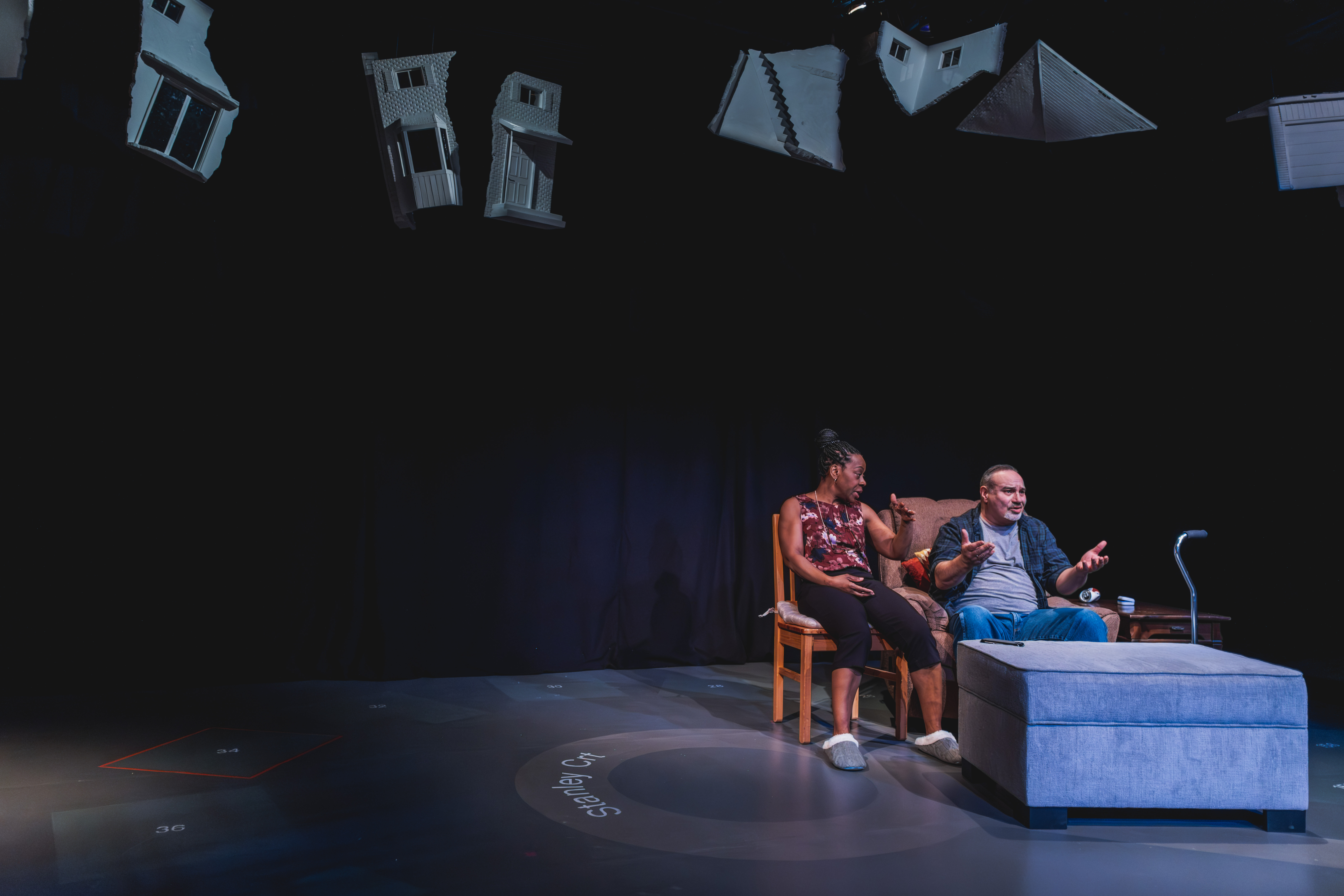
He slides into his La-Z-Boy as if it were an extension of his own body, yawning and rubbing his stomach as he dozes beneath the fragments of his neighbour’s homes hung with care up above. It is a stark, captivating visual, domestic comfort and self-assurance fractured and suspended above his head. The folksy, gently insistent music draws us into their space with the ease of the moment before we quite understand its weight. We know this type of man, we think, in all the solid ways we can know a neighbour as his wife enters with warmth, announcing happily that “Sophie has landed.” And in that stretch of time between the plane touching down and her knock at the door, Nicolas Billon’s play finds its beating, complicated heart in their engaging demeanour. We hear hints of what is coming. “What that monster did.” “You thought it was a murder.” Yet, what unfolds inside this deeply intoxicating new play, The Neighbours, is not a simple unwrapping of a crime story, nor merely an emotional reexamination of it, but a darker excavation of humanity and humility on a neighbourhood scale.
Presented by Green Light Arts in association with Tarragon Theatre, the script by Billon (The Elephant Song) is enthralling in the way it dissects observation itself. Simon and Denise Armstrong, played with razor-sharp precision by Tony Nappo (Soulpepper’s Jesus Hopped the ‘A’ Train) and Ordena Stephens-Thompson (Soulpepper/Obsidian’s Three Sisters), recount the horror that unfolded in their neighbourhood one morning, while simultaneously narrating their own reactions to it. They unpack the past and the present with an energy that is captivating, slipping sharply between storytelling and self-justification with unnerving fluidity. They have a camaraderie that is deliberate and connecting, even as he constantly interrupts with asides that border on racist and stereotypical judgment, a stance that is surely going to reveal itself soon enough.
Directed with force by Matt White (Page1’s There Are No Gays), the two sometimes get carried away with their own superficial sense of self, hemming themselves inside the accusatory gaze of a world suddenly fixated on their quiet community of Stanley Court. The writing is sly in its structure. It meanders at times, as a couple often does in their storytelling, offering details that initially feel incidental, even indulgent. Not every narrative thread screws itself into place as tightly as it could. But those digressions are rarely empty. They mirror the way real people circle around trauma, testing the edges before daring to look directly at it. And when the pieces are finally seen in the light of day, a hush falls over their home, and we can’t help but lean even more into their accusatory eyes.
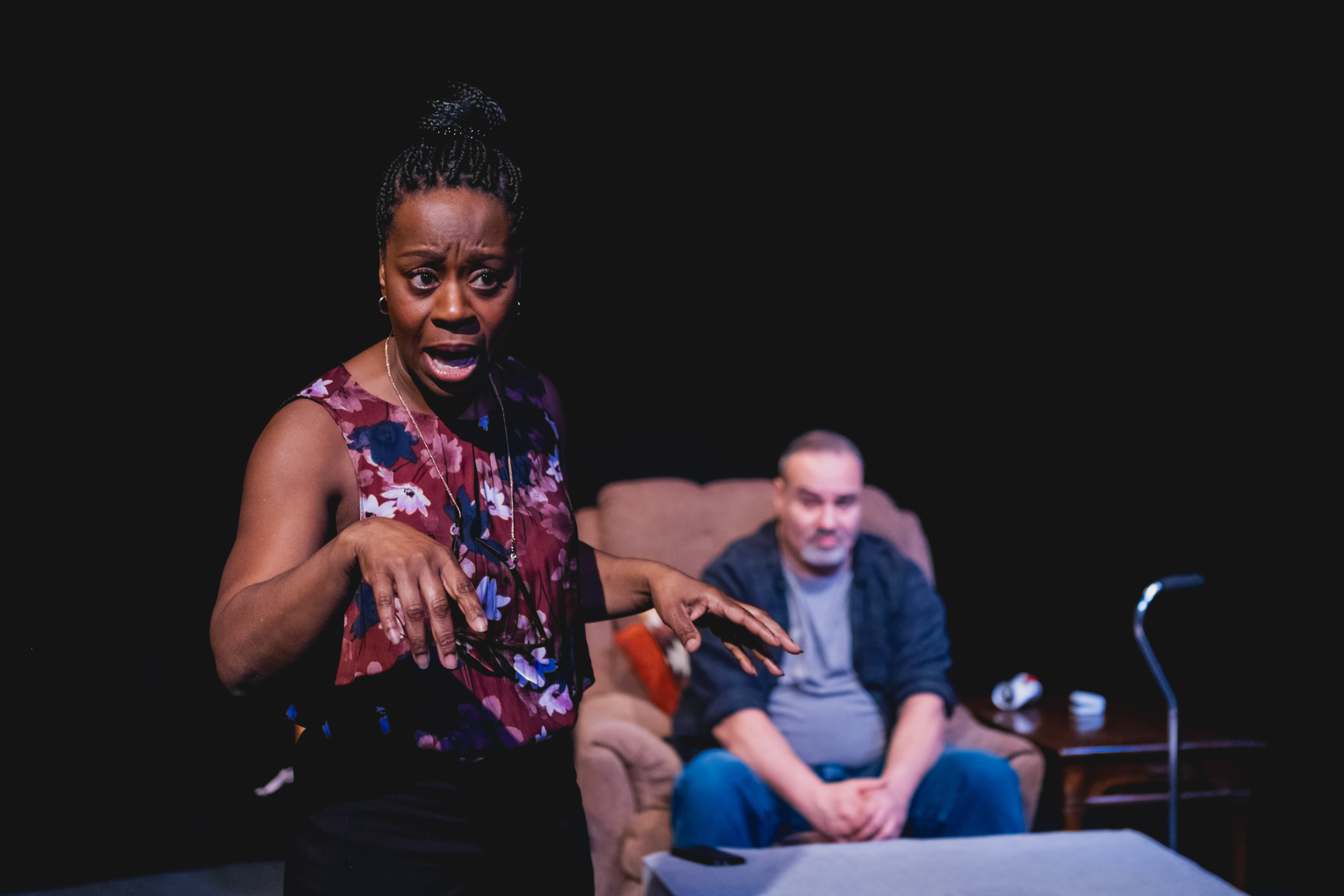
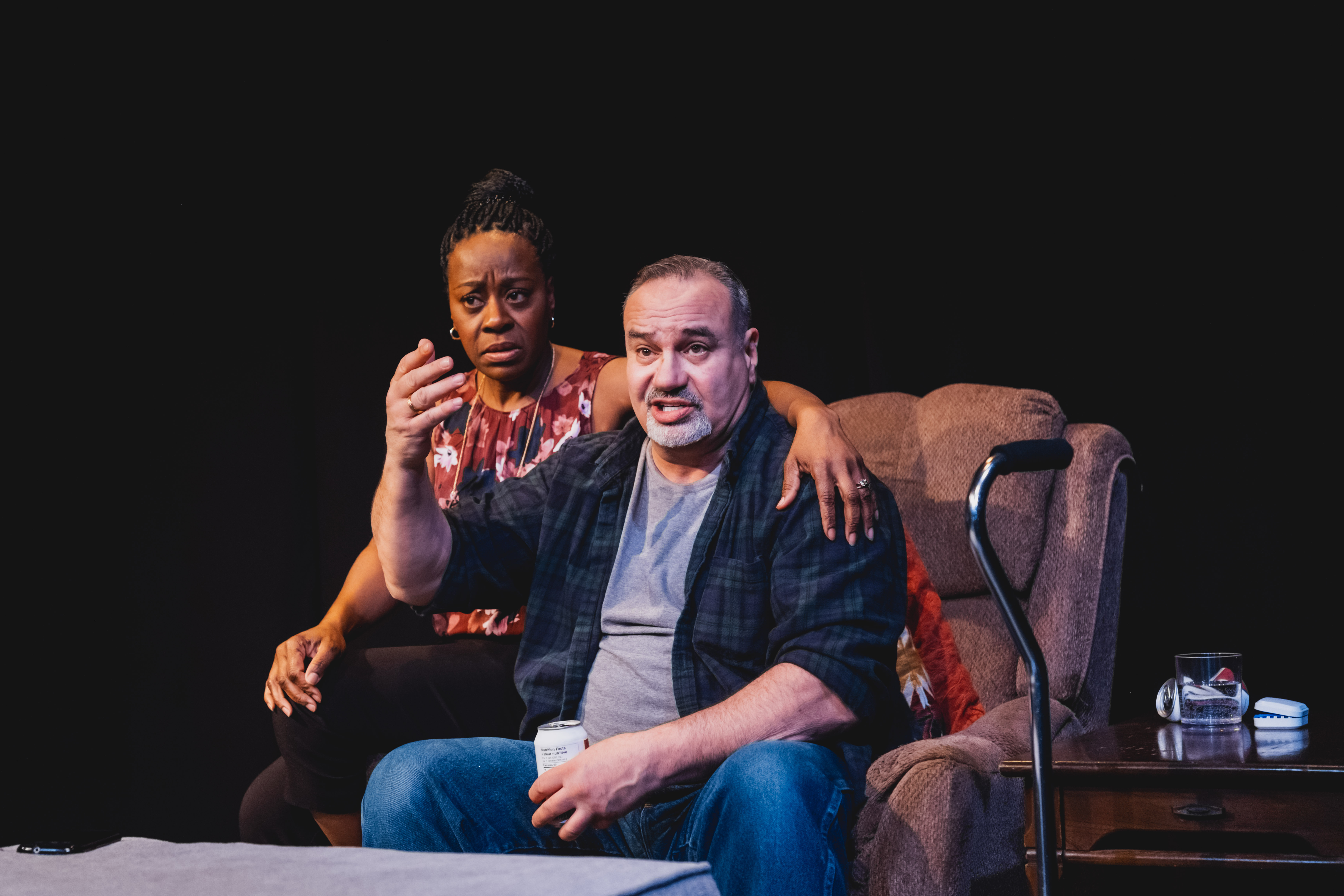
Nappo and Stephens-Thompson are the production’s great anchors, securing those bars into the walls with precision. Their marital dynamic feels effortless, the shorthand of a couple who have learned to finish each other’s sentences while occasionally weaponizing them or flat-out ignoring them. Nappo’s Simon carries a performative charm that slowly reveals insecurity and fallibility beneath it, while Stephens-Thompson’s Denise balances empathic warmth with flashes of steely resolve, a needed defence for survival in this complex companionship. Together, they create a rhythm that keeps the audience locked in, even when the narrative wanders.
Their chemistry is so lived-in that it becomes unsettling to watch as cracks start to form under the pressure of public scrutiny and private doubt. As we begin to notice Denise’s dawning realization, a shift occurs at the axis of their marriage, and the quiet domestic rhythm fractures to the sound of a saucer shockingly slipping from the silent neighbour’s hand and crashing to the floor. We had almost forgotten about the man sitting nearby. He has been so still, but that rupture electrifies the space as we watch him clean up his clumsiness. It is a small, metaphoric but jolting rupture, a sound that lands like tight judgment in a room that has been so carefully narrating itself.
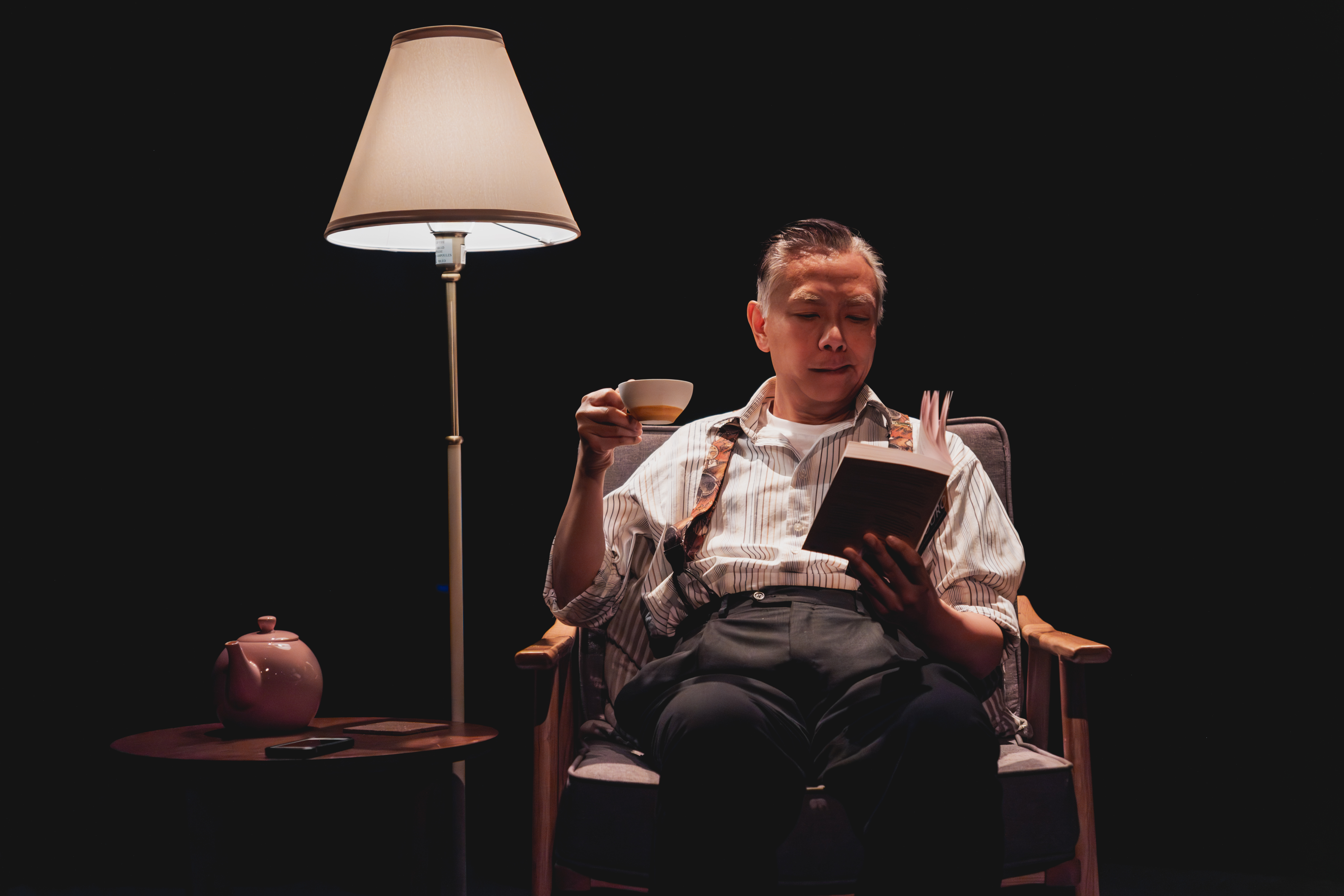
The production design reinforces that tension beautifully. The split domestic space, the suspended fragments of a pristine suburban dream, designed creatively with intent by Kelly Wolf (Tarragon’s Waiting Room), and the cool fading wash of lighting by Paul Cegys (Green Light Arts’ Will You Be My Friend) combine to create something that feels part living room, part true-crime reconstruction. Yet as the play unfolds, we can’t help but continually glance over towards the silent presence of a neighbour, embodied by Richard Tse (Tapestry Music’s Iron Road), seated to the side for much of the play, much like his character in that domestic hood. His silent presence, patiently reading a telling classic novel with studied calm, adds another layer of unease, or is it curiosity? There is a quiet question mark hovering over his tea-drinking frame. What is his role in all this? Is he more active than his energy is giving off? Or is he the world view, redirecting its interest back to something else?
The questions begin to pile up, sharpening the play’s larger inquiry into complicity and authority. What do we choose to see, and what do we deliberately overlook, for the sake of our own comfort? It is easy to imagine we would have righteously hidden people in our attics back then. It is harder to confront the ways we secure the screws without asking what they are holding in place. We have judged others for their historic silence in the face of persecution. Yet what about our own inaction? The Neighbours forces us to consider how we respond when vulnerable communities are targeted in our own time, in plain sight. And it’s hard not to feel the bars closing in on our own self-made cage.
If The Neighbours occasionally circles its destination a beat longer than necessary, it does so in pursuit of something richer than shock value. Yet its final turn, particularly the way it draws the silent observer fully into the action, lands with a curious lightness. The gesture adds ambiguity, even a lingering question mark, but it stops just short of the devastating inevitability the material seems to promise. As Simon reels from the recalibration of his marriage and their daughter’s long-anticipated knock finally arrives at the door, the play chooses suggestion over seismic impact. This is not a play interested in sensationalizing horror. It is interested in the stories told beside it, around it, and sometimes in spite of it. By the final moments, what lingers is not the monstrous act that occurred under the watchful eyes of the Stanley Court neighbours, but the fragile moral framework of the homes that surround it. In that quiet, uncomfortable, fracturing space, perhaps intentionally unresolved, The Neighbours turns its gaze back on us and the world.
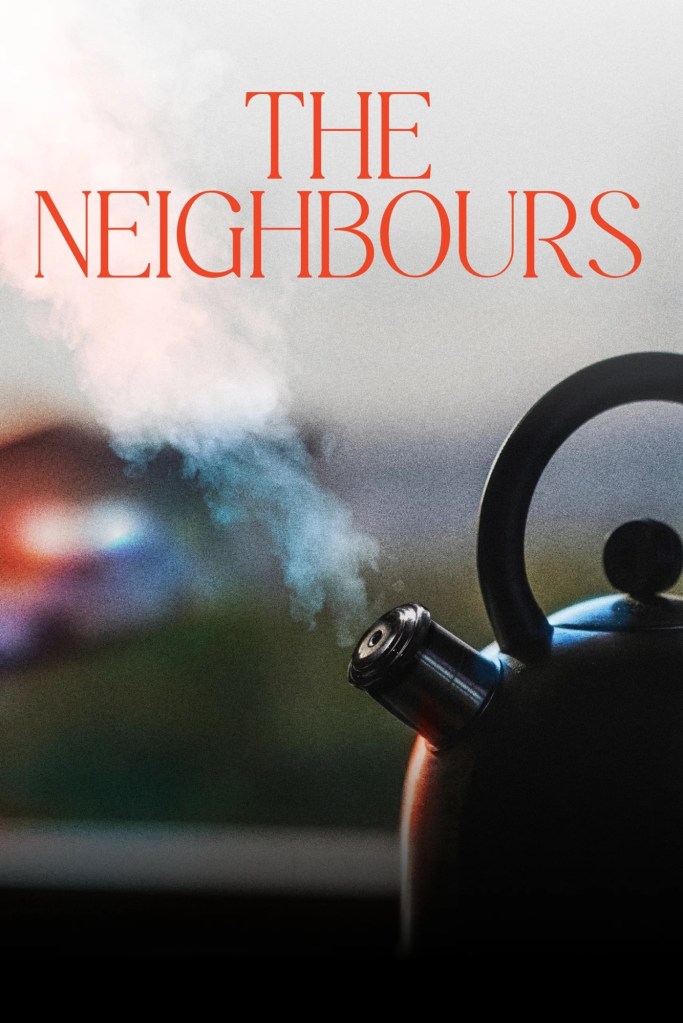
The Neighbours, a Green Light Arts production in association with Tarragon Theatre
Tarragon Theatre, Toronto – Now through March 15. For more information and tickets, click here.
 front mezz junkies