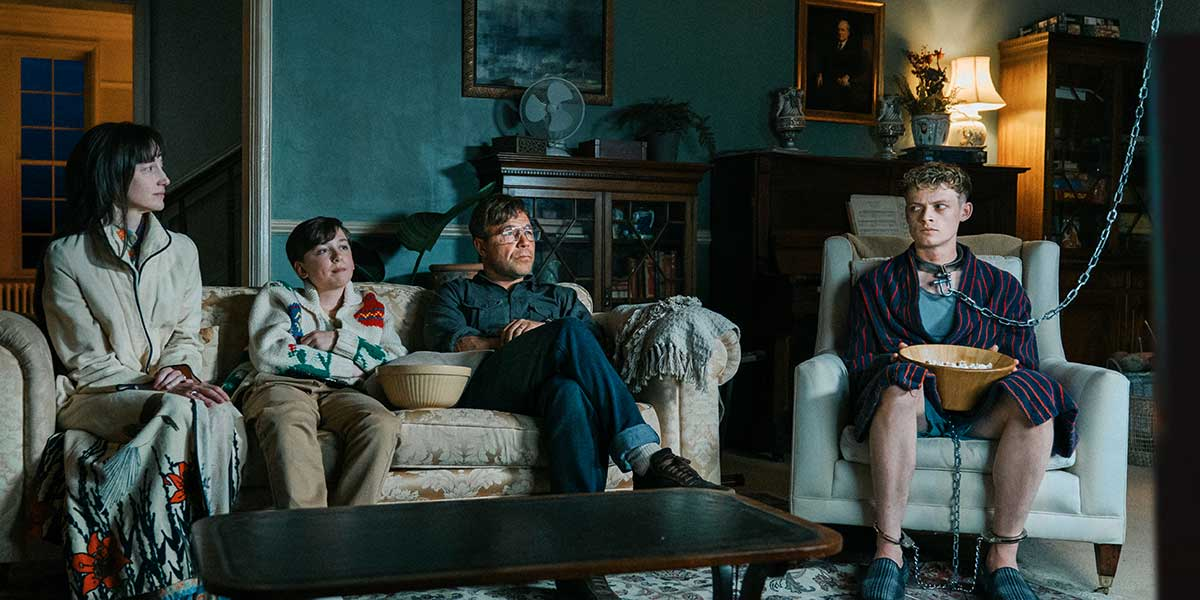
A Frontmezzjunkies Film Review: “Heel” (formerly “Good Boy“)
By Ross
Sometimes the best festival discoveries are the ones you walk into almost on a whim. That’s exactly how I encountered “Good Boy,” director Jan Komasa’s darkly twisted thriller during its world premiere at the Toronto International Film Festival last fall. The film, now opening in theatres under the title “Heel,” left a lasting impression: unsettling, wickedly funny, and surprisingly emotional. With the movie finally reaching wider audiences, it feels like the perfect time to revisit the review I wrote after that TIFF screening.
Originally published during TIFF 2025: Komasa’s “Good Boy” at TIFF: A Darkly Twisted Tale of Capture and Catharsis
The Tiff Film Review: Jan Komasa’s “Good Boy“
WORLD PREMIERE – Poland, United Kingdom | 2025 | 110m | English
By Ross
Surprisingly emotional and engaging, “Good Boy, “ seen during its world premiere at the Toronto International Film Festival, is defiant and twisted, in all the best ways. The film sneaks up on you, starting from a place of wild abandonment, as we watch our complicated and combustible hero, Tommy, played powerfully, wickedly smart by Anson Boon (Blackbird), smash into the night streets like a bomb with a loose fuse, carrying an arrogant swagger that’s both intoxicating and dangerously explosive.
He’s trouble with a capital T, a messed-up party boy who doesn’t care about anyone else’s safety or their security. He’s a walking red flag, debauched king of the road, a fuckin’ madman drowning himself in alcohol and drugs and acting out on his anger at the world. He pushes everyone away, even the girlfriend who cares about him perhaps more than she should. And once he’s had his fill, both buddies and the women who find his confidence compelling, he’s off to drink and dance some more. And all of this transpires within the first racing, raging moments of this spectacularly fascinating film, directed with a clear intent by Academy Award–nominated Jan Komasa (“The Hater“; “Corpus Christi“).
Then we see the aloneness of this sort of character, stumbling down the street without a posse of friends to hold him up. He’s pushed them all away over the course of this one particular night, to the point of them not caring any longer. But this night is going to end in a way he could never have imagined, as we anxiously watch him go down in the headlights of a car that has been watching him. For how long? That is unclear, but when his and the car’s lights go out, the twist of “Good Boy” has begun, and young Tommy is at the center of it, out of his league and locked up for his own good.
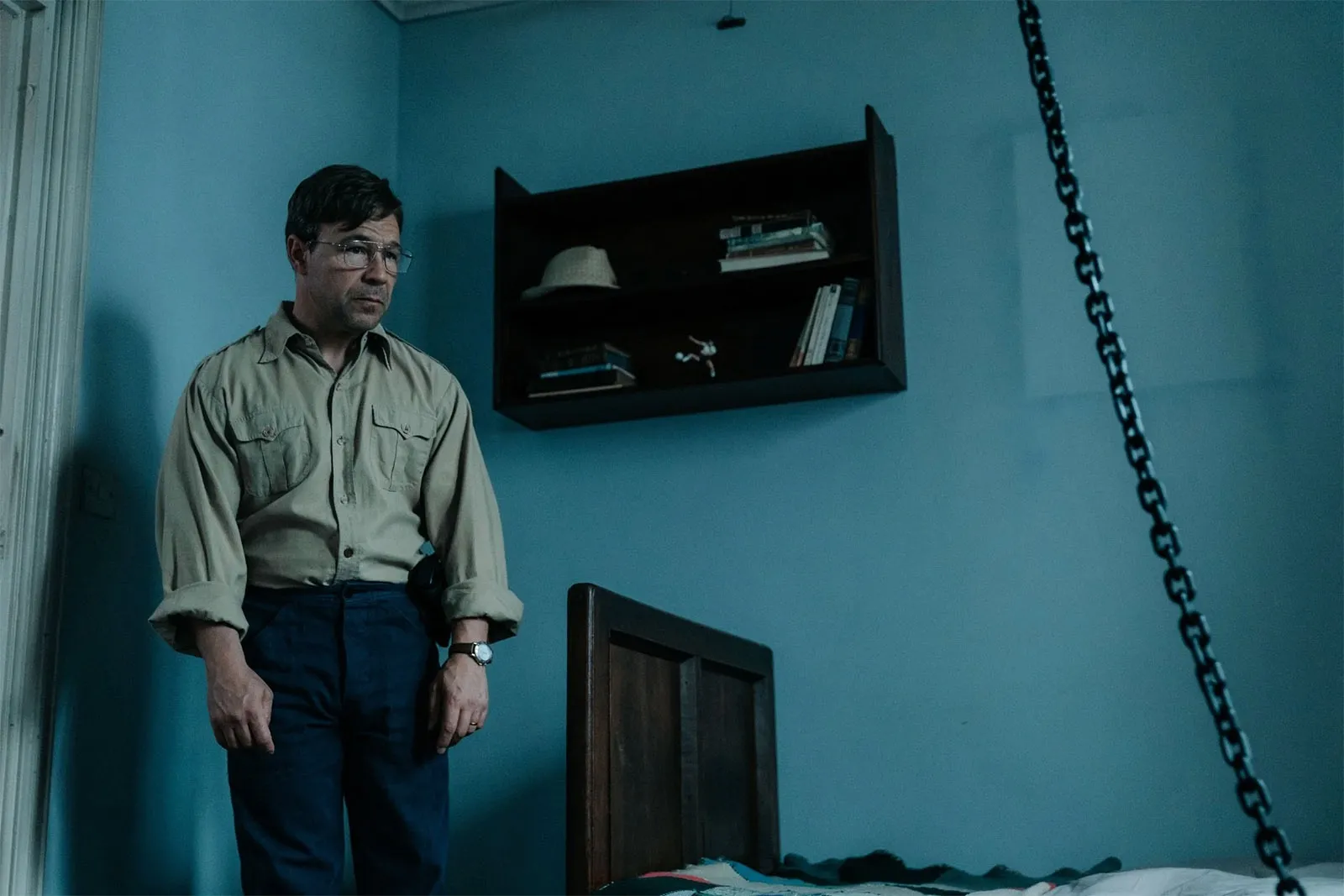
Scripted by Bartek Bartosik and Naqqash Khalid (“In Camera“), “Good Boy” morphs into a grim fairy tale of unknown origins, for what waits for Tommy when he opens his eyes after that night is a vision that shocks us and horrifies the young man who previously thought of himself as invincible, reckless, but always in charge. He wakes to find a chain locked around his neck in the basement of an isolated home, and the well-to-do patriarch standing before him, greeting him with a smile that at first makes us shiver, but soon we find our attitude shifting.
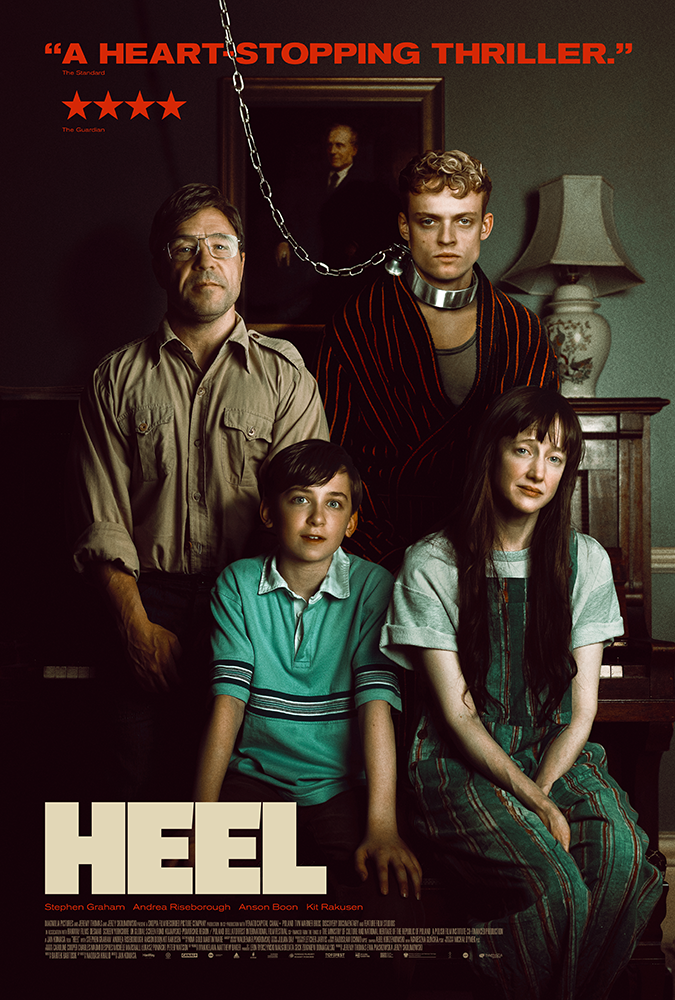
It’s an utterly fascinating ride, this forced rehabilitation process of Tommy-boy, electrifyingly inflicted by the dysfunctionally complex couple who own the house in which he finds himself imprisoned. Stephen Graham (“Tinker Tailor Soldier Spy“) brings chilling precision to Chris, the self-appointed trainer and father figure; Andrea Riseborough (“Happy-Go-Lucky“) is unsettlingly catatonic as Kathryn, his wife; and Kit Rakusen (“Belfast“) is their eager son, Jonathan, who gives the house its strangest warmth.
Deviously well constructed, the film digs its solid heels into the twisted reasoning behind the kidnapping of this young man off the streets. Chris stands before Tommy, surprisingly sheepish, explaining his strong desire to do what they couldn’t or didn’t do before: to teach, prod, and turn him into a ‘good boy’ regardless of how he, at first, rejects them all. It’s an attempt to right a long-ago wrong, and that twisted despair plays across the family’s face in ways that torture their souls and haunt the film’s emotional framing.
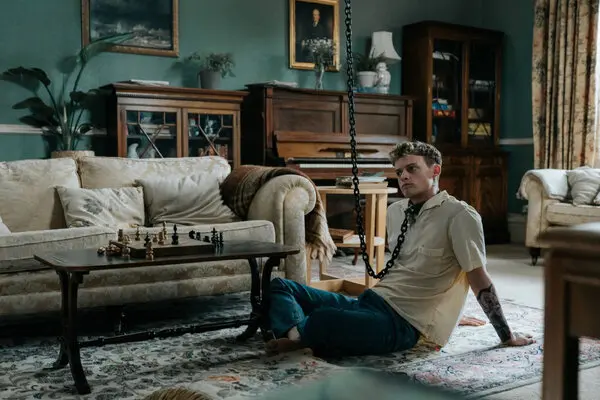
It’s shocking how quickly our perspective shifts from looking at Tommy from the outside to really connecting with his inner conflict. And it’s in that turnaround, both within our stance and Tommy’s, where we discover just how good “Good Boy” truly is. It’s one of the most twisted of dark thrillers that leans on a tight, original construct, and then runs with it in directions that are both fascinating, absorbing, and hilarious. With superb tracking cinematography by Michal Dymek (“The Girl with the Needle“), who gives the film its slick, surreal texture, making the basement feel like a theatrical stage for psychological warfare, this unwrapping digs into identity, historical trauma, anger, hurt, and pain, all locked up inside the battle over identity, freedom, and the idea of independence.
The film takes us on a journey down a track that is intense and unforgettable, leading us to places we didn’t know existed until now. “Do you trust me?” he asks, and we do, as Komasa frames this act of inner resolution so solidly, delivering confinement and redemption all at once. In the end, “Good Boy” surprises, driving us far down the road, from and back to its opening conflict and concern, becoming both an electrifying genre piece and a cracked reflection on identity, trauma, and the price of transformation. I walked in on a whim and walked out shaken, amused, and oddly moved — a little like young Tommy himself.
 front mezz junkies