The Toronto Theatre Review: ARC’s thrilling production pulls the rug out from under its audience with precision and purpose
By Ross
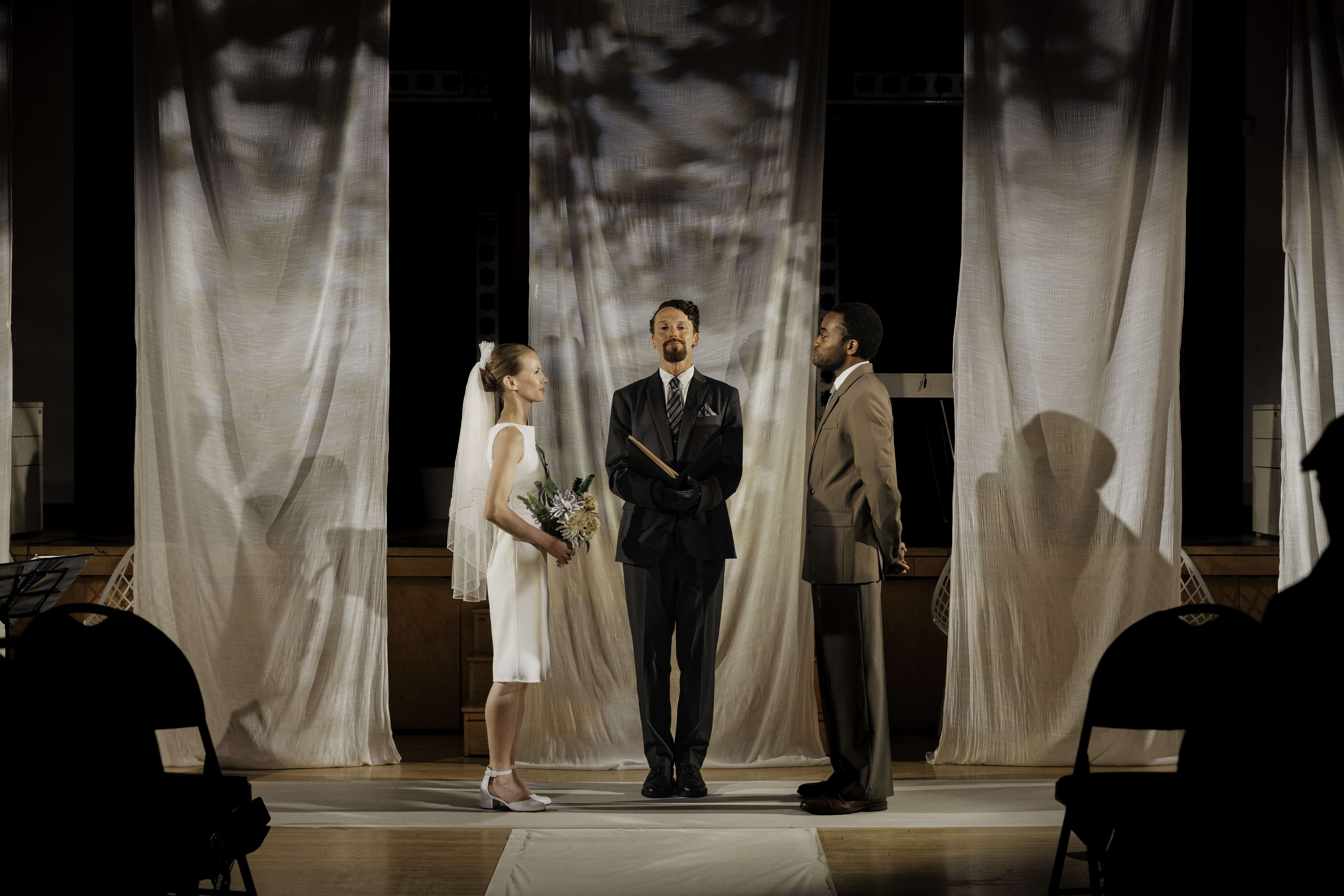
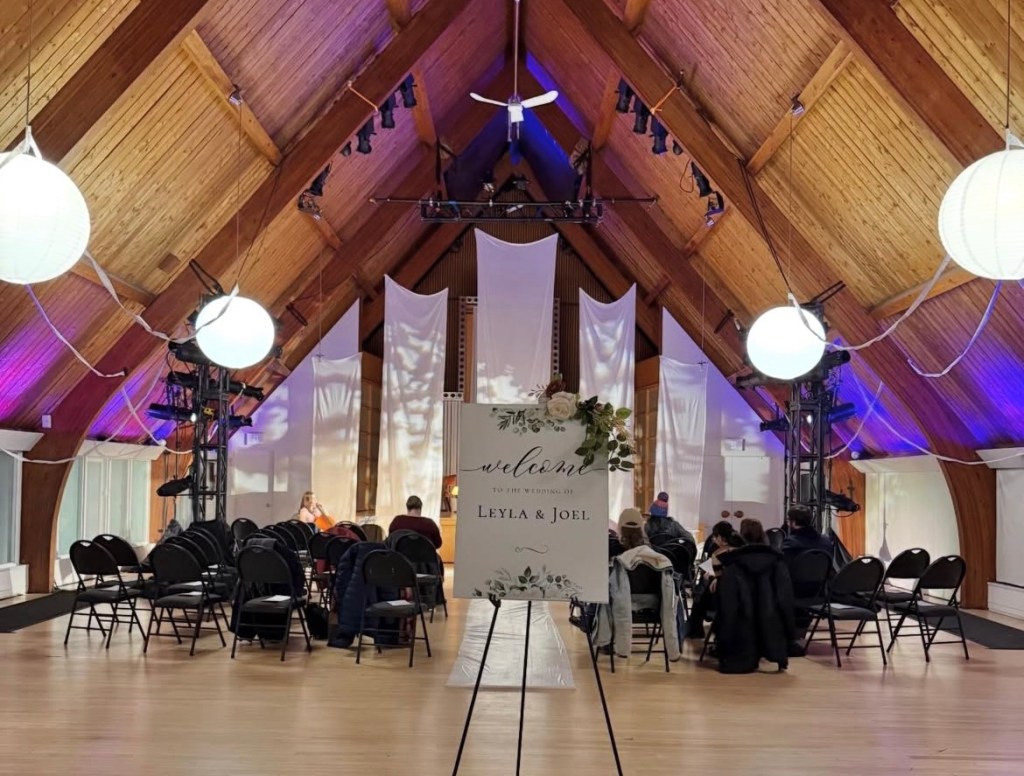
We have been cordially invited to a wedding, and a soft hum of sweet expectation fills the room like Golden notes in the air. We file in, past a familiar sign welcoming us to the union of Leyla and Joel. It all feels pretty right and good. We take our seats with the easy curiosity of guests waiting to witness something intimate and celebratory, unsure what this play will teach us about the couple or about ourselves. Gentle music, played with elegant control by cellist Rita Dottor (Mirvish’s Bright Star), sets a gentle tone as the room and the guests settle, wrapping itself around the room with quiet assurance. Three men stand at the front, anxiously shifting their weight as they wait for the ceremony to begin. The groom carries the nervous anticipation of countless others before him. And then, we are asked to stand for the bride.
It all feels recognizable, comforting even, the rhythms of a ceremony we understand instinctively, taking shape around us and inviting us into a shared social contract. And yet, something shifts suddenly. The air tightens and releases at the same time. Expectations begin to blur, and the joyous façade flies away as we begin to sense that we have not gathered for what we were promised, but for something far more intricate and quietly unsettling. What unfolds instead is a subversive, unlicensed act of theatre, and we feel the room lean forward together in curiosity and unease.
At this stage of the game, the less you know walking into ARC‘s A Mirror, the better. This is a production built on revelation, on the thrill of discovery, and on the slow realization that the rules governing the evening are not what they first appeared to be. So consider this your invitation, and your warning. If you plan to attend, stop reading here. I don’t want to ruin anything for you, as what follows moves far beyond that first impression. And in that framing, this is the best wedding present one could ask for.
Sam Holcroft’s A Mirror, deftly directed with precision and curiosity by Tamara Vuckovic (TMU’s Problem Child), embarks on a captivating journey through the intricacies of authoritarianism, fiction, and propaganda. Beyond that initial setup, there is a layered and deliberate theatrical construct, a play that folds in on itself again and again, asking us to question not only what we are watching, but how and why it is being presented. It becomes a work that feels akin to unravelling an onion, a continuous peeling back of metatheatrical elements where each layer exposes something sharper and more fascinating beneath. Within this shifting structure, we begin to encounter the story’s central framework: a dystopian world governed by a Ministry of Culture, where art is monitored, shaped, and, when necessary, silenced.
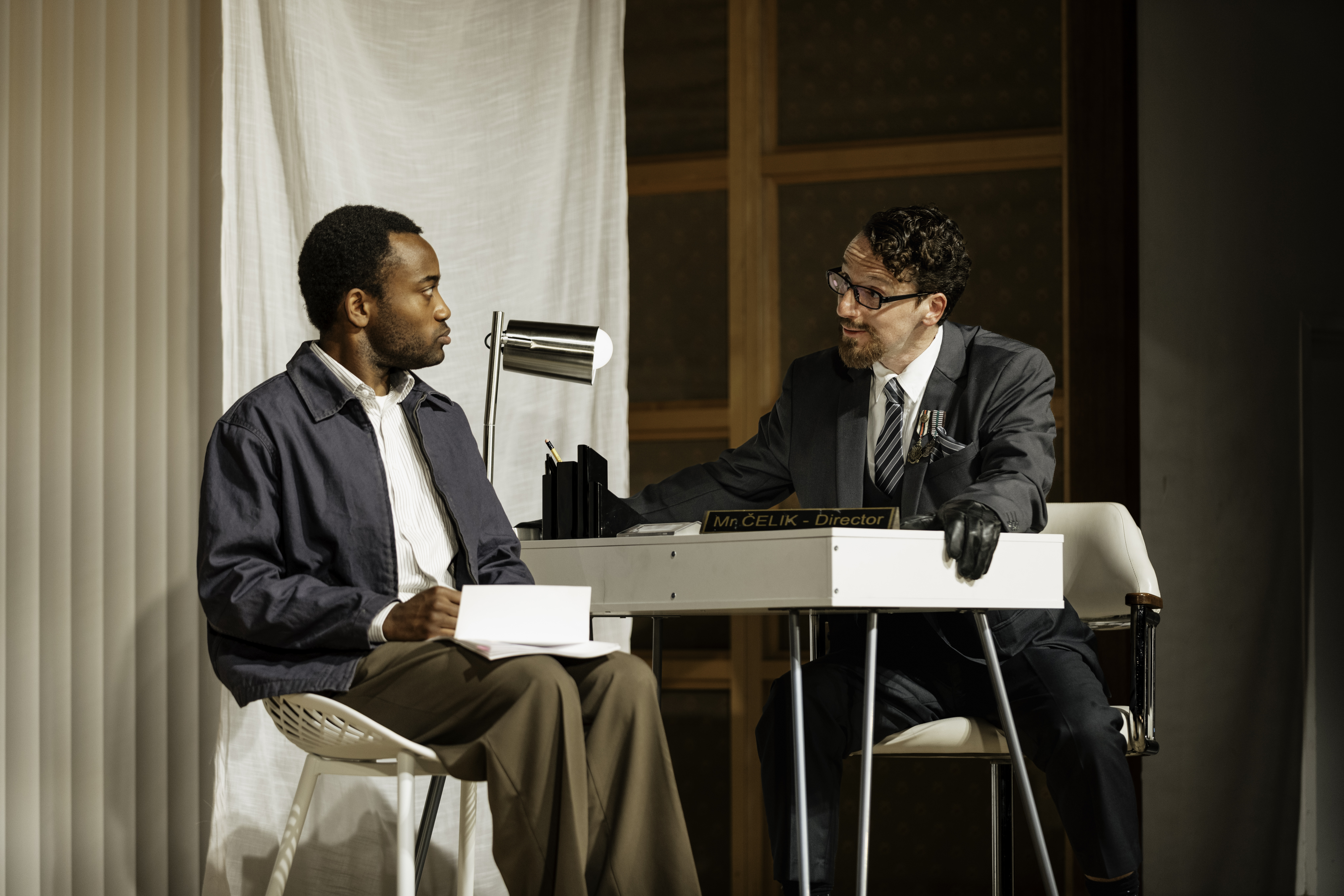
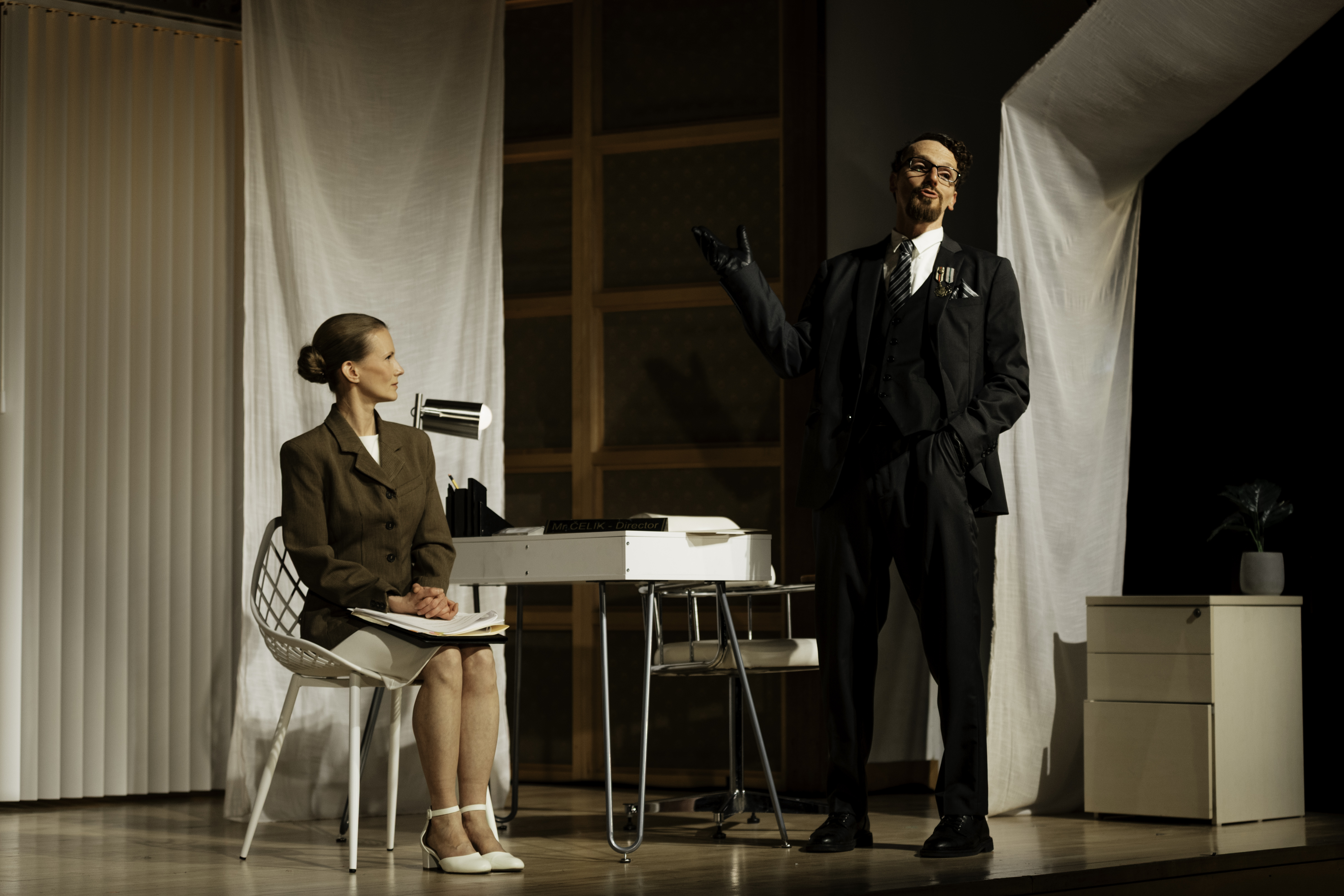
At the centre of that system is Mr. Celik, a composed and calculating authority figure tasked with censoring creative expression while maintaining the illusion of support. Into his orbit steps Adem, a young writer whose work captures the raw and unfiltered reality of his surroundings, a choice that immediately places him at odds with the expectations of the state. What follows is a careful and unsettling negotiation, as Celik attempts to guide, reshape, and contain that voice through sanctioned channels, enlisting both a celebrated, state-approved writer and a quietly observant assistant to reinforce the system’s boundaries. It is within these parroted and problematic interactions that the play’s tension deepens, revealing how easily language can be redirected, softened, or weaponized in the name of order.
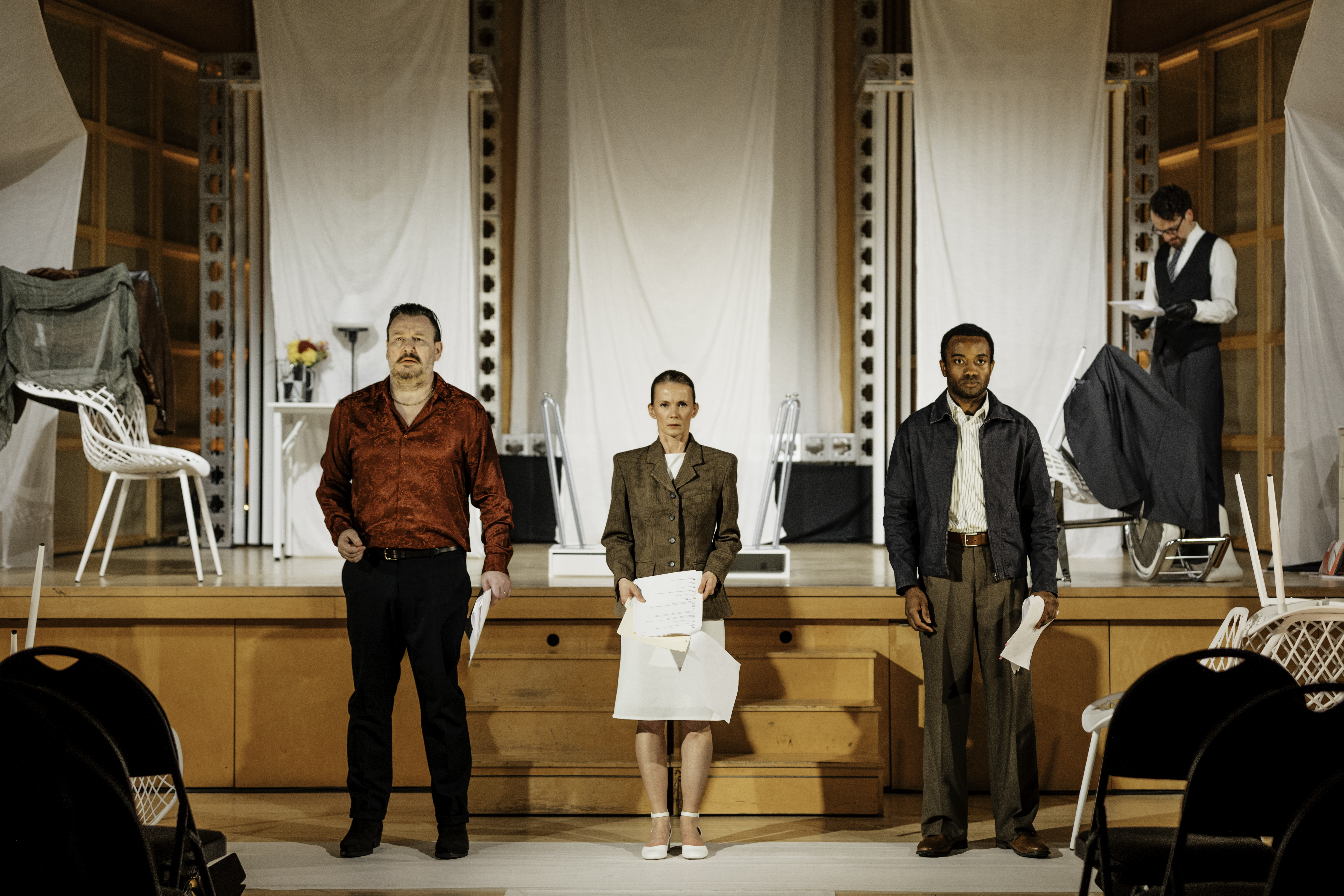
The production thrives on the constant reorientation of its world. Nick Blais’s set begins in familiar territory before transforming with striking fluidity, as white wedding banners are pulled away to reveal new realities lurking just behind them. Snezana Pesic’s costumes track subtle shifts in identity and status, while Chris Malkowski’s lighting design becomes an essential storytelling force, marking each transition with precision and unease. Lyon Smith’s sound design deepens the atmosphere, allowing each tonal shift to resonate with both clarity and quiet disruption. Together, these elements create a landscape where nothing remains fixed for long, and where each reveal carries both excitement and implication.
Within that unstable terrain, language itself becomes one of the play’s most powerful tools. Holcroft (The Rules for Living) fills the script with ideas that land as both philosophy and warning. “A mirror isn’t a painting,” we are told, a deceptively simple distinction that begins to define the play’s central tension between reflecting truth and constructing it. And how art can play a significant role. Elsewhere, the language sharpens ideas and constructs. “Bullets are dangerous, but words?” arrives with chilling resonance (especially these days), reframing the stakes of expression, while “Throwing bricks doesn’t build houses” is presented as guidance even as it quietly reinforces control. These are not just lines of dialogue. They are ideological frameworks, carefully constructed to persuade, to limit, and to shape perception. We hear them, we absorb them, and we begin to question how easily we might accept them at different times in this game, particularly around the concept of what art is and should be.
The performances ground this intricate structure with clarity and commitment. Jonelle Gunderson (StratFest’s To Kill a Mockingbird) is riveting, shaping her role with careful intention and revealing a gradual transformation that becomes one of the production’s most compelling through-lines. There is a watchfulness in her presence, an awareness that evolves into something more awakened and quietly defiant. Paul Smith (Factory’s WOKE) brings a grounded vulnerability to Adem, capturing the tension between creative instinct and imposed limitation, while Craig Lauzon (Crow’s Bad Roads) delivers a particularly fascinating turn as a writer forced to confront his own words when they are reflected back to him. His growing recognition and discomfort become a powerful mirror in itself, one that forces a reconsideration of what has been accepted as truth and what is reality.
Nabil Traboulsi (Grand’s Homes: A Refugee Story) embodies Celik with a calm, measured authority that is as persuasive as it is unsettling, offering reasoned arguments that carry a sly undercurrent of control. His performance, including the final unveiling, captures the complexity of a figure who believes fully in the system he represents, even as it reshapes those around him. Courtenay Stevens (TIFT’s La Bête) and Cole Munden (Strangebird’s Paper Chase) contribute to a world that feels both theatrical and disturbingly plausible, ensuring that the production’s broader structure remains anchored in human behaviour and recognizable ideals.
Vuckovic’s direction holds these elements together with a confident sense of rhythm and curiosity. There is a clear trust in the audience, a willingness to allow meaning to emerge through observation rather than explanation. The pacing remains taut, each moment building carefully on the last, creating a theatrical experience that feels both meticulously constructed and alive with unpredictability. It is a production that invites engagement, asking us to lean forward, to question, and to remain alert to the shifts unfolding before us.
What A Mirror ultimately reveals is not simply a story about censorship or artistic control, but a reflection of our own position within systems of observation and participation. As we sit in our seats, initially positioned as passive guests at a celebration, we begin to understand that we have been drawn into something far more active. A quiet act of rebellion. A shared complicity. When the question arises, “Who have you roped in?” the answer becomes unavoidable. It is us.
The experience has transformed into an act both thrilling and quietly unsettling. The boundaries between audience and participant dissolve, leaving us to sit with the realization that witnessing is not a neutral act. This is one of those plays that feels best experienced firsthand, an enigmatic puzzle that continues to unfold even after the lights come down, asking us to consider where truth resides and how easily it can be shaped.
Within that first framing, of sitting together at a wedding, it no longer feels like a simple beginning. It becomes a calculated invitation into something far more dangerous, a space where fiction reshapes reality and participation is no longer optional. We arrive as guests, but we leave as participants in a rebellion. Because in this world, paying attention is not passive. It is an act of defiance.
 front mezz junkies