The Toronto Theatre Review: A bold and ambitious reworking of a classic that struggles to ground its own desire
By Ross
A confession. I always look forward to a new production from Icarus Theatre. It’s one of those companies that has consistently challenged my expectations, feeling both daring and deeply considered. The company, albeit new and infused with that energy and courage, has continually astonished. Their productions, much like the sublime Constellations, often carry a distinct theatrical intelligence, one that embraces risk without losing sight of emotional clarity. With Julie, written by the English playwright Polly Stenham (Hotel), that Icarus ambition remains firmly in place, though the results feel more uneven, as if the scale of the attempt has outpaced the cohesion needed to fully realize it.
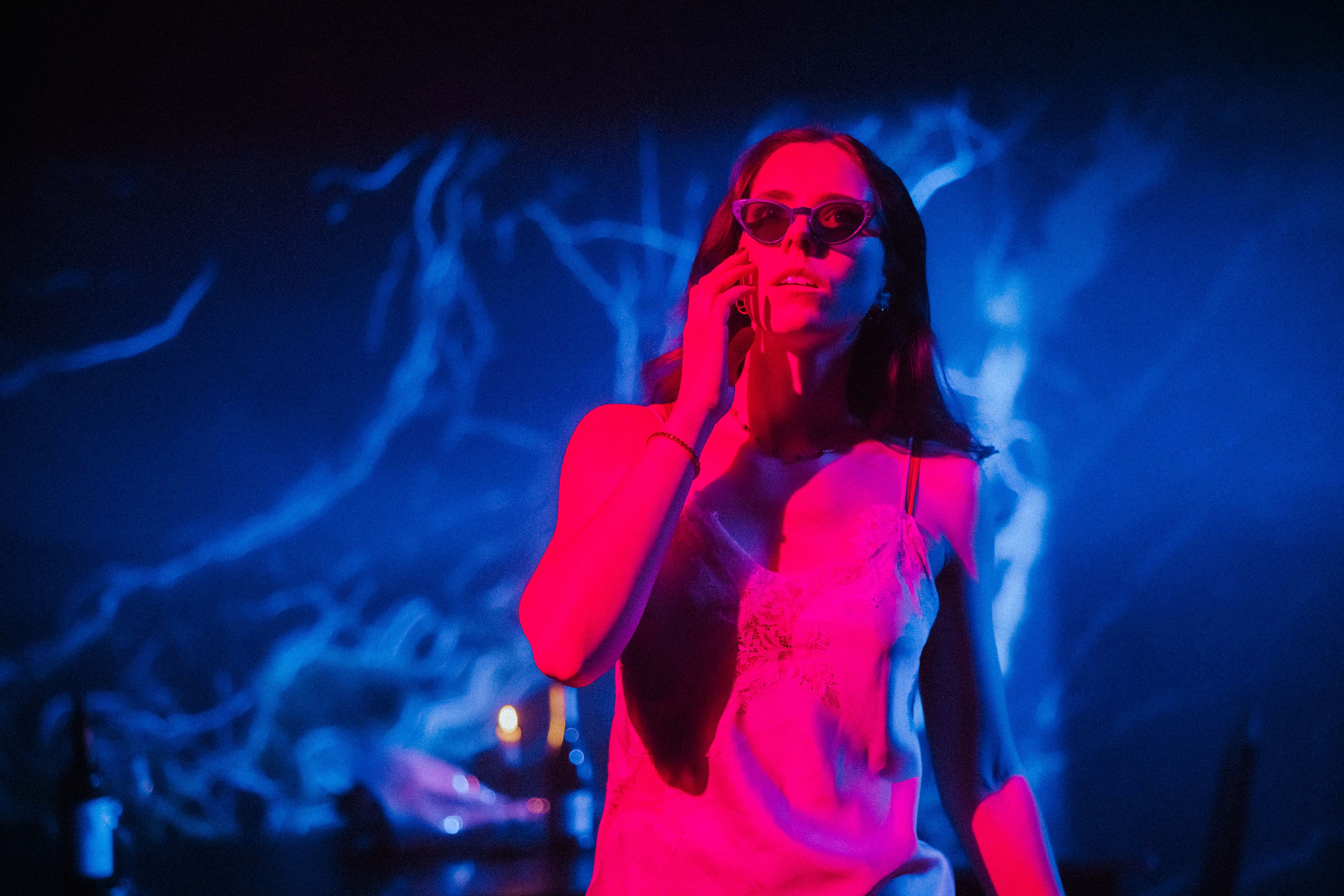
Adapted from Miss Julie by August Strindberg, the play retains its Midsummer setting and its core dynamic of power, class, and desire, while shifting itself into a more ambiguous contemporary landscape. Within the kitchen of an estate that feels both grounded and untethered, Julie, portrayed by Emily Anne Corcoran (Icarus’s Lobby Hero), circles dangerously around Jean, a chauffeur played by Jamar Adams-Thompson (Leroy Street’s The Adding Machine). She is seemingly out of control, he believes, while his fiancée, Kristine, played cleverly by Tara Sky (Buddies’ The Born-Again Crow), remains just within reach of the action, watching and serving Julie as she always has done. The bones of Strindberg’s ruthless psychological battle remain, though here the framing leans away from the naturalism he envisioned for the play, and toward something more abstract, more stylized, and at times, unfortunately, more difficult to fully believe.
From its opening moments, as directed by Jordan Laffrenier (CS’s Slave Play), the production establishes a heightened visual and emotional language. A wall of knives looms in the background, a quiet but insistent reminder of where this story might lead, while a candlelit table suggests an intimacy that is quickly destabilized. Movement, shaped with intention through the choreography of Alli Carry (Mixtape Projects’ Iris (says goodbye)) and supported by intimacy direction from Rebecca Lashmar (Makeshift’s All That She Wrote), pushes Julie into the play’s space in a way that feels heightened and performative, as though she is reaching for something just beyond her grasp. Yet there is a sense that the physical language is working harder than the emotional reality beneath it, creating a subtle distance between what is expressed and what is felt internally.
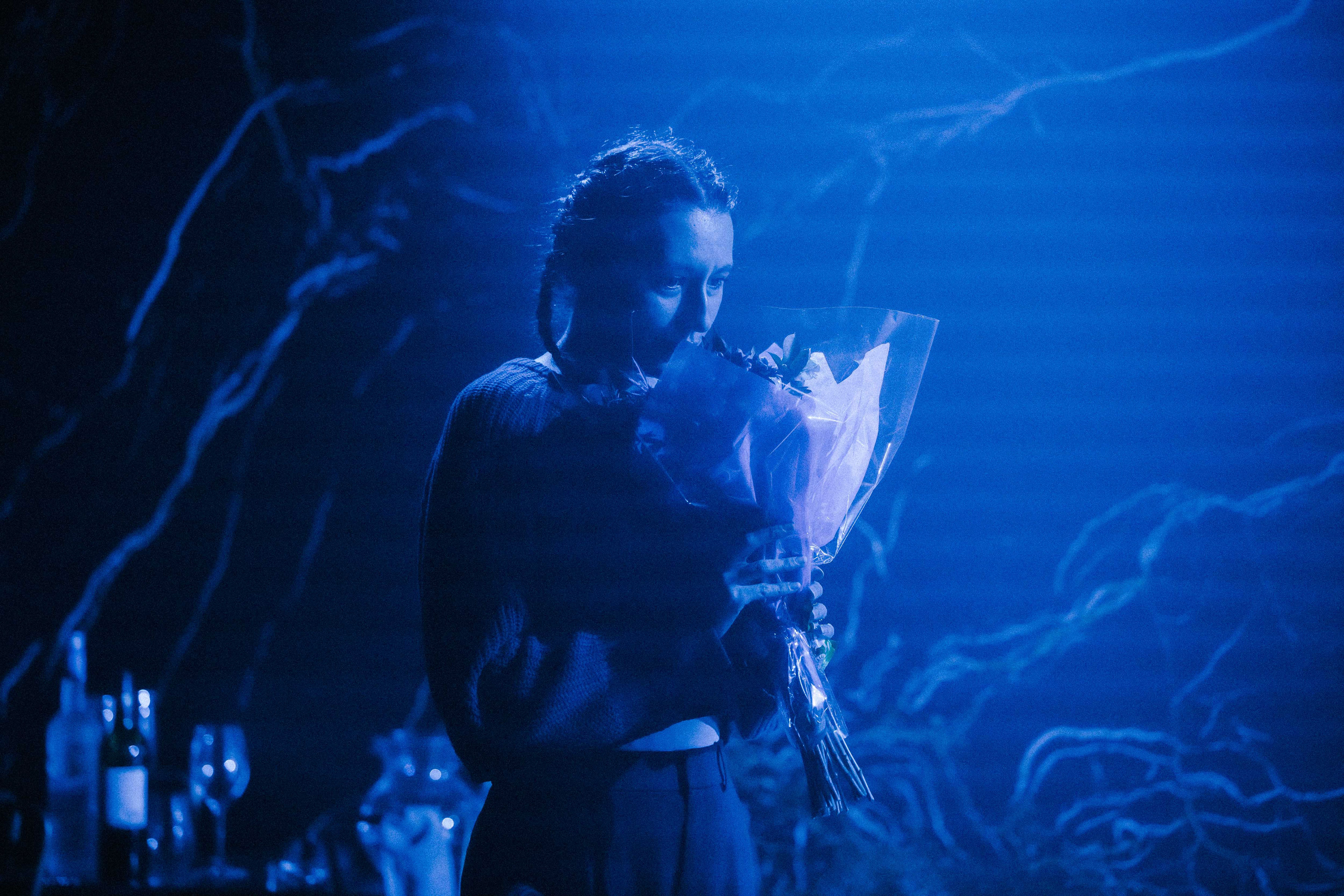
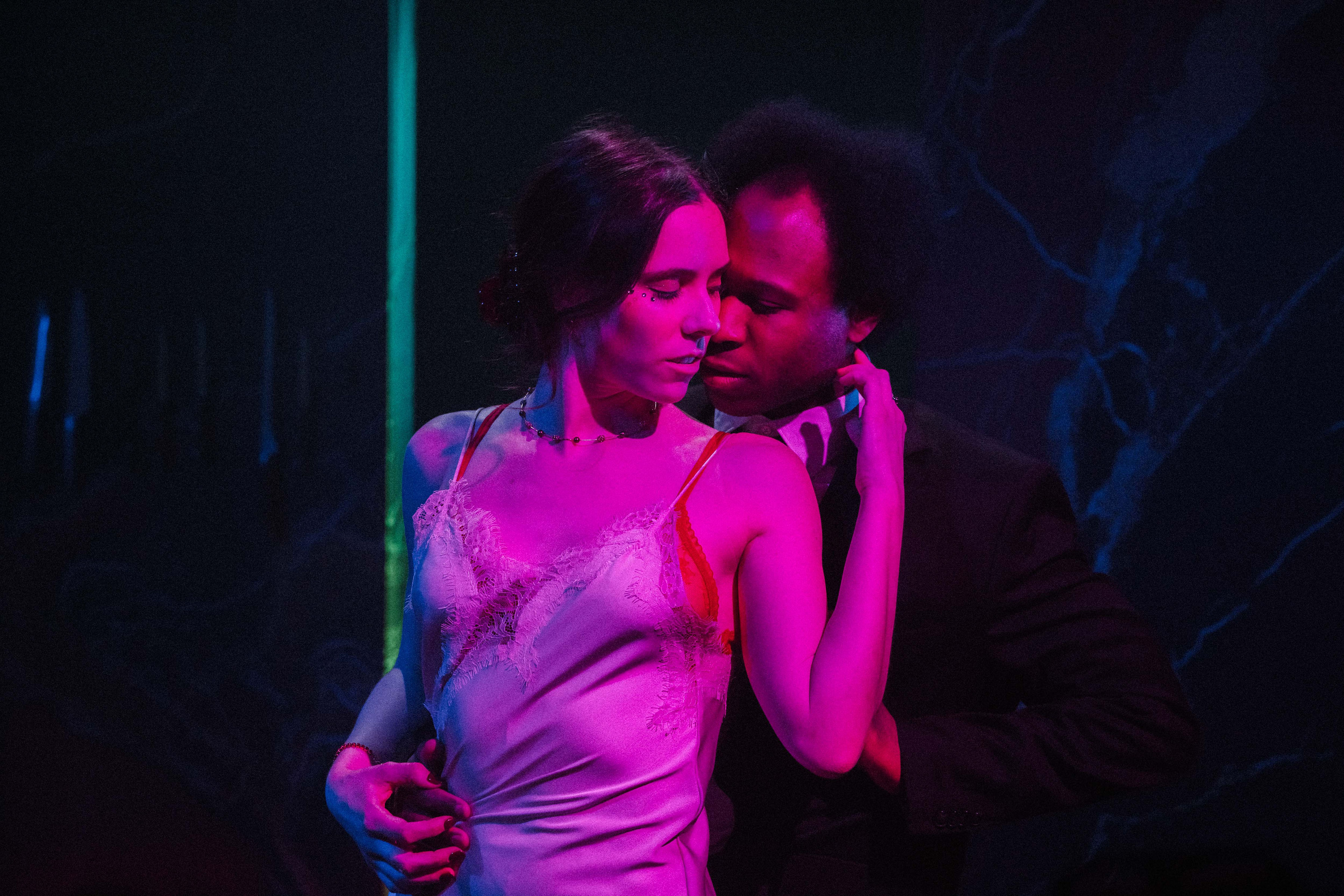
That distance becomes most apparent in the central relationship. The text asks us to accept a volatile and consuming attraction between Julie and Jean, one that collapses boundaries and overrides logic, but the production never fully locates that heat. There are moments where conflict lands with clarity, particularly in the fierce exchanges that probe class, entitlement, and control, and both performers navigate those tensions with commitment and presence. Corcoran leans into Julie’s volatility, shaping her as impulsive, cruel, and searching, while Sky’s Kristine unearths an equally powerful but opposite weightiness and awareness in her caretaking role. Adams-Thompson offers a Jean who is measured, observant, and aware of the shifting power beneath the surface. Yet the crucial shift, where resistance gives way to desire, does not fully register. It feels guided more by the demands of the text than by an undeniable electric pull between two people who cannot help themselves.
This imbalance extends into the broader world of the play, which struggles to fully define the forces pressing in on these characters. The modern elements, including the presence of technology and the ambiguity of place, suggest a re-contextualization that never quite settles into clarity. Julie’s rebellion against her unseen father carries thematic weight, though there is a vacuum there that the production does not entirely seem to know how to fill. Her provocations, her fainting spells, her need to shock and destabilize, all gesture toward a deeper rupture, but often land as surface actions rather than manipulated expressions of something more deeply rooted.
There are sequences where the production finds a stronger footing, particularly in moments of confrontation that feel grounded in emotional truth. Sky captivates in the minor role of lady-in-waiting. Her solidness and faith feel the most honest in a room unraveling under the push and pull between Julie and Jean. Inside their oppositional roles, shifting dominance, and their mutual ferocious awareness of the stakes, all align with the play’s underlying tensions. In these interactions, the language sharpens, the performances settle, and the stakes become clearer. It is in these battles that the production hints at the sharper, more dangerous version of itself that it is reaching toward, and we can lean into them with curiosity and concern.
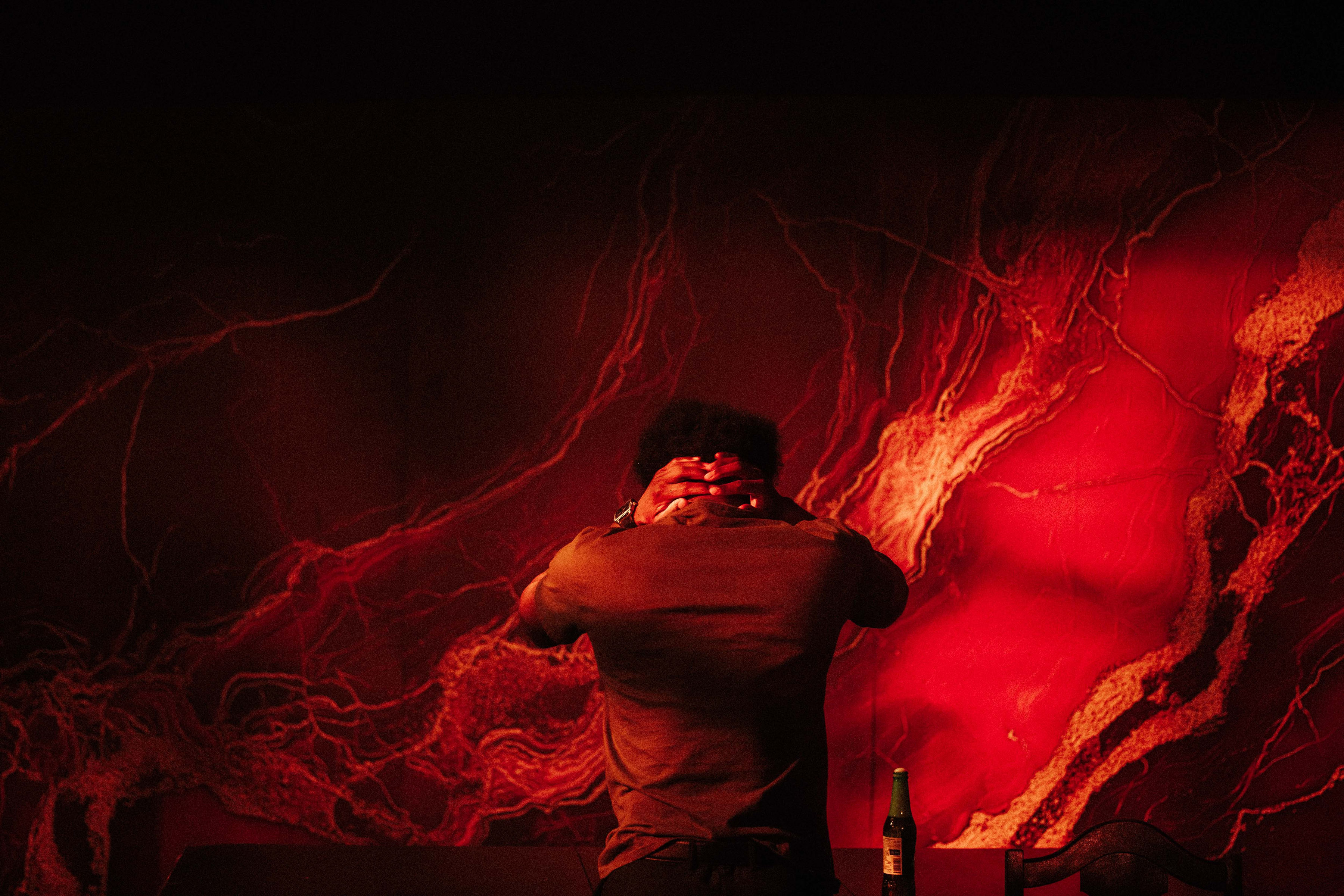
The design elements support the production with clarity and control. Lighting consultant Chris Malkowski (Crow’s The Surrogate) shapes the space with passionate precision, isolating moments and heightening shifts in tone, while composer Jamal Jones and sound designer Erik Richards (TIFT’s Company) build an aural landscape that reinforces the unease and volatility of the world. These elements contribute to a cohesive atmosphere, even when the narrative itself feels less certain of its grounding.
What ultimately lingers is the sense of a production reaching for something expansive and confrontational, but not always finding the connective tissue needed to sustain it. The language of the adaptation can feel abrupt and clumsy, its rhythms uneven, and in this staging, that lack of fluidity becomes pronounced. The result is a work that gestures toward urgency and danger, but does not consistently allow those qualities to emerge organically.
There is no question of the ambition at play here, nor of the commitment from the artists involved. Icarus Theatre continues to pursue work that asks difficult questions and resists easy answers, and that remains deeply admirable. With Julie, that ambition is unmistakable, even when its execution falters. It is a production that reaches wide, punches high, and dares to stretch beyond its grasp, and in doing so, Julie reveals both the strength of the company’s vision and the challenges that come with pushing it to its limits.
 front mezz junkies