An Izzy Ontario Theatre Review: The Importance of Being Earnest at the Grand Theatre
By Izzy Siebert
Vivid and vibrant, The Importance of Being Earnest is unabashedly joyful at the Grand Theatre in London, Ontario. Director Alistair Newton’s production captivates the eye with bold designs and delights the heart with playful performances, resulting in a show that radiates joy in every detail.
Embracing Oscar Wilde’s whimsical spirit, the production opens with a new preshow. Miss Prism (Deena Aziz) and Gwendolyn Fairfax (Kaylee Harwood) instruct the audience on the intricate language of hand fans, demonstrating subtle gestures like swordplay where every movement is weighted with meaning.
This introduction pays off. Throughout the show, the actors trace fans across cheeks, tap their noses, or snap them open to punctuate lines. When characters delivered especially cutting flourishes, I relished in the drama and gasped along, having been given the key to understanding these social intricacies. From its opening moments, this production invites audiences into a vivid world rich in signals and defined by aesthetics.
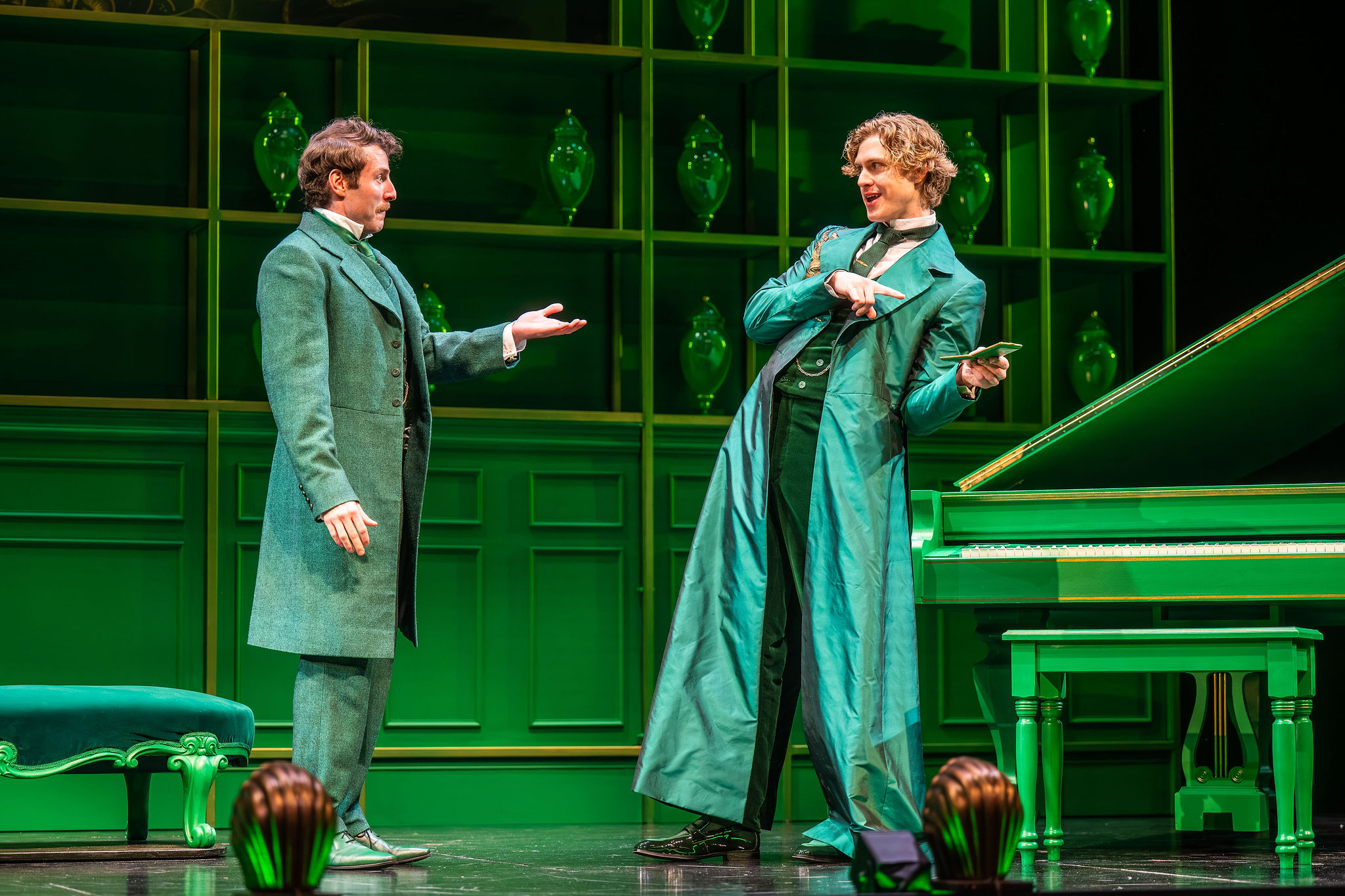
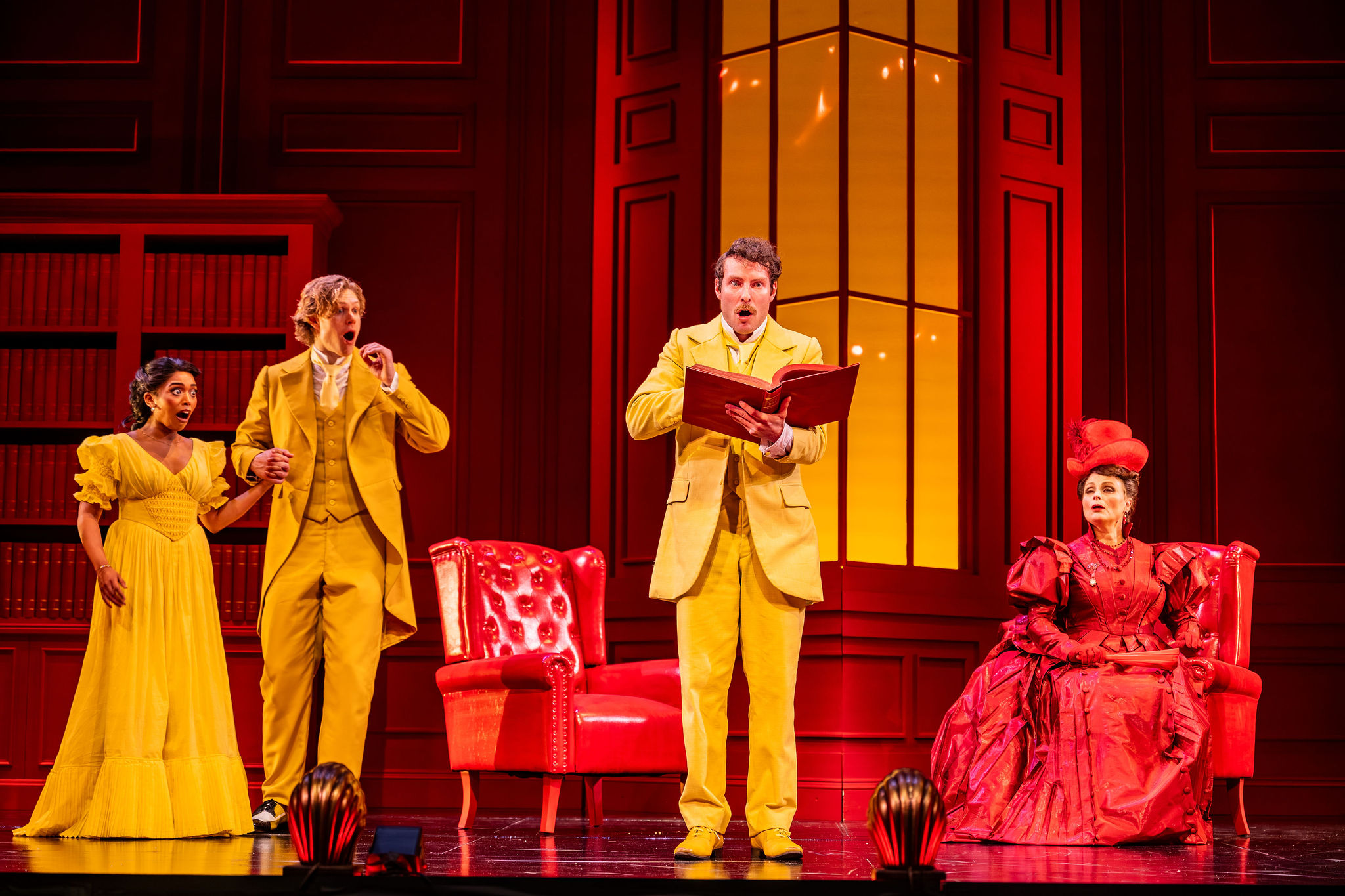
Newton’s production leans fully into a striking visual concept, dividing the show into three colour-dominated acts. The stage cycles through bold green, radiant yellow, and rich red colour palettes cohesively captured in sets, costumes, and props. I initially wondered if style might overpower story, yet found it satisfying how thoroughly the production commits to its aesthetic.
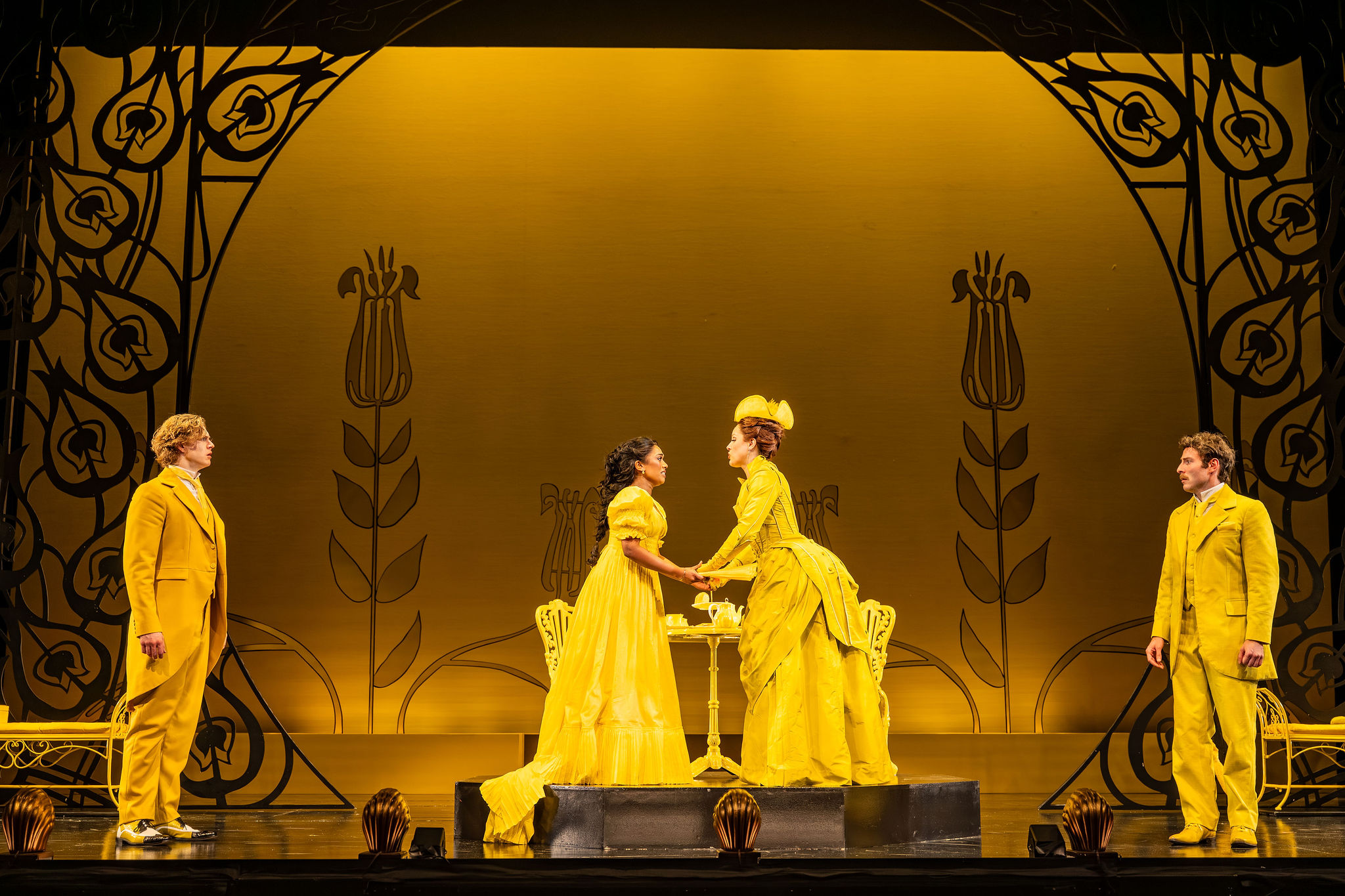
Michelle Tracey’s stunning sets are precise down to the last detail, from the red sheet music resting on the piano to the emerald green notebook Lady Bracknell (Claire Jullien) produces as she critiques Jack’s (Julien Galipeau) suitability as a husband. The transitions between colour palettes become breathtaking. I was enthralled as Act I’s opulent jade drawing room gave way to a stylized garden in sunshine hues in Act II.
The intense commitment to colour makes its intentional breaks all the more captivating. Pops of clashing colours draw the eye and signal meaningful intrusions. In the butter yellow world of Act II, a bright green calling card heralds an incoming change, and Jack’s black funeral suit feels starkly out of place as he mourns the death of his invented brother, whose identity Algernon (James Daly), very much alive, has gleefully assumed.
Judith Bowden’s costumes offer a rich array of textures to complement each character, from Cecily’s (Mirabella Sundar Singh) light cottony dress as she flounces around the garden to Algernon’s self-indulgent green velvet suit. Prism’s costume was especially interesting, with the stiffer fabric and practical pantsuit suiting her stern presence.
It’s not the first time Newton has explored a vivid approach to Wilde’s script. The Grand’s production builds on a vision he previously staged at the University of Victoria’s Phoenix Theatre. Newton’s 2023 production included colour-blocked acts and introduced two new characters based on Victorian-era drag performers, celebrating the queer undercurrents in Wilde’s work.
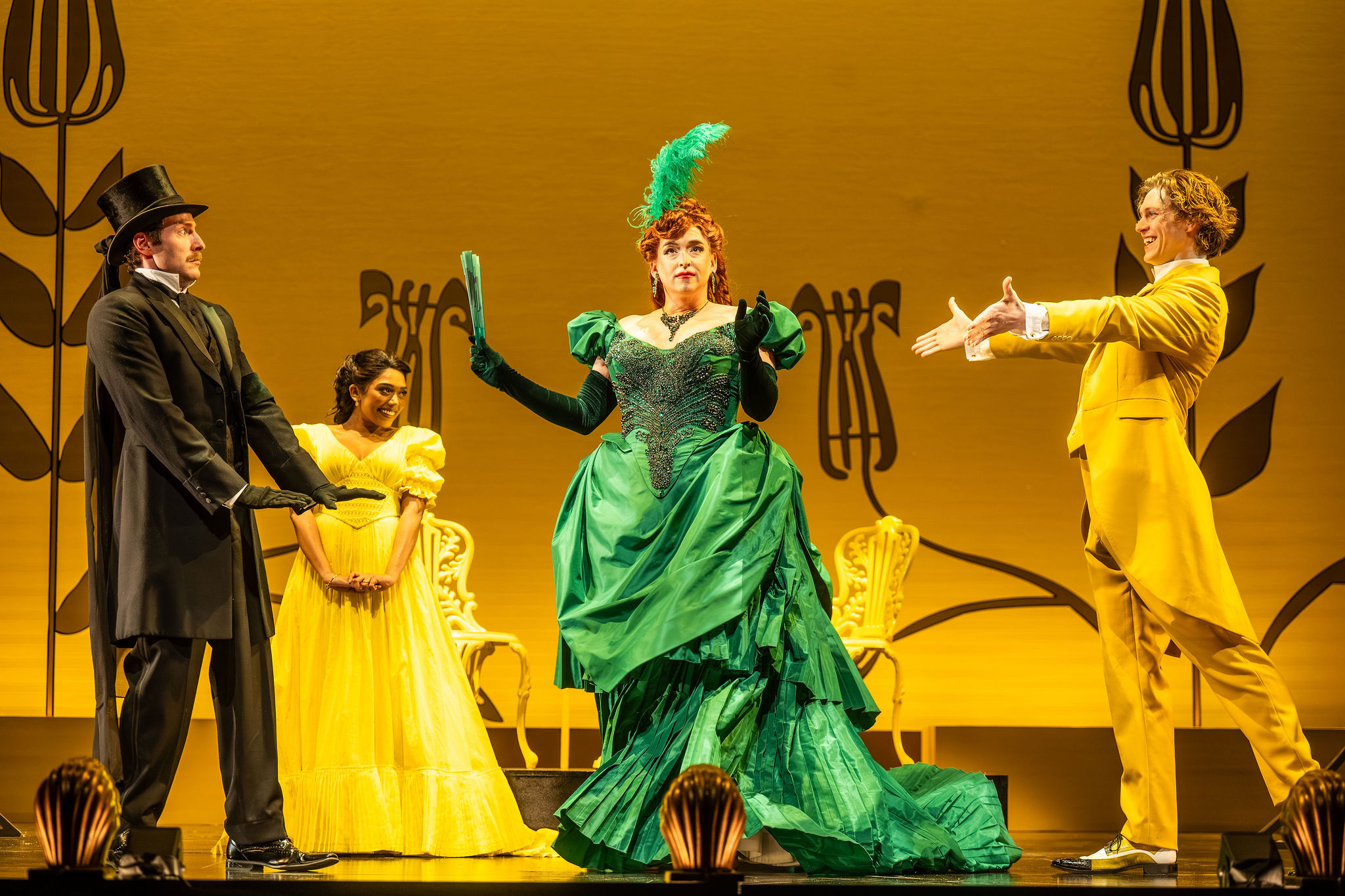
At the Grand, Newton consolidates the two roles into a single striking figure: Lady Stella Clinton, based on a real 19th-century queer trailblazer who lived as a woman both onstage and offstage. Played by Billy Lake (who doubles as butler Merriman), Stella sweeps onstage with resplendent gowns and perfectly coiffed hair to sing several songs throughout the show.
Literary loyalists can rest easy since Stella functions less as a new character than a device to smooth transitions and keep the energy high between acts. Lake flourishes in the spotlight, playing with the audience and foregrounding the joy this production takes in rendering the invisible visible. From the cheering audience around me, several sporting the green carnations popularized as a queer symbol by Wilde, it’s clear that the community embraces what this production offers.
For all its additions, Newton’s vision complements the script rather than distracting from it. Wilde’s wit shines through the cast’s charming performances and sharp comedic timing. Daly’s Algernon is a treasure. Playful, pleased with himself, and full of flourishes, he effortlessly cartwheels over lounges and his entertaining reactions elevate every exchange. It’s a pleasure to watch his brazen confidence soften as he falls for Cecily.
As Algernon’s sweetheart counterpart, Singh is pure sunbeam, radiating energy and delight through her expressive portrayal. Arguably the most earnest character in the entire play, Cecily throws her heart into every line until it’s impossible not to be smitten with her.
Opposite Algernon’s cavalier attitude, Galipeau’s Jack is endearingly restrained. His quiet alarm and gentle awkwardness contrast wonderfully with the big personalities around him. Jack’s steadiness makes it all the more entertaining when he indulges in self-pitying sulks or builds to bursting with anger.
As Gwendolyn, Harwood carries steely confidence as a young woman deftly orchestrating her ideal romance. The family trait of forcefulness is evident in Gwendolyn’s mother as well. As the formidable Lady Bracknell, Jullien commands the stage and delivers immovable opinions like decrees.
As a whole, the cast glows with glee as they indulge in Wilde’s wit. Despite being written over a century ago, satirical digs at marriage draw large laughs from a modern audience, as well as critiques of society in London (the other one, naturally, yet the cast is winkingly aware they stand before an audience in London, Ontario). Yet, no critical comments linger long and everything is subverted with a smile before it can grow too serious.
The delight at the heart of The Importance of Being Earnest is its wholehearted embrace of joy. At the Grand Theatre, that joy shines in a show that takes itself seriously in all the right ways, but most of all in its commitment to being delightfully unserious.
 front mezz junkies