The Broadway Theatre Review:
A sharp, unsettling dark comedy about love, truth, and self-preservation by Second Stage
By Ross
The first thing we hear is a description of a crime scene. A television narrator, sensational and dramatic, lays out the facts of something that has gone wrong. It is unexpected, but it feels pretty spot on for Becky Shaw, a play presented on Broadway by Second Stage that treats emotional damage with the same precision as physical evidence. From that opening moment, the tone is set. This is a world where connection is fragile, truth is weaponized, and humour cuts as sharply as anything else on stage.
Written by Gina Gionfriddo (Can You Forgive Her?), the production moves with a sharp, confident rhythm, unfolding a story that is funny and surprisingly unsettling. The dialogue lands with exacting precision, each line carrying the weight of intention behind it. Characters speak in truths, or at least what they believe to be truths, and those truths rarely arrive gently. “I don’t like this weepy thing,” Max says early on to a grieving Suzanna, setting the tone for a play where emotional vulnerability is often met with impatience, skepticism, or outright rejection. Not by everyone, but by a select few, and in that attitude, the play finds its core.
At the chaotic, detached emotional center of it all is Max, played with riveting control by Alden Ehrenreich (“Weapons“). He is difficult, abrasive, and at times deeply unpleasant, yet impossible to dismiss. Ehrenreich finds a balance that keeps Max grounded in something recognizable, allowing flashes of insecurity and damage formed from a profound abandonment to surface beneath his relentless certainty. It becomes clear that the character’s harshness is not simply cruelty, but a defense, a way of navigating a world he does not entirely trust. That complexity makes him compelling, even when his behavior suggests he should not be.
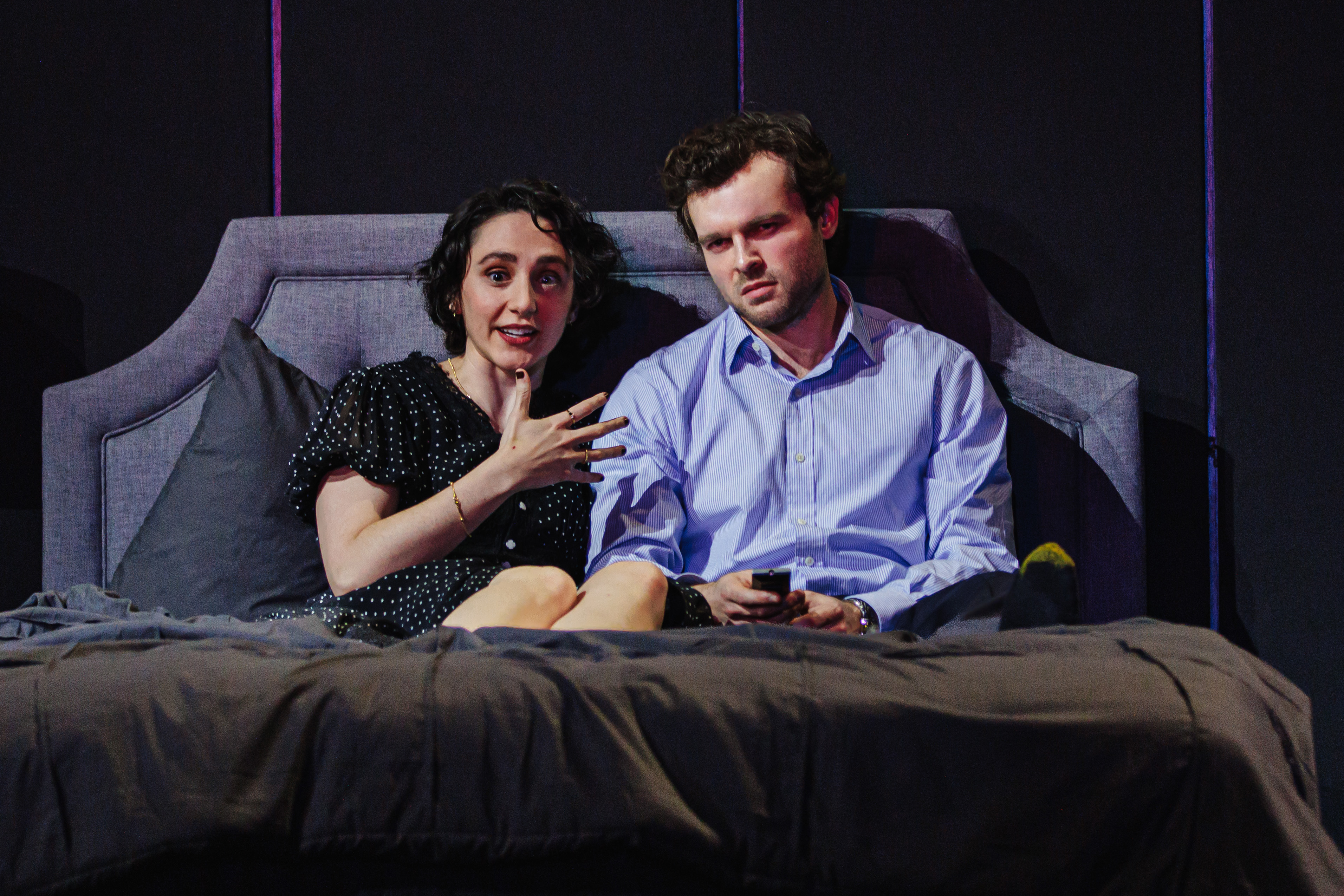
Standing opposite him is Suzanna, played with sharp emotional clarity by Lauren Patten (MCC’s The Lonely Few). Their complex dynamic carries a wild tension that feels almost too intimate at first, blurring boundaries in a way that unsettles before it is fully explained. There is an ease between them that hints at something deeper, something unresolved, and the play smartly lets that discomfort linger. Suzanna’s choices, particularly her decision to follow Max’s advice with startling speed, shift the landscape of the play almost immediately, setting the rest of the action in motion.
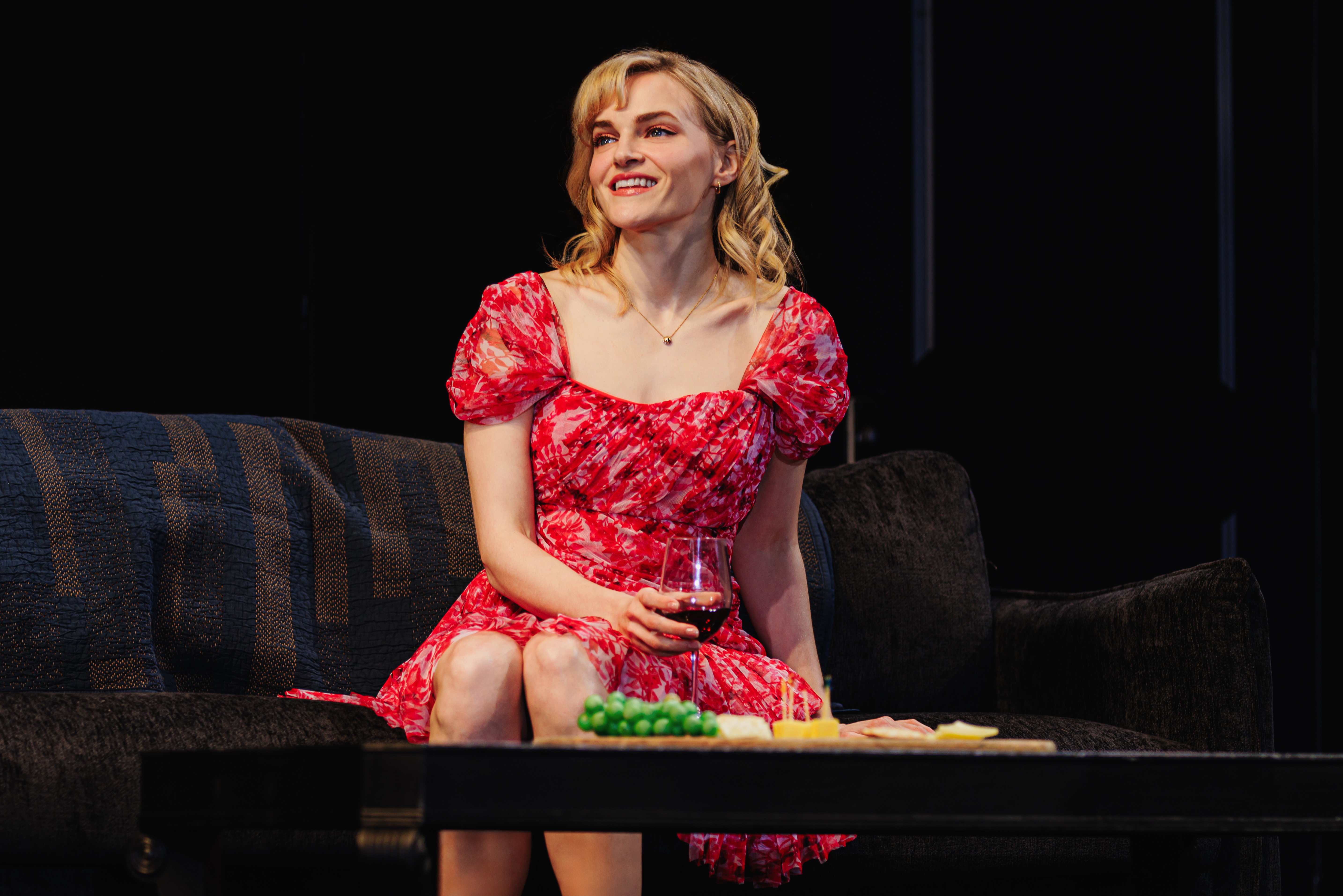
When Becky finally enters, portrayed with careful control by Madeline Brewer (“The Handmaid’s Tale“), the play pivots again, finding a different force to comprehend. She arrives already framed as something fragile, something in need of protection, yet her presence complicates that assumption at every turn. Becky moves through the story with a calculated softness, revealing just enough to invite sympathy while holding something essential just out of reach. Her motivations remain deliberately unclear, and that ambiguity becomes one of the play’s central tensions. We are never entirely sure whether we are watching someone in need or someone in control of the narrative she presents.
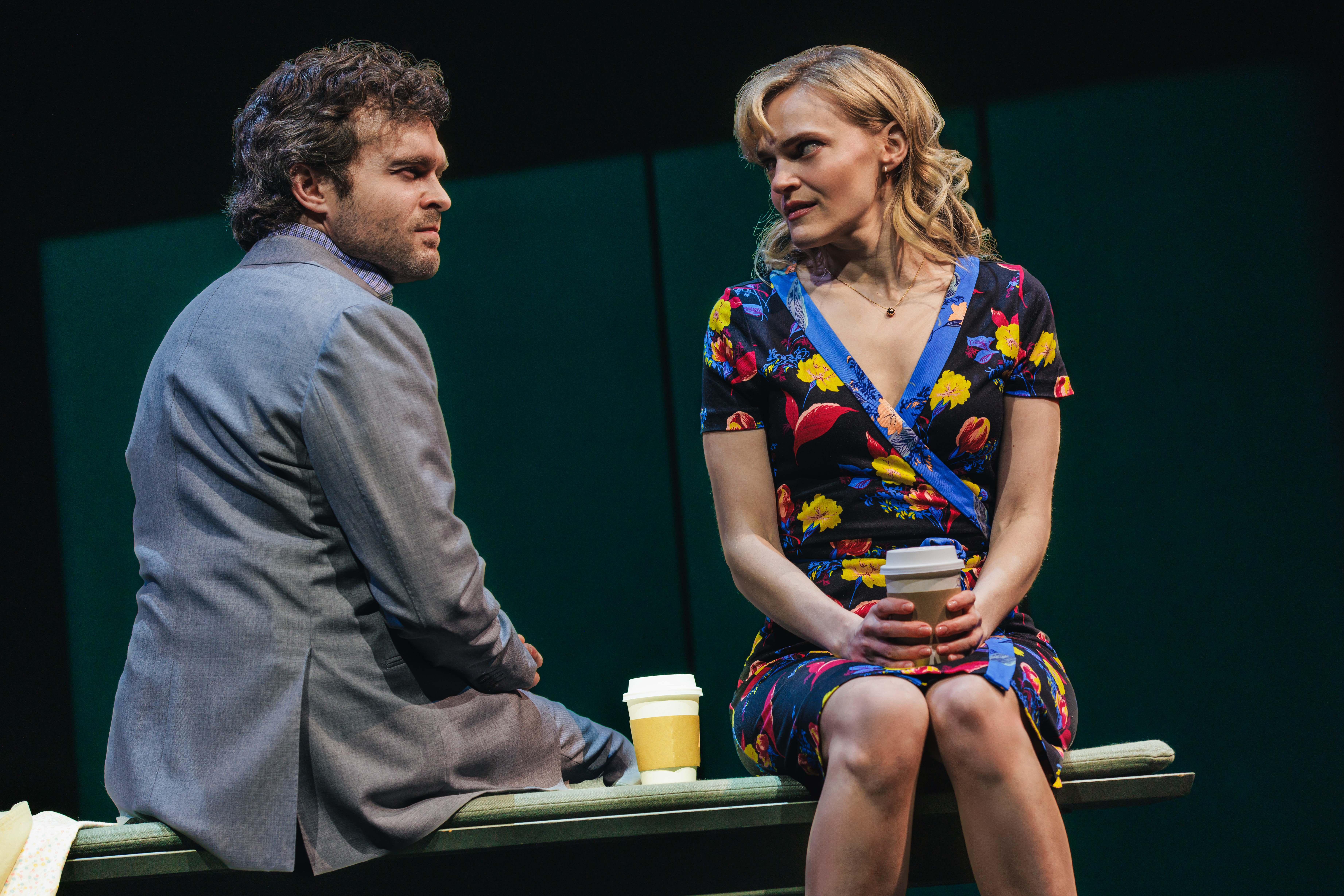
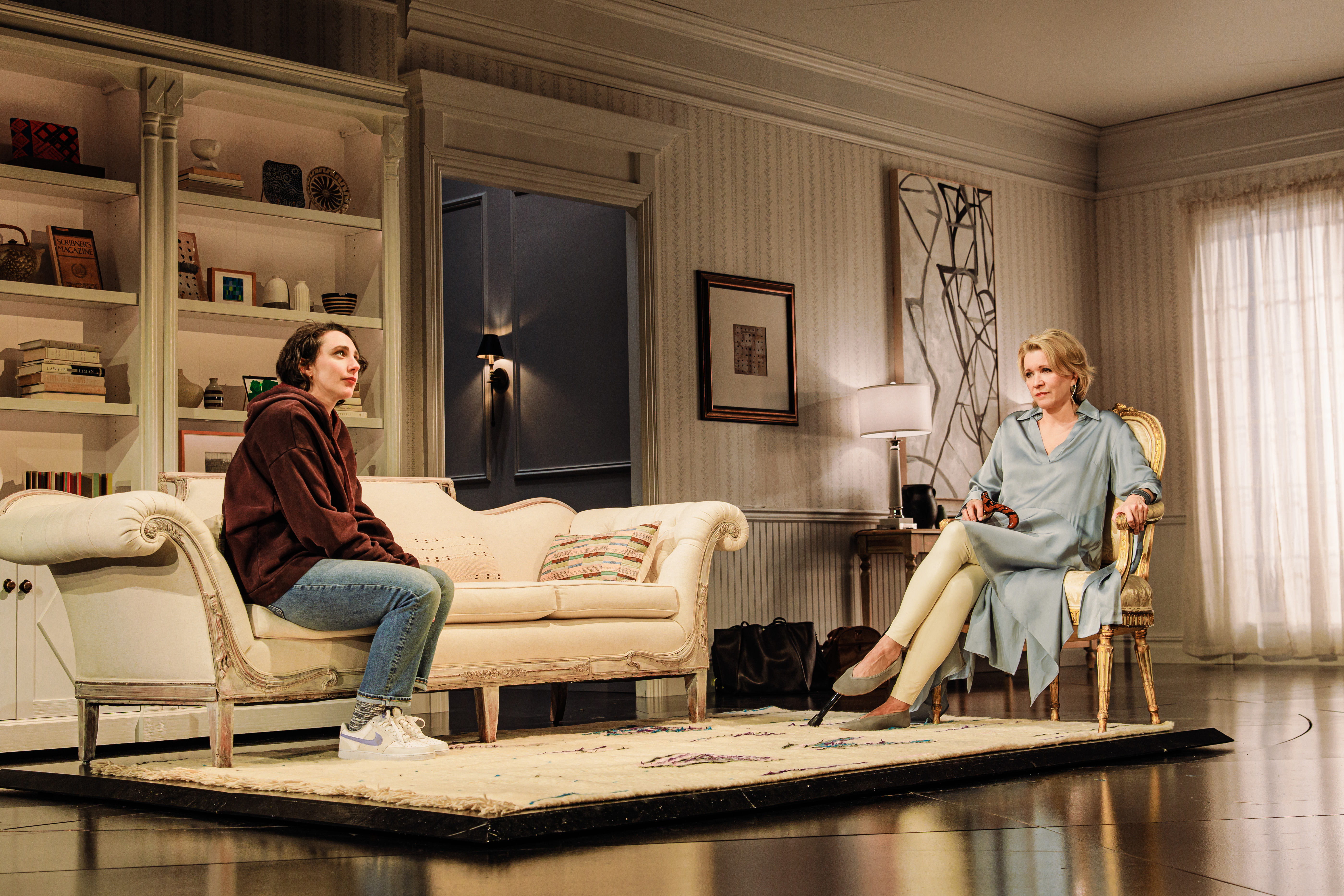
The structure supports that uncertainty. Scenes jump forward with urgency, almost chaotically, relationships shift just as abruptly, and the sense of stability never fully settles. Eight months pass between the first and second moments, and, much to our surprise, everything feels different, yet strangely, deeply unchanged. And the environments reflect this instability. The Providence apartment, where Suzanna and her husband Andrew attempt to build something resembling a life, doesn’t quite feel like a home. It feels collegiate and temporary. That sense of impermanence lingers, suggesting that the only space where anything like truth exists is in Suzanna’s mother, Susan’s Richmond living room, where the family matriarch rules with a kind of brutal honesty and dismissive certainty.
Linda Emond (HBO’s The Gilded Age) is deliberate and iconic as mother Susan. She is one of the production’s greatest strengths. She speaks with a sharp clarity that cuts through the noise, unafraid of the damage her words might cause. There is nothing performative about her honesty. It is direct, messy, and fully lived. In a play where so many characters shape their language to control perception, Susan stands apart by refusing to do so. Her presence grounds the play, even as it exposes the cost of that kind of truth. Maybe that’s why her apartment’s living room is all light and maturity.
The ensemble works in tight coordination, each performance contributing to a world that feels heightened yet recognizable. Andrew, as carefully portrayed by Patrick Ball (“The Pitt“), provides a softer counterpoint, embodying a kind of sweet steadiness that seems appealing but ultimately insufficient, or maybe misdirected. The relationships between these characters form a web of dependency, desire, discomfort, and projection, each one feeding into the next with an unsettling precision.
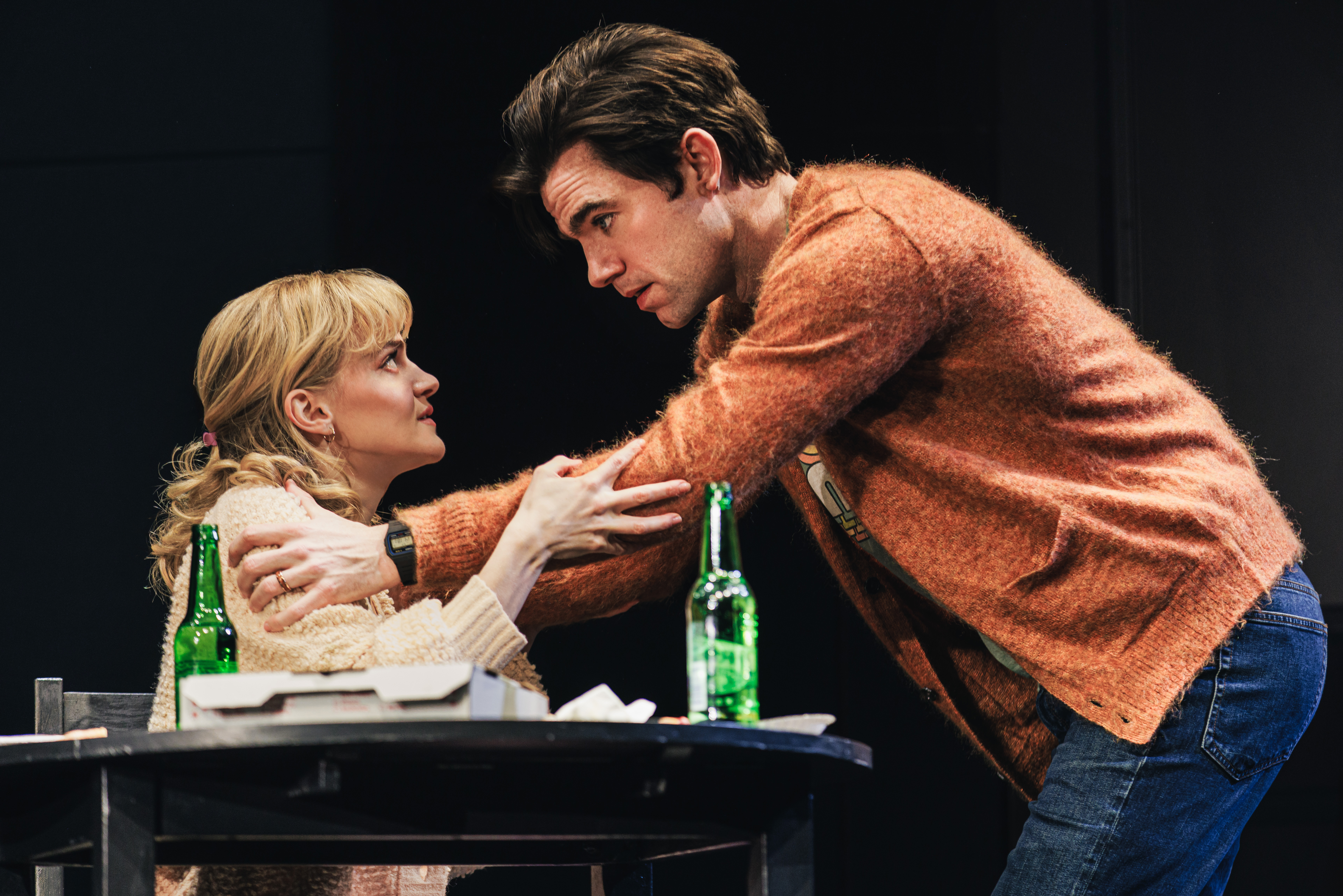
Directed with a clear, unblinking eye, Trip Cullman (MTC’s Queens) leans into the play’s rhythm, allowing scenes to move quickly without losing clarity. The staging, supported by the sparse and flexible design by David Zinn (Broadway’s Enemy of the People), emphasizes movement and transition. Costumes by Kaye Voyce (Broadway’s Sea Wall/A Life) ground the characters in a world that feels lived in yet carefully curated, while lighting by Stacey Derosier (PH’s Teeth) sharpens the emotional contrasts between scenes. The sound design by M. L. Dogg (Broadway’s Here Lies Love) underscores the tension with a subtle precision that keeps the rhythm of the play moving forward. The matte black spaces reflect an emotional emptiness the characters attempt to fill through conversation, confrontation, and connection. The final shift into Susan’s home, brighter and more defined, feels like a deliberate contrast, offering a glimpse of something more mature and authentic, even if it comes with its own messy and brutally honest complications.
Becky Shaw is so effective as it sits carefully in its refusal to offer easy answers. It asks uncomfortable questions about love, ethics, and self-preservation, and it does so without guiding us toward a single conclusion. The humour is relentless, often hilarious, but it never fully softens the impact of what is being delivered. Laughter becomes another form of defence, another way of navigating the discomfort that sits just beneath the surface.
And in that almost forgettable opening image, an idea lingers. A crime scene described with heightened entertaining detachment, as if the deathly damage has already been done and all that remains is to piece together how it all happened. It feels like a metaphor and a structure, packaged for presentation. Relationships examined, motives questioned, and truths revealed in fragments that carefully step forward with quiet determination. What remains is not resolution, but the uneasy recognition that sometimes the hardest thing is not finding the truth of Becky Shaw, but deciding what to do with it once it has been spoken.
 front mezz junkies