The Broadway Theatre Review: Liberation on Broadway
By Ross
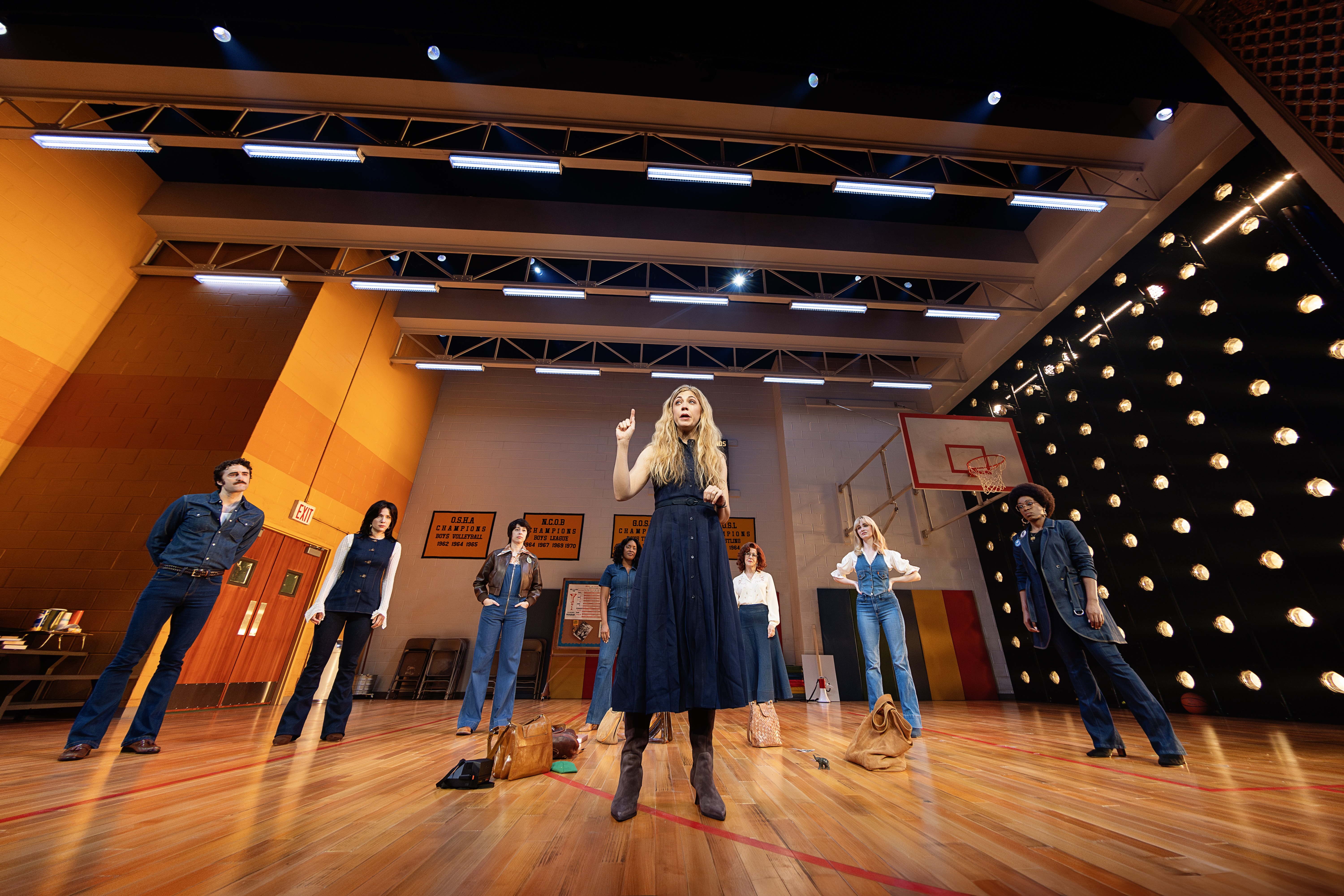
When I first experienced the glory of Bess Wohl’s extraordinary Liberation at Roundabout’s Laura Pels Theatre earlier this year, I was completely blown away. I knew, almost immediately, that I had just witnessed something profoundly powerful and enlightening. Wiping away tears, I turned to my companion and said that we had seen one of the most stirring and intelligent plays of the season. Filled with sharply engaging writing and a deeply personal perspective, Liberation felt like an exceptional spark of something unstoppable, and I prayed it would make its way to Broadway. Now that it has, opening at the James Earl Jones Theatre, the exceptional cast and creative team have only deepened its power. What once felt intimate and revelatory Off-Broadway now radiates outward with even greater resonance, with a raised fist to the sky, both fiercely personal and undeniably universal.
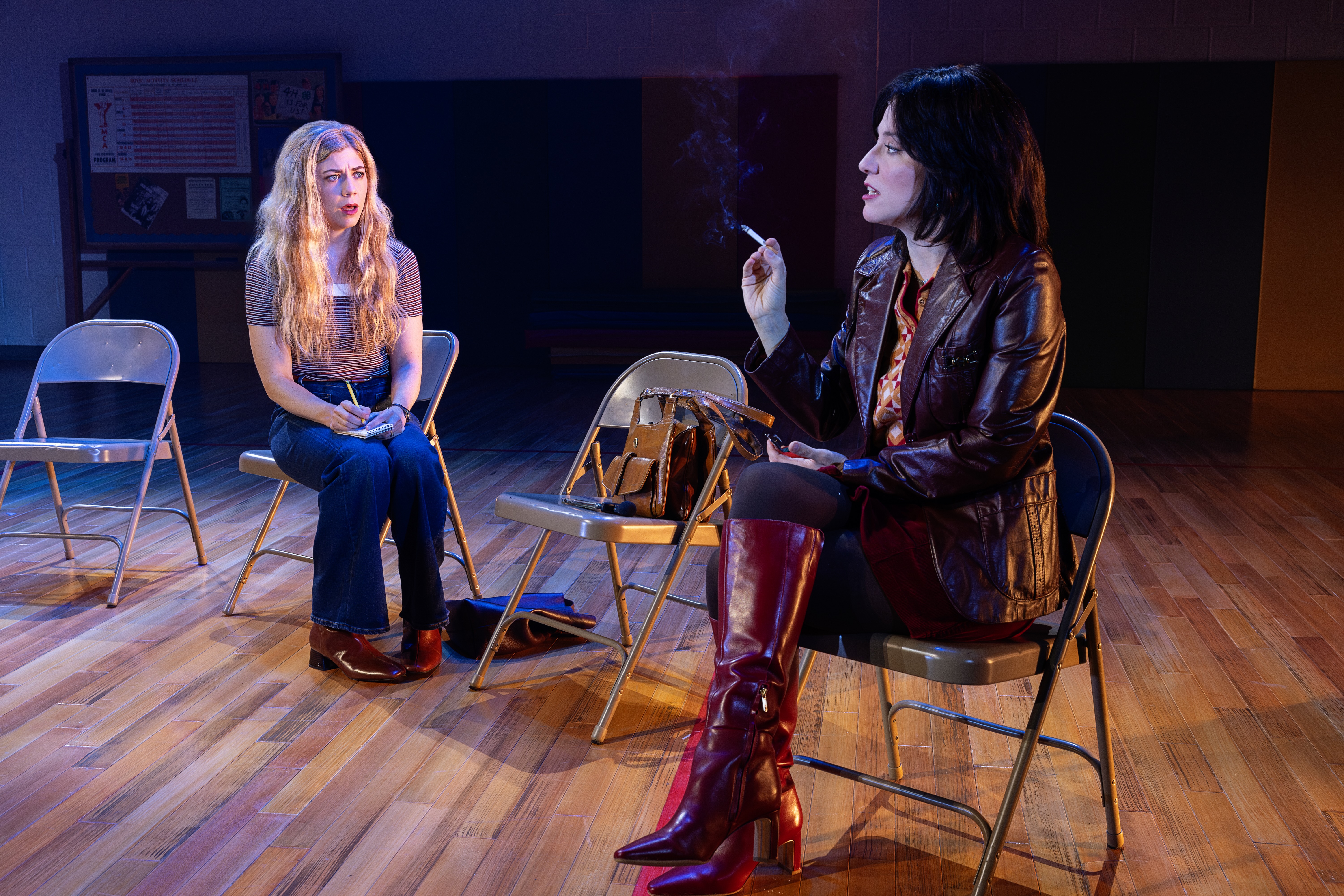
It all comes into sharp focus with the casual arrival of Susannah Flood’s remarkable central figure, our narrator and guide, standing before us, speaking to us directly in a way that felt so honest that we hardly could believe it is scripted. She engages in a way that enters our soul and even seems to choke herself up. It’s an astonishing beginning that feels ever-so simple, as she invites us to join in her search for meaning in the legacy of her mother, Lizzie, and all those who gathered together in that basement gym for a weekly Women’s Liberation meeting, one that had no leader, nor a manifesto. Her performance, under Whitney White’s precise and empathetic direction, remains a masterclass in nuance, profoundly effective and deeply moving. Her voice carries the ache and awe of a woman trying to reconcile, at the very minimum, two generations of liberation and loss. The theatre may be larger now, but her connection to the audience feels maybe even more immediate, more piercing than ever.
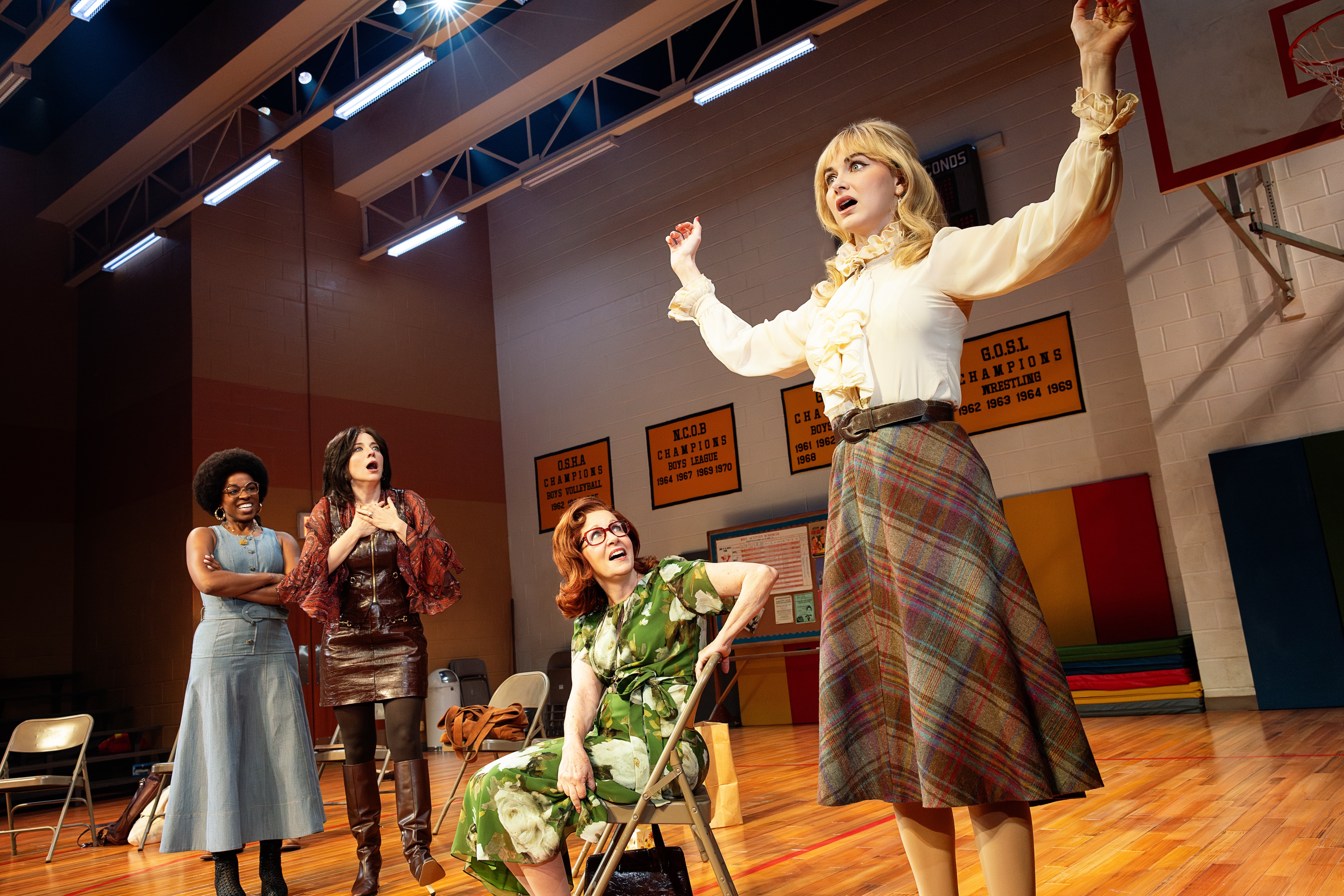
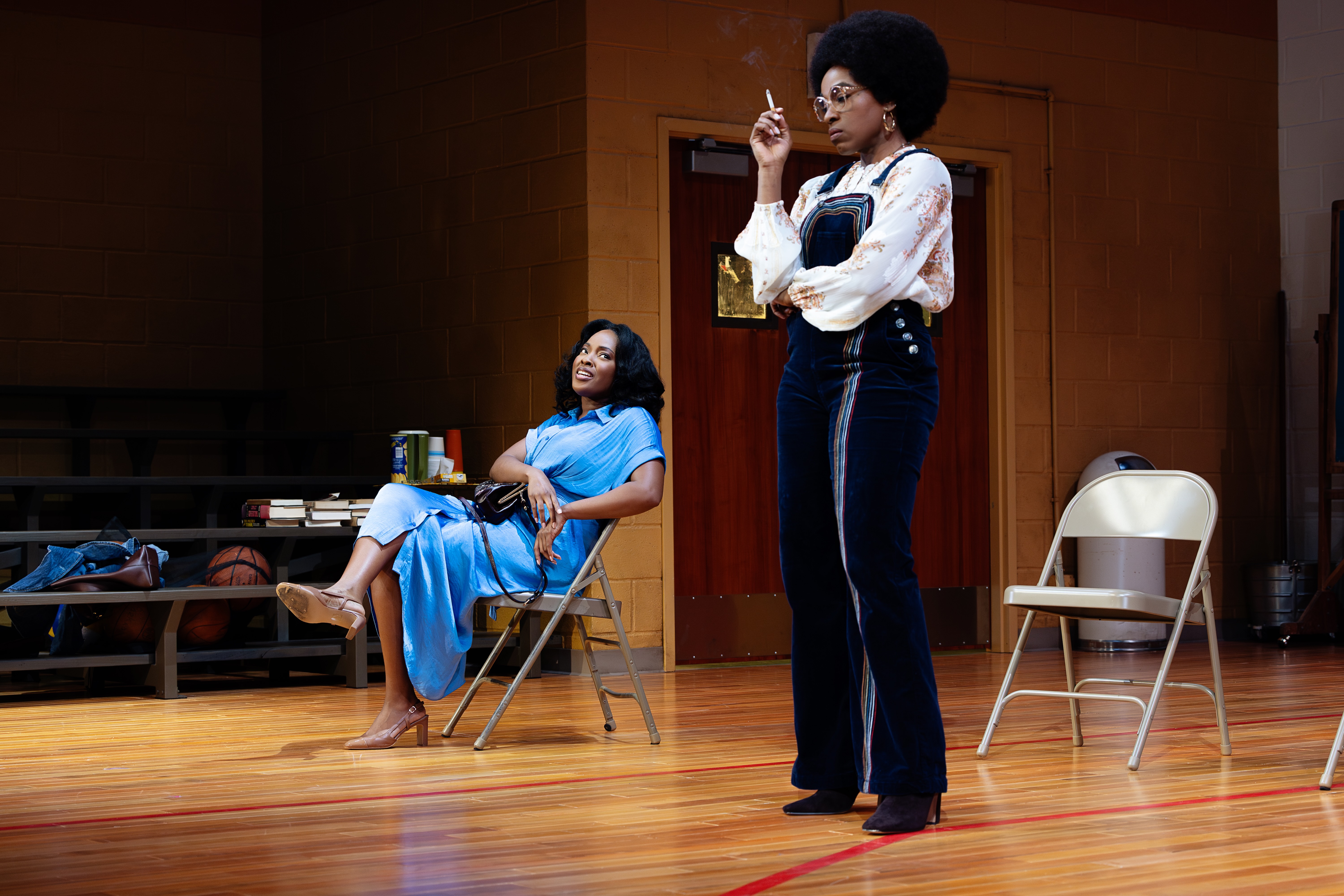
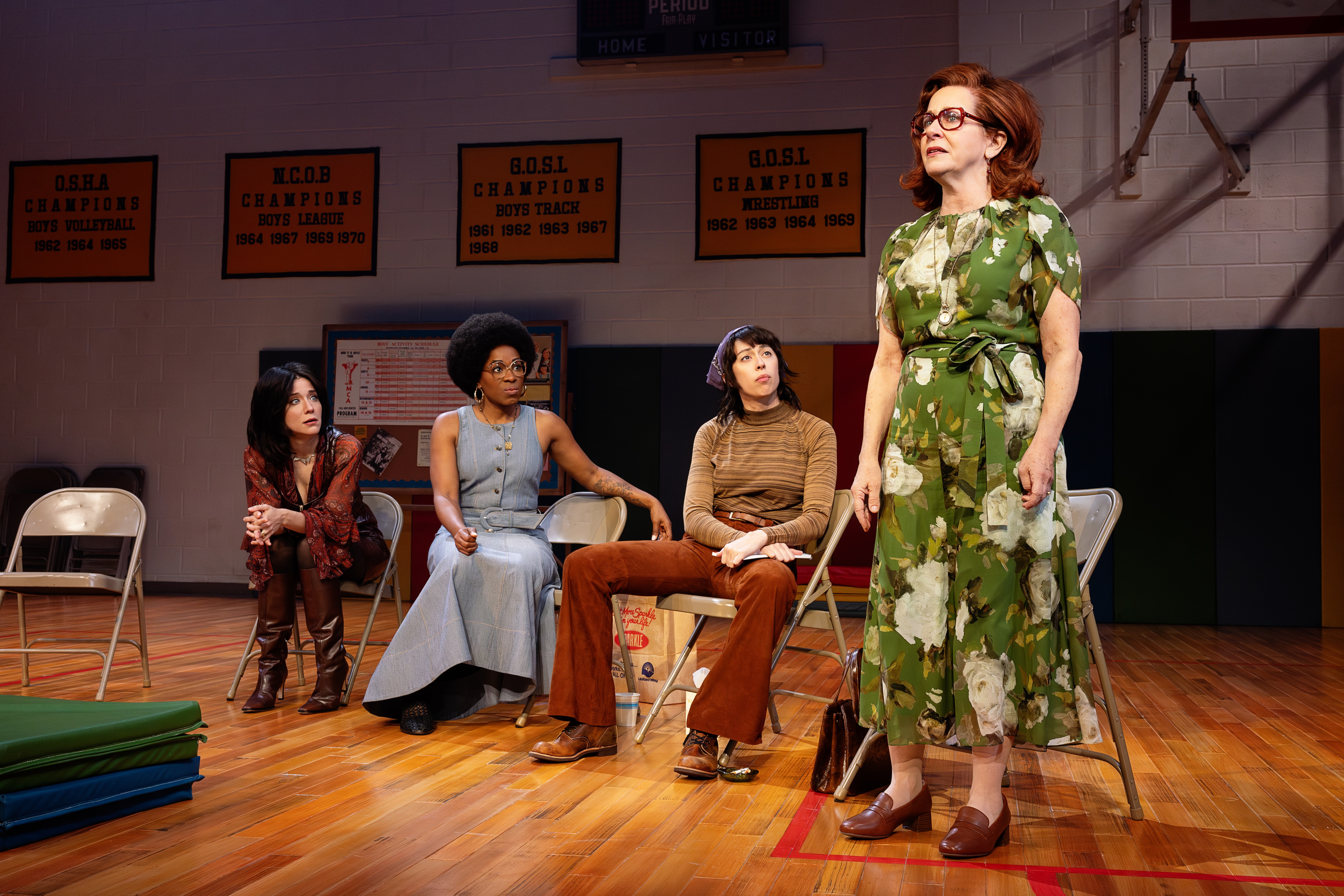
Much of what made Liberation so moving Off-Broadway remains gloriously intact: Wohl’s incisive, time-bending structure; the circle of women gathering in that timeless gymnasium; and the aching beauty of their self-discovery and connectivity. The space, designed by David Zinn (Broadway’s Stereophonic), expands naturally without losing its grounding realism and its sense of safety, and Palmer Hefferan and Ben Truppin-Browan’s sound design and Qween Jean’s costumes all continue to vibrate in perfect harmony. Cha See’s lighting feels elevated and enhanced, pinpointing moments in ways I didn’t remember, but happily embrace. All together, they beautifully preserve the intimate pulse of the original while giving the story room to breathe and expand.
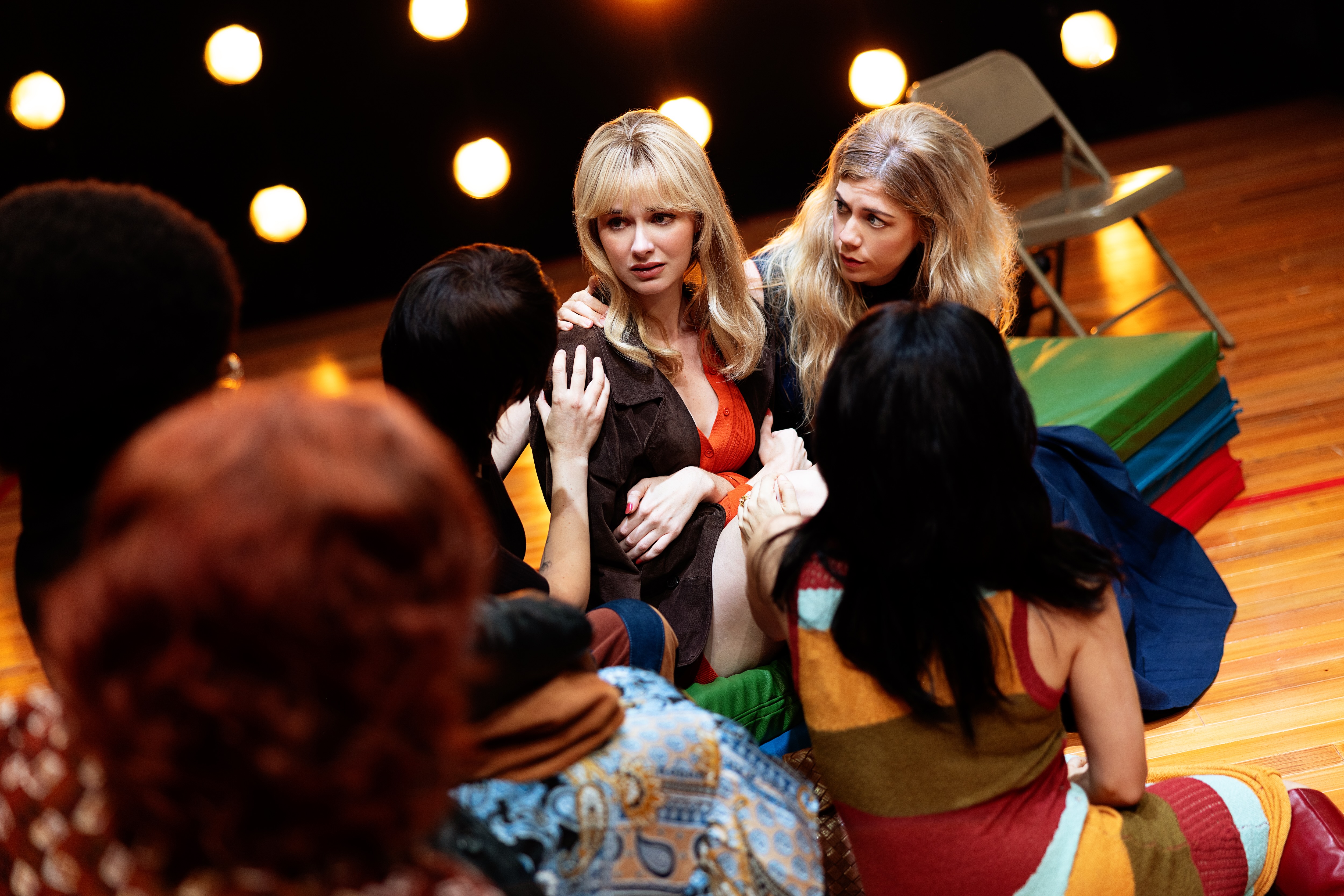
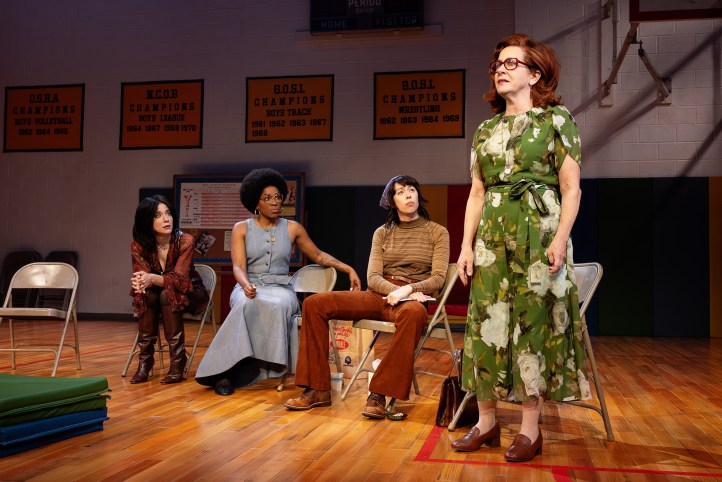
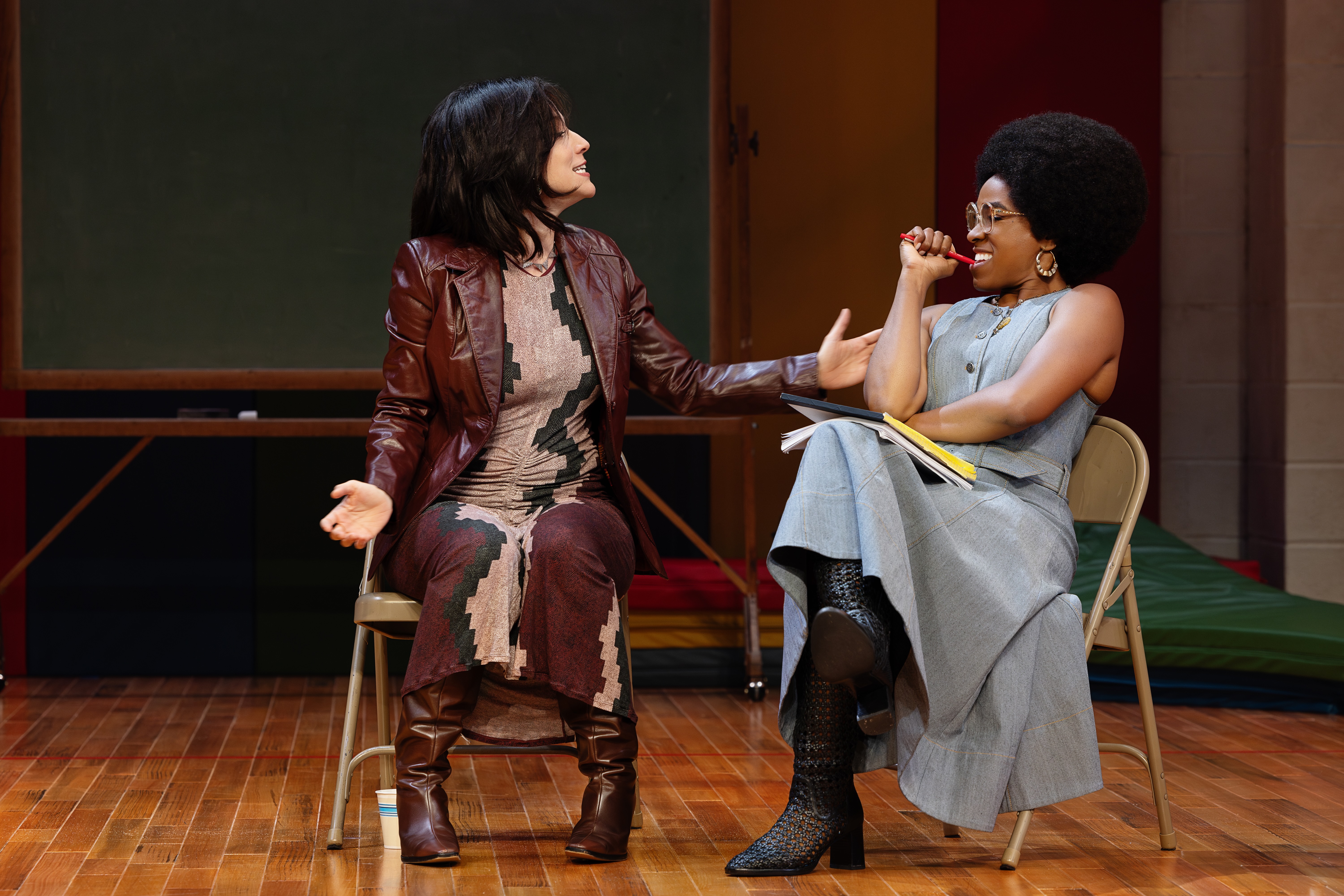
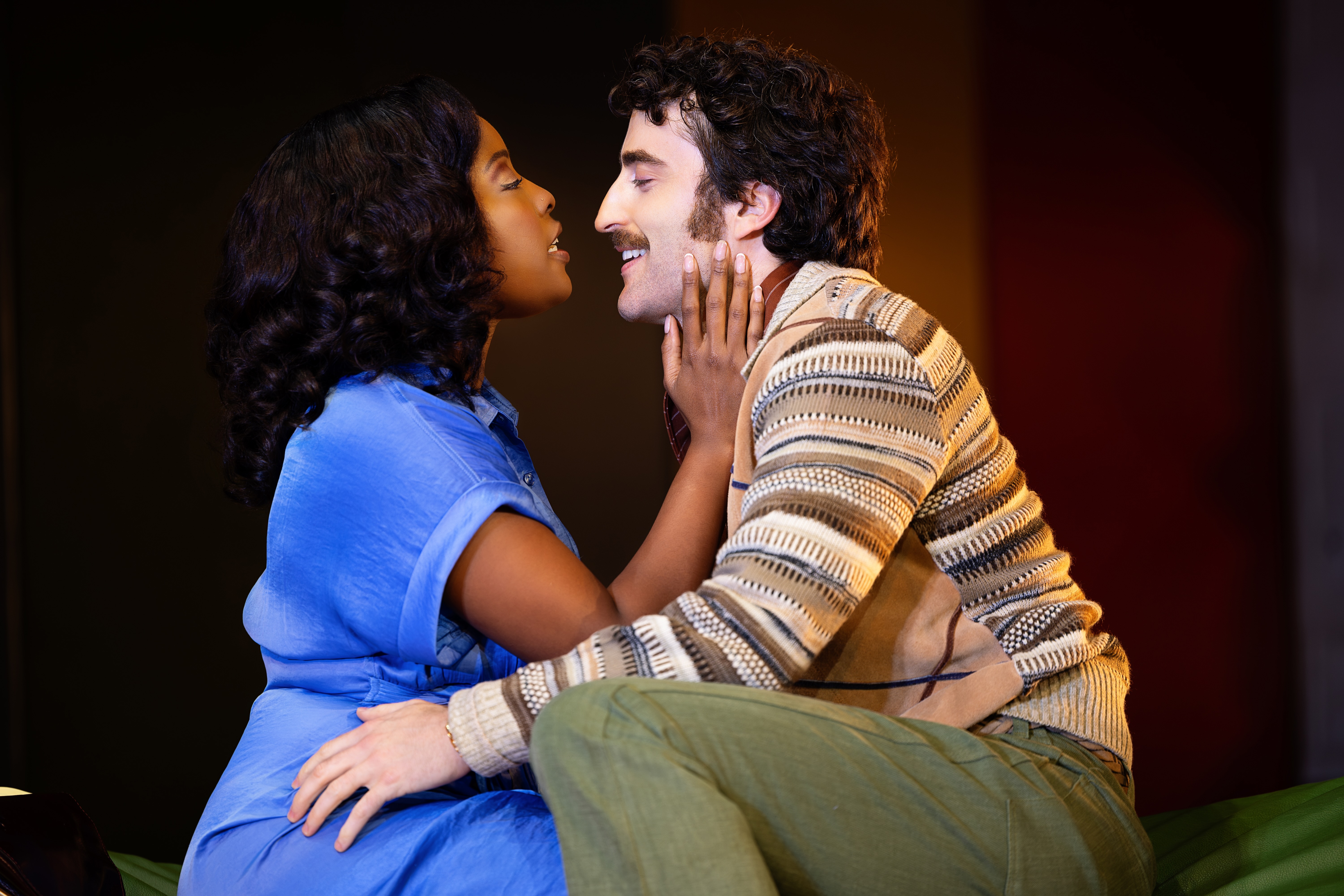
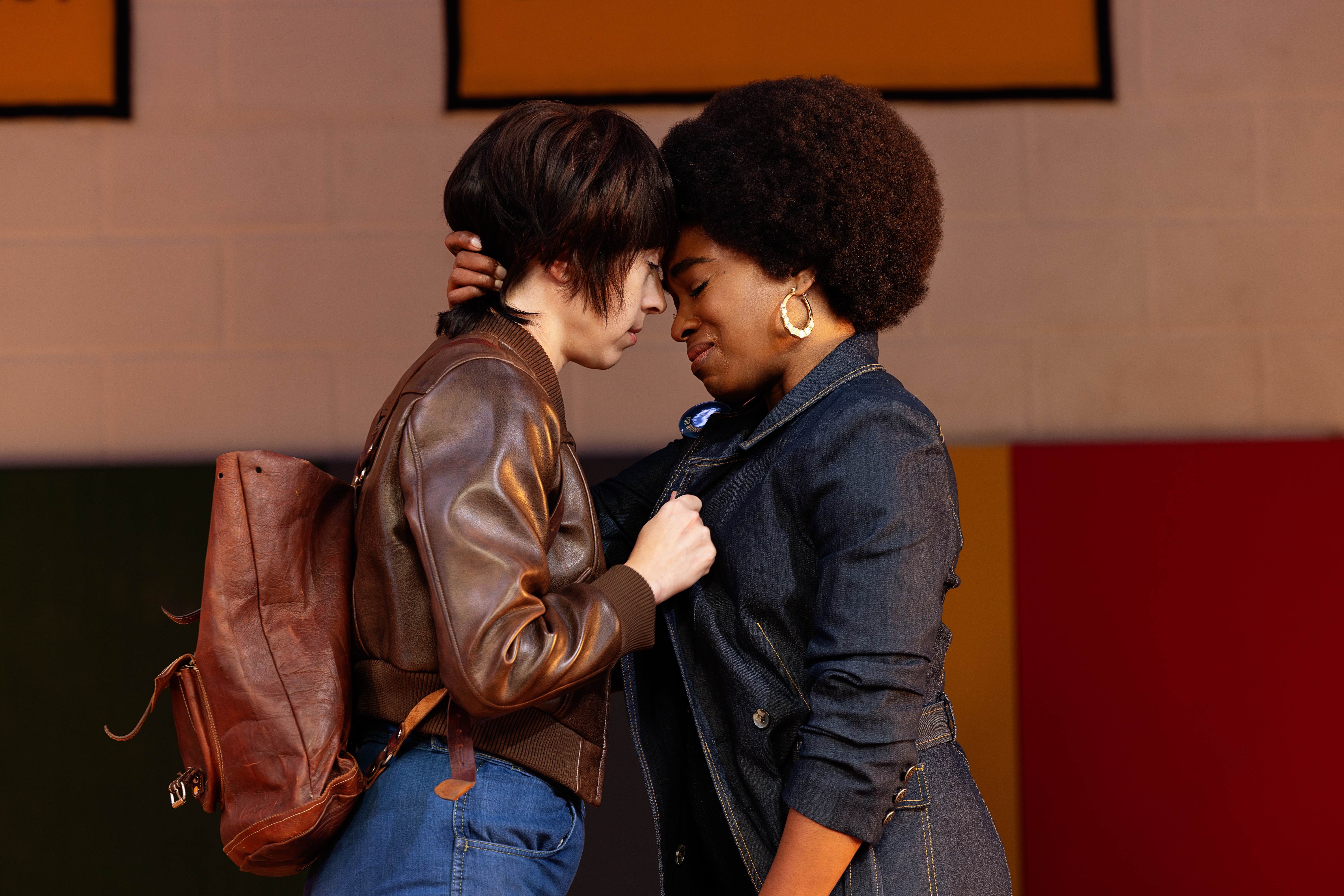
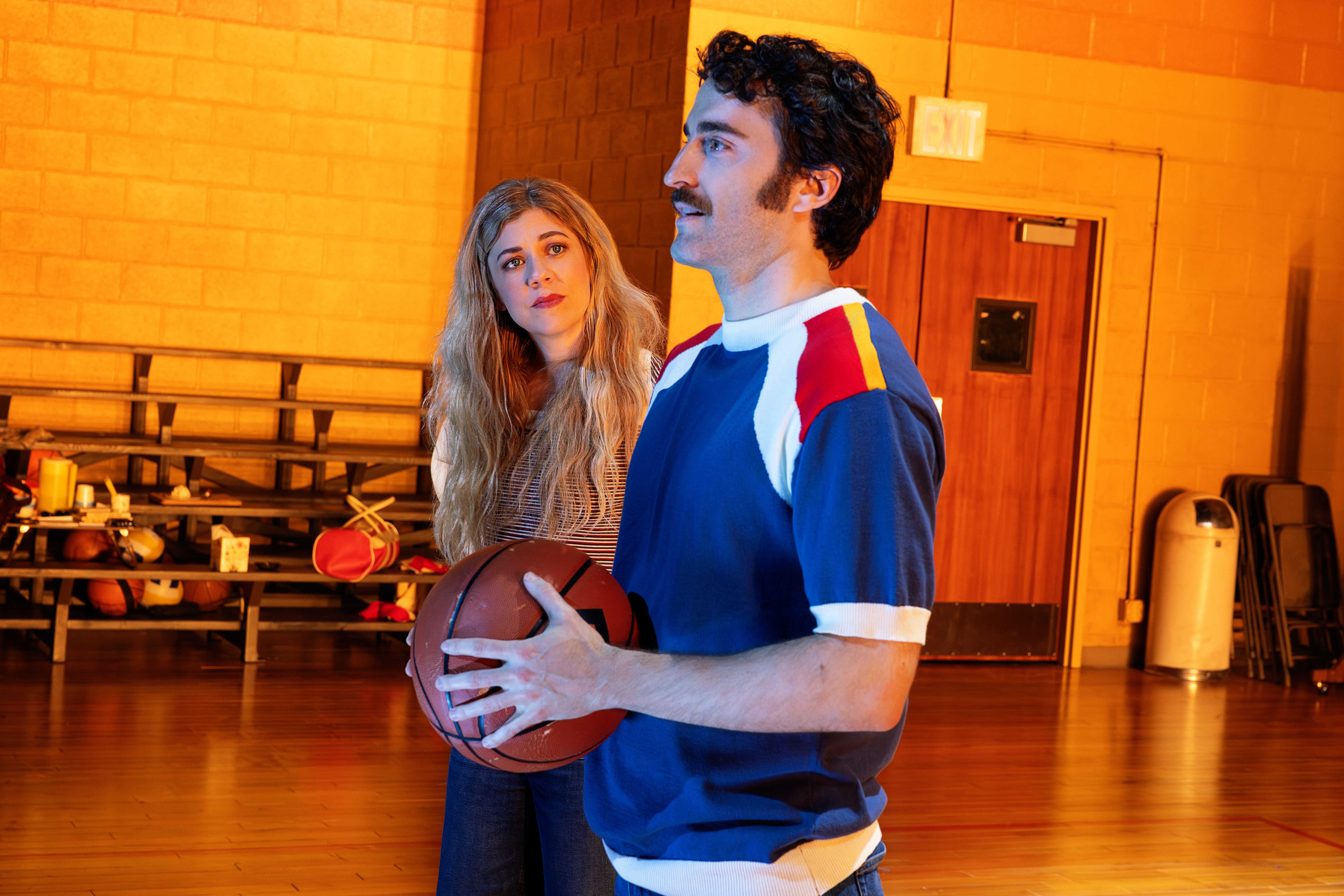
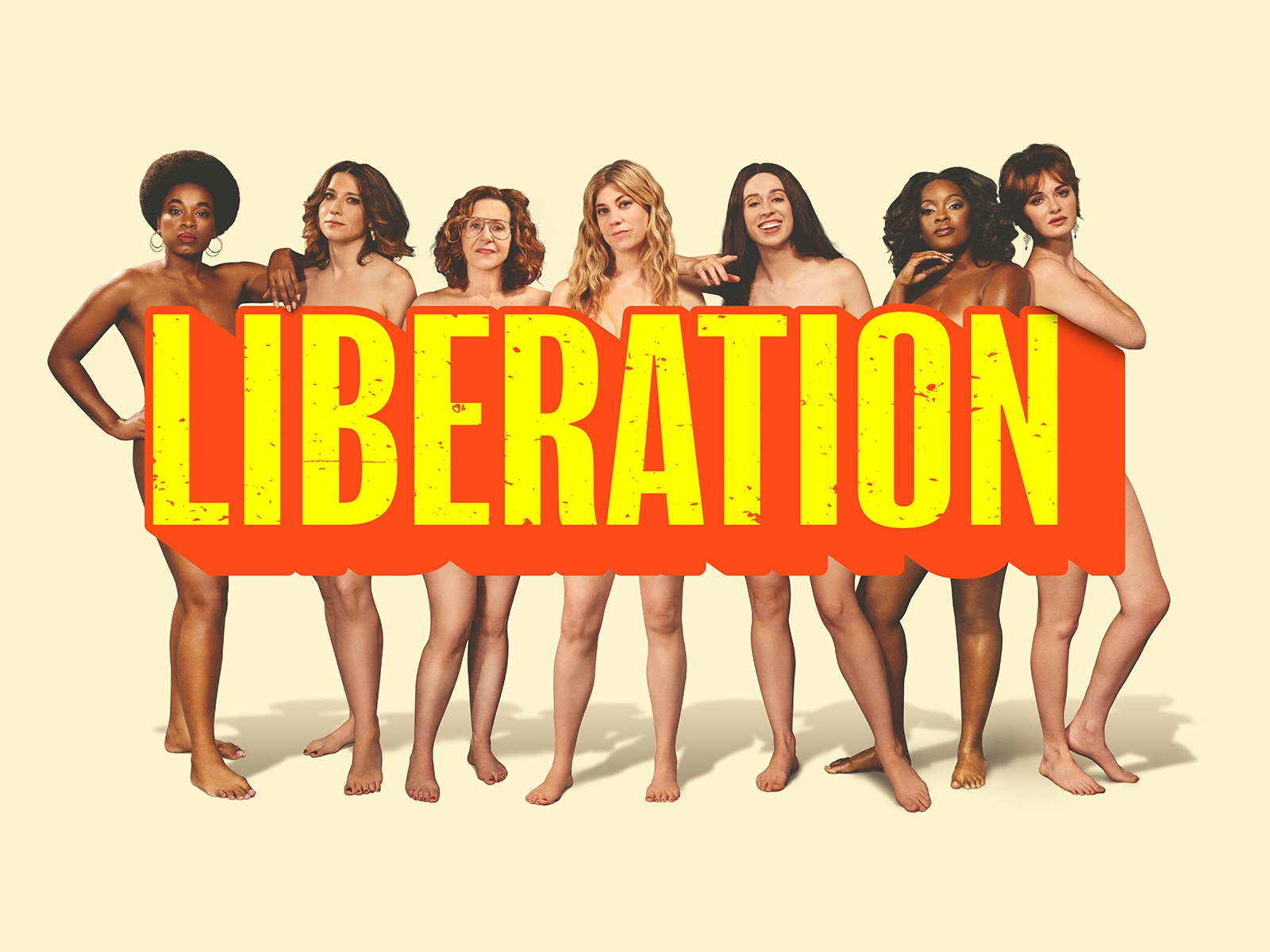
If anything, the Broadway transfer amplifies the play’s most vital theme, that the political and personal are forever entwined, and the timing of this revelation is as important then as it is now. The ensemble remains beyond spectacular, with Betsy Aidem, Kristolyn Lloyd, Irene Sofia Lucio, Adina Verson, Kayla Davion, Audrey Corso, and the lone man on stage, Charlie Thurston, shining with absolute precision and grace. Each has moments of clarity and engagement that feel truly owned and delivered at the highest level of expertise, especially Aidem when she dons a different connection with Flood’s daughter persona. Their performances blend humour, exhaustion, and determination into something profoundly human. Their solidarity, both fragile yet unbreakable, feels even more essential these days, as we watch the world explode in ways we could never have imagined years ago.
Liberation is still, at its core, a memory play about inheritance and the question of regret. It’s about the passing of burdens and strength from one generation to another, and the wondering of what could have been, should have been, or would have been had we made other choices. “Don’t go too far,” one warns, or you might start to fully realize where the “bars of the cage” are. And now, in the larger world frame, their message feels newly urgent and surprisingly relevant. It’s not just a story about the women of 1970 and their search for consciousness and equal rights, but Liberation is about us, sitting here in 2025, feeling all our feelings of rage and disappointment, still asking the same questions and still, somehow, believing in the possibility of change.
Bess Wohl’s Liberation was a supreme triumph Off-Broadway. On Broadway, it’s a revelation of the highest order, possibly the best of the season. It tugs and pokes at my heart in ways this gay man, born in the mid-1960s, still can’t fully understand, but boy, did it connect to something. Maybe both my rage at this country and my fear of its future. It’s a play that doesn’t just revisit the past but insists we carry its unfinished revolution forward. And I plan to, with my fist held up high and my soul wanting something better for us all.

 front mezz junkies
[…] 1. Off-Broadway/Broadway’s Liberation […]
LikeLike
[…] David Herskovits, Show/Boat: A RiverWhitney White, Walden and Liberation […]
LikeLike
[…] sense of immersion. Andrew Boyce’s sparse, gym-like set, lit tightly by Cha See (Broadway’s Liberation), creates an arena that feels both literal and psychological, a space where confrontation is […]
LikeLike
[…] identity that first brought them attention. Titles such as Cold War Choir Practice, Giant, and Liberation reflect a season that has embraced bold theatrical language and complex […]
LikeLike
[…] to the 2026 guidelines, productions such as Titanique, alongside Cats: The Jellicle Ball and Liberation, were considered in previous seasons, with only new elements eligible for recognition. Their […]
LikeLike
[…] work that has left a distinct visual imprint across productions, including Cats: The Jellicle Ball, Liberation, and Saturday […]
LikeLike
[…] Vic), CATS: The Jellicle Ball, Eurydice, Exorcistic: The Rock Musical, Heathers the Musical, Liberation, Marjorie Prime, Oratorio for Living Things, The Whole of Time, Titanique, and You Got […]
LikeLike
[…] (Carry a Cake Across New York) all vying for the top prize. On the play side, The Balusters, Giant, Liberation, and Little Bear Ridge Road step forward as this year’s contenders, offering a range of voices […]
LikeLike
[…] once in a lifetime. Other major winners included Mexodus for Outstanding Production of a Musical, Liberation for Outstanding Production of a Play, Lear deBessonet for her direction of Ragtime, and Joe […]
LikeLike
[…] Theater Artist of the SeasonMichael Arden Shayok Misha ChowdhuryLuke EvansQween JeanConstantine RousouliBrandon […]
LikeLike
[…] Theater Artist of the SeasonMichael Arden Shayok Misha ChowdhuryLuke Evans[winner] Qween JeanConstantine RousouliBrandon […]
LikeLike
[…] Balusters, David Lindsay-AbaireGiant, Mark Rosenblatt ✅🤞 Liberation, Bess WohlLittle Bear Ridge Road, Samuel D. […]
LikeLike
[…] danced away with the night’s biggest prize as Best Musical, while Bess Wohl’s Liberation claimed Best Play, capping off a remarkable season for both productions at the 79th annual Tony […]
LikeLike
[…] in a Play. Daniel Radcliffe earned Best Lead Performer in a Play for Every Brilliant Thing, while Liberation was voted Best New Play. Elsewhere, Ragtime was selected as Best Revival of a Musical, and […]
LikeLike
[…] which has undergone many alterations to become a theater, was once again made whole. (Set Design by David Zinn) I was reminded of my own suburban Midwestern Catholic Church that I grew up attending. Everything […]
LikeLike
[…] at Manhattan Theatre Club‘s Samuel J. Friedman Theatre, with Whitney White (Broadway’s Liberation) directing. Denée Benton, Patina Miller, Jasmine Amy Rogers and an ensemble of performers bring […]
LikeLike