
The Broadway Theatre Review: Little Bear Ridge Road
By Ross
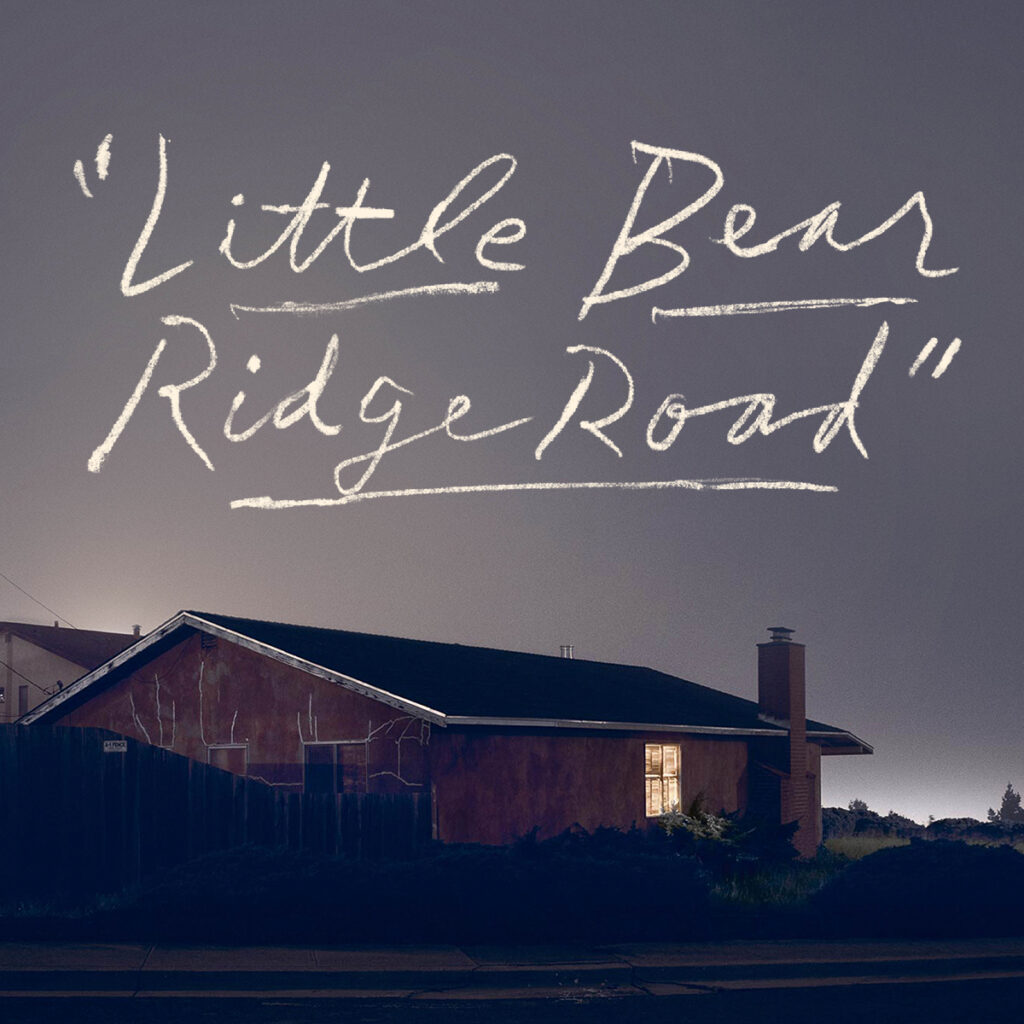
The shadow of an overhead fan engulfs the space with its stark rhythm and cold lines. It fits perfectly alongside a shiny plastic covered couch that tells you everything about the desolation of emotion that hums inside the new Broadway play, Little Bear Ridge Road. Written with clear compassion and intensity by Samuel D. Hunter (Lewiston/Clarkston; Greater Clements), his newest excavation of American loneliness grips the Booth Theatre with a tautness and clarity that feels almost brutal in its sharpness.
At its core is the impressive Laurie Metcalf (Broadway’s A Doll’s House, Part 2), a performer whose capacity for volatility and microscopic emotional detail seems forever bottomless. As the razor-edged, beaten-down aunt, she stands on guard, purposefully marooned on the outskirts of a small Idaho town on that titular road. She doesn’t like to give an inch, nor extend a hand unless her hand is forced, and in that framing, Metcalf delivers a performance roughly carved from dysfunction, isolation, and a lifetime of self-protection. Slumped opposite her is Micah Stock (Broadway’s The Front Page) as Ethan, the just-arrived nephew, who is equally raw and exposed, matching her stance but not mirroring it. Embodying a relative whose damage feels beaten into his bones and brow, the two face off, circling one another like skittish animals, each wanting something that resembles connection, but terrified by the cost.
Hunter’s writing has always thrived on this kind of intimate smallness in the chasms between people and the tight spaces between sentences. Living within the immaculate direction of Joe Mantello (Broadway’s Hillary and Clinton), the play becomes a faulty-fused pressure cooker of grief, heartbreak, and unspoken need, sliced with humor and compassion for these two damaged souls. Mantello expertly leans into their awkward frames, the misshapen jokes, the awkward stabs toward intimacy, allowing the text’s care and compassion to grow steadily inside its emotional detachment. The result is a work that is bitingly funny in its bleakness yet strangely tender in the way it exposes two souls who have forgotten how to trust anything and anyone outside their own solitude.

The unexpected connective pull of the production, however, comes from John Drea’s James, the boyfriend who enters the play quietly and ultimately expands its emotional universe. Drea (Goodman’s The Sound Inside) plays him with such an open-hearted awkwardness that he becomes the audience’s emotional entry point, our quiet way into the mess these two have inherited and continue to inhabit. His presence softens the edges of the playing field without diminishing the sting. These two central figures are starved for something as simple as being seen, and Drea’s James delivers that into their vulnerable hearts in some surprising, compassionate ways, without losing his own sense of self. Meighan Gerachis, as Paulette, contributes her own sharp flicker of humanity, underscoring how even secondary encounters reverberate through these damaged constellations.
Physically, the production embodies a masterful connection to minimalism done with intention and clarity. Scenic designer Scott Pask (Broadway’s The Prom) crafts a space that feels as stark and realistically uncared for as the relationships unfolding within it. Jessica Pabst’s costumes ground the characters in understated authenticity, while the lighting by Heather Gilbert (Audible’s Dead Outlaw) sculpts the vast emotional hollows of the Idaho night with a quiet, affecting precision. Mikhail Fiksel’s sound design ties it all together, subtly underscoring the play’s cosmic loneliness without ever tipping into sentimentality. Each element feels calibrated toward Hunter’s larger idea that the void is expansive, the universe indifferent, and that connection is a messy, unsteady, and hard-won road to travel down, no matter what shape your car is in.
What makes Little Bear Ridge Road linger is its complete refusal to judge its characters, even as it exposes their failings with unforgiving clarity. Metcalf and Stock deliver completely authentic and moving performances that feel almost dangerously vulnerable. They strip their characters down to the anxious tremors and ticks of people who want love but no longer believe in their own ability to give or receive it. Mantello shapes the entire journey with a steady, compassionate hand, allowing Hunter’s work to resonate like a quiet explosion that makes no attempt to destroy so much as reveal the fault lines we carry inside us.
Little Bear Ridge Road becomes exactly what it promises: a sharply etched portrait of two people fumbling across an emotional divide, terrified that connection might swallow them like a black hole, yet somehow making the attempt anyway. On that lonely Idaho ridge, under the vast and indifferent stars, Little Bear Ridge Road finds something profoundly human and profoundly moving, standing, slumped at the fragile intersection of fear, longing, and the stubborn hope that we might still reach out to one another and find hope.
 front mezz junkies
[…] Rudin and Barry Diller, marking Rudin’s continued re-entry into the Broadway landscape following Little Bear Ridge Road. His presence alone is enough to reignite discussion in certain corners of the industry, though […]
LikeLike
[…] my review, I wrote that the play’s “bleak humor and profound tenderness” make it a “sharply etched […]
LikeLike
[…] 8. Broadway’s Little Bear Ridge Road […]
LikeLike
[…] raising the emotional and existential stakes with every rotating shift. Sarah Laux’s costumes, Heather Gilbert’s lighting, and Josh Schmidt’s sound design remain finely tuned to the escalation, guiding us […]
LikeLike
[…] as Willy and Linda Loman under the direction of Tony Award winner Joe Mantello (Broadway’s Little Bear Ridge Road). The pairing alone has generated considerable excitement, promising an actor-driven revival […]
LikeLike
[…] Cullman, Becky ShawStephen Daldry and Justin Martin, KyotoJoe Mantello, Death of a Salesman and Little Bear Ridge RoadMarshall Pailet, Marcel on the […]
LikeLike
[…] Little Bear Ridge Road […]
LikeLike
[…] surprise, the New York Drama Critics’ Circle has named one of my favourite plays of the season, Little Bear Ridge Road, as Best Play of the 2025-26 season. It feels like one of those moments, a recognition of a play […]
LikeLike
[…] New York) all vying for the top prize. On the play side, The Balusters, Giant, Liberation, and Little Bear Ridge Road step forward as this year’s contenders, offering a range of voices and storytelling approaches […]
LikeLike
[…] with clarity by Joe Mantello (Broadway’s Little Bear Ridge Road), this 2026 Broadway revival leans fully into the fractured architecture of Miller’s text, […]
LikeLike
[…] Little Bear Ridge Road […]
LikeLike
[…] ShawStephen Daldry and Justin Martin, Kyoto***Joe Mantello, Death of a Salesman*** and Little Bear Ridge RoadMarshall Pailet, Marcel on the […]
LikeLike
[…] Outstanding Broadway PlayThe BalustersGiantLittle Bear Ridge RoadPunch […]
LikeLike
[…] Outstanding Broadway Play[winner] The Balusters (tie)[winner] Giant (tie)Little Bear Ridge RoadPunch […]
LikeLike
[…] Balusters, David Lindsay-AbaireGiant, Mark Rosenblatt ✅🤞 Liberation, Bess WohlLittle Bear Ridge Road, Samuel D. […]
LikeLike
[…] convert any of its nine nominations into wins. Chess, Titaníque, The Balusters, Waiting for Godot, Little Bear Ridge Road, and several other productions likewise found themselves applauded but unawarded. Yet Broadway […]
LikeLike
[…] production will also feature an acclaimed creative team, including scenic designer Scott Pask, costume designer Tom Broecker, lighting designer Natasha Katz, sound designer and original music […]
LikeLike