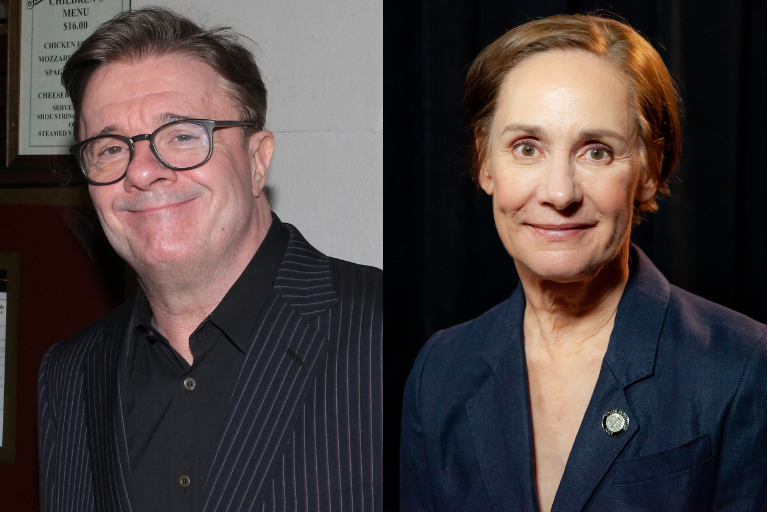
(Photo © David Gordon/Seth Walters)
Frontmezzjunkies Reports on The Revival of Arthur Miller’s Death of a Salesman
By Ross
Arthur Miller’s Death of a Salesman is heading back to Broadway next spring, and the announcement alone has already stirred up a familiar mix of excitement, scrutiny, and spirited debate (along with a noticeable and reasonable concern). It’s difficult not to feel a genuine spark at the prospect of Nathan Lane (Broadway’s Pictures From Home) taking on Willy Loman under Joe Mantello’s direction, with Laurie Metcalf (Broadway’s Grey House) as Linda. That pairing alone could sell out a season’s worth of Wednesday matinees. The 14-week engagement begins previews March 6, 2026, at the Winter Garden Theatre, with an official opening on April 9.
They’ll be joined by Christopher Abbott (Broadway’s The House of Blue Leaves; “Poor Things“) as Biff and Ben Ahlers (“The Gilded Age“) as Happy. On paper, it’s an actor-driven revival with undeniable star power. Yet, understandably, the casting has prompted a spirited conversation, especially given the recent and very different 2022 Broadway production directed by Miranda Cromwell, which starred Wendell Pierce and Sharon D. Clarke. That revival reframed the play through a Black family’s experience inside the American Dream, opening up emotional and sociopolitical textures that many audiences (myself included) found revelatory. It demonstrated how flexible Salesman can be when directors interrogate not just its text but its cultural positioning, and it raised expectations for what a modern revival might consider or include.
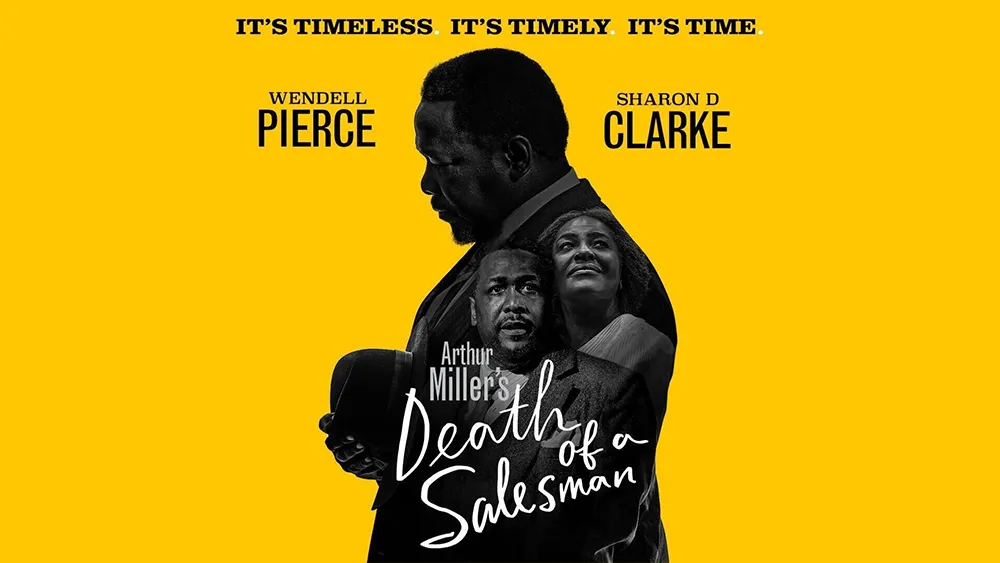
So, as this new Lane-Metcalf production approaches, there’s an understandable curiosity, some of it enthusiastic, some of it wary, about how the producing team is situating Salesman in 2026, and what it means to return to a white, celebrity-led Loman family so soon after such a groundbreaking reimagining. That tension doesn’t exactly dampen anticipation, but it certainly does frame it in a different way.
The production is led by Scott Rudin and Barry Diller, marking Rudin’s continued re-entry into the Broadway landscape following Little Bear Ridge Road. His presence alone is enough to reignite discussion in certain corners of the industry, though clearly not enough to stall the momentum of a revival of this scale.
From the Miller estate’s perspective, though, enthusiasm seems high. Kate Miller, Trustee of the Arthur Miller Literary and Dramatic Property Trust, describes Mantello’s approach as one rooted in archival deep-diving, engaging with early drafts and rediscovering impulses and theatrical ideas that have long been buried beneath decades of interpretation. Mantello echoes this, calling the access to the archives “rewarding” and suggesting he’s found elements that feel “unexpectedly modern.”
Lane, in classic Lane fashion, frames this revival as a promise fulfilled: a quiet declaration Mantello (Broadway’s The Humans, Three Tall Women) made to him nearly thirty years ago, finally coming true. Metcalf, ever the collaborator, points to the comfort and trust she shares with both men, a familiarity that turns something daunting into something “thrilling.”
The design team: Chloe Lamford (scenic), Rudy Mance (costumes), Jack Knowles (lighting), and Mikaal Sulaiman (sound), suggests a visually driven revival rather than a purely nostalgic one. That alone raises intriguing possibilities for what “traditional” might look like under Mantello’s restrained, sculptural theatrical sensibility.
Of course, Salesman has been revived half a dozen times on Broadway, with actors as varied as Lee J. Cobb, George C. Scott, Dustin Hoffman, Brian Dennehy, Philip Seymour Hoffman, and, most recently, Wendell Pierce, whose performance reshaped long-familiar lines with startling urgency. I’m also very much looking forward to this iconic play to hit the main stage of the Stratford Festival this year, starring Lucy Peacock and Tom McCamus. Each revival refracts the play’s questions about work, worth, and American self-mythology through a new historical moment.
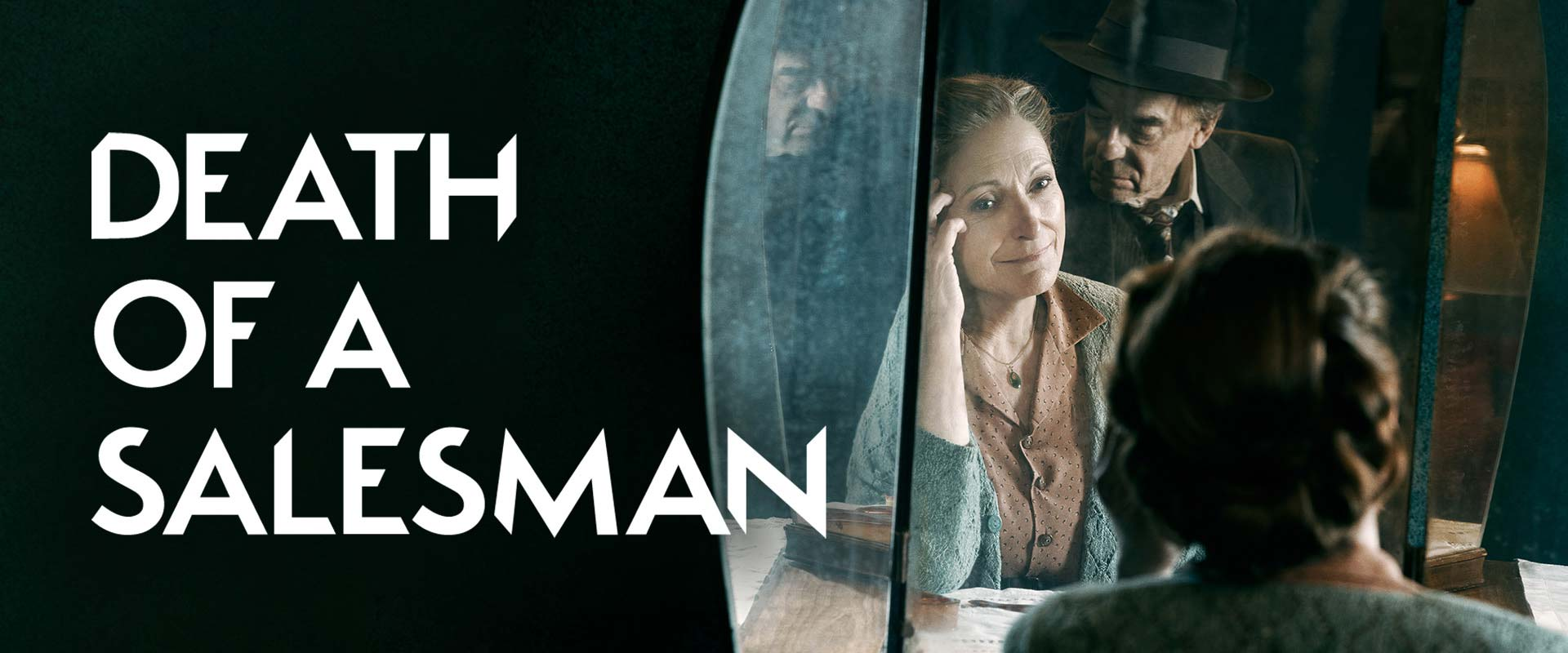
This latest Broadway revival will inevitably be in conversation, whether intentionally or not, with Cromwell’s 2022 production, which cracked open one of the most canonical plays in the American theatre and revealed its racial dimensions with devastating clarity. So the question lingering as Mantello’s revival approaches isn’t whether it will be good (the talent involved almost guarantees that), but how it will speak to a moment that is already fractured, attentive, and alert to who gets to embody these iconic narratives, and who is allowed back in the producer’s seat.
Either way, the curiosity is real. And like many others, I’ll be there, ready to see how this new Salesman positions itself in the legacy of one of Broadway’s most contested, most revived, and still most haunting plays.
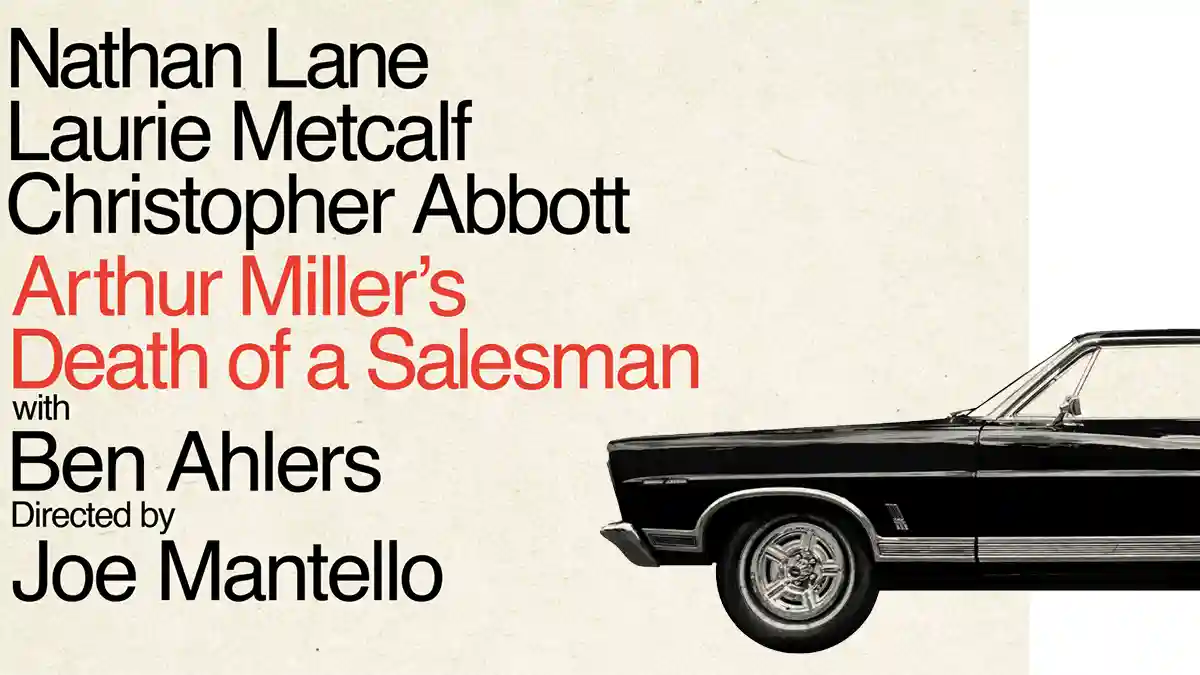
More at SalesmanBroadway.com.
 front mezz junkies
[…] Broadway boards alongside Barry Diller, with more projects reportedly in the wings; a revival of Death of a Salesman starring Metcalf and Nathan Lane is already announced for next spring. Whether or not audiences […]
LikeLike
[…] performance aimed squarely at connection, not applause. On the other end of the emotional spectrum, Death of a Salesman returns with Nathan Lane and Laurie Metcalf, a pairing so theatrically potent it practically hums […]
LikeLike