The Toronto Theatre Review: Riot King’s sharp, surreal Gothic comedy about longing, isolation, and being seen
By Ross
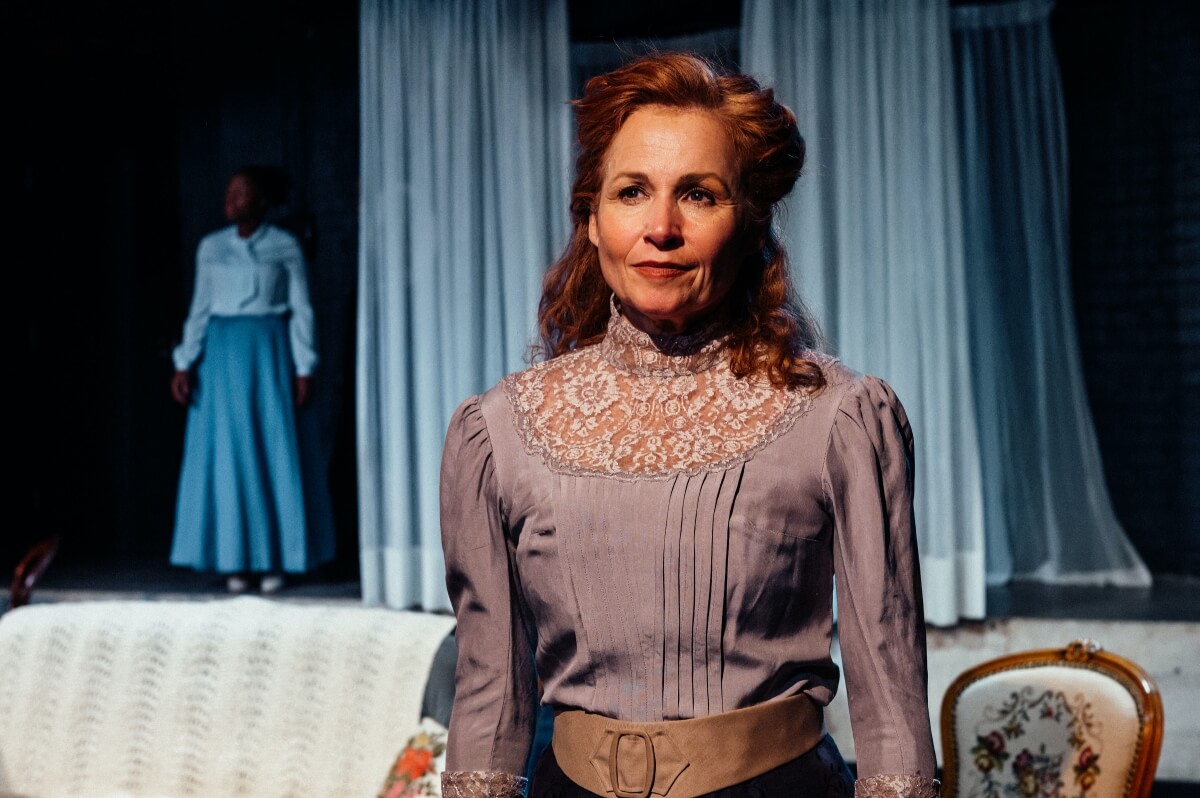
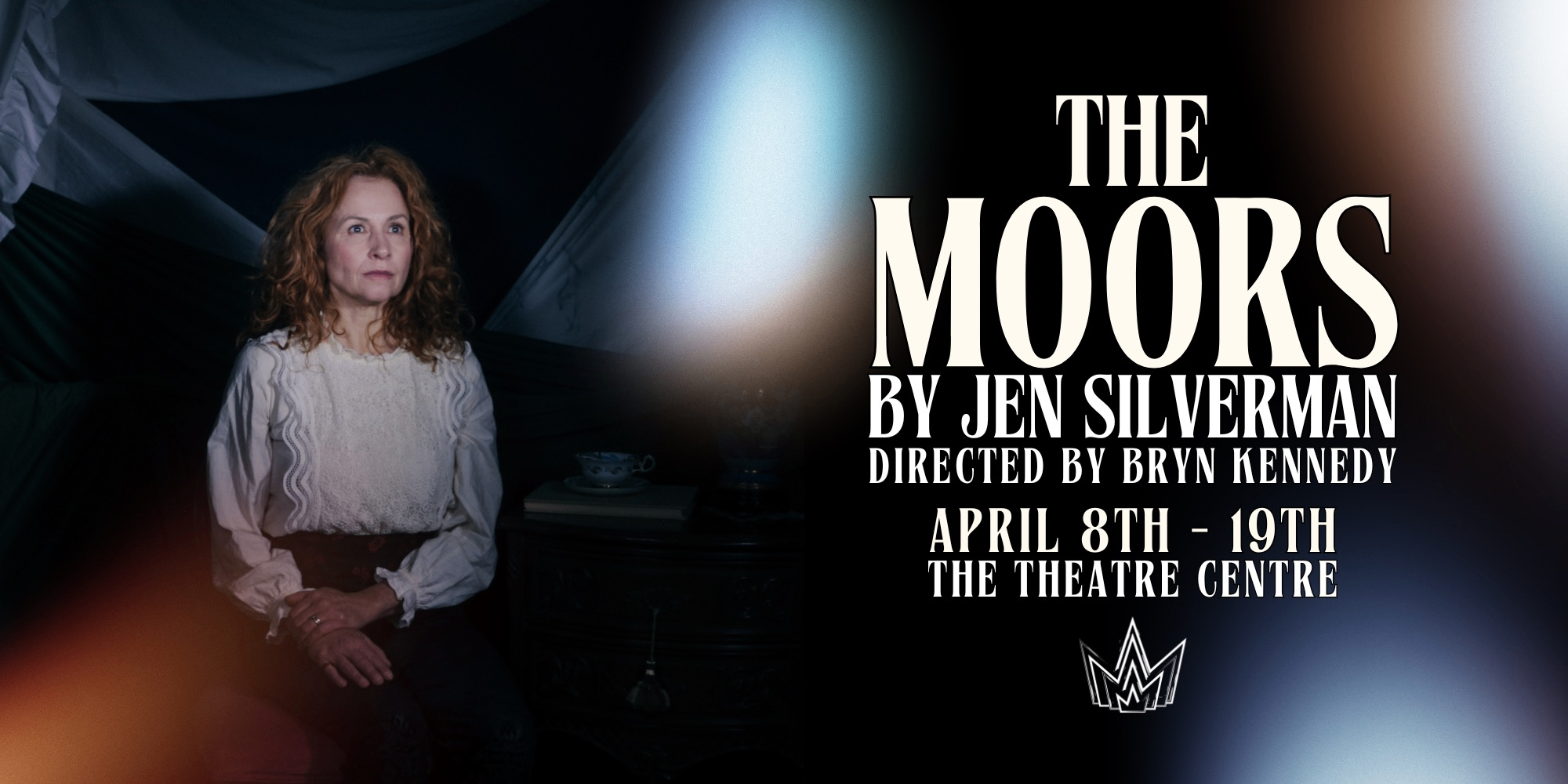
A bird crashes into the window as the wind howls, almost from the moment the lights come up. Nothing on stage suggests any of these qualities beyond a clear reaction that startles us all. “Is this acceptable?” she barks, alongside her dog. “Don’t answer that,” she adds, quickly and forcefully. And in that moment, we can’t help but notice the strange and immediate pull of The Moors, presented by Riot King Art Market at The Theatre Centre, Toronto. A savage and wild world is instantly created, where stillness and coldness carry weight and where the promise of connection is always just slightly out of reach.
There is a quiet between these characters that feels charged with something waiting to break or snap, and as written by Jen Silverman (The Roommate), the production deliciously leans into its Gothic roots with a knowing sense of play and mischief. A young governess arrives at an isolated manor expecting purpose and possibly, excitedly, some passion, only to find dismissal and detachment. The master of the house isn’t anywhere to be found, the child she was meant to teach does not seem to exist, and questions that continually go unanswered. What remains are two polar-opposite sisters, a maid who may not be singular, and a dog who seems to understand more than anyone else in the room. From that initial formal introduction, the play smartly unfolds in a darkly comic manner, with delightfully fascinating explorations of intense longing, identity, and the need to be seen wholeheartedly.
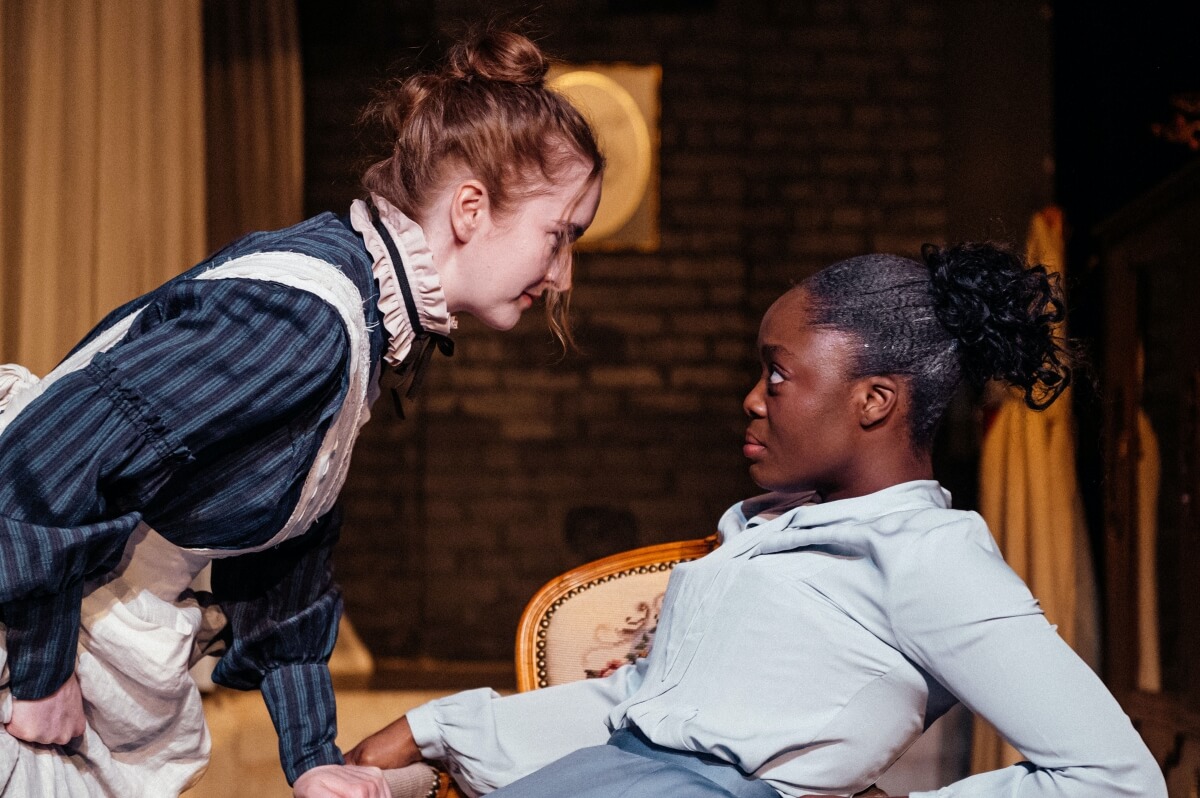
There is “no weakness in the Moors,” we are told, and the created environment fully supports that instability with precision. Director Bryn Kennedy’s set allows the space to shift from parlour to bedroom to gallery without any physical change whatsoever, relying instead on a sharp, witty, and recurring joke that elevates the environment in a shockingly satisfying way. The lighting design by Franco Pang (Luminato’s Queen of the Night) expertly defines mood and location, giving us an interior and exterior life that is clear, clever, and concise. The transitions are fluid and slightly, comically disorienting, as though the house itself is rearranging its internal logic as the characters move through it. Costumes by Madeline Ius (By the Bay’s Icemen) ground the production in a recognizably Victorian world, only to fracture it with unexpected touches, including a protective plastic layer that feels both “American Psycho“-absurd and utterly revealing. Sound design by Ian Ottis Goff (Falling Iguana’s Crane Girl) diligently threads through the piece with a subtle tension that supports its tonal shifts, allowing the comedic moments to land without losing the unease beneath them.
As directed playfully by Bryn Kennedy (Theatre Born Between’s Vitals), the entire cast expertly embraces the play’s strange, shifting tone. Raquel Duffy (Coal Mine’s Appropriate) cleverly delivers forth the oldest sister, Agatha, as rigid, controlled, and controlling, her stiffness masking a deeper hunger for something beyond the confines of the house. Sitting in opposition to her, Lindsey Middleton (“Cows Come Home“; Riot King’s Suddenly, Last Summer) unravels the younger sibling, Huldey, who is wildly unpredictable, naïve, and desperately in need of attention. Middleton’s unhinged and electric performance carries a superb chaotic energy that refuses to be boring. In her desire to not be sorry, she builds toward a final sequence that feels both theatrical and deeply unhinged, pushing the play breathtakingly into a space that borders on surreal spectacle.
As Emilie, the governess who arrives searching for purpose, Blessing Adedijo (Hulu’s “The Testaments“) brings a grounded sincerity that anchors the more eccentric elements around her. Her initial giddiness, optimism, and her song slowly give way to something more complex and compelling, as the reality of her situation becomes clearer and more exciting. That shift is handled with the utmost care, allowing Emilie to move from romantically hopeful outsider to someone fully entangled and ‘chosen’ to be a part of the emotional turmoil of the family and share in the secrets that live upstairs. The maid, majestically portrayed by Erin Humphry (Cola Mine’s Breathing Corpses), exists in a state of constant transformation, full of “action verbs,” shifting between roles and intentions with a precision that adds both wild humour and unpredictability. Her polishing presence disrupts the already combustible energy of the household, injecting moments of sharp, deadpan comedy that keep the production moving even when its structure begins to waver.
And then there is the mastiff.
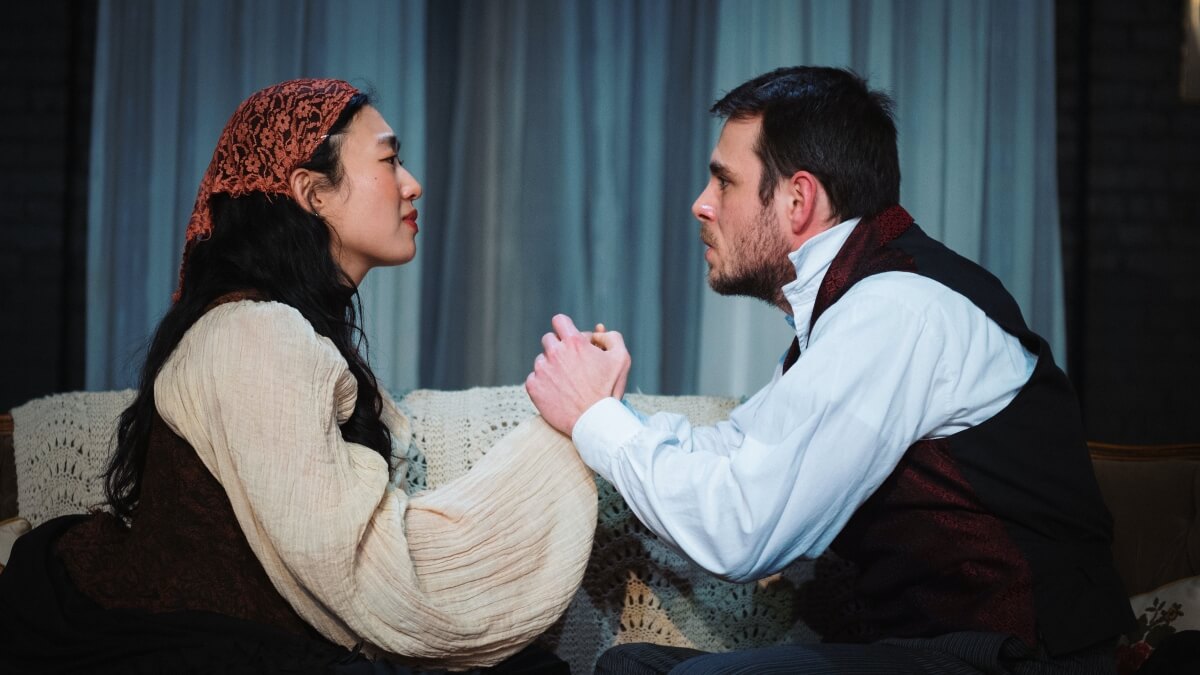
Jack Copland (Guild Festival’s Three Men in a Boat) heroically delivers one of the most compelling performances of the evening as the family’s neglected dog, a creature described as a beast that “will devour your face” if you touch it. But in reality, or at least as embodied cleverly by Copland, the creature is hopelessly driven by longing, confusion, and a desperate need for connection. His poetry and physicality are extraordinary, moving with a controlled grace that captures both the animal and the human impulses at play. Through him, the themes of isolation and desire become tangible. His struggle and yearning are not abstract. It is intuitively embodied, immediate, and deeply felt, making his presence the true emotional core.
His philosophizing and gentle demeanour are undeniable and heartbreaking, but when he comes into contact with Heeyun Park 박희윤 (Soulpepper’s Witch), as the ‘moor-hen’ who has just crash-landed outside the manor, another layer of surrealism and emotional depth is added. She enters with a kind of honest, open fragility and intensity that expands the emotional vocabulary of the piece. Her performance beautifully carries a focus and quiet vulnerability that contrasts with the more aggressive energies in the house, and when the two come together against the rain, their communion reinforces the play’s fascinating exploration of what it means to exist, on our own, outside of understanding.
“That’s one way of doing things,” she states. The writing is clever, sharp, and often very funny, drawing from the language and structure of Victorian Gothic literature and black and white films like “Rebecca” and “Jane Eyre“, while twisting it into something contemporary and somewhat self-aware. The play moves between tones with a confidence that keeps the audience enthralled, even as the narrative becomes increasingly strange. At times, however, the structure feels somewhat less certain. The motivations behind key actions can feel just out of reach, and it begins to drift off and get lost in the dangerous moors, circling and circling its ideas rather than deepening them. The play introduces several themes, including power, desire, identity, and isolation, but not all of them are given the space they need to fully resonate. The result is a production that is consistently engaging, but occasionally uneven in its focus.
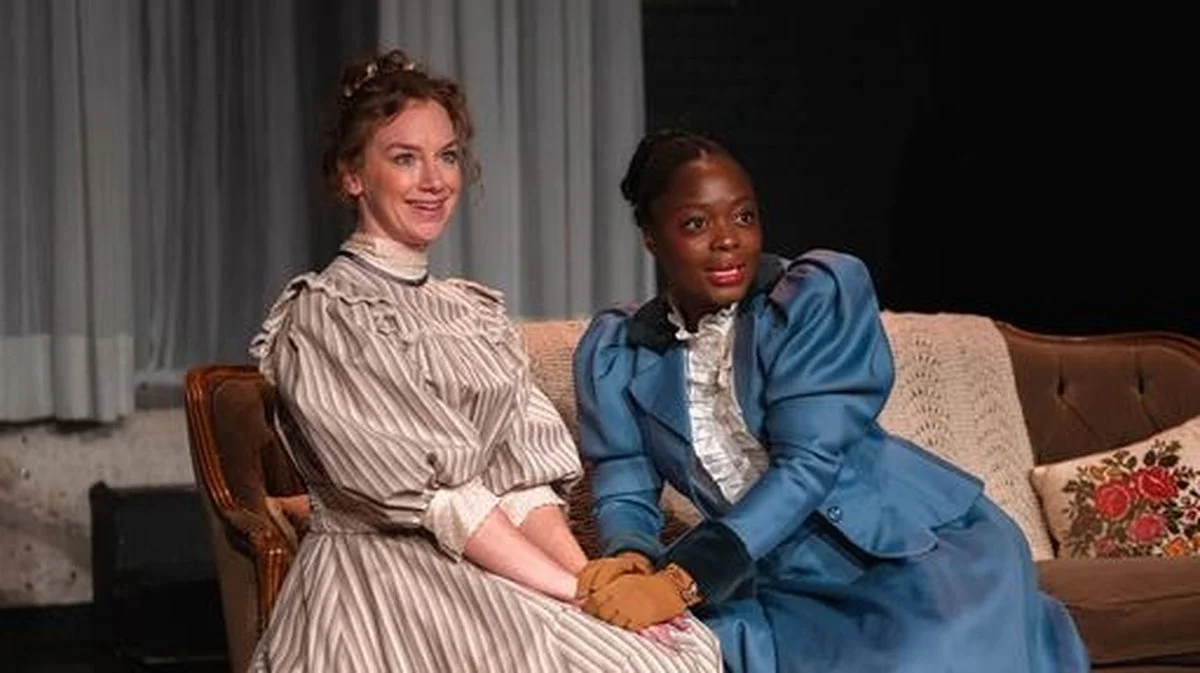
Yet within the animal world, there is something undeniably compelling and captivating. The mastiff’s dilemma, unlike his humans’, is fully realized, and committed to its own emotional truth. That connection and outcome draw us completely in. The truth, and all the human humour that exists around it, lands, the performances hold, and the atmosphere remains fully intact.
In the wild and dangerous Moors, that sense of being inside a house where everyone is searching for something they cannot quite name, quiet desperation becomes the journal entry we truly care about. That emotional clarity is what drives each character forward, even as they fail to connect in the ways they hope. The image of the dog, waiting, wanting, trying to understand what love might look like if it were ever fully returned, is what sticks, especially in the play’s final blood-red moment. That is where the play finds its deepest truth. Not in its cleverness or its theatricality, but in its understanding of how isolating it can be to exist without being seen, and how desperate it can make any of us. Watching these characters reach for connection, again and again, without ever fully grasping it, leaves a mark that lingers long after the last laugh and the lights fade.


[…] Toronto with a cast that includes Parastoo Amanzadeh, Paula Goldie, Anthony Goncharov, Sasha Khan, Heeyun Park (박희윤), Samel Sunil, and Kaeley Jade […]
LikeLike