The Toronto Theatre Review: Clare Barron’s restless, electric play soars through the chaos of becoming
By Ross
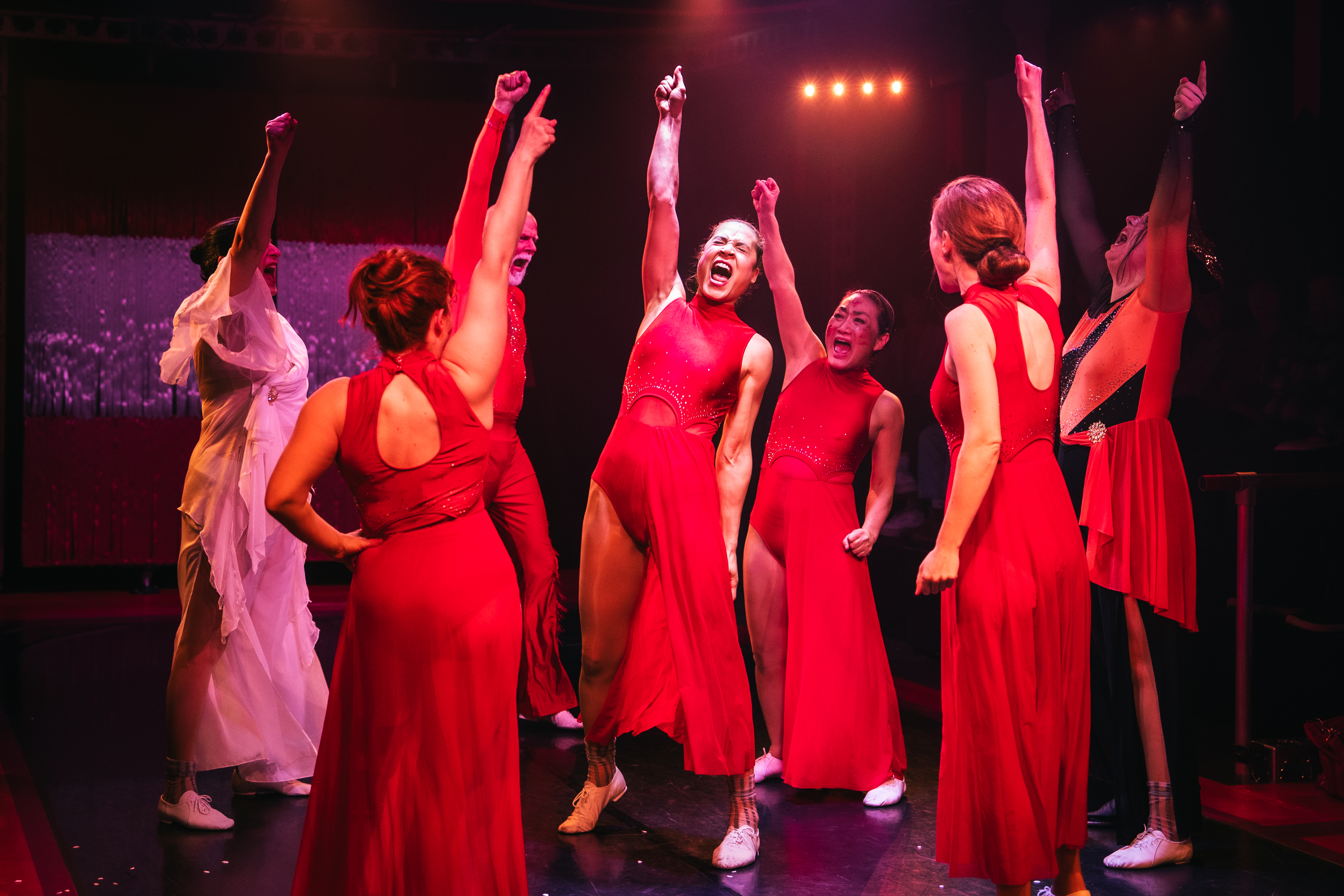
At thirteen, the body feels like it could betray you at any moment, but it also holds the dangerous possibility that it might do something extraordinary. It could elevate your life, or maybe expand your horizons. And inside Dance Nation, that tension is everywhere. The limbs that flail and stretch and snap into choreography carry both the awkwardness of adolescence and the quiet belief that something transcendent might still be possible; that a dance could cure cancer, or rescue you from being just mediocre. This is a space where competition sharpens every instinct, where the need to be seen burns through every movement, and where the idea of lifting off, of escaping the weight of self-consciousness, hovers just within reach.
Presented by Coal Mine Theatre and Outside the March in association with Rock Bottom Movement, Dance Nation by Clare Barron (You Got Older) unfolds as a two-sided coin played out on two floors, one a dance competition and the other side something far more internal and metaphoric. The two-levelled structure gives us a unique vantage point to take in a troupe of young dancers preparing for a national contest, but the real terrain lies in the confessional spaces that open up between routines. These are not simply performers chasing trophies. They are young people navigating identity, desire, fear, and the fragile architecture of self-worth, all while being watched, prodded, judged, and shaped by the adults around them.
The decision to cast adult actors in these roles is essential to the production’s emotional impact. It allows the volatility of adolescence to sit alongside a deeper awareness of what is being lost, distorted, or carried forward. The bodies on stage move with youthful intention and control, yet they are constantly betraying the uncertainty of the characters they inhabit. That duality sharpens every moment, turning scenes of competition into something more unsettling and, at times, quietly devastating.
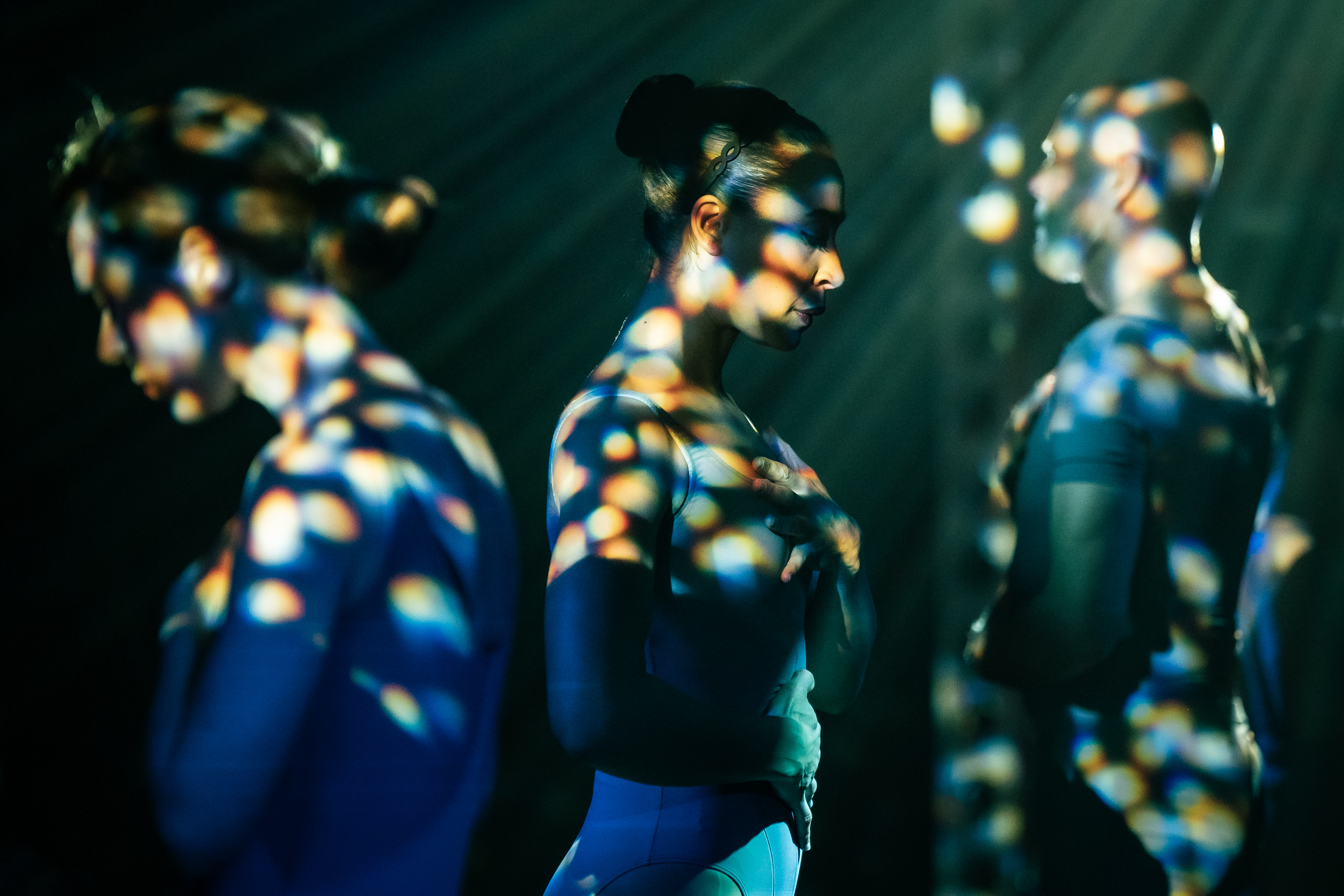
Director Diana Bentley (Coal Mine’s People, Places & Things), alongside movement director Alyssa Martin, leans fully into that instability, and it works beautifully. The choreography does not simply decorate the narrative. It becomes the pulse of the story. The ensemble moves with a kind of Bacchic intensity during certain moments, pushing them all past precision into something raw and almost uncontainable. Group numbers surge with ferocious, sharp-toothed energy, but it is in the fractures, the moments where the choreography strains or slips, that the production reveals its most telling textures. The body becomes both an instrument and a battleground, where control and creation are constantly negotiated and rarely secured.
The design created by Nick Blais (Coal Mine’s The Effect) reshapes the space in ways that feel experiential. The transition from a runway-like strip into a more immersive, surrounding environment does not follow a clear architectural logic, but it lands with a disorienting emotional force. It mirrors the internal disorientation of the characters, pulling the audience into a world that feels heightened and unsteady. Costumes by Kathleen Black (TIFT’s Cock) ground the dancers in a recognizable competitive aesthetic while allowing flashes of individuality to break through, and Miquelon Rodriguez’s sound design underscores the shifting emotional terrain with precision, carrying us from heightened performance into quieter, more vulnerable spaces.
Within the ensemble, the performances are strikingly detailed. Beck Lloyd (H+B’s Measure For Measure) as Amina holds herself with a contained brilliance, aware of her own talent but unable to fully embrace it. That tension erupts in moments where her body seems to act before she has given herself permission, claiming space with an instinct that feels thrilling and isolating in equal measure. Annie Luján (Soulpepper’s The Welkin) as Zuzu moves with a raw, aching intensity, her sense of being second-best cutting deeply into her sense of self. Her vulnerability is never softened, and it leaves its mark.
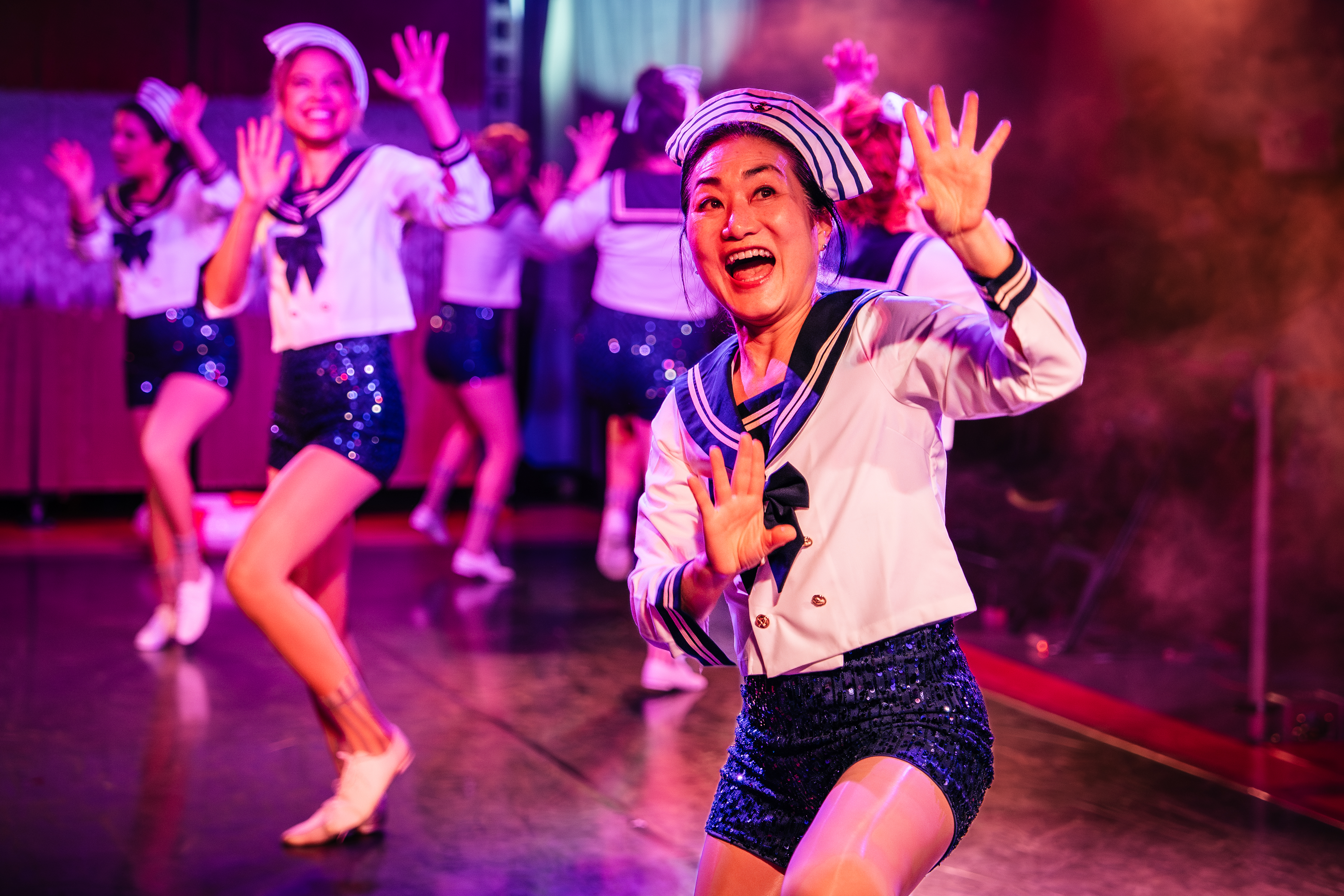
Amy Keating (Factory’s Trojan Girls…) brings a sharp, performative confidence to Ashlee that continually flickers with doubt beneath the surface, while Jean Yoon’s Sofia carries a quiet observational weight that anchors several of the production’s most affecting moments, especially in the bathroom scene that reveals the chasm-wide distance between child and parent with striking clarity. Zorana Sadiq’s Connie finds an emotional centre that cuts cleanly through the surrounding noise, particularly when she finds the strength to challenge the group’s internal dynamics and demand the “C” be heard, not silenced. As Maeve, Katherine Cullen (OtM’s Vitals) gingerly shuffles and floats through the piece with an almost untethered quality, and when she shares her belief that she can fly, it lands not as whimsy, but as something painfully sincere.
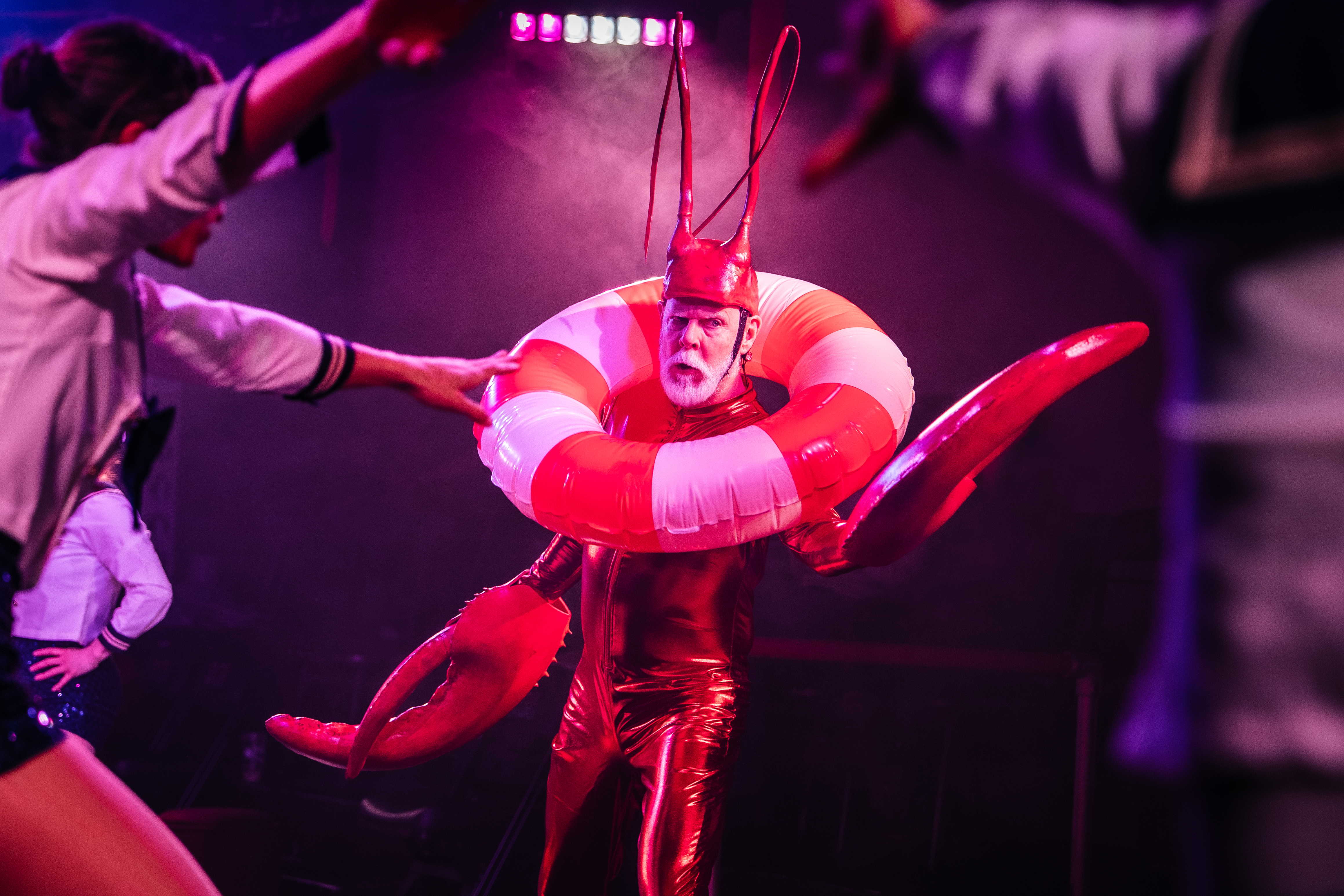
In a most tender turn, Oliver Dennis (Tarragon’s Bremen Town) brings a lobster-headed playfulness and sincerity to Luke that never loses sight of his outsider status within the group, and Salvatore Antonio’s dance teacher Pat injects the production with a heightened authority, channeling a recognizable “Bring It On” archetype without flattening it into caricature. Surrounding them, Amy Matysio (Crow’s The Bidding War) delivers a “brought-my-own-chair” gallery of dance mothers that offer sharp glimpses into the generational pressures shaping these young performers, none more affecting than the quieter exchanges that reveal how much remains unsaid.
Barron’s writing moves fluidly between satire and sincerity. The absurdity of a group of teenagers performing a number about Gandhi, barely grasping its meaning, becomes a pointed reflection on the way ambition is often dressed in borrowed significance. At the same time, the play never loses sight of the deeply personal stakes at play. The need to stand out while remaining part of a group, to be recognized without being rejected, pulses through every interaction.
That balance fractures midway through, when it pushes the production into more volatile territory. What begins as a confrontation between a dance mother and Pat spirals into something far less containable, a release that feels almost feral in its intensity. The choreography turns aggressive, the energy overtly charged, as the dancers pussy-push into a space that resists comfort and control. It does not settle there. The eruption continues, building toward a moment where language and movement collide in a way that feels deliberately destabilizing. What is spoken and acknowledged by a 13-year-old girl carries a rawness that feels startling. That confession and its resulting tension land with force. The room becomes still in response, not only in discomfort, but in recognition that something deeper and more unsettling has surfaced.
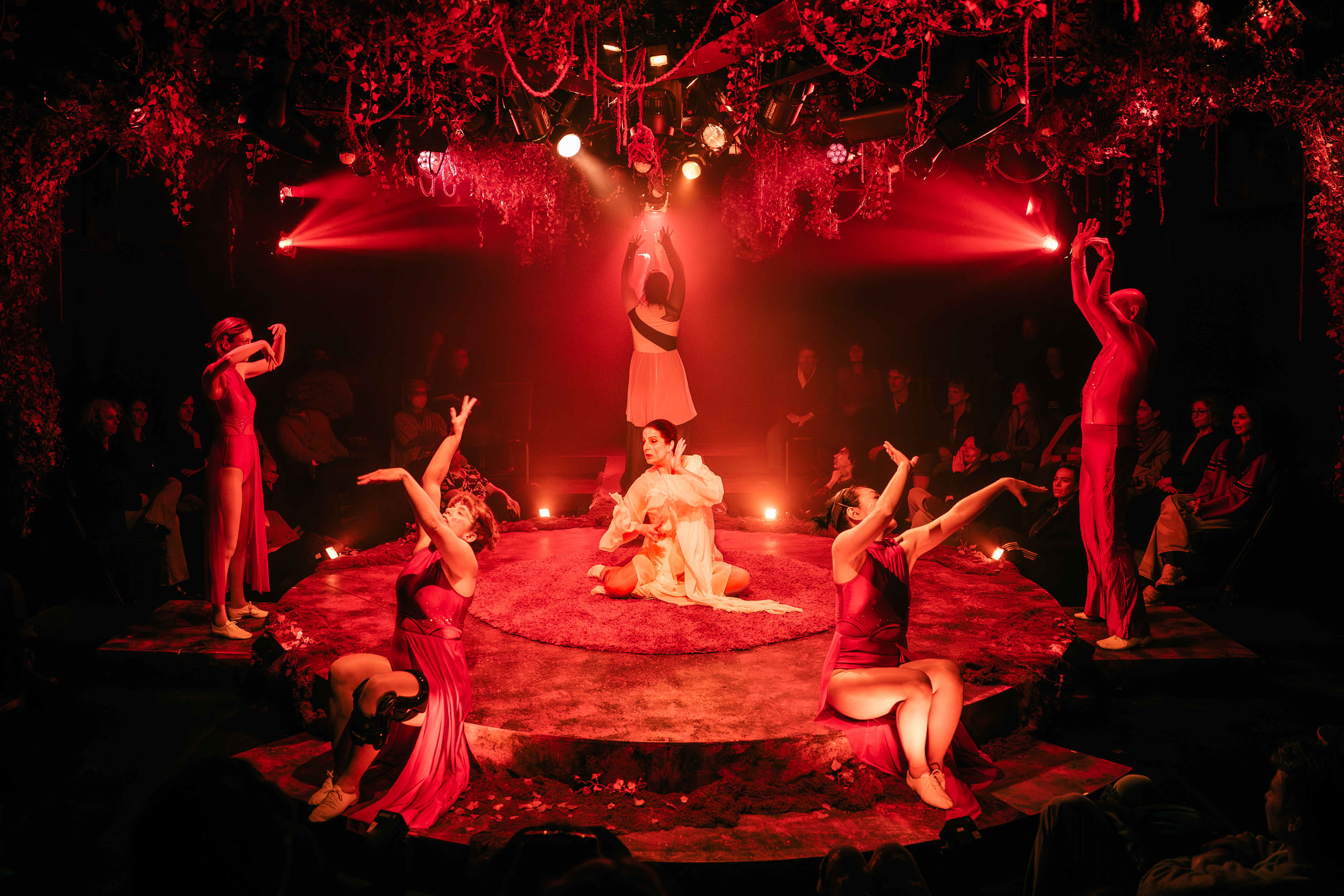
What gives this production its particular force is the way it allows these competing impulses to exist without resolution. The dancers reach for transcendence, for moments when the body might carry them beyond doubt and fear. Yet they remain tethered to the realities of growing up, of being watched, and of learning to deal and exist within expectation. These movements lift them, briefly, into something that feels close to freedom, but that sensation is never allowed to settle or be embraced.
Deep inside Maeve’s quiet floating admission is a framing that keeps circling around with more clarity: the memory of a time when flight felt not only possible, but certain. Watching this group push themselves through exhaustion, ambition, and longing, that belief hovers over the entire piece, not as something naïve, but as something honest, fragile, and worth holding onto. The beautifully layered staging becomes a Dance Nation space where that sensation flickers back into existence, if only for a moment, carried in the bodies of those still searching for a way to rise.
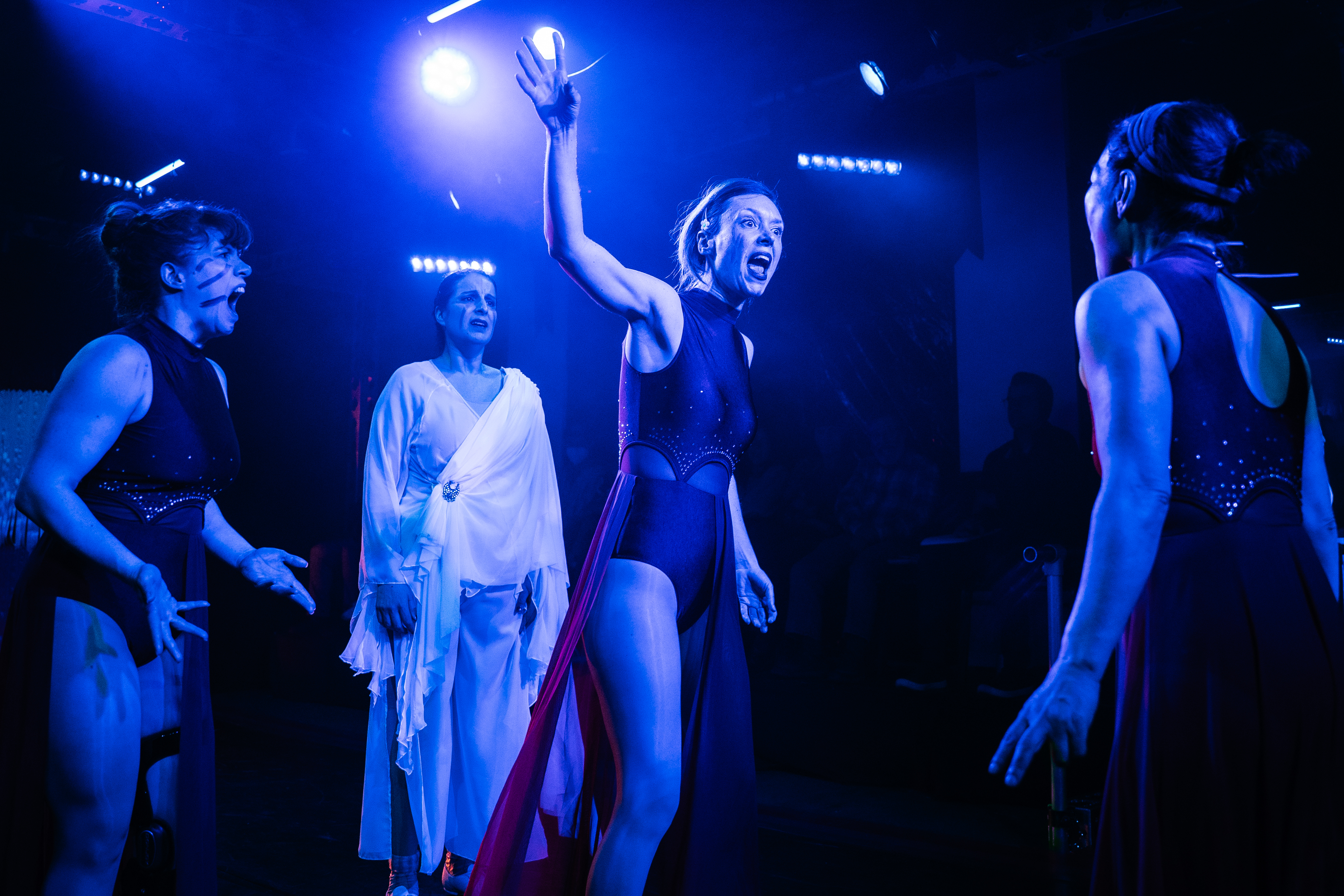


[…] Yoon (center right, with company in BG) in Dance Nation at Coal Mine Theatre. Photo by Elana […]
LikeLike
[…] Theatre Passe Muraille’s Through the Eyes of God, Coal Mine Theatre and Outside the March’s Dance Nation, Tarragon Theatre and The Musical Stage Company’s After the Rain, Crow’s Theatre and […]
LikeLike
[…] collides with the messy realities of modern life. Here the emotional centre quietly transfers to Amy Keating‘s Annie and Danté Prince‘s Percy, whose awkward warmth grounds a section increasingly […]
LikeLike
[…] Invasion Christmas Carol) handles Cope Adams, the Duke, and others. Beck Lloyd (Coal Mine’s Dance Nation) gives Isabella wit and grace, while also finding some terrific comedy in Elbow. Chris […]
LikeLike
[…] stage itself understands the assignment. Nick Blais’ set design gives the notorious 17-foot phallic sculpture a deliberately tacky and deliciously […]
LikeLike