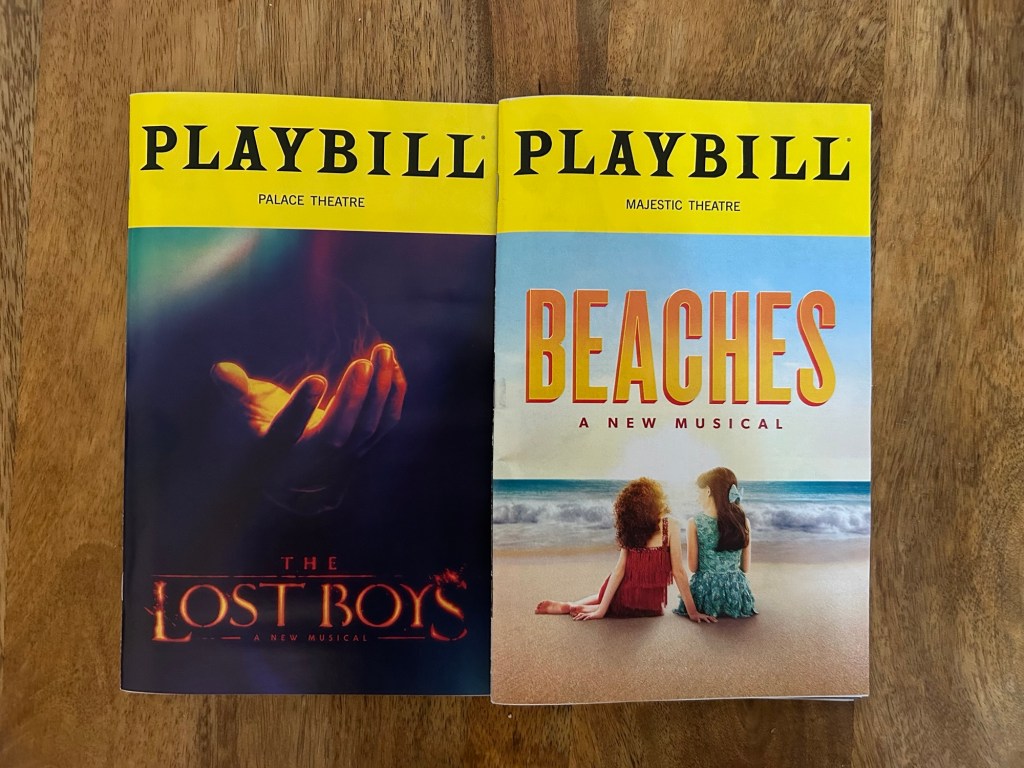
The Broadway Theatre Review: Two Film Favorites Come to Broadway with Strikingly Different Results
By Ross
A strange kind of theatrical whiplash is set somewhere between curtain calls, where one story reached out with unexpected clarity, and the other slipped just out of emotional grasp. Sitting with two back-to-back adaptations of beloved 1980s films, each carrying decades of cultural memory and audience affection, the contrast revealed itself quickly and then deepened. One musical, centered on lifelong friendship, arrived with all the recognizable markers of sentiment and scale, yet struggled to root itself in something that felt immediate and lived-in. The other, built around supernatural outsiders and blood-soaked comic-book mythology, found a surprising emotional honesty that grounded its high-flying world. That reversal alone created a fascinating lens through which to experience both works, setting the stage for an evening where expectation and outcome rarely align.
Memory does a great deal of the heavy lifting here at Beaches – A New Musical, and perhaps that is part of the challenge. Directed by Lonny Price and Matt Cowart (Broadway’s Sunset Boulevard), this stage adaptation arrives with the weight of a beloved story already deeply embedded in the cultural imagination. The lifelong bond between the brash Cee Cee and tightly wound Bertie is one audiences feel they already know, and that familiarity creates an expectation of emotional payoff that the production continually reaches for but struggles to find.
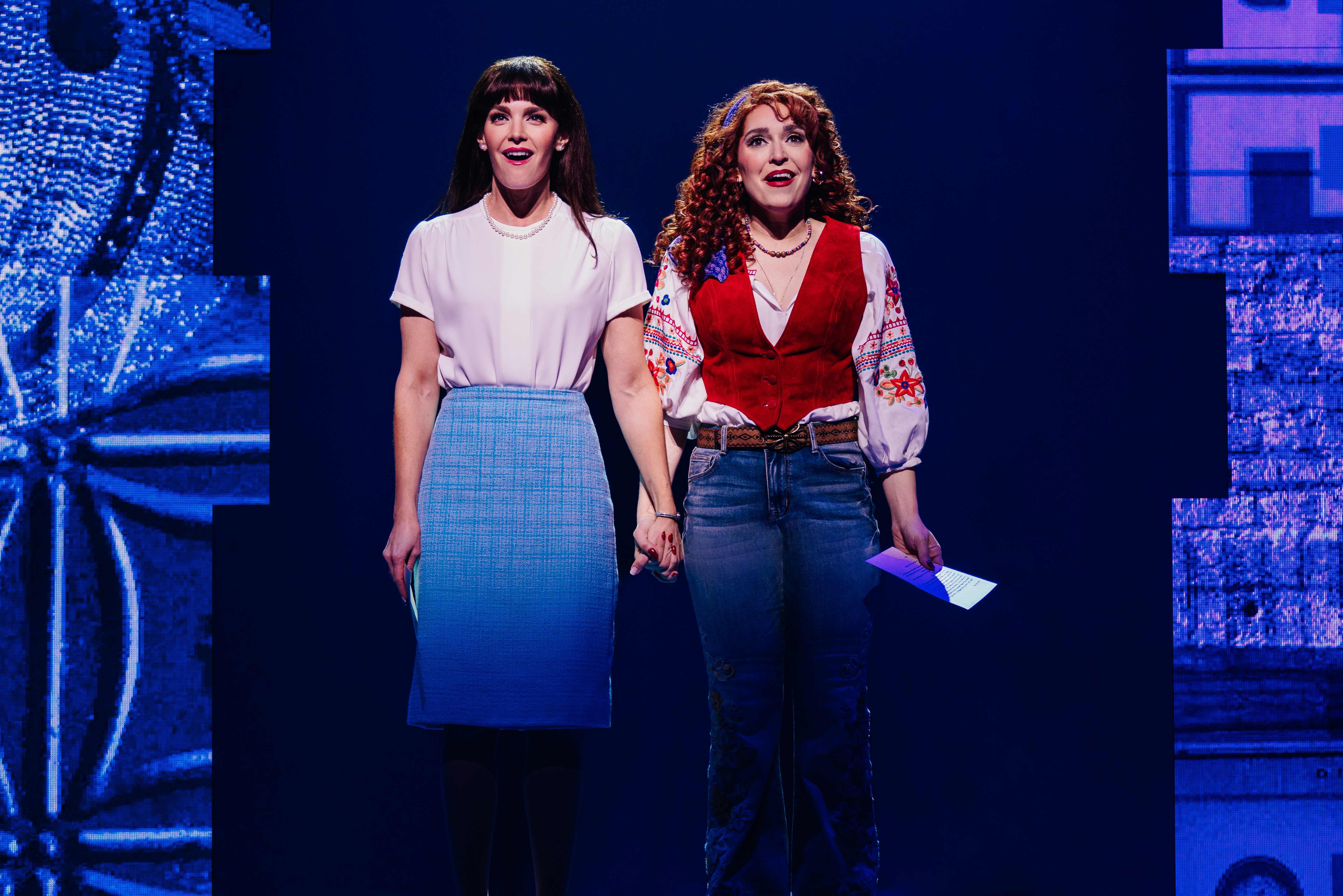
An impressive Jessica Vosk (ATC’s The Bedwetter) steps into the role of Cee Cee with commanding vocal assurance, her performance carrying clear echoes of Bette Midler’s indelible influence while still striving to carve out its own space. Opposite her, Kelli Barrett (Broadway’s Parade) brings a warmth and sincerity to Bertie that grounds their shared history, even as the character is written with a frustrating lack of dimension and an almost studied naivety. Together, they find moments of genuine connection, particularly in their quieter exchanges, but the material surrounding them often reduces that relationship to a series of broad emotional markers rather than a lived-in evolution. A repeated line, “Nothing bad can happen cause I am holding your hand,” initially lands with tenderness, but its continued return begins to feel like a substitute for deeper emotional development rather than an extension of it.
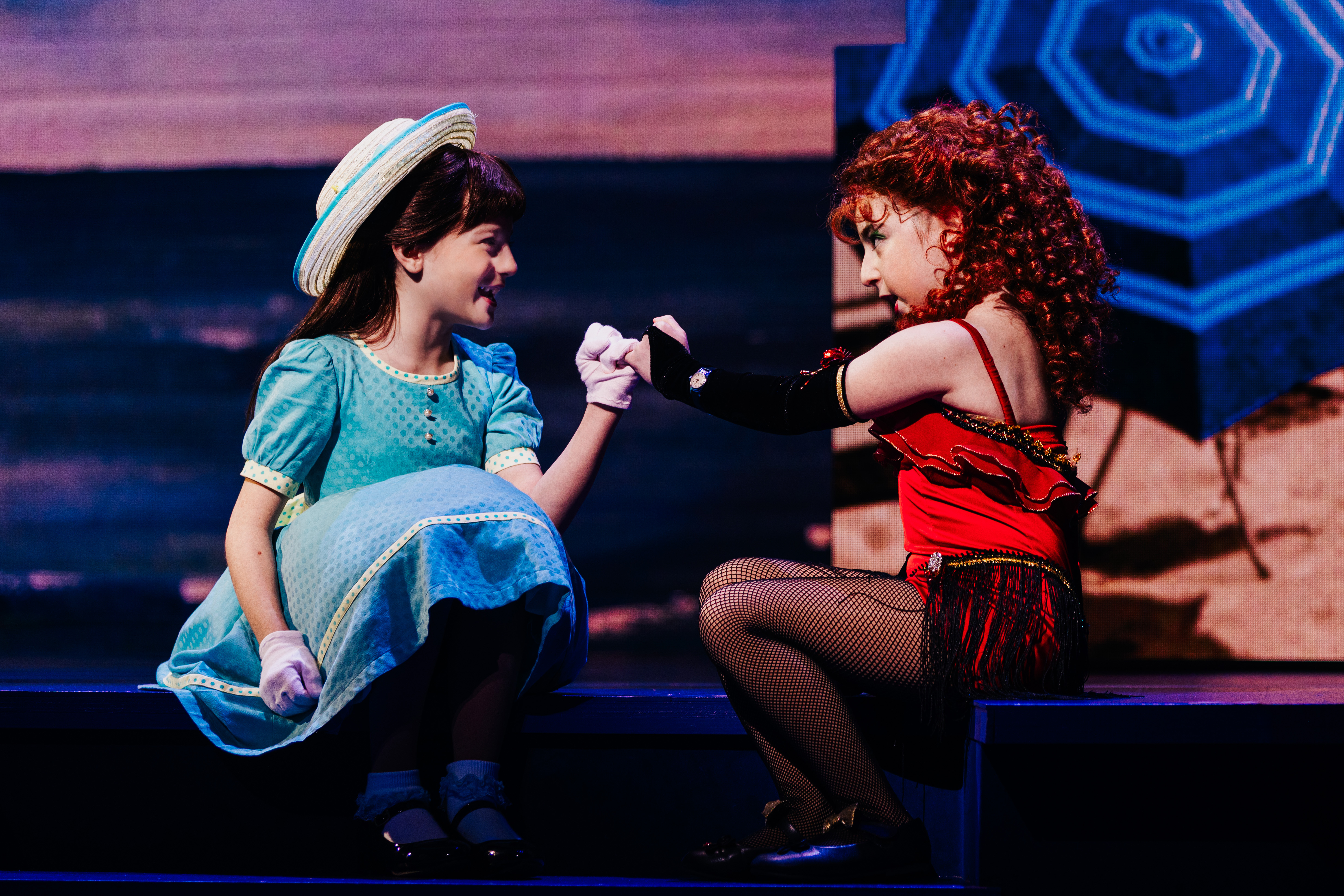
Somehow, the structure compounds this sense of distance. The narrative moves through the decades with an almost dissociated rhythm, guiding the audience back and forth through time, from one milestone to the next, without allowing those moments to fully breathe. Transitions between love and betrayal are mapped out in such broad strokes that the ruptures rarely feel fully authentic or resonate with the same force as the teary-eyed reconciliations. Even the inclusion of younger versions of the characters, portrayed strongly by Samantha Schwartz and Zeya Grace (with middle versions, reminiscent of the stronger The Notebook Musical, introduced but never really folded in), feels more functional as the musical moves forward than illuminating, offering sentimental glimpses of history without deepening our trying to understand any of it.
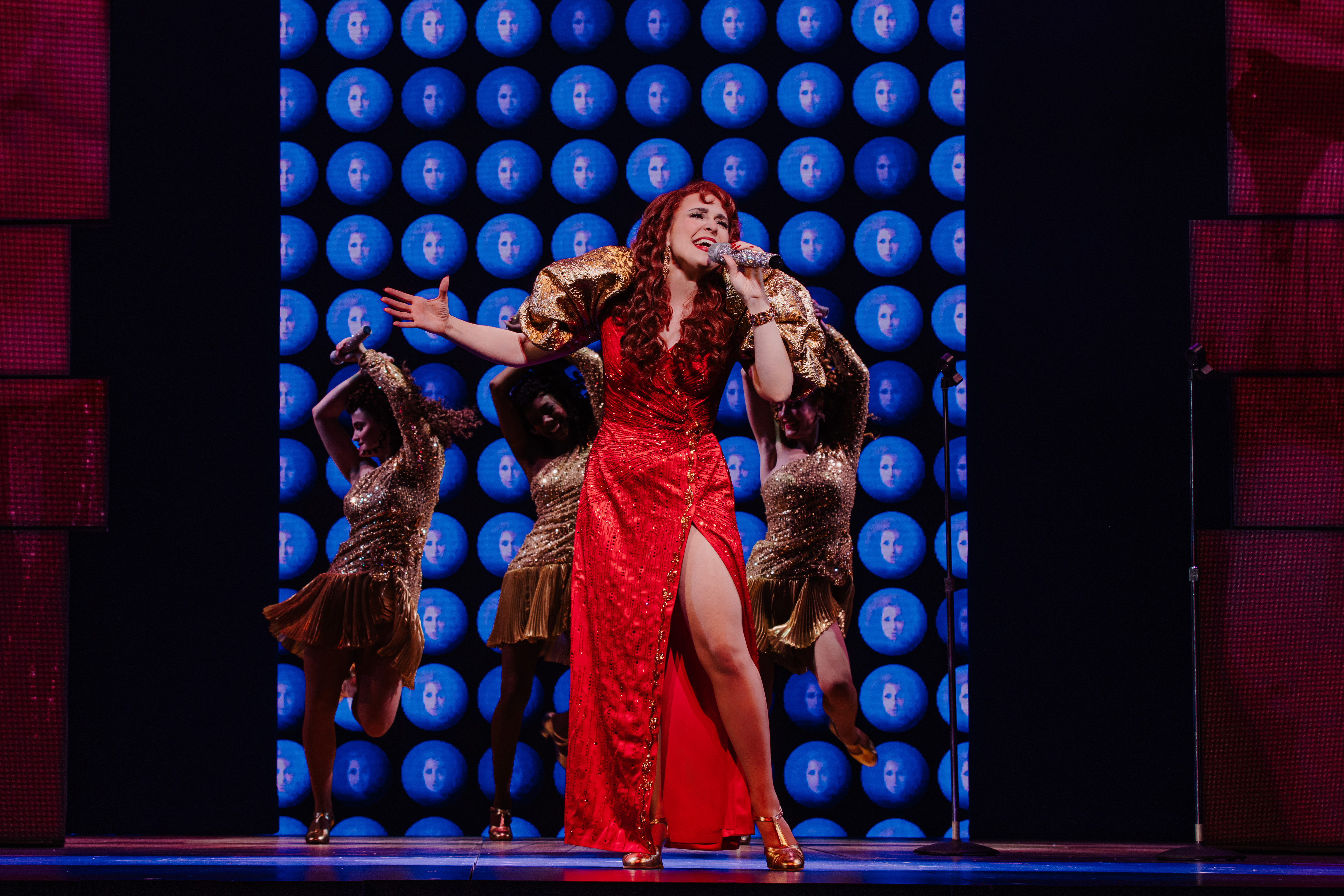
Musically, the score by Mike Stoller (Smokey Joe’s Cafe) aims to support the story’s time period and emotional arcs, but rarely expands them. Songs, like “Wish I Could Be Like You,” arrive and recede without leaving a lasting imprint, reinforcing sentiments already present in the dialogue rather than uncovering new emotional terrain. There are flashes of emotional energy, including a strong connection to husband John, played handsomely by Brent Thiessen, that bring a welcome sense of charisma and dimension to his character, but his place in this drama feels like an isolated moment rather than an integrated one. His first singing moment, a duet with the other husband, the one-note Michael, portrayed by Ben Jacoby, is a somewhat playful add-on that ultimately felt more like a nod to the actors than an intuitive part of the tale. Too often, the book by Iris Rainer Dart and Thom Thomas, alongside the score, leaves the audience hovering just outside the emotional core of the story, waiting for a connection that never fully lands and wondering, “Why is this not working?“
Visually, the production reflects a similar tension. The design, led by scenic designer James Noone, suggests a scale suited for movement and transition, but is often burdened by the feeling of a show built for the road rather than one made to fully inhabit the glorious Majestic Theatre. Thus, the environments can feel curiously distant and flat, even in moments that call for intimacy. The lighting by Ken Billington (Broadway’s Smash) and sound by Kai Harada (Broadway’s Dead Outlaw) reinforce the sense that we are watching a story unfold rather than being invited into it. That distance becomes particularly noticeable as the narrative approaches its most dramatic turns, where the anticipated emotional weight seems to drift somewhere out beyond the sand and ocean waves.
After sitting at a careful distance that lingers throughout Beaches, the shift into The Lost Boys feels almost physical. Walking into the Palace Theatre, the air changes. Where one production keeps reaching for emotional connection without quite landing it, the other grabs hold from the outset, pulling us into something urgent, dangerous, and unmistakably alive.
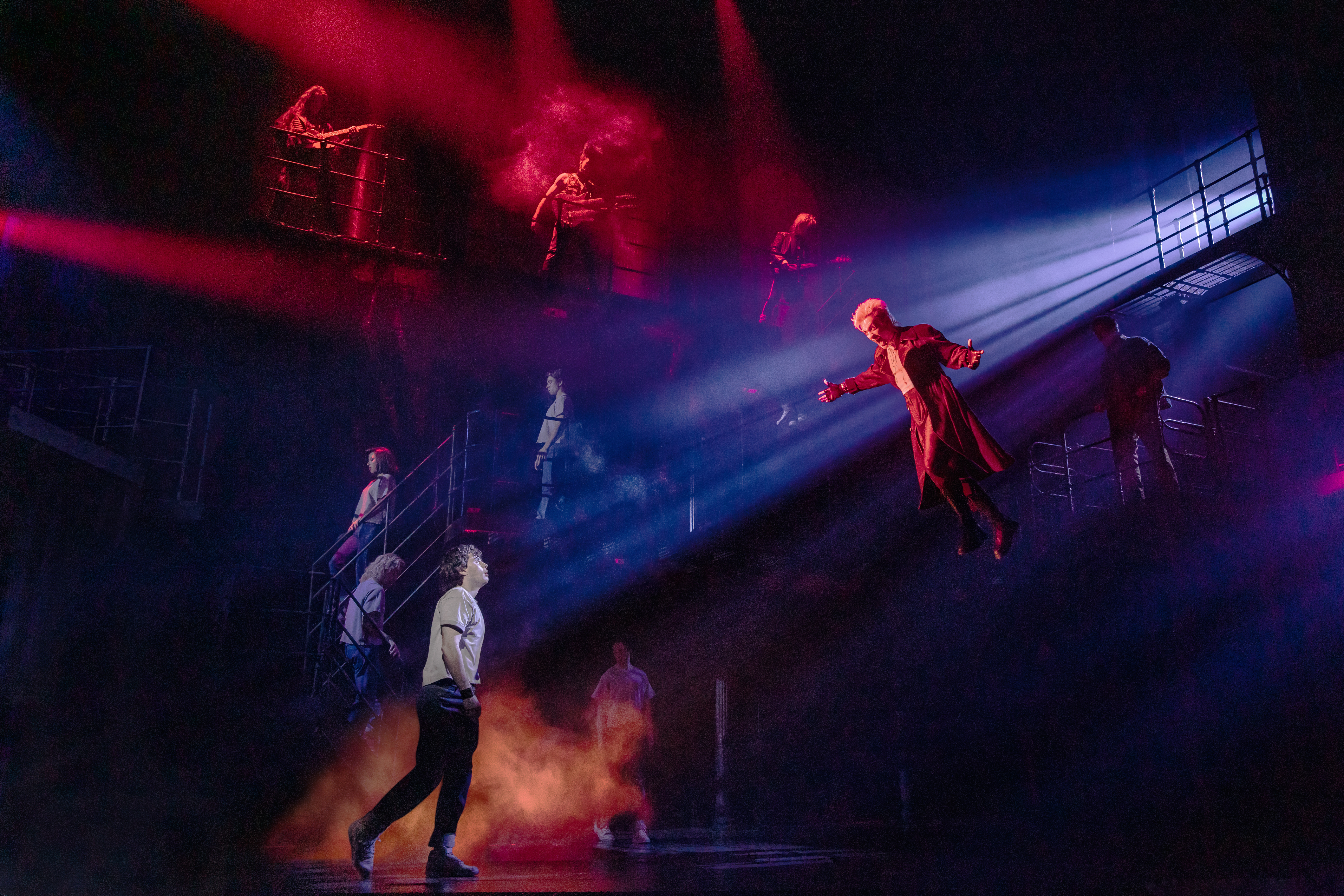
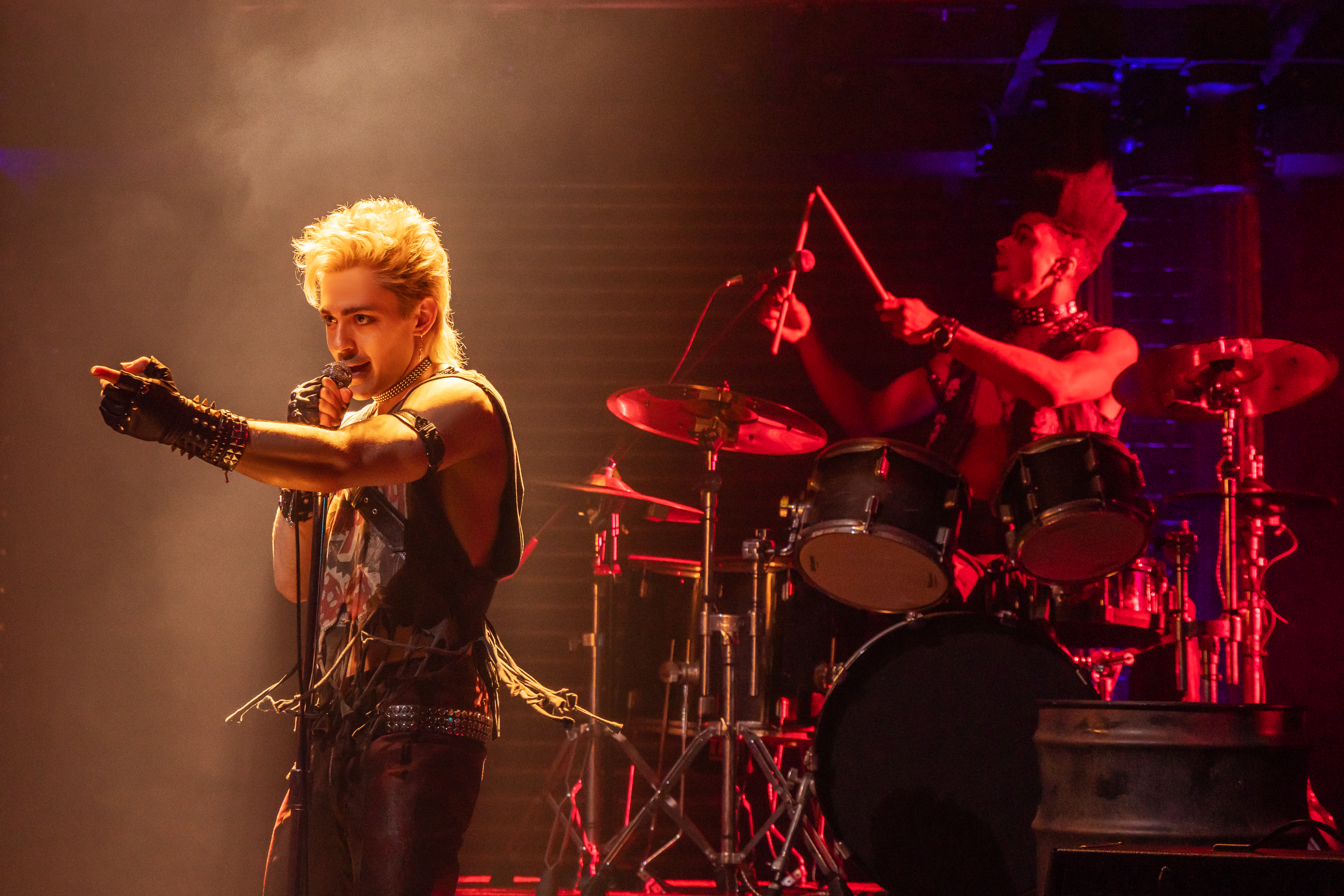
From the moment we hear the whisper of foreboding laughter cutting through the darkness and the decaying architecture of Santa Carla, this production drops in, signalling its intent with striking clarity. Directed with muscular precision by Michael Arden (Broadway’s Maybe Happy Ending), The Lost Boys wastes little time establishing a world where danger, desire, and identity collide. Even a fleeting televised reference to Ronald Reagan helps anchor the time and tone, setting the stage for a story that embraces its period while leaning fully into its emotional undercurrents.
The transition into the Emerson family’s arrival in Santa Carla is handled with a fluidity that immediately invests us in their dynamic. Shoshana Bean (Broadway’s Hell’s Kitchen) brings a powerful emotional core to Lucy, her vocal strength matched by a sense of lived experience that gives weight to the family’s upheaval. The family’s “No More Monsters” stance is clever and concise, grounding the musical’s central theme of fractured and reconstructed family with wit and emotional truth, and binding the story together even as it ventures into darker, more supernatural territory.
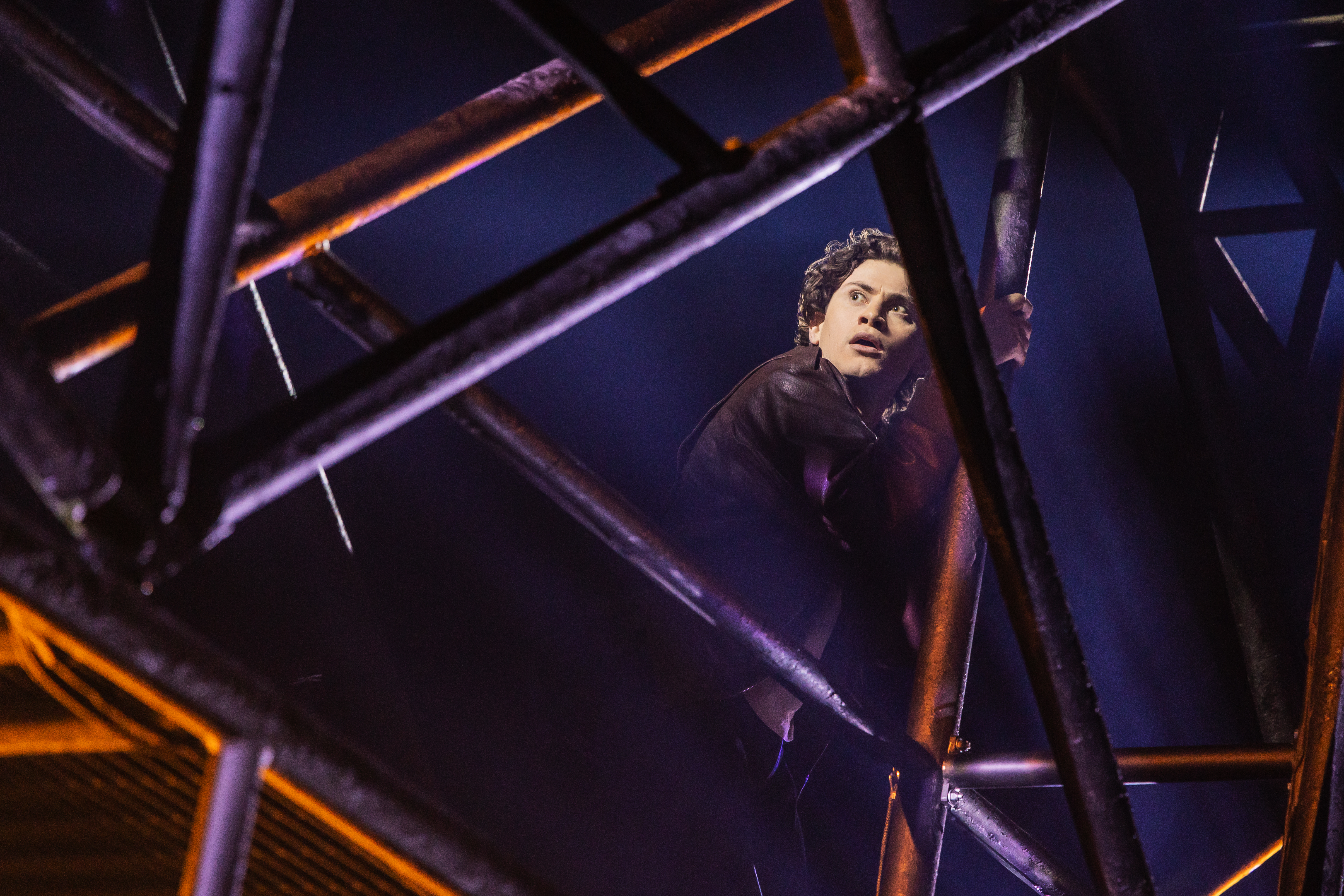
At the teenage heart of the production is Broadway newbie, LJ Benet (Hollywood Bowl’s Jesus Christ Superstar) as Michael, whose intoxicatingly smooth and emotionally attuned vocal performance captures the character’s vulnerability, curiosity, and gradual surrender to the seductive pull of the unknown. Opposite him, Ali Louis Bourzgui (The Who’s Tommy on Broadway) delivers a magnetic turn as David, balancing menace and allure with a presence that feels both hypnotic and unpredictable. Their dynamic, particularly in “Have to Have You” alongside Maria Wirries’ hauntingly present Star, becomes one of the production’s most compelling emotional anchors, electrifying its heightened premise with something that feels immediate, dangerous, and completely alive.
However, it is in quieter, more intimate moments, like “Now, Forever,” with Michael and Star gazing up at all the dead stars in the Santa Clara sky, that the score by The Rescues fully drives the production forward with a muscular, electric energy that feels intrinsically tied to the characters’ inner lives. There is a rawness to the music, a sense that it has been shaped with a deep understanding of this world and these figures, that allows it to function as more than accompaniment. Songs emerge as extensions of desire, fear, and transformation, giving the musical a cohesion that consistently pulls the audience deeper into its orbit.
Visually, the production is nothing short of arresting. Dane Laffrey’s three-tiered ironwork set operates as both environment and metaphor, rising and descending with a mechanical precision that mirrors the instability of the world it contains. Combined with evocative lighting by Jen Schriever (Broadway’s A Strange Loop) and a surround-sound design by Adam Fisher (Bridge’s Into the Woods) that fully and forcibly pulls us in, the expert technical elements create a space that feels dangerously alive with tension and possibility. The use of aerial work and shifting levels reinforces the sense of constant threat and upheaval, driving us fast into a physical and emotional landscape that rarely feels safe or secure.
That said, the production is not without its tonal challenges. The second act introduces a more overtly comic and camp-inflected energy, particularly through the Frog Brothers, played with committed enthusiasm by the fantastically gifted Jennifer Duka and Miguel Gil. Their performances are energetic and genuinely funny, but the shift arrives with a jolt that feels only partially prepared for in the earlier sections. It is a tonal pivot that occasionally disrupts the carefully built atmosphere, even as the performers themselves navigate it with skill.
Similarly, the final confrontation resolves with a surprising brevity that undercuts some of the tension established throughout the evening. After such a sustained build of emotional and physical stakes, the climax arrives and dissipates more quickly than expected, leaving behind the sense that it could have landed with greater force. Yet, even with these imperfections, the production’s strengths, particularly Shoshana Bean’s powerful portrayal, remain undeniable. It understands the allure of its source material while reshaping it into something that feels urgent and emotionally grounded. The supernatural elements become a framework for exploring belonging, transformation, and the search for identity and family, rather than simply a vehicle for spectacle.
Experiencing these two productions in such close proximity sharpens their individual qualities while deepening their contrast. One leans heavily on sentimentality, inviting the audience to revisit a familiar emotional Beaches landscape but struggling to make that terrain feel immediate. The other embraces its heightened Lost Boys world with a sincerity that allows its characters to live fully within it, uncovering something unexpectedly human along the way. Returning to that space between curtain calls, the distinction settles into something clearer and more resonant. Against the backdrop of sand, surf, and nostalgia, it is the story steeped in darkness, danger, and blood that ultimately feels the most alive.

 front mezz junkies
[…] Outstanding Lighting Design of a MusicalMextly Couzin, MexodusAdam Honoré, Amahl and the Night VisitorsAdam Honoré and Donald Holder, RagtimeAdam Honoré and Japhy Weideman, Beau the MusicalBradley King, The Baker’s WifeJen Schriever and Michael Arden, The Lost Boys […]
LikeLike
[…] the nominations is the Broadway musical The Lost Boys with eleven nods, followed closely by Mexodus with ten. Schmigadoon! lands with eight, while […]
LikeLike
[…] Production of a MusicalBeaches, a New MusicalBeau the MusicalBigfoot!The Lost BoysMexodusMy Joy is HeavyNight Side SongsSaturday […]
LikeLike
[…] the pack are The Lost Boys and Schmigadoon!, each earning an impressive twelve nominations and firmly establishing themselves […]
LikeLike
[…] and Mexodus followed closely with four wins apiece, while several other productions, including The Lost Boys and Well, I’ll Let You Go, also received multiple honours. The awards will be presented on May 21 […]
LikeLike
[…] Lea Michele, whose celebrated return to Broadway made her the most-awarded performer of the year. The Lost Boys took home Favorite New Musical, while Dog Day Afternoon was named Favorite New Play. In the acting […]
LikeLike
[…] Production of a MusicalBeaches, a New MusicalBeau the MusicalBigfoot!The Lost Boys***Mexodus***My Joy is HeavyNight Side SongsSaturday […]
LikeLike
[…] The Jellicle Ball***WINNER***Lauren Yalango-Grant and Christopher Cree Grant, The Lost Boys (includes aerial […]
LikeLike
[…] behind is The Lost Boys with eight nominations, including Outstanding Design of a Broadway Production and three featured […]
LikeLike
[…] alone cannot sustain a musical once the curtain rises. Hearing that both Death Becomes Her and Beaches are preparing to close within weeks of one another carries two entirely different emotional […]
LikeLike
[…] the race may not be entirely settled. The Lost Boys claimed Outstanding Original Score for composers The Rescues, suggesting that enthusiasm for the […]
LikeLike
[…] announcement. Schmigadoon! enters the evening looking every bit like the production to beat, though The Lost Boys has built enough momentum and creative admiration to emerge as a genuine spoiler. Elsewhere, […]
LikeLike
[…] The Lost Boys 🏆 ✅🤞 Schmigadoon!TitaníqueTwo Strangers (Carry a Cake Across New York) […]
LikeLike
[…] of the best in New York theater. And one production emerged as the overwhelming musical favourite. The Lost Boys swept an extraordinary number of categories, taking home Best New Musical while also earning […]
LikeLike