Frontmezzjunkies reports: Five Shaw Festival productions have me returning to familiar stories, revisiting old theatrical obsessions, and looking ahead to something entirely new
By Ross
Once again, I find myself boarding an early morning bus to head out of Toronto for a weekend of theatre. This time it’s the Shaw Festival bus that will take me to Niagara-on-the-Lake for a jam-packed weekend of plays that I have already experienced. This is my weakness. Give me a production of Amadeus after I have spent years thinking about Mozart and Salieri ever since streaming it from National Theatre Live, put Ohio State Murders back in front of me after seeing Audra McDonald tear through Adrienne Kennedy’s extraordinary play on Broadway, or offer me another Heartbreak House after I have already seen Bernard Shaw’s ship-shaped world transformed into a gloriously theatrical bunker, and I am immediately curious about what another company might discover. This season, I have been given the particularly wonderful opportunity to make my way back to the Shaw Festival for a collection of productions that combines those familiar titles with a couple that are completely new. And now the Festival has already given me a reason to start thinking about next summer, with an ambitious 2027 season just announced that will bring eleven productions to Niagara-on-the-Lake (more on that later). I am genuinely excited, and more than a little honoured, to be seeing these shows, particularly a new work in progress from a playwright whose work I have been following with enormous interest.

Back to Mozart, Salieri and the delicious misery of Amadeus
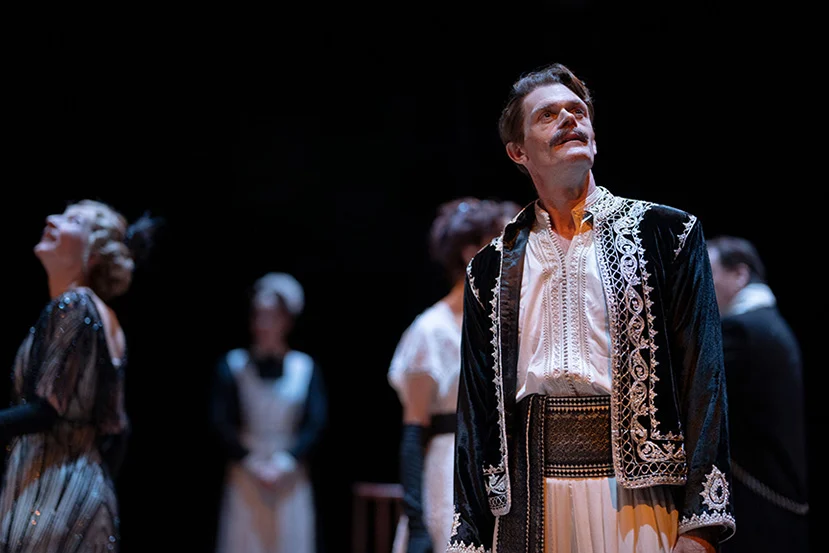
I have only seen Peter Shaffer’s Amadeus as a streamed production from the National Theatre in London, so the chance to encounter it live at the Shaw Festival feels particularly enticing. Shaffer’s play gives us Antonio Salieri, a pious and conscientious composer who discovers that the foolish, vulgar young Wolfgang Amadeus Mozart possesses a musical genius that seems to have been handed down directly from God. Salieri’s response to that discovery is deliciously awful. If God has chosen to give Mozart this extraordinary gift, then Salieri will make sure that God’s beloved Amadeus pays for it.
That collision between faith, envy, genius and resentment is precisely the sort of theatrical material that can become wonderfully dangerous in the right hands. Here, Tim Carroll directs Tom Rooney as Salieri and Michael Therriault as Mozart, with Judith Bowden designing the set and costumes, Kevin Lamotte handling the lighting, Paul Sportelli providing music supervision and Alexis Milligan directing movement. I am particularly curious about how those elements will create the musical world around these two men, because in Amadeus, music is never simply background. It is the thing that makes Salieri’s torment possible and devastating.
And there is another reason this production has caught my attention. I am very curious about the upcoming Amadeus television series starring Will Sharpe and Paul Bettany, so this seems like an especially good moment to reconnect to Shaffer’s theatrical version of the story. I already know the pleasure of watching Amadeus through a screen. Now I get to sit in a theatre and watch that jealousy, that worship, and that fury unfold before my very eyes.
Returning to Adrienne Kennedy’s Ohio State Murders
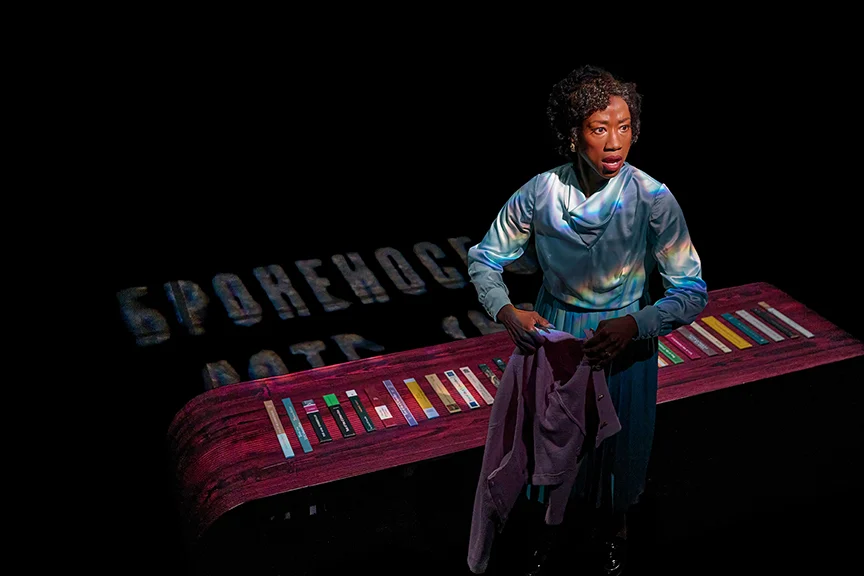
I have already seen Ohio State Murders on Broadway, where the astonishing Audra McDonald took on Suzanne, Adrienne Kennedy‘s haunted writer returning to her alma mater decades after a devastating experience. That production left a very particular mark on me, which makes the Shaw Festival‘s production especially intriguing. Seeing a different actor inhabit a role I have already watched McDonald command in a production that had its fair share of problems gives me a chance to reconsider the play itself, rather than simply revisit a performance.
Kennedy’s story brings Suzanne back to Ohio State University to speak about the violent nature of her writing, only for the memories of 1949 to begin breaking through the academic occasion. The play moves through race, identity and grief while examining how violence can become embedded in memory, language and the stories we tell about ourselves. Philip Akin directs Sophia Walker and André Morin, with Kimberley Rampersad as associate director. Melanie McNeill‘s set and costumes, Jeff Pybus‘s lighting, and Jacob Lin 林鴻恩‘s original music and sound will help create the theatrical space in which those memories can surface.
I am fascinated by the opportunity to see this play again because I know where it can take me and leave me. I also know that another production can change the shape of that journey. Kennedy’s writing leaves plenty of room for an actor to find the emotional currents beneath Suzanne’s carefully constructed exterior, and I am eager to see what Walker discovers there.
Another Heartbreak House, another theatrical world
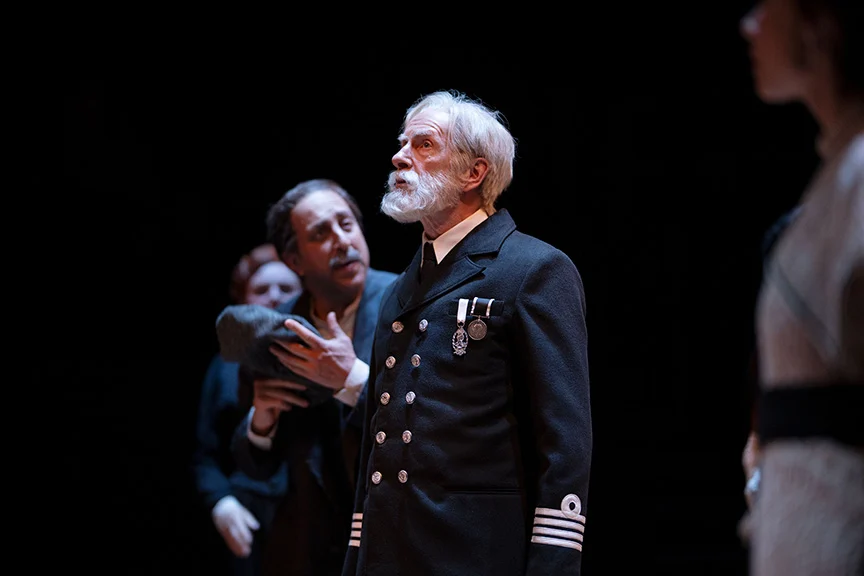
Bernard Shaw’s Heartbreak House brings another personal connection into this Shaw Festival visit. I have already seen the Gingold Theatre production off-Broadway at Theatre Row, and that production remains memorable for the sheer audacity of its physical world. Instead of the grand house modelled after a ship I had expected, Robin Lefevre’s production gave us a fortified bunker in the basement of a theatre, and it was gloriously realized and rendered.
Now Tim Carroll is directing Shaw’s play at the Jackie Maxwell Studio Theatre, with Ellie Dunn arriving at Hesione’s home while engaged to the ruthless businessman ‘Boss’ Mangan, even though her heart is engaged elsewhere. Hesione’s eccentric father, Captain Shotover, sees society heading blindly toward the rocks, while the characters around him navigate love, desire and the threat of war.
That gives me an immediate theatrical question: what kind of Heartbreak House will emerge from this production’s physical world? Judith Bowden is designing the set and costumes, with Kevin Lamotte on lighting, Paul Sportelli providing music supervision and Alexis Milligan directing movement. The Jackie Maxwell Studio Theatre itself adds another element to my curiosity. I have already seen how radically the physical environment can shape Shaw’s play, so I am very interested in discovering what this production builds around these characters.
And then there is The Wind in the Willows
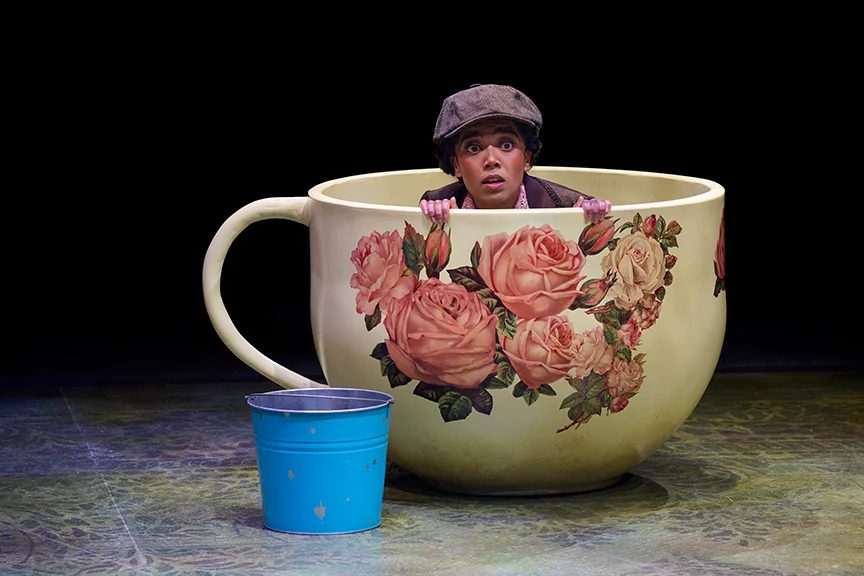
Curiosity is everything when it comes to The Wind in the Willows because it brings a different challenge into the mix. This production is aimed at all ages, and that always makes me wonder about how a company balances the expectations of younger audience members with the responsibility of respecting everyone sitting in the room. I want the younger audience to have a genuinely entertaining theatrical experience, but I also want the production to trust and respect them enough to fearlessly give them something substantial.
Fiona Sauder adapts and directs the production, based on A.A. Milne’s Toad of Toad Hall, with Lawrence Libor as the serially enthusiastic Toad, alongside Sharry Flett as Rat, Gabriella Sundar Singh as Mole, and Shawn Wright as Badger. The creative team includes Judith Bowden on set and props, Laura Delchiaro on costumes, Jeff Newberry on original music and sound, and Jack Davidson on fight and movement direction. The story sends Toad racing recklessly through his latest obsession before his behaviour lands him behind bars and his friends have to help him reclaim his ancestral home.
Walking into a production with that particular question in my head is appealing. Can a show designed for younger audiences make space for everyone? Can it be playful without talking down to anybody? Can the theatrical world be exciting enough that the adults in the room are just as willing to follow Toad wherever his latest disastrous idea takes him? It doesn’t always play out like that, but when it does, it truly is something magical.
A new Branden Jacobs-Jenkins play, still becoming itself
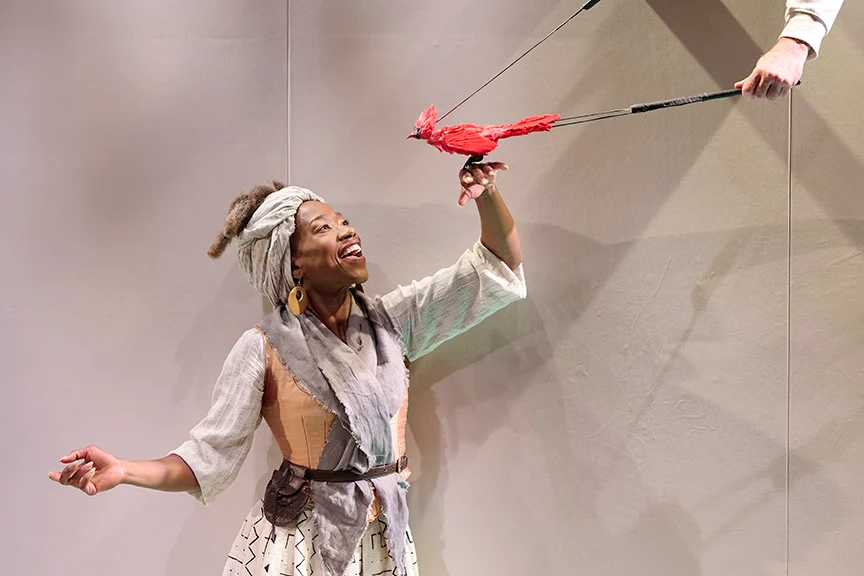
And then there is the production I may be most intrigued by simply because I have no idea where it is going yet. The Shaw Festival is presenting a special workshop presentation of a new play created and directed by Branden Jacobs-Jenkins, the 2025 Pulitzer Prize and Tony Award-winning playwright, at the Court House Theatre from August 1 to September 10.
The starting point is Cinderella, but Jacobs-Jenkins is clearly interested in what happens after the fairy tale has finished. The familiar ingredients are still there, including evil stepmothers, fairy godmothers, and eligible princes, but this grown-up, darkly comic take asks where these people go when the story stops protecting them. Life continues after the glass slipper has been put away, and even the supposedly evil stepmother gets to exist as a person whose life remains unfinished.
Truth be told, I will not be writing this up as a typical production review because it is a work in progress, but that does not make me any less eager to experience it. I have followed Jacobs-Jenkins through Steppenwolf Theatre’s Broadway production of Purpose, as well as Appropriate at Second Stage on Broadway and at Toronto’s Coal Mine Theatre, so the opportunity to sit in a room while a new play is still finding its shape is something I am going to savour.
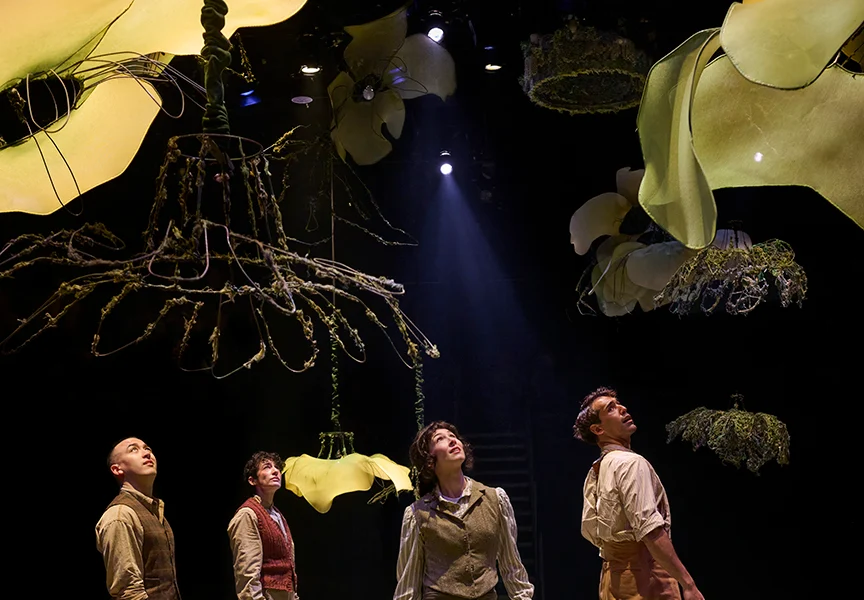
And while I am looking ahead to this visit, the Shaw Festival has already given me something else to anticipate. The newly announced 2027 season will bring eleven productions to Niagara-on-the-Lake, including South Pacific, The Color Purple, Arsenic and Old Lace, Jumpers, Deathtrap, Arms and the Man, Grimm Tales, The Rats / The Patient, What Every Woman Knows, Goblin: Pygmalion, and Intimate Apparel. The really intriguing part is that, for the first time in the Festival’s 65-year history, two major musicals will run concurrently during the main summer season. I have plenty to say about that lineup, but that deserves its own article, and it will be coming soon.
That is what makes the Shaw Festival so appealing. I am arriving with memories of Amadeus, Ohio State Murders, and Heartbreak House, each carrying its own previous theatrical life inside me, while The Wind in the Willows offers an entirely different question about how we welcome younger audiences into the theatre. And then Jacobs-Jenkins gives us all something none of us has seen before, a new play still figuring out what it wants to become. It’s an exciting few days that await me once I get off that bus, and I am looking forward to all of it, but perhaps especially to that feeling of sitting down in the dark, knowing a little about what awaits me and knowing that the theatre still has plenty of room to surprise.