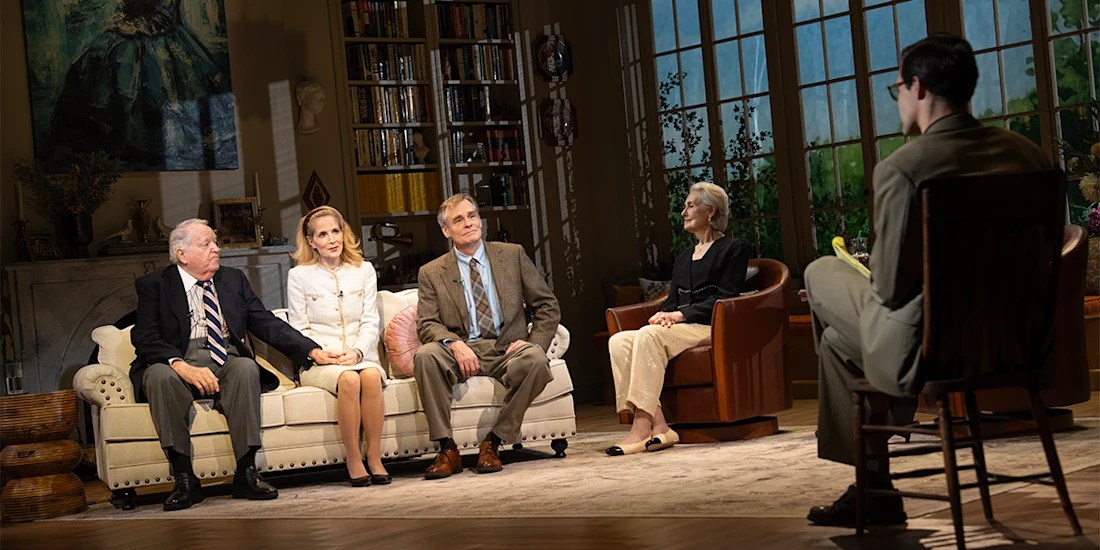
An Off-Broadway review of Wendy Wasserstein’s “An American Daughter,” produced by La Femme Theatre Productions at The Irene Diamond Stage at The Pershing Square Signature Center.
By Antonio
I have been a huge fan of Wendy Wasserstein since I saw the original production of The Heidi Chronicles starring Joan Allen. I have always admired Wasserstein’s incredible ability to balance the personal with the universal, the comedy with the tragedy, and find the truth of the human experience. I was very excited to hear of this revival and reimagining of An American Daughter, integrating an unpublished second act Wasserstein developed during the Chicago production as well as various other versions. Wasserstein was able to see how the landscape of her life and the women’s lives of her generation were slowly being eroded. She is so perceptive to see how these forces would ultimately undo the groundbreaking work done to give women the possibility to actualize their human potential. If she were still alive today, I am sure she would be creatively responding and reflecting on how women’s lives are affected by the limitations made to their autonomy, opportunities, and freedoms.
La Femme Theatre Production of An American Daughter has much to celebrate from its incredible actors, designers, and director, and it was joyous to revisit this story from almost 30 years ago to see how much has changed and how much has stayed the same. But, ultimately, the play did not live up to the beauty of its individual parts. Dr. Lyssa Dent Hughes (Jean Lichty) has accepted the nomination for Surgeon General. She is the daughter of conservative Republican Senator Alan Hughes of Indiana (Dakin Matthew) and Ulysses S. Grant’s fifth-generation granddaughter. She is the former president of Georgetown Hospital and a national advocate for women’s health issues who should be easily confirmed given her popularity with both pro-choice soccer moms and more conservative fast-food dads.
But as the story of a misplaced jury summons evolves into “Jurygate”, we are reminded of the double standards that exist for women, and when their education, career, and reputation are unimpeachable, the only way to keep a good woman down is to go after their personal life. Set in the 1990s, we see how the 24-hour news cycle and the media’s competition to attract a larger audience keep the story growing, and Lyssa’s words are twisted into an attack on women. This creates a national discussion. Or should we say, Witch hunt? This derails Lyssa’s ability to focus on the nomination, forcing her onto an apology tour.
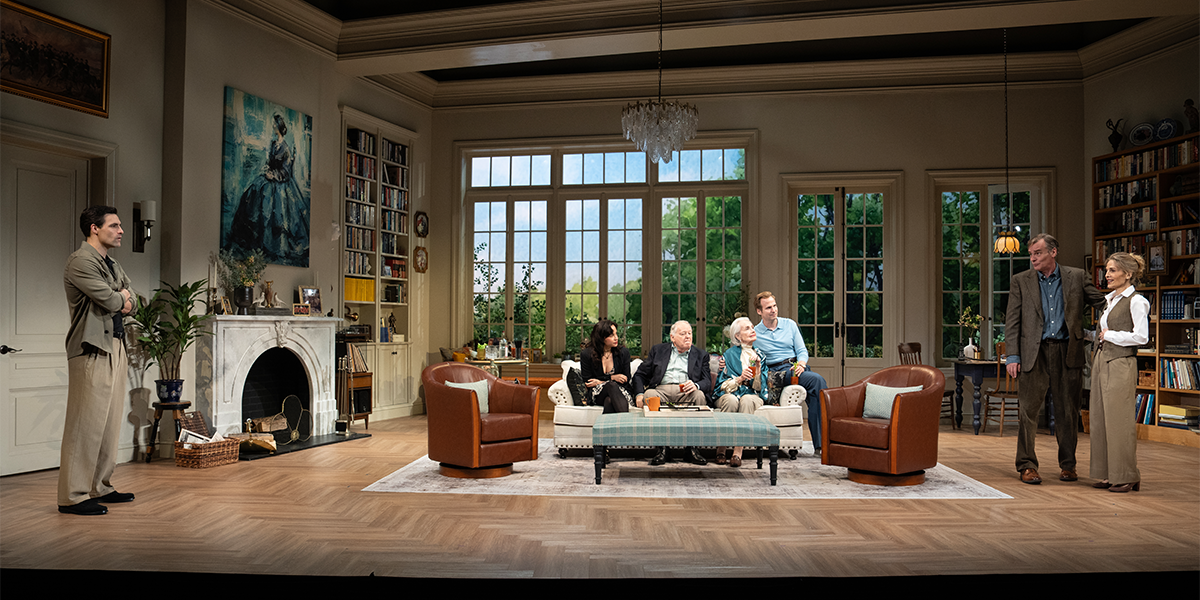
This production was beautifully designed by Scenic Designer Mikiko Suzuki MacAdams and Lighting Designer Alan C. Edwards. This Georgetown home was lush with an eccentric mix of family history and modern luxury. The lighting and design of the back garden made it appear as if you were miles away from D.C. and insulated from the harsh realities of politics. The Sound Designer, Darron L. West, created an incredible playlist that combined 90s pop music in the pre-show with a 60s retro vibe. The prop radio grounded us in these circumstances as the world transitioned from analog to digital.
Sarna Lapine’s direction really brought the world to life and gave wonderful opportunities for the actors to shine. I was disappointed that when the story developed from security to chaos, there was not more of a shift in pacing of the play. I feel that Lyssa’s conflict between being true to herself or being who the country wants her to be could have created a more dynamic sequence. I sense that privileged people, whether conservative or liberal, value their sense of control over their lives, careers, and legacy. As we see the control slip away, I think the play slowed down and lost the intensity needed to steer this ship back on course, by any means necessary.
The casting by Stephanie Klapper Casting brought together an amazing group of actors who definitely understood the assignment. Montego Glover (Broadway’s Memphis) as Judith B. Kaufmann was captivating. She entered each scene, and I could not take my eyes off her. She embraced all the many facets of Judy and made her shine. On the day after the Jewish New Year, which is Taschlich, the festival of regrets, Montego found the power to embrace all of Judy’s regrets and fears and found her way back to hope with the slogan, “As you ramble on through life, whatever be your goal, keep your eye upon the donut, and not upon the hole.”
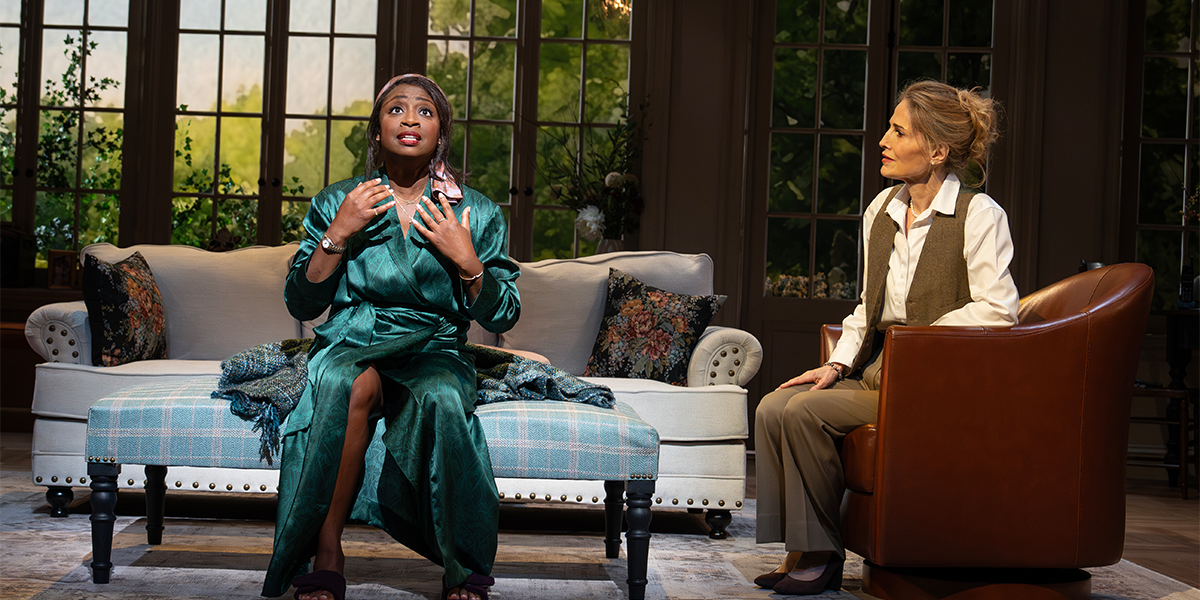
Matthews (LCT’s Camelot) as Alan Hughes made a conservative senator from Indiana look easy. He brought so much charm and grace as a politician, while staying grounded in being a father who loved his daughter very much. Mary Beth Peil (ATC’s The Reservoir) as Charlotte “Chubby” Hughes was delightful. She found the perfect balance for “Chubby,” where she was so sweet and would never offend a soul, while also having a strong point of view of the circus around her.
Robert Sean Leonard (Edward Albee’s At Home at the Zoo, Off-Broadway) as Walter Abrahmson was dutiful in his role of husband, father, and academic. He found how Walter can be selfish in one moment and generous in the next. Carmen Zilles (Primary Stage’s Little Women) as Quincy Quince was relentless in her ambition and found such delight in bringing the next wave of Feminism to a new century. Lichty (La Femme’s A Lovely Sunday For Creve Coeur) as Lyssa Dent Hughes was possibly the weak link in this cast. As many of her ensemble were running, jumping, and leaping into the story, it felt that Jean was struggling to keep up.
I do admire Jean’s commitment, as Executive Director of La Femme Productions, to reviving this play and making it accessible to another generation of theatergoers, who may not be familiar with Wasserstein’s work. Although the production did not fulfill all my expectations, I was left with a profound sense of Chekhovian sentiment: we must work hard, and we must endure.
LYSSA: Judy, can I tell you a secret?
JUDITH: When have you not told me your secrets?
LYSSA: I actually have never felt so free in my life. All those things we had to do, all those benchmarks we thought would protect us have lost all their weight. Nothing will protect us, Judy. There are no deals to make. We don’t have to be such good girls anymore.
JUDITH: That doesn’t terrify you?
LYSSA: We’re scientists. I want to know the truth.
Every day, women such as Lyssa and Judy work to make this world a better place for other women and must compromise themselves at every turn. The Hillary Clinton headband in the final interview reminded me of a crown of thorns. The ultimate beauty is with this second act added to the play, which ends with the two women, Lyssa and Judy, facing the future together. I have no doubt they will build a better future for all.