The Toronto Theatre Review: Andrew Kushnir’s Docu-Drama Unpacks Family Mythology, National Identity, and the Weight of Historical Silence
By Ross
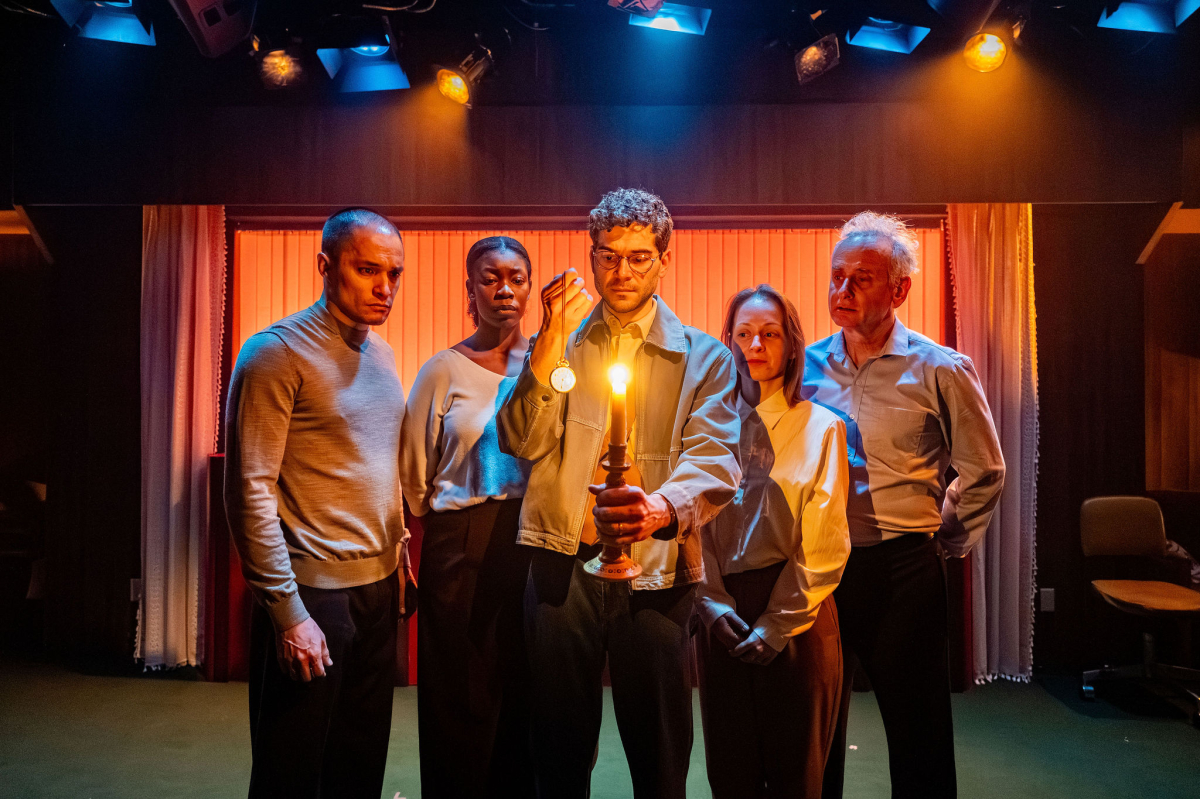
It’s the most compelling question of the evening, when someone asks whether you would love a family member differently after discovering an unbearable truth about them. The idea unwinds our senses, and the room changes temperature inside Andrew Kushnir’s The Division. I could feel that superbly constructed question settling heavily over the audience long before it was spoken out loud directly. It hovered inside every dated slide, every story passed down through generations, and every hesitant recollection about a grandfather remembered by his family as both a survivor and a mystery. Produced by Project: Humanity and Pyretic Productions in association with Crow’s Theatre, this deeply personal and intellectually probing docu-drama transforms one man’s personal search into a larger examination of Ukrainian family history, world conflict, inherited mythology, patriotism, guilt, and the dangerous instability of historical memory.
Directed by Kushnir (Stratford’s Casey and Diana) himself, the production unfolds inside a long hallway-like playing space that immediately evokes both transit and entrapment. The production’s visual language, shaped through the set and costume design of Sim Suzer and Niloufar Ziaee, reinforces the feeling of a documentary excavation unfolding in real time, while Christian Horoszczak’s lighting and Thomas Ryder Payne’s carefully textured sound design help guide the audience through the play’s shifting emotional and political landscapes. The layout occasionally feels awkward in its staging mechanics, with actors navigating a somewhat clumsy physical structure that mirrors the unevenness within the writing itself. Yet that roughness also gives the evening a searching, unsettled energy that ultimately suits the material.
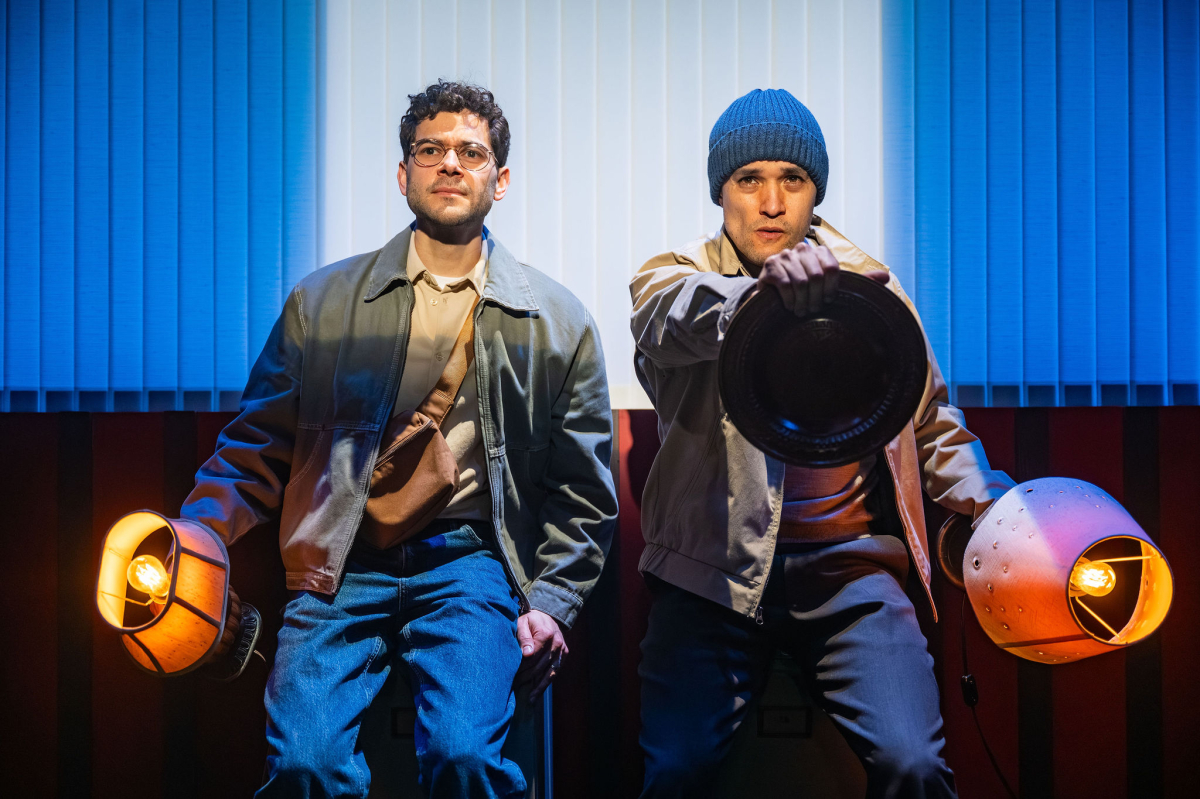
From the opening moments, when Daniel Maslany’s version of Kushnir begins recording a letter to his future nephew, the production gently and almost too compassionately establishes its central tension between hope and dread. “It’s not that original,” he says modestly, introducing a deeply intimate framing device while discussing the ongoing war in Ukraine and imagining a future where the violence might finally be over. The gesture feels vulnerable, uncertain, and slightly over-constructed all at once, much like the play itself. That uncertainty becomes the driving force behind The Division.
After publishing a eulogy for his late grandfather, a renowned watchmaker, Kushnir is confronted online with accusations tied to his grandfather’s military service in the First Ukrainian Division during the Second World War. The discovery launches him on a sprawling investigation across Ukraine and Europe, forcing him to dig in and confront some pretty disturbing historical ambiguities surrounding nationalism, collaboration, survival, and complicity. It turns out, at seventeen years old, his grandfather swore an oath to Hitler while wearing a German uniform to receive a gun to continue to fight against their historical enemy, Russia. The play repeatedly returns to the impossible question buried within that fact: did he believe in what he was saying, or was survival the only ideology available to him?
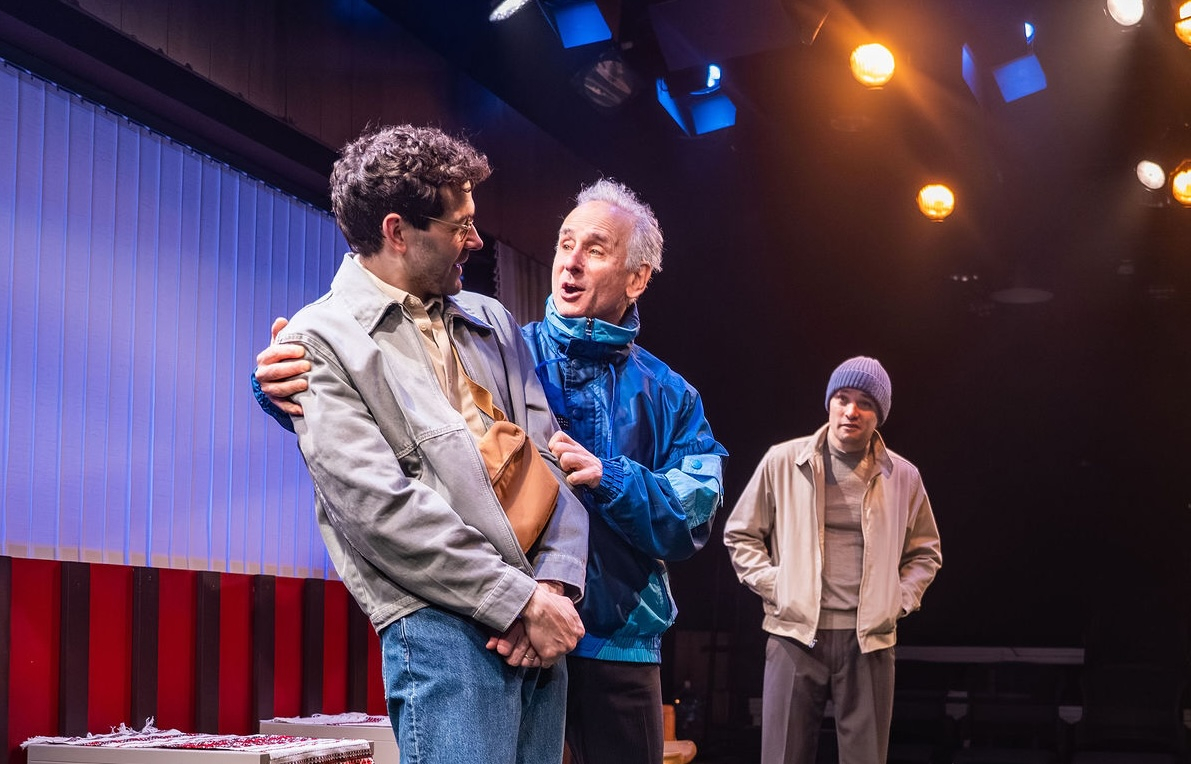
Kushnir’s writing is at its strongest when it allows these contradictions to remain unresolved. The play understands that history is rarely clean, particularly for displaced communities shaped by war, migration, and political trauma. One of its most compelling observations is the idea that modern Ukraine, especially during an ongoing war with Russia, is often expected to present itself to the world as morally pristine in order to maintain international sympathy and support. Yet history refuses to cooperate with those simplified narratives. Kushnir repeatedly encounters resistance from people urging him not to dig too deeply into the past, warning him that some stories are too dangerous, too politically inconvenient, or too emotionally destabilizing to fully excavate. The production wisely understands how patriotism and myth-making often depend upon selective remembering, and Kushnir never seems willing to shy away from those difficult conversations, regardless of the threats lobbed his way.
Maslany (Knifefight’s Invasion: Christmas Carol) delivers a deeply thoughtful and emotionally grounded performance as Kushnir, carefully guiding the audience through the increasingly tangled and crater-filled emotional terrain. He expertly captures the playwright’s curiosity, anxiety, humour, and vulnerability with a restrained sensitivity that keeps the evening from collapsing beneath the weight of its own ideas. Around him, the ensemble shifts fluidly through multiple roles and perspectives. Ivy Charles, Karl Ang, Mariya Khomutova, and Alan Nashman all bring clarity and texture to the constantly evolving structure, helping guide the audience through rapid transitions in geography, time, political context, and well-delivered accents. Their work keeps the production energized even during moments when the script risks becoming overloaded with information.
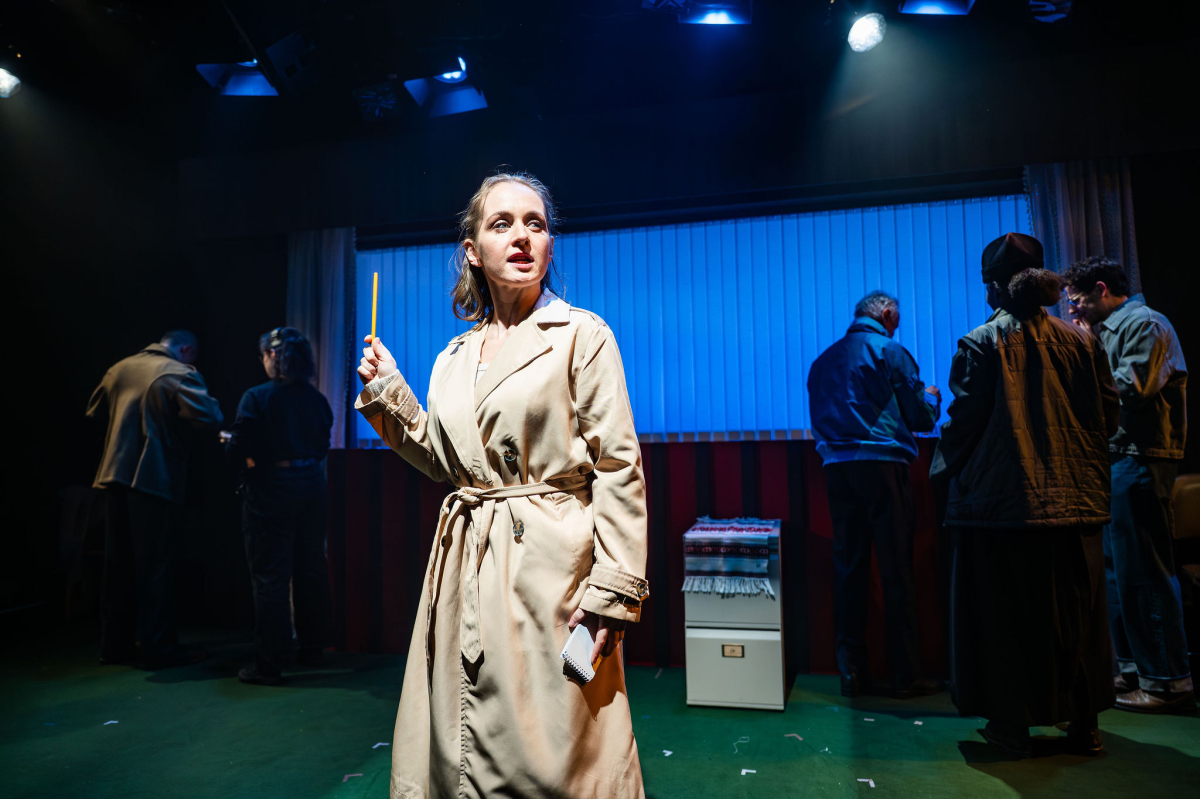
Despite its heavy themes, The Division is often surprisingly funny. Kushnir uses humour strategically throughout the piece, particularly in sequences satirizing the 2023 Hunka scandal and in the wonderfully theatrical depiction of Vladimir Putin. These moments of absurdity provide necessary release while also emphasizing how surreal political discourse surrounding war, nationalism, and public image has become. The comedy never undermines the seriousness of the material. Instead, it exposes how fragile and performative many of these narratives truly are.
The production is particularly compelling when examining the complicated emotional inheritance carried by Ukrainian Canadians. Kushnir articulates how Ukrainians are often described as either resilient heroes or corrupt opportunists, depending entirely on who is controlling the narrative and for what political purpose. That observation cuts directly into the heart of the play’s investigation. The search for historical truth here is not simply academic. It threatens to destabilize identity itself. Kushnir is not only questioning who his grandfather was. He is questioning the stories his family told themselves in order to survive emotionally, culturally, and politically.
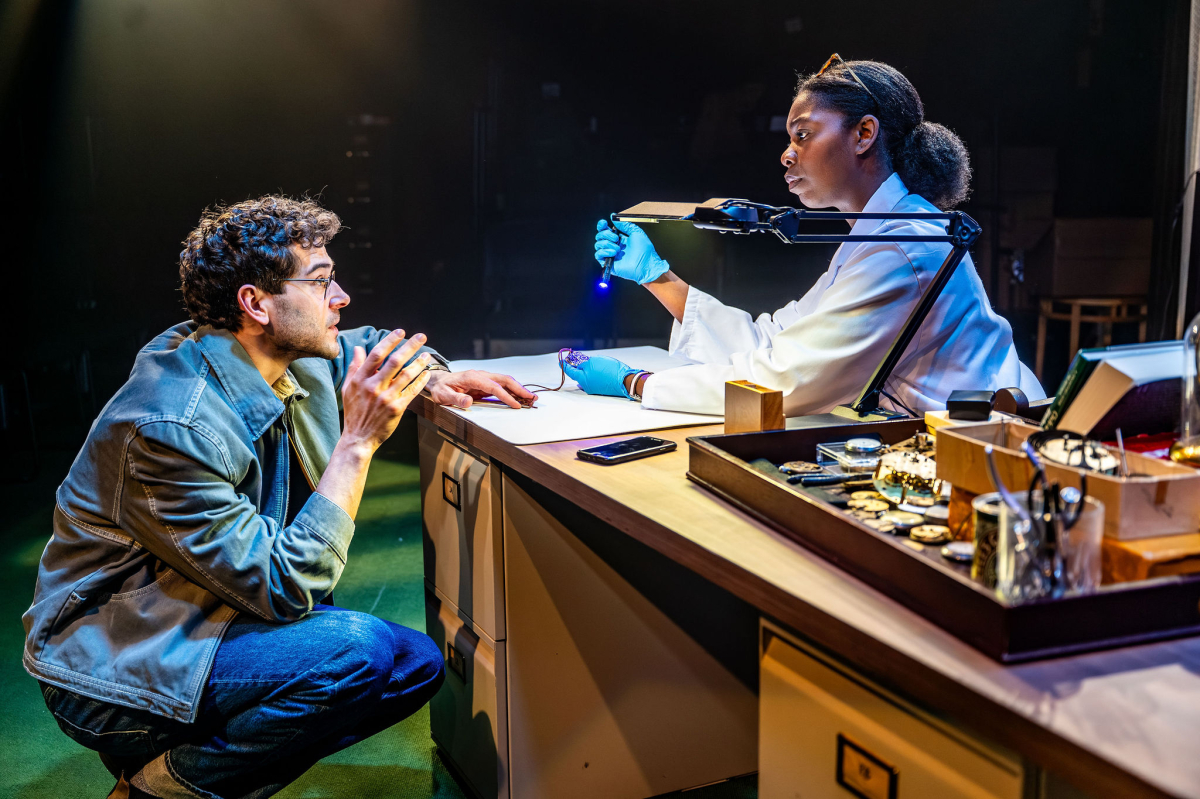
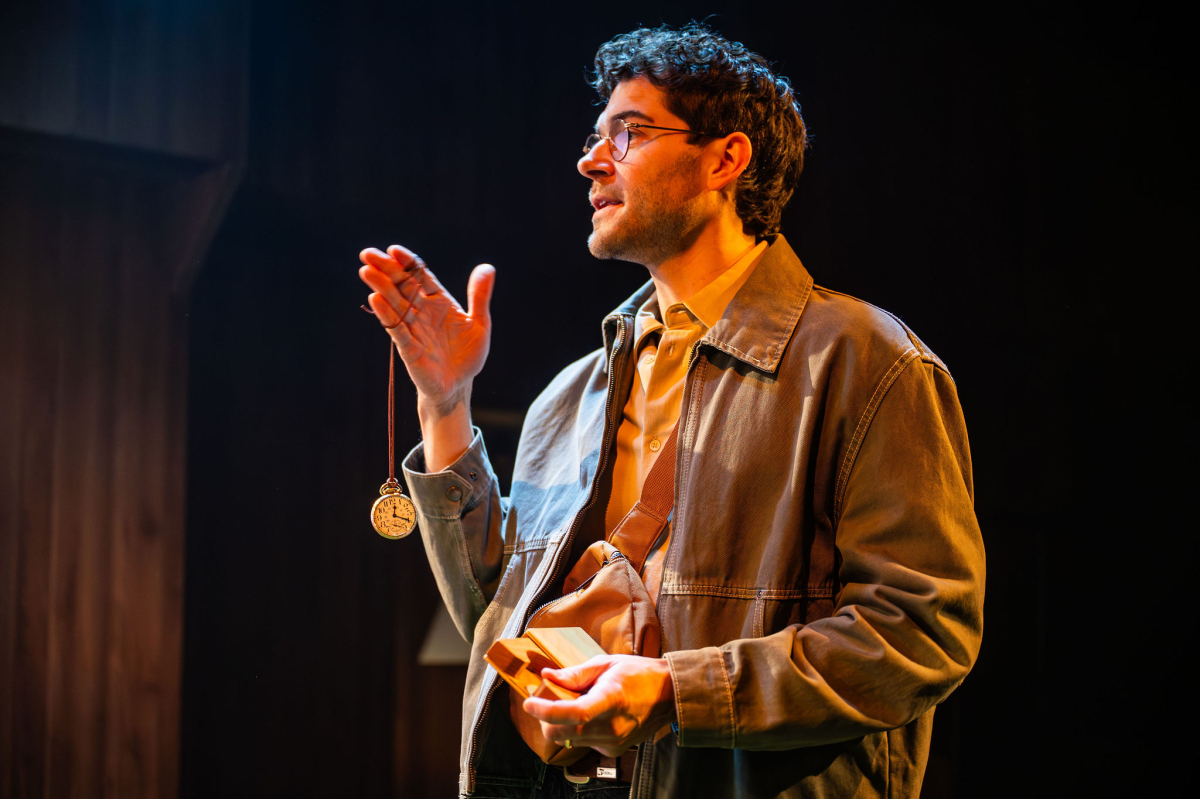
The recurring symbol of the inherited watch attempts to anchor those ideas emotionally, though this is where the production struggles most noticeably. The repeated images of different hands holding the watch and the insistence upon its symbolic importance never fully develop beyond Kushnir’s personal attachment into something theatrically resonant. We understand intellectually why the object matters to the playwright, but the writing never quite transforms it into a stronger metaphor about time, inheritance, or memory with enough emotional force. A similar issue arises in the play’s final framing involving the birth of a child, which introduces a sentimental circularity that simplifies some of the richer ambiguities the production has worked so carefully to explore. The conclusion attempts to reach for emotional closure, yet the delivery slightly softens the sharper and more unsettling questions raised earlier in the evening.
The Division is not perfect in this timely manner, yet it succeeds because it is willing to remain uncomfortable. Kushnir does not offer easy moral resolutions, nor does he fully condemn or absolve the grandfather whose legacy he is trying to understand. The play recognizes that love and disappointment can coexist painfully within the same emotional space, particularly inside families shaped by silence, migration, survival, and inherited fear. That complexity gives the production its emotional and intellectual weight.
A quote from Ukrainian writer Victoria Amelina appears in the program: “We break the spell not when we banish the ghosts, but when we invite them to breakfast.” Sitting with that ideal near the end of The Division, I kept thinking about that invitation and about how terrifying it can be to truly sit beside the ghosts that built us. Kushnir’s play understands that confronting history does not necessarily heal us or provide certainty. Sometimes it simply forces us to look more honestly at the people we love and ask whether our understanding of them can survive the truth. The answer offered here is neither simple nor comforting, but it feels deeply human in its refusal to turn away.
 front mezz junkies
[…] The Division […]
LikeLike
[…] Division while also earning Romeo Candido recognition for Outstanding Sound Design/Composition. The Division claimed Outstanding Production, Outstanding New Play, Outstanding Direction, and Outstanding […]
LikeLike
[…] like spectators than invited guests sitting quietly inside the Chan family’s conversations. Amelia Mielke-O’Grady‘s simple, welcoming set reinforces that closeness, even if some of the physical staging […]
LikeLike