The Broadway Theatre Review: A fact-based drama of isolation and narrative control, driven by performance and shaped by uneven execution
By Ross
Time does not move the same way for everyone, and sitting in the dark at the James Earl Jones Theatre, I felt that distortion take hold almost immediately. “Time can be a blistering thing,” Nick explains, and the poetic framing he lays out lands with a weight that stretches far beyond metaphor. It conjures speed and stillness at once, the rush of reckless, stolen-car freedom and the suffocating drag of consequence, and it sets the tone for a story that exists in that uneasy tension between motion and paralysis.
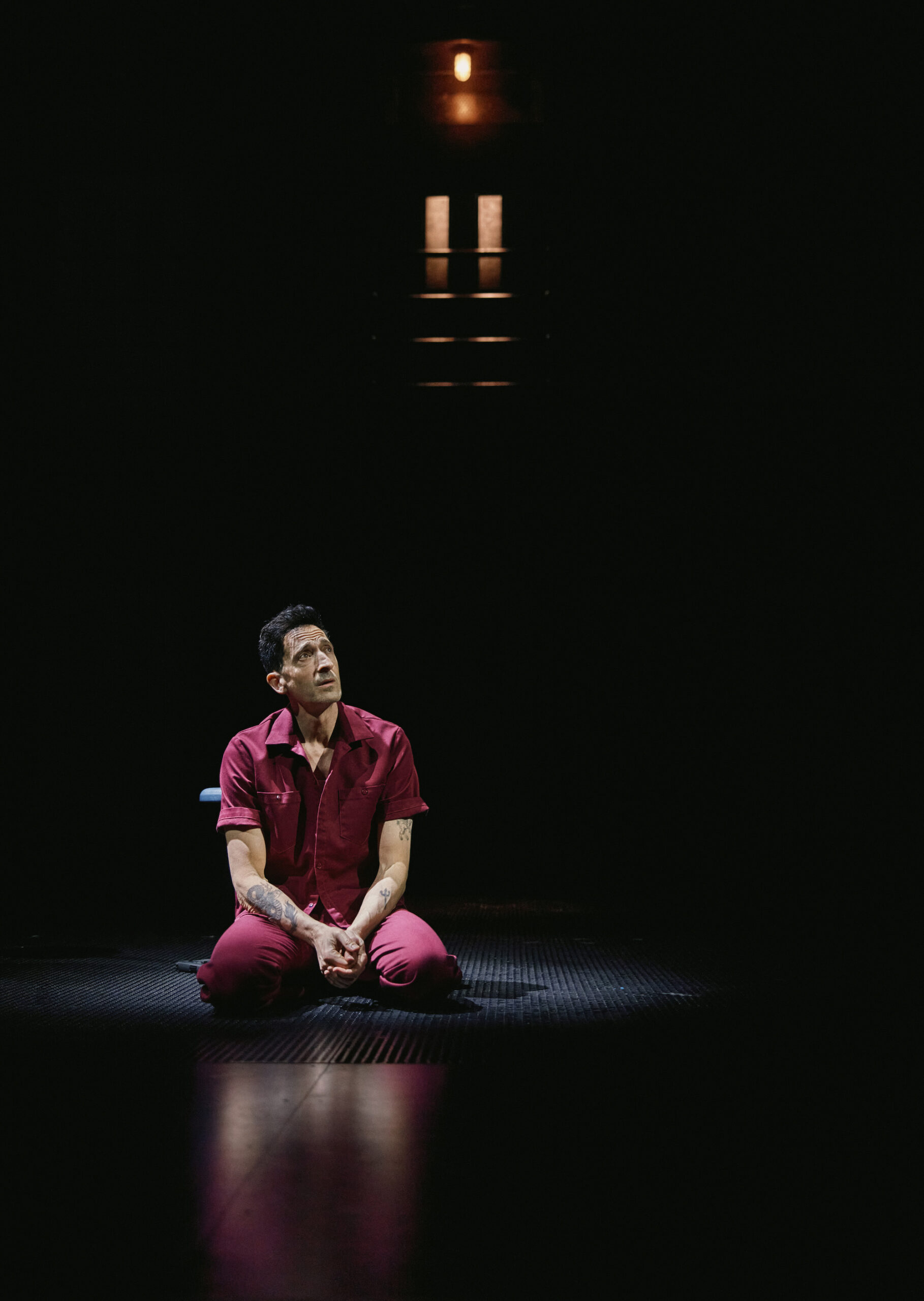
Lindsey Ferrentino’s The Fear of 13, directed with careful control by David Cromer (MTC’s Bug), places us inside that psychological space through a stark, deliberate design. Arnulfo Maldonado’s barren, dark set frames the action within the isolating confines of level-five solitary confinement, where a single light glows against an otherwise muted world. Lighting by Heather Gilbert (Audible’s Dead Outlaw) and sound by Lee Kinney (Off-Broadway’s Prince Faggot) deepen that sense of enclosure, creating an environment that feels both physically restrictive and mentally expansive. Within this space, Nick, portrayed distinctly by Adrien Brody (“The Brutalist”), insists, “I know where I am,” yet the play continually returns to the question of how and why he arrived there, and whether those answers can ever feel complete.
The narrative unfolds through Nick’s own storytelling, a layered account of a life shaped by choices, misjudgments, and an ongoing relationship with truth itself. He is presented not simply as a man caught in a system, but as someone who has actively shaped his own narrative, often bending it in ways he believes might offer escape. That tension between honesty and invention becomes central to the play’s structure, much like the idea of innocence, and as years pass and details shift, we are left to navigate the unstable ground between what is said and what is real. Ferrentino (This Flat Earth) threads this instability throughout the script, even gifting Nick with the word “incredulous,” a small but telling linguistic anchor that reflects his constant oscillation between disbelief and self-invention. Through repetition and reflection, the writing mirrors the psychological loops of confinement, working on a foundational level until the bars become something more than just poetic or symbolic.
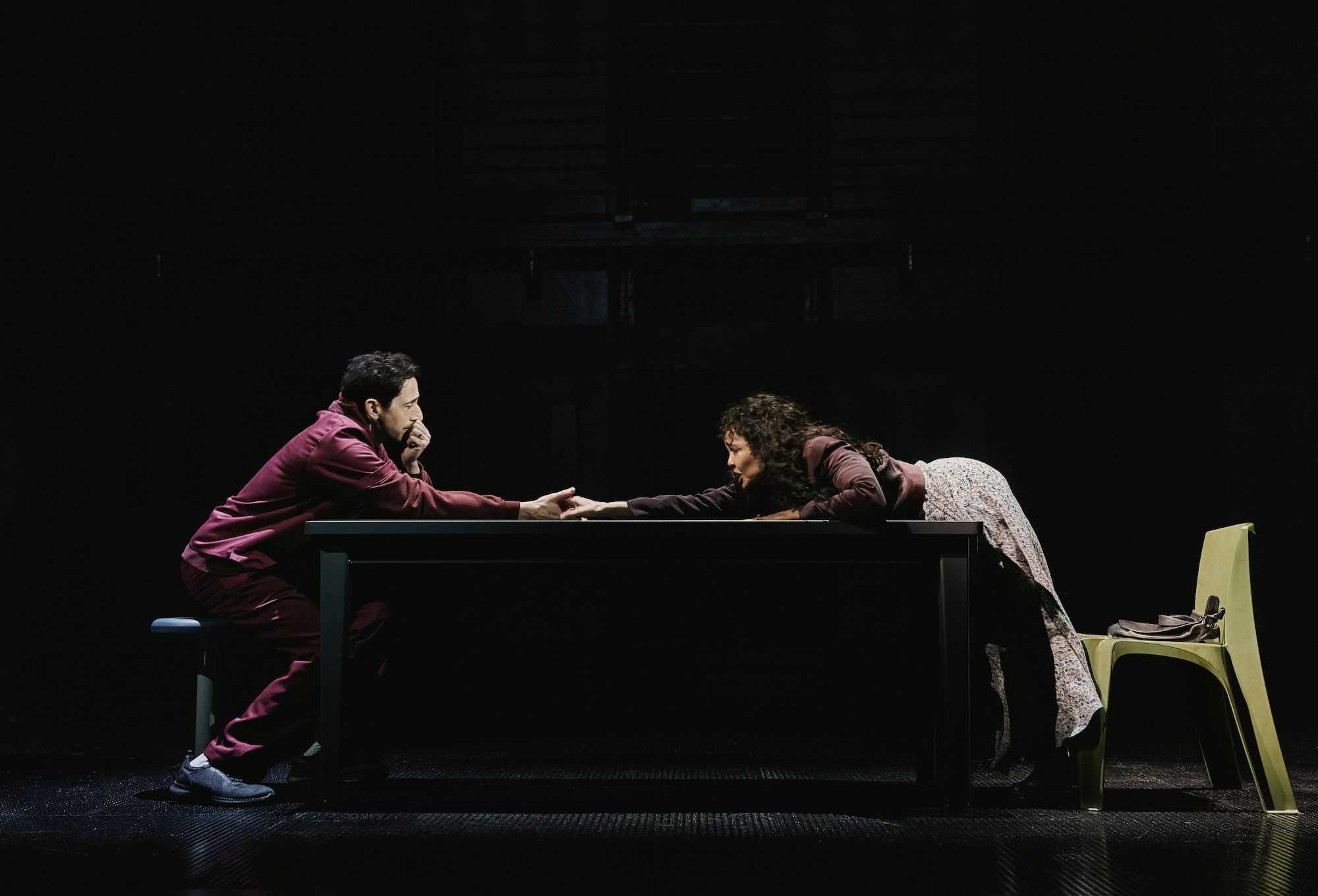
Standing center, Brody delivers a performance that carries both the emotional and structural weight of the piece. His Nick is charismatic, restless, and deeply human, a man who draws us in even as we question him. The performance moves fluidly between vulnerability and defense, capturing the contradictions of someone who is both self-aware and elusive. Tessa Thompson (“Hedda“) as Jacki enters as a counterpoint, a voluntary presence from the outside world who becomes increasingly entwined in Nick’s story. Their relationship forms the emotional spine of the play, though the connection between them does not always land with the clarity or depth the script seems to seek, leaving certain moments feeling more constructed than emotionally authentic.
Ferrentino’s writing reaches for a wide tonal range, moving between humor, reflection, and moments of stark intensity. At times, that range creates powerful engagement, particularly when the language leans into the rhythms of memory and the isolating effects of silence. The play offers glimpses into the psychological toll of solitary confinement, especially in its depiction of enforced muteness and the fragile relief that comes with the return of speech through song. That tension finds one of its clearest expressions in the moment the enforced silence is lifted, punctuated by Ephraim Sykes’s a cappella rendition of “I Wish It Would Rain,” a striking release that briefly breaks through the play’s emotional containment. This performance carries a visceral resonance, inviting the audience to consider not just the circumstances of Nick’s imprisonment, but the internal ramifications shaped by years of isolation.
The structure, however, does not always sustain that momentum. The absence of an intermission contributes to a sense of temporal weight, where the passage of time within the story begins to echo in our own experience of the play. Certain sections feel extended beyond their natural rhythm, and the repetition that reinforces Nick’s mental state can also slow the forward drive. The narrative builds toward key revelations and emotional turning points, yet not all of them land with the intended impact, creating an uneven progression that shifts between gripping immediacy and lingering delay. That ambiguity extends to the title itself, which is never fully articulated within the play. While the documentary roots it in the concept of triskaidekaphobia and a fascination with language, Ferrentino leans into a more abstract sense of misfortune and superstition, leaving the idea hovering rather than defined.
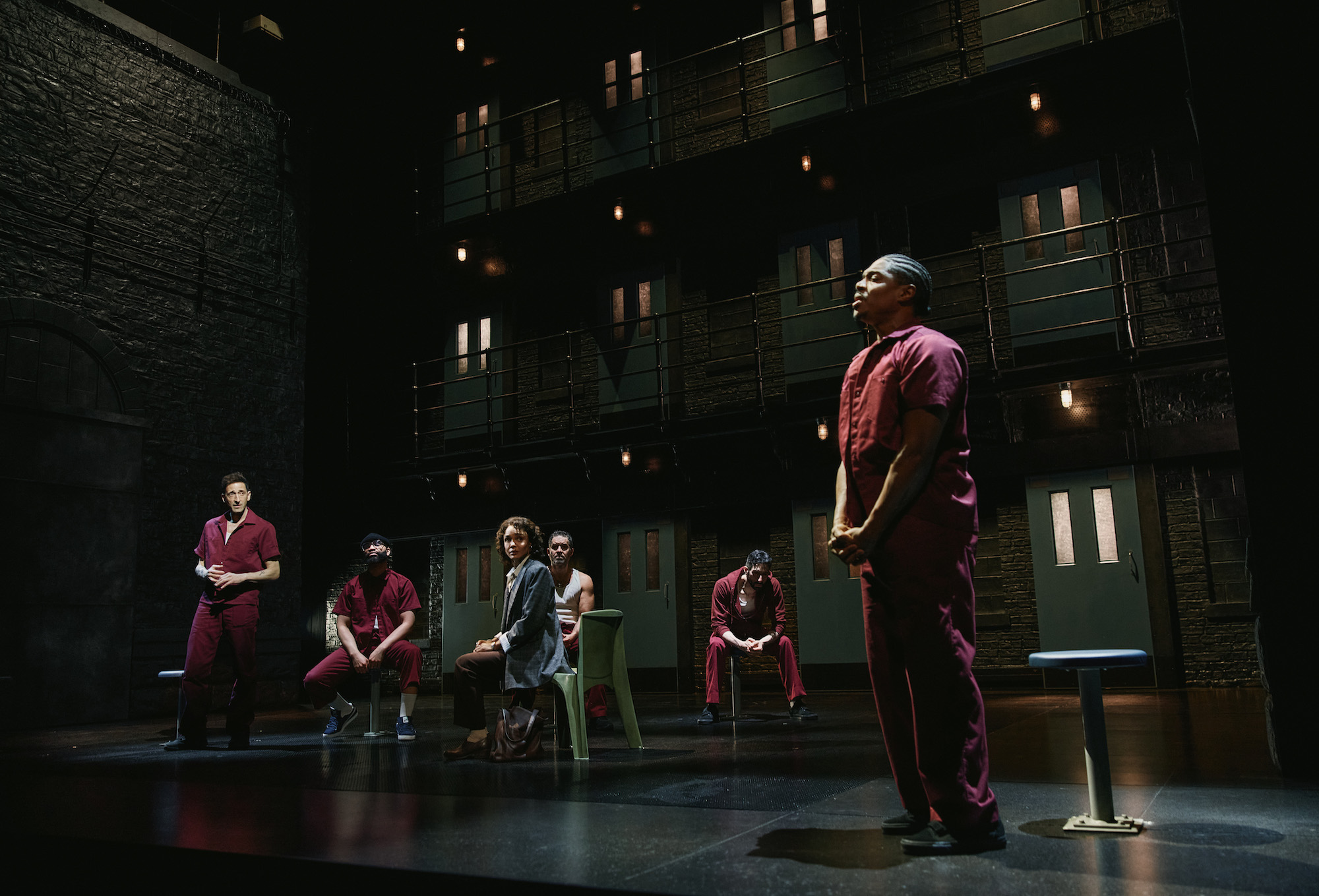
Thematically, the play engages with questions of justice, identity, and the systems that define both. It draws from the real-life story of Nick Yarris, a man who spent more than two decades on death row before being exonerated, and it carries the weight of that history throughout. The production’s partnership with the Innocence Project underscores that connection, grounding the theatrical experience in a broader conversation about wrongful conviction and the fragility of truth within the legal system. At the same time, certain narrative choices simplify complex aspects of Nick’s past, framing pivotal moments in ways that feel reductive rather than fully explored, which creates a disconnect between the play’s ambitions and its execution. Blame is delivered in a way that left me feeling a bit sick to my stomach, and not for the reasons intended.
As the story moves toward its conclusion, the emotional trajectory shifts into a more overtly sentimental register. The final moments aim to provide resolution and release, yet they arrive with a familiarity that contrasts with the psychological intricacy established earlier. For a play that engages so deeply with language, literature, poetry, and the act of storytelling, that closing gesture feels unexpectedly grounded in a more conventional register, leaving some of its earlier ideas unresolved and forgotten.
Even within those inconsistencies, The Fear of 13 manages to hold a somewhat compelling core. It is a work driven by performance, by the intensity of presence, and by the unsettling nature of a story that resists easy understanding. Sitting with Nick’s words, with his insistence on making sense of a life shaped by forces both internal and external, the experience drifts away from resolution and settles inside that uncertainty. Time stretches, contracts, and circles back on itself, and within that shifting landscape, the act of telling the story becomes its own form of survival.
 front mezz junkies
[…] Michele or Aaron Tveit for Chess, Laurie Metcalf for Little Bear Ridge Road, or Adrien Brody for Fear of 13. That play received only two nominations for lighting and sound design. Beaches, Proof, and Call Me […]
LikeLike
[…] OrchestrationsBryan Carter (music supervisor and arranger), The Fear of 13Daniel Kluger, The Seat of Our PantsDavid M. Lutken, Morgan Morse, Lisa Helmi Johanson, Sherry […]
LikeLike
[…] OrchestrationsBryan Carter (music supervisor and arranger), The Fear of 13Daniel Kluger, The Seat of Our Pants***David M. Lutken, Morgan Morse, Lisa Helmi Johanson, […]
LikeLike
[…] Wilson’s Joe Turner’s Come and Gone🤞 Heather Gilbert, BugHeather Gilbert, The Fear of 13 ✅ Jack Knowles, Arthur Miller’s Death of a […]
LikeLike
[…] Wilson’s Joe Turner’s Come and Gone🤞 Heather Gilbert, BugHeather Gilbert, The Fear of 13 🏆 ✅ Jack Knowles, Arthur Miller’s Death of a […]
LikeLike