The Broadway Theatre Review: August Wilson’s Century Cycle Resonates with Spiritual Force at the Barrymore
The sound of a guitar being gently strummed is what draws me in, but it is the feeling behind it that holds me there. Sitting inside the Ethel Barrymore Theatre, I could feel the rhythm settle into the room before a single line of dialogue fully took shape, as the very appealing Tripp Taylor as Jeremy Furlow eases us into August Wilson’s Joe Turner’s Come and Gone with a quiet musical invocation. When the lyric “and that’s why I’m singing the blues” reaches out into the audience, it does more than set a tone. It establishes a shared emotional ground, one rooted in longing, memory, and survival. From that first gathering around the breakfast table in this Pittsburgh boarding house, I felt pulled into a living space filled with warmth, humour, and an undercurrent of searching that never lets up.
This play, first staged in 1988 and set in 1911, stands as the second chapter in Wilson’s extraordinary American Century Cycle, his ten-play chronicle of Black life across each decade of the twentieth century. What he attempts across this body of work is staggering in scope. He builds a theatrical map of history through intimate human stories, documenting not only the social and economic realities of each era but the spiritual and emotional truths that accompany them. In Joe Turner’s Come and Gone, that focus sharpens around identity, migration, and the lingering scars of enslavement. The characters who pass through Seth and Bertha Holly’s home are not simply tenants. They are unique individuals in motion, carrying pieces of themselves that have been fractured, stolen, or buried. Each is searching for a way to reclaim a sense of wholeness that they have lost or misplaced along the way, buried within a world that has rarely afforded them much opportunity.
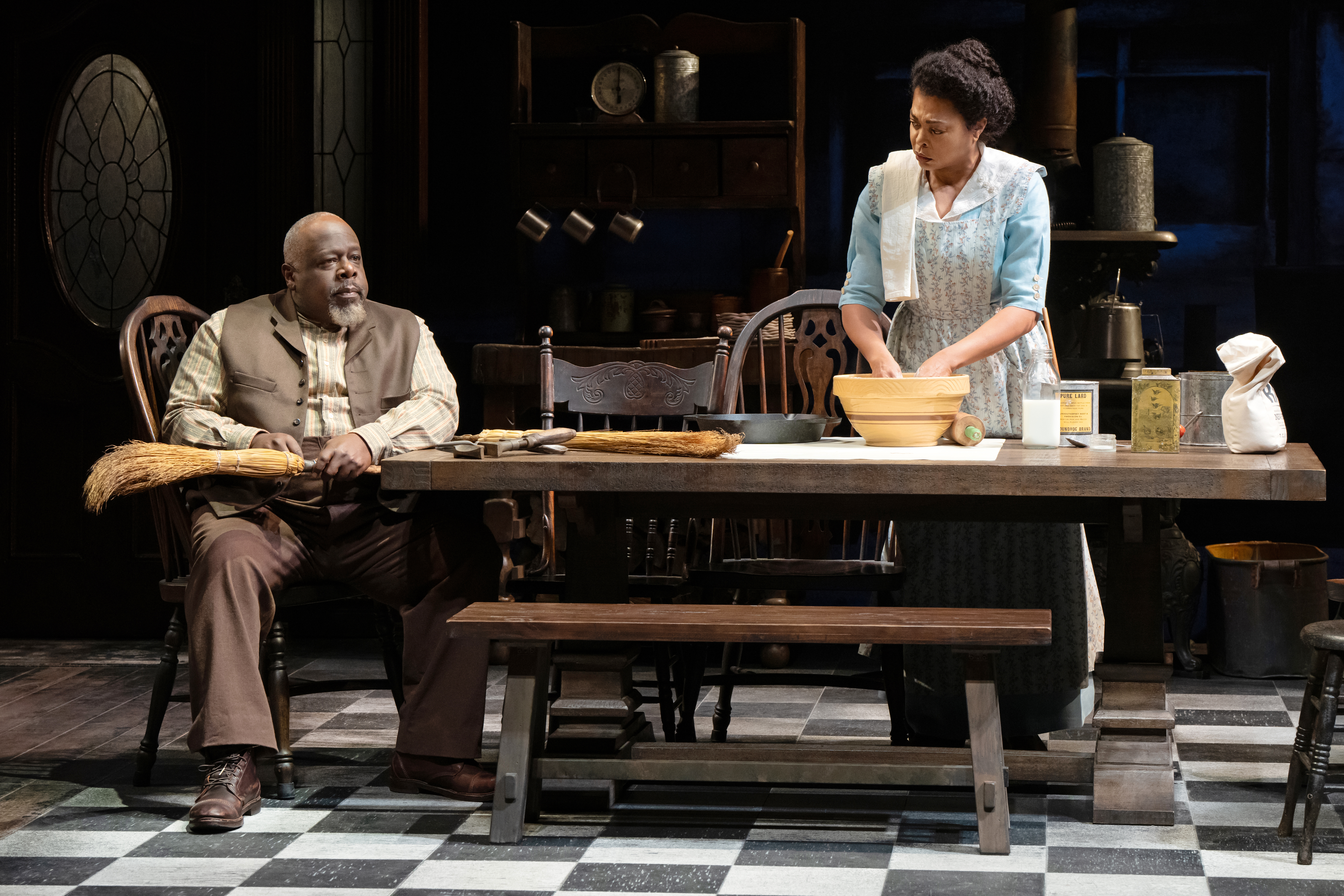
Debbie Allen’s direction honours that structure with a clear commitment to performance and presence. The production resists the urge to complicate the material, allowing Wilson’s language, grounded in lived experience and rich with musicality, to guide the rhythm of the evening. There are moments where transitions feel somewhat static, where the staging holds rather than flows. These pauses feel like a missed opportunity, moments where a stronger connection to our present moment might have deepened the play’s already potent historical and spiritual resonance, like a newly arrived guest from our present moment. Allen instead trusts Wilson’s text to speak for itself, resisting the temptation to impose an additional contemporary perspective. Yet, even within that momentary stillness, the weight of the text remains firm. The world of the play is not heightened for spectacle or commentary. It is lived in, sat with, and absorbed.
At the heart of this boarding house are the gifted duo, Taraji P. Henson and Cedric the Entertainer, as Bertha and Seth Holly, the steady anchors of this transient community. Henson (“The Curious Case of Benjamin Button”) serves up a warmth and openness in her Bertha that feels fulfilling and sustaining. Her presence offers a kind of emotional refuge within the house that simmers quietly but distinctly. Cedric the Entertainer (Broadway’s American Buffalo) meets her with a grounded, practical strength, shaping Seth as a man who understands the rules of survival in a system that continues to press against him. Together, they create a familial foundation that allows the many voices passing through their doors to rise and fall with clarity and purpose.
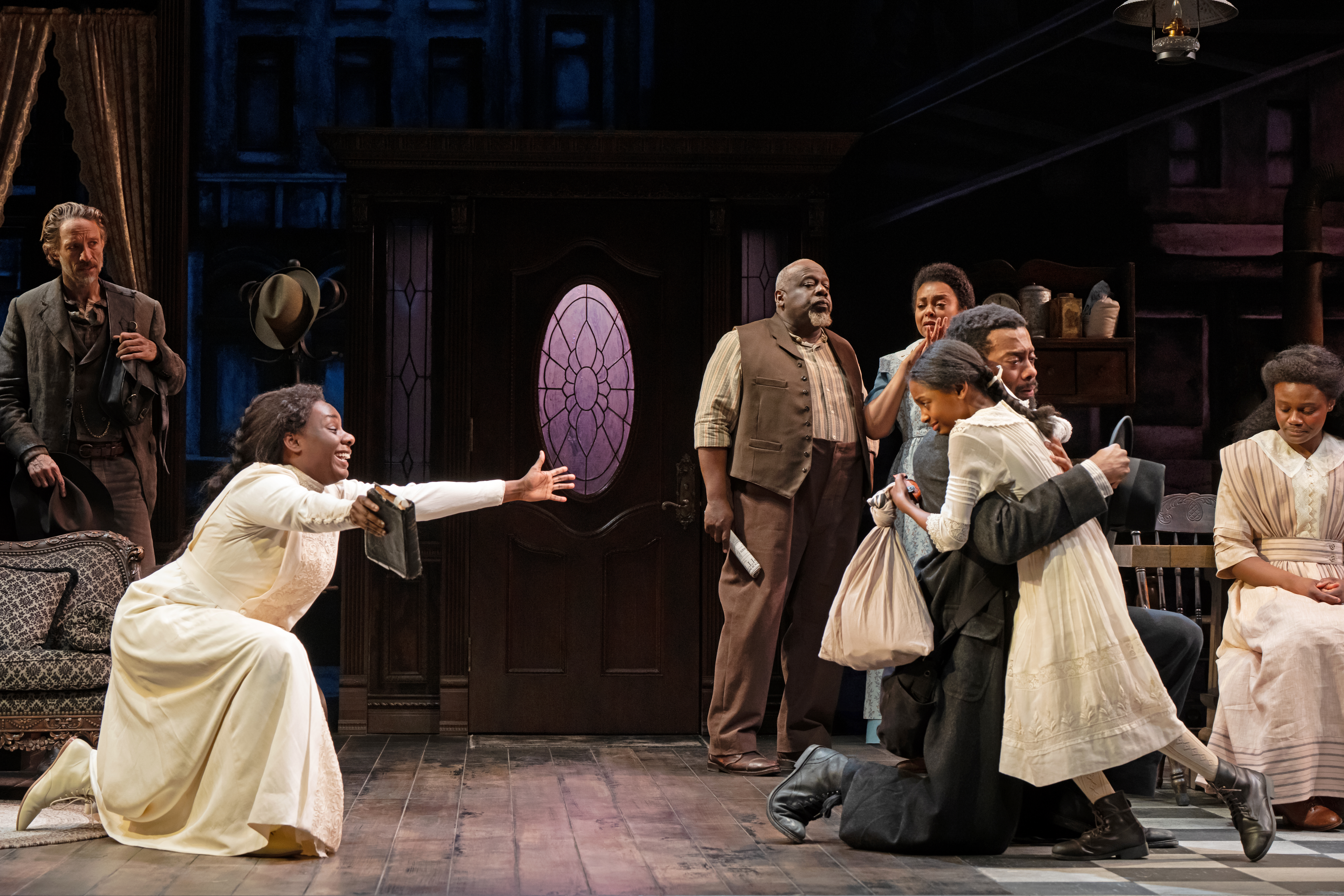
The ensemble surrounding them is richly drawn and deeply felt. Maya Boyd’s Molly Cunningham carries herself with an astounding independence and resolve, while Bradley Stryker’s Rutherford Selig moves through the space as both connector and reminder of the transactional nature of identity in this world. But a different energy arrives within the heavily coated Herald Loomis (Joshua Boone), a tense, dark man with a storm contained within him; his haunted presence and eyes shift the emotional temperature of every scene he enters. Holding onto this man’s hand tightly is Savannah Basley’s Zonia, his daughter, who carries a quiet watchfulness, absorbing the instability around her with a child’s unspoken understanding. And when Abigail Onwunali’s Martha Loomis finally enters near the end of Herald’s week, she brings with her an open grace that contrasts sharply with the turbulence that precedes her. Their eventual reunion unfolds with a complexity that resists easy sentiment. We wait for whatever is going to unfold, standing on alert alongside them all, holding our collective breath and praying for an outcome we can embrace.
What emerges most vividly across these performances is the shared pursuit of what old timer Bynum Walker (Ruben Santiago-Hudson) calls a person’s “song.” Though not always spoken directly, the idea permeates every interaction. These characters are searching for recognition, for connection, for a way to stand fully within themselves after being displaced by forces far beyond their control. The boarding house becomes a crossroads of that search, a place where stories intersect and where the past is never fully at rest. Santiago-Hudson gives Bynum a weathered wisdom and quietly magnetic authority, grounding the production in a spiritual perspective that illuminates the journeys of everyone who passes through the Hollys’ home.
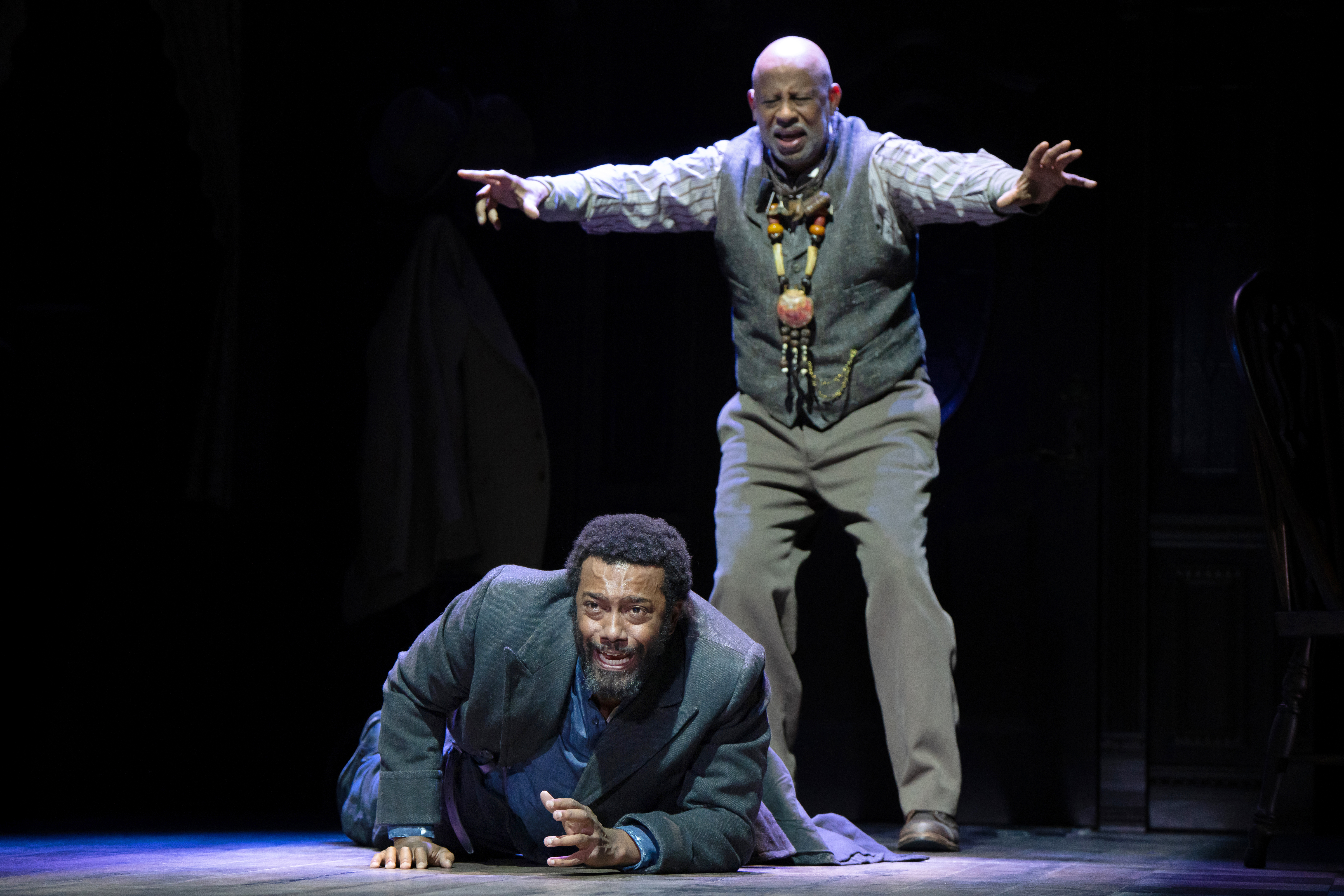
The design elements support this sense of lived-in history with careful attention. The set, designed by David Gallo (Broadway’s Jitney), grounds the interactions in a space that feels both worn and welcoming, with that long staircase rising as a quiet visual metaphor for the personal climbs each character must undertake. Paul Tazewell‘s costumes root the figures in their time without flattening their individuality, and Stacey Derosier‘s lighting shapes the emotional contours of the room, shifting subtly as memory, spirituality, and reality begin to overlap. The sound design by Justin Ellington (Broadway’s Our Town) carries the production’s heartbeat, from the opening guitar to the communal rhythms that build toward the play’s most powerful moments, including the Juba sequence, which rises with a force that feels both ancestral and immediate.
That sequence, along with the spiritual climax that follows, speaks directly to Wilson’s larger project within the Century Cycle. He is not only documenting history. He is reclaiming it, restoring voice and ritual to stories that have too often been erased or simplified. The legacy of Joe Turner, rooted in the real history of forced labor and unlawful imprisonment, lingers as a ghost over the play, shaping the characters’ fears and their fractured sense of self. Even in freedom, the weight of that past remains, influencing how they move, how they trust, and how they define their own worth.
As the play reaches its final moments, that opening sense of musical grounding returns in a different form. The search that has unfolded across the stage does not resolve neatly, but something within it shifts. Watching these characters struggle toward recognition, toward naming themselves in a world that has denied them that right, I felt the quiet power of Wilson’s vision settle in. The guitar that first welcomed us into the room seems to echo beneath it all, not as a simple refrain, but as a reminder that the act of finding one’s song is ongoing, fragile, and necessary. It is carried in the body, in the voice, and in the spaces we share, waiting to be heard.
 front mezz junkies
[…] Miller’s Death of a Salesman, Caroline ShawAugust Wilson’s Joe Turner’s Come and Gone, Steve BargonettiThe Lost Boys , The RescuesSchmigadoon!, Cinco PaulTwo Strangers (Carry a Cake […]
LikeLike
[…] Joe Turner’s Come and Gone […]
LikeLike
[…] Brothers SizeBugDeath of a SalesmanEvery Brilliant ThingFallen AngelsGruesome Playground InjuriesJoe Turner’s Come and GoneProofTwelfth NightYou Got […]
LikeLike
[…] FaggotRiver Lipe-Smith, CarolineLizan Mitchell, Cold War Choir PracticeRuben Santiago-Hudson, Joe Turner’s Come and GoneRichard Thomas, The […]
LikeLike