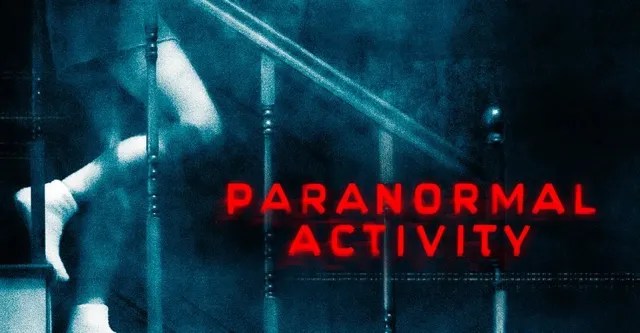
A Frontmezzjunkies Broadway review: Felix Barrett turns a haunted house and a nervous audience into a Broadway thriller that knows exactly how to get under your skin.
By Ross
I knew perfectly well what I had signed up for when I took my seat at the August Wilson Theatre to see “Paranormal Activity,” and yet I still found myself scanning the darkness for signs of what might be waiting in the corners. As I wrote before seeing the production, fear and I have a complicated relationship. I can happily climb aboard a roller coaster when I know what to expect, but put me in a dark theatre with a story I cannot predict, and my imagination will eagerly take over. This live production seems determined to exploit that weakness from the moment we enter the theatre, with preshow music that vibrates loudly through the room, refusing to let us settle comfortably into our seats. That first voice, talking about hauntings and ghosts, establishes the uneasy groundwork of what will follow, drawing us into a domestic nightmare that is as much about anticipation as it is about the shocks themselves. Written by Levi Holloway (Broadway’s Grey House) and directed by Felix Barrett (Sleep No More), co-artistic director of the immersive theatre company Punchdrunk, this is an original story set in the same universe as the 2007 found-footage film, but not a retelling, and its theatrical ingenuity makes the whole experience an impressively effective Broadway screamer, whether I like it or not.
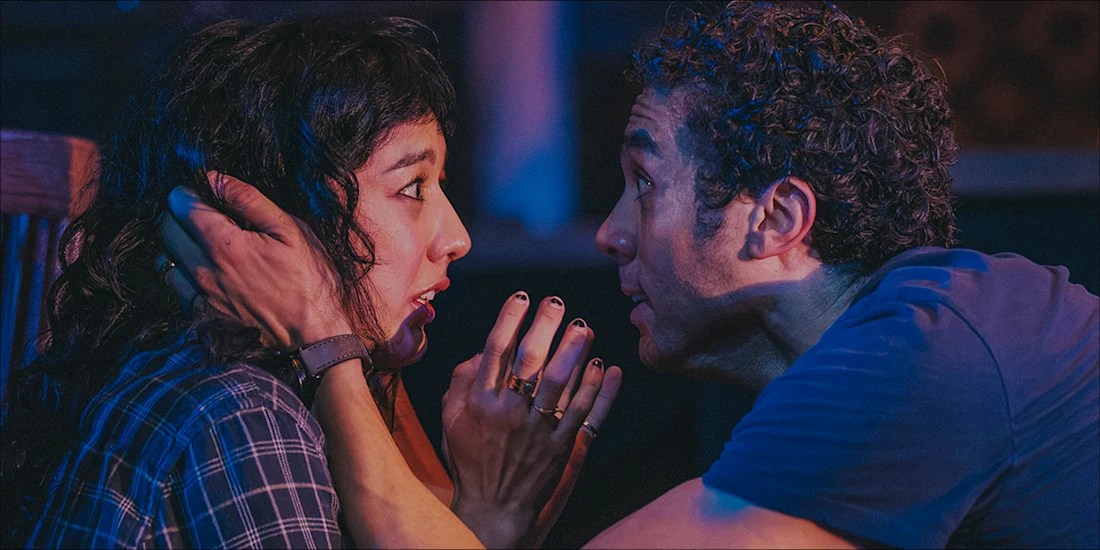
The premise is deceptively simple. James, played by an impressive and thoroughly captivating Travis A. Knight (Red Orchid’s Grey House), and Lou, brought to life by a wonderfully emotionally engaging Cher Álvarez (Apple TV’s ‘Sugar‘), are an American couple who have moved from Chicago to a two-storey London house in an attempt to escape a dark past and start anew. Lou, however, is struggling to settle into her new surroundings, increasingly consumed by the dread she cannot shake. The suspicion grows that whatever they were trying to escape has followed them to London and has no intention of leaving them alone. It’s the perfect beginning of a ghost story, as we watch Lou slowly begin to lose her grip on the possibility of a fresh start, increasingly unsettled in “this fucking place.” When she tries to settle herself, asking Alexa to play her chill playlist, the resulting atmosphere delivers an entirely different kind of chill, the kind that makes the hair on the back of your neck stand up.
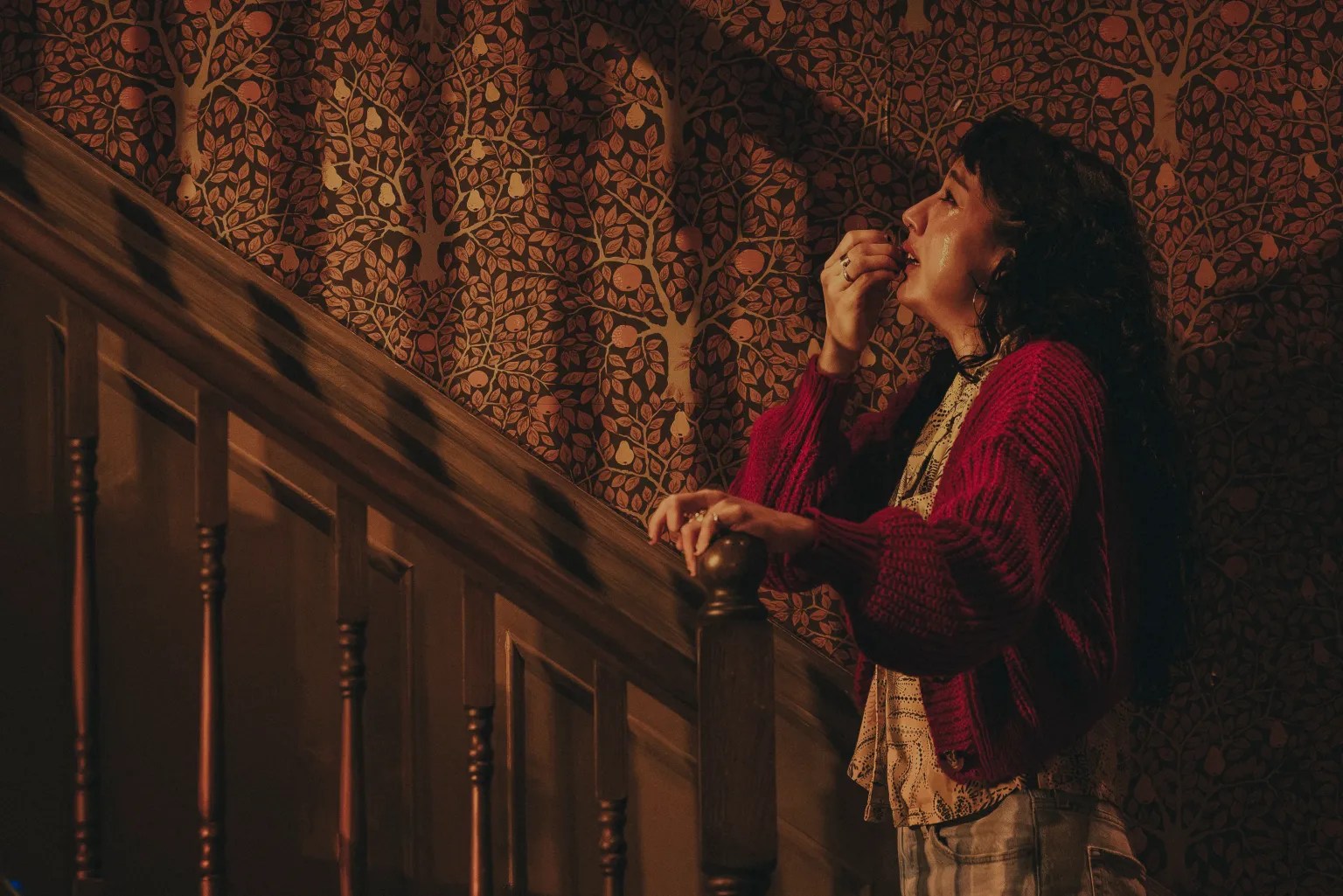
We are told by that podcast voice in the beginning of Paranormal Activity that people are the ones haunted, not places, and that idea steadily works its way into the couple’s increasingly fragile life, making them question each other’s loyalty and sanity in a way that gets under everyone’s skin. Knight and Álvarez keep the strain between James and Lou alive and active, while also beautifully grounding it in love, care, and need. They allow their marital fractures and underlying trauma to give the supernatural events genuine emotional stakes and a place to land. When the electricity first goes out after James shouts into the spiritual void, Lou pleads, “Never say that out loud again,” and we all chimed in with that plea. I felt a shiver of anticipation that had nothing to do with the temperature in the theatre. The house may be the setting for the haunting, but it is the fear that takes hold that is really the fuel to our discomfort, elevated by our growing attachment to the people trapped inside it.
The two-storey house is central to the production’s considerable scare-making ingenuity. Its many rooms, doorways, corners, and shadowy spaces give us an almost irresistible urge to keep our eyes moving, searching for a clue to what might happen next. The set design by Fly Davis (Broadway’s Caroline, or Change) turns their home into an intricate field of possible threats and dark spaces, with the lighting by Anna Watson (Broadway’s Giant) and sound design by Gareth Fry (Broadway’s The Encounter) manipulating our attention with extraordinary precision. Each time the lights plunge the stage into deep blackness and return after that slow curtain rise, I catch myself surveying every corner once again, trying to work out what I should brace for.
The flashlight shadows do an astonishing amount of work, while the changing patterns of car headlights and siren lights through the windows add another layer of movement and menace. Illusion designer Chris Fisher, whose work includes Harry Potter and the Cursed Child, contributes magnificently to the production’s remarkable ability to make the impossible seem physical. The costumes by Davis also help keep the central couple grounded in the ordinary world they are trying to preserve, giving the supernatural disturbances a recognizable context. I became so absorbed in searching the house for clues that I even missed one of the quick scares before the lights went out again. The audience’s nervous laughter in the darkness made it clear that I had missed a scare, and I wished I had been looking in the right direction.
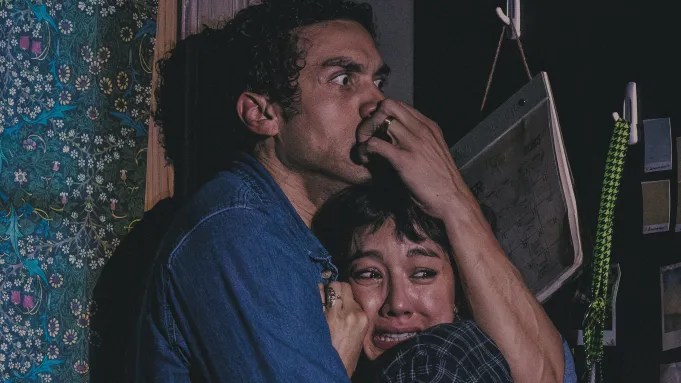
Some of the production’s most effective moments come from the sheer simplicity of what we are afraid to see. The shower-curtain sequence is a masterclass in sustained audience anxiety, with cries of “No, no, no!” echoing through the theatre as James approaches the curtain and pulls it back with an intensity that matches our own mounting dread. It is ridiculous in the most delightful way: a whole audience pleading with a character not to do something that we know he is almost certainly going to do, then laughing at ourselves once the moment has passed. Watching the people around me squirm in their seats becomes part of the entertainment, and the communal response gives the scares a contagious energy. The production does rely at times on sudden loud noises to trigger its jump scares, and the attic drop is one of the moments that feels less satisfying than it should. Yet many of the other effects are so firmly rooted in what we have been led to believe is happening that they still get under my skin, even when I think I have anticipated the next move. More than once, I felt goosebumps rise on my arms. The theatrical framing makes the house feel like a trap we are peering into, and the knowledge that the actors are performing live in front of us only sharpens the tension.
I also appreciated the gradual rise in intensity, which gives the story time to draw us closer to James and Lou before the supernatural events begin to arrive with greater force. The arrival of a psychic seems to promise one kind of revelation, only for the encounter to take a sudden and startling turn as the action shifts toward the door. The psychic believes, “You’re a kind of door,” but the meaning of that observation remains unsettlingly elusive as the power continues to fail. Lou moves through the house with the disorientation of someone sleepwalking toward an answer she cannot yet see. Shannon Cochran and Eva Kaminsky round out the cast wonderfully, helping sustain the production’s tense atmosphere as the story moves toward its final revelations. When the mother pleads, “Pray to lift the darkness,” I found myself leaning into the hope of that request, despite my own non-belief. The next knock arrives with impeccable timing, sending another jolt through the room as the pieces begin to fall into place. Holloway’s writing and Barrett’s direction understand the theatrical pleasure of making an audience wait, listen, search, and then react together. The scares are not all equally successful, but the production’s command of timing and atmosphere makes the experience consistently thrilling.
I came to “Paranormal Activity” with some reservations about my willingness to be frightened, and I happily left with my nerves thoroughly tested and a grin I could not quite suppress. The show knows that a dark room can turn the smallest sound into a threat, and that an ordinary home can become a maze of possibilities when we are no longer certain what belongs there. Its most successful effects draw their power from that uncertainty, while Knight and Álvarez give the escalating terror an emotional foundation that keeps the evening connected to the lives of the couple at its centre. There are a few moments when the mechanics of the scare become too apparent, but the production’s inventive design, committed performances, and infectious audience reactions make it a wildly entertaining theatrical ride. I may still be the sort of person who scans every corner when the lights come back on, searching for something I cannot quite name. And after this particular night at the theatre, I suspect I will be anxiously listening a little more carefully for that bump and creak in the night.