A Frontmezzjunkies Interview: Brandon White and Shannon Mills on Adapting Gothic Literature Through Opera, Movement and Immersive Theatre
Halloween in Toronto is about to get deliciously dark again, as White Mills Theatre Co. brings Tales of the Damned back to Campbell House Museum for a strictly limited engagement. I had the pleasure of stepping into the production last Halloween, when White Mills transformed the historic house into what I called “a haunted storytelling wonderland,” weaving the worlds of Mary Shelley, Robert Louis Stevenson and Oscar Wilde into an immersive horror opera filled with murder, madness, revenge and the Devil. It was, as I wrote at the time, “a gorgeously wicked and creative collision of literature, history, and horror,” and I am more than ready to walk back through those doors this October and see what this year’s incarnation has in store.
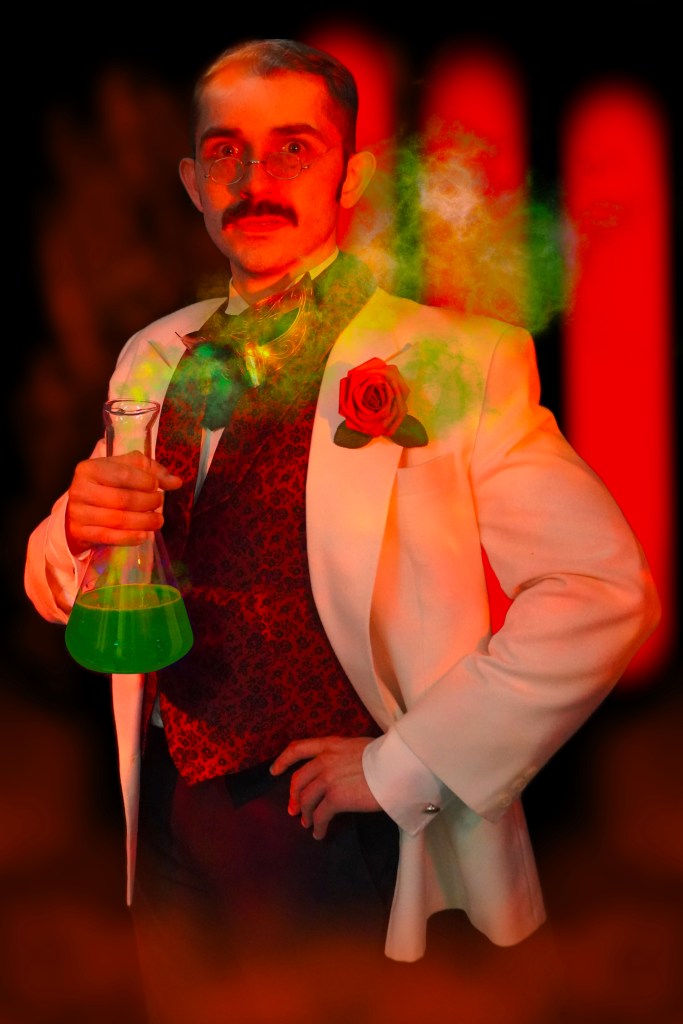
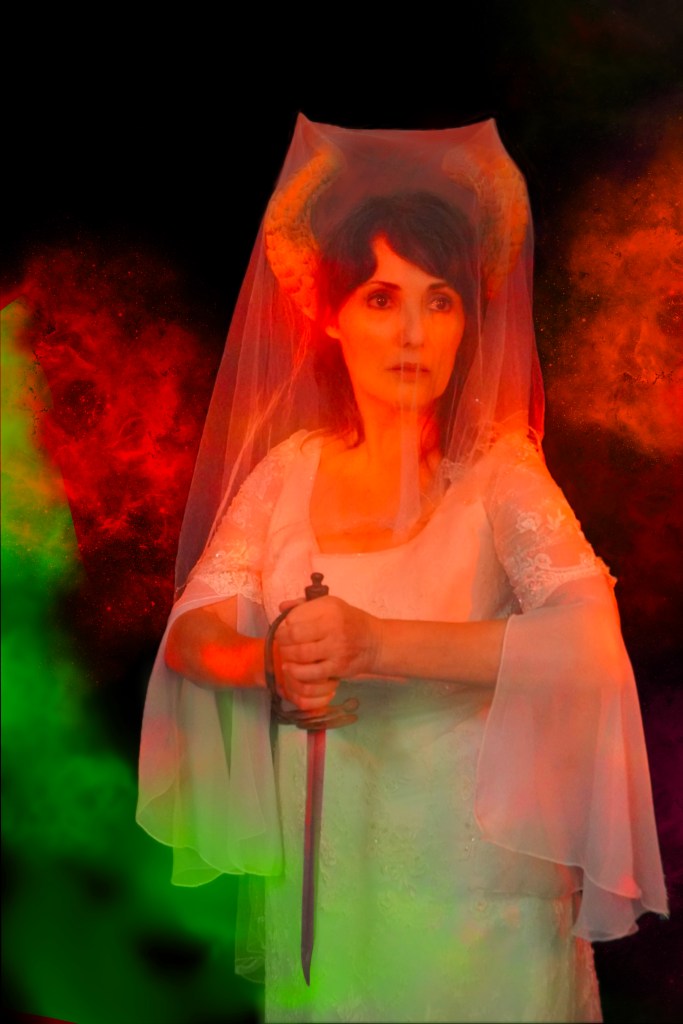
At the centre of that adaptation pulling all the strings are Brandon White and Shannon Mills, co-founders of White Mills Theatre Co., with White serving as adaptor and Mills as music director. Together they have built a company devoted to immersive adaptations of literary works, bringing together verbatim text, movement and opera in unconventional spaces. For Tales of the Damned, that means turning Campbell House into a world where audiences move through candlelit rooms and encounter some of literature’s most disturbed characters at close range. Last year I described the experience as a “living, breathing séance of literature and theatre,” and with the production returning with fresh characters and familiar tales, I wanted to speak with White and Mills about the process of adapting these gothic stories, creating horror for a historic space, and what they have discovered by bringing audiences back into the nightmare.
Frontmezzjunkies: When you first began creating Tales of the Damned, what was the challenge of bringing Frankenstein, Jekyll and Hyde, and Dorian Gray into the same theatrical world? What did each of you discover about the connections between these characters as the adaptation and music began to take shape?
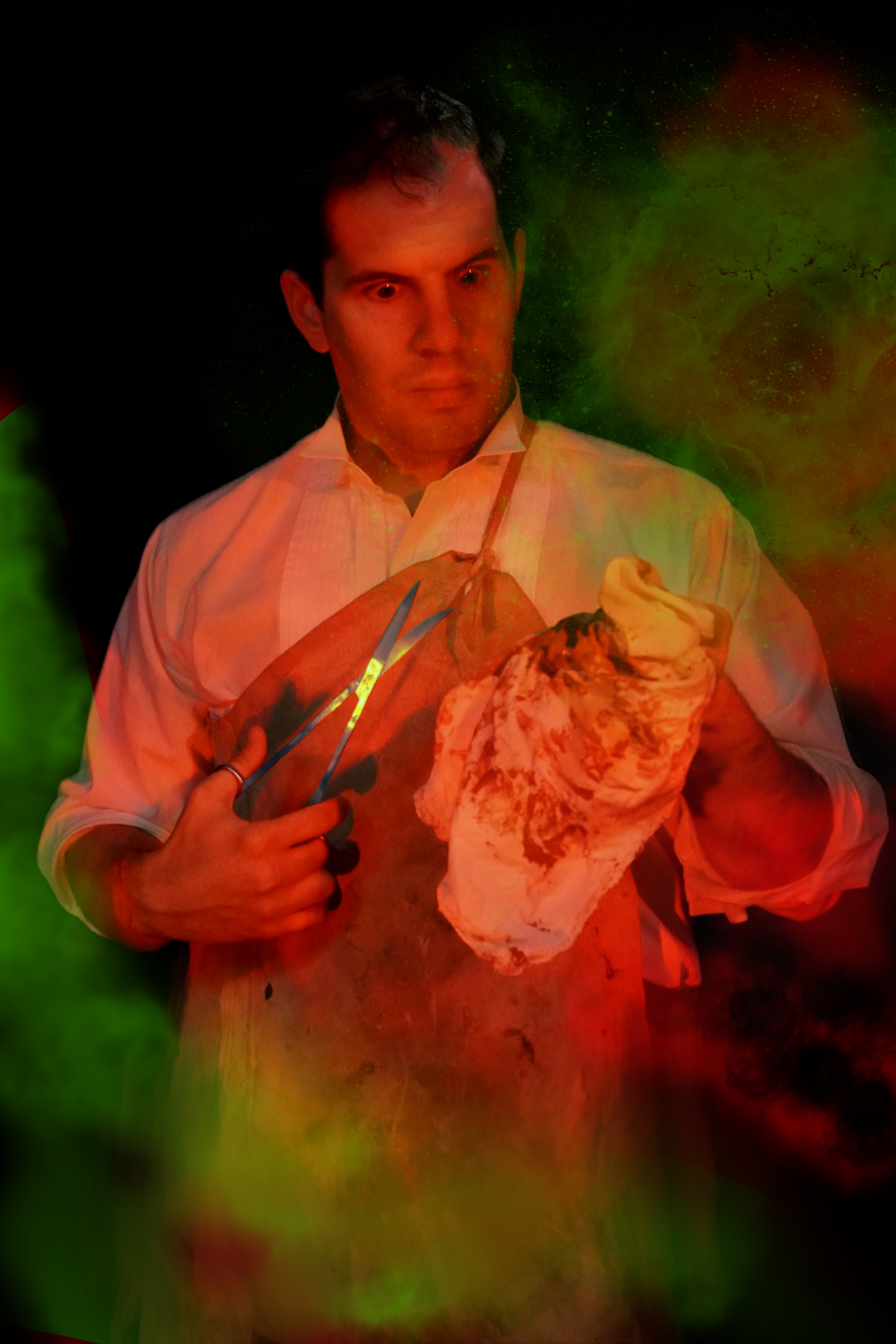
Brandon White: Our starting point in the adaptation process was to identify the shared themes between our source texts to help shape a new, combined narrative. In the early stages, we noticed themes of innocence, yearning, and mourning emerge in all three stories, which guided the evolution of the writing. From there, we treated dialogue as a mosaic, piecing together bits of verbatim text from each novel to create new conversations that honour the original stories while allowing us to place the characters in the same world. We ultimately chose to set the story at ‘Black-Mail House’ from The Strange Case of Dr. Jekyll and Mr. Hyde, which we reimagined as a brothel. By weaving these Gothic masterpieces together, the production explores the frailty of innocence, humanity’s yearning for connection and power, and the mourning that follows both our profound losses and our darkest choices.
Shannon Mills: The connection between these themes and characters solidified when the music began to take shape alongside the script. We discovered that music could act as a bridge between our source texts, and it quickly became associated with the otherworldly aspects of the production, particularly the Devils. Introduced the moment they are called upon, the music serves as a tool to assert their control over the main characters, leading them towards the darkness. We ensured that each of the three Devils has their own distinct musical influence, unified by a similar thread that establishes both their supernatural powers and their influence over Frankenstein, Jekyll, and Dorian alike.
FMJ: One of the things that struck me about the production last year was how Campbell House itself seemed to become part of the storytelling. How did the building’s history, its period and its individual rooms influence your creative decisions, from the musical selection to the way the story unfolds?
SM: We always strive to keep the musical selection as period-specific as possible to complement the era that Campbell House was built in and the timeframe in which our story takes place. Set in 1886, we had a rich selection of existing classical compositions to choose from, ranging from the French Grand Opera (J. Offenbach and C. Gounod), the Romantic Era (S. Rachmaninoff, M. Mussorgsky, and C. Saint-Saëns), and Impressionism (M. Ravel and O. Messiaen). These works were then arranged by Rob Carruthers for this year’s instrumentalists. We also try to find material that thematically suits the production, so we drew inspiration from the opera Faust, as well as the symphonic Danse Macabre and Night on Bald Mountain to reinforce our story while establishing a musical link to both the Devils and the supernatural itself.
BW: Both the challenge and privilege of site-specific work is that Tales of the Damned cannot exist anywhere else; it was developed for the distinct possibilities and limitations posed by the architecture of Campbell House Museum. A large part of our adaptation process is spent analyzing the museum’s blueprints to map our audience’s path through the space and building a physical framework that directly dictates how the narrative unfolds. While the history and period of Campbell House influence every artistic choice we make, the true magic lies in the clockwork precision required to honour the constraints of the space while leaning into its inherent uniqueness. Beyond developing a compelling script, our writing revolves around strategic orchestration: calculating how to slip actors between rooms completely unseen, how to guide separate audience groups from floor to floor without colliding, and how to fragment a story so that it can be told out of order without dismantling the plot. In the end, every audience member navigates a slightly different path and personal experience, yet they all leave having witnessed one cohesive, haunting narrative. Without Campbell House, there is no ‘Black-Mail House’, let alone a production, and both our characters and audience are left without a world to inhabit.
FMJ: The audience is divided and led through the house, with different stories unfolding in different rooms and through shifts in time and space. What does that kind of physical movement allow you to do as creators that you couldn’t do in a conventional theatre setting?
BW: Staging site-specific, immersive theatre dismantles the “safety net” that the fourth wall offers in a more traditional setting. In conventional productions, the audience maintains a certain level of comfort while watching a story happen to someone else. In Tales of the Damned, however, the audience becomes enmeshed with the story itself. As we propel them through shifts in memory and physical location, they experience the narrative in a fragmented order, transforming them from passive observers into active participants who must piece the story together. This physical movement mirrors the psychological fracturing of the characters themselves: the split mind of Jekyll, the shattered innocence of Justine Moritz, and the rotting conscience of Dorian Gray. In this context, we deliberately create moments of intense isolation, sudden confrontation, and discovery that are impossible to experience when looking at a flat stage. Unlike most theatre, our audience is never a fly on the wall.
FMJ: I described the production as “a living, breathing séance of literature and theatre,” particularly because of the combination of opera, movement, atmosphere, and the close proximity between the audience and performers. How did the two of you arrive at this distinctive theatrical language, and how has it evolved through your creative partnership?
SM: This particular blend of theatre is very much our individual artistic personalities fused into a cohesive theatrical cocktail. Brandon’s experience in devised theatre, creative writing, and movement combined with my love for the lushness of opera and classical music has morphed into a singular artistic vision. Driven by our shared passion for classic literature, nostalgia, historic buildings, and black-and-white cinema, this signature style began to emerge early in our collaboration. It has been a dream to see all of these facets of our friendship and creative partnership come together to create something truly unique that has taken over 10 years to actualize and perfect. In terms of the immersive experience, the music acts as the literal invocation for the séance, a continuing motif that appears throughout our body of work. By placing vocalists and instrumentalists in historic rooms alongside our audience, we’ve created a distinct sonic experience that wraps around our spectators, pulling them into the supernatural worlds we build.
FMJ: The production has been created to be an immersive horror opera, and Shannon, your music is such an important part of creating that atmosphere. What does opera allow you to bring to these stories that spoken drama alone could not, particularly when the audience is moving through a historic house?
SM: The minute you add live music to this kind of immersive theatre, the audience is given another sensory element that propels both the narrative and atmosphere forward. Being in such close quarters to these skilled musicians, sometimes literally rubbing shoulders, or encountering an opera singer directly in front of you is an experience that audiences typically do not have in conventional theatre. Opera and classical art song add an emotional depth to the spoken word; when paired together, they offer a rare window into the characters’ inner worlds. In Tales of the Damned, we strategically rely on operatic vocalises to complement important sections of text that intensify the emotional context of the writing as well as the audience’s sense of discovery, vulnerability, and terror.
FMJ: There is a fascinating tension in the production between the familiar gothic characters audiences think they know and the very physical, immersive experience of encountering them inside Campbell House. How do you decide what to preserve from the original literature, and where can the two of you take these characters somewhere unexpected through adaptation, performance, and music?
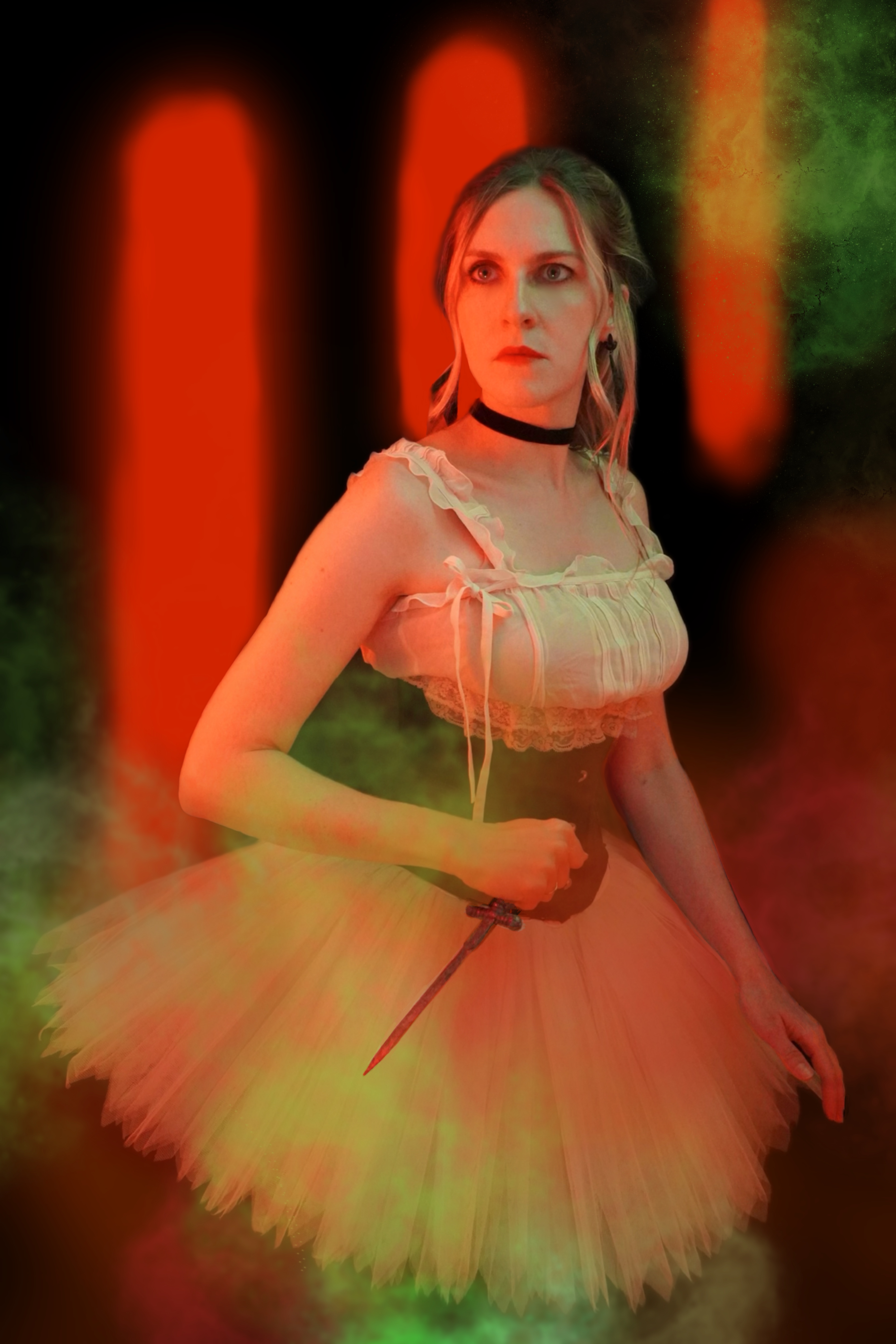
BW: Although Tales of the Damned is almost entirely composed of verbatim text, our goal is to reintroduce audiences to these iconic figures through a fresh, unexpected lens. Since these stories have been adapted for generations, pop culture has created a shorthand for how they unfold that rarely matches the actual books. For example, characters like Justine Moritz, the ultimate victim of Shelley’s Frankenstein, and Agatha De Lacey, who teaches the monster his own humanity, are almost always erased from modern adaptations. Tales of the Damned reclaims these forgotten voices and interrogates their source novels to find surprising connections between characters who belong to completely different literary worlds. Our version of Dr. Jekyll, for instance, fuses the original doctor (who has very little dialogue in Stevenson’s novella) with the acerbic wit of Lord Henry Wotton from Wilde’s The Picture of Dorian Gray. By focusing on their shared flaws and drawing on parallel archetypes, we’ve created a theatrical experience that feels entirely original while remaining deeply loyal to the books. We hope it inspires audiences to revisit the original stories and discover the exact breadcrumbs that led to our creative choices.
SM: I’ll add that the musical sequences in the production also serve as a way to underscore very famous, recognizable moments in the original literature that are synonymous with the narratives. They provide emotional depth and help us probe deeper into moments where we’ve intentionally deviated from the cultural expectations of these stories to expand on the source material that audiences may be unfamiliar with.
FMJ: The production returns after its sold-out 2025 run with fresh characters and familiar tales. Having lived with Tales of the Damned through that first production, what have you each wanted to revisit, deepen, or change this time around?
SM: I wanted to continue to integrate the music with text so that it appears even more seamless for the audience. It was important to me that I ensured our musical moments had circular aspects that helped to either reinforce character development or specific themes from the original stories. We also have some new musical selections this year which I hope will be even more terrifying and spooky!
BW: It’s a privilege to return to a world that has occupied our creative energy for years, and to have the rare opportunity to elevate it. I also wanted to push the style and aesthetic that’s so unique to our company forward, that “theatrical language” you mentioned earlier (blending opera, movement, verbatim text, atmosphere, and close proximity to performers). With more time on our side, we focused on strengthening the marriage between these elements, particularly fusing our choreography and soundscapes into one seamless experience. As our creative team has grown to support the needs of the production, we were able to dive deeper into our collaborations with like-minded artists. We worked hand-in-hand with our choreographer, Ella Mazur, to heighten the show’s surreal physicality, while our sound designer, Daniel Tofach, and music arranger, Rob Carruthers, used Shannon’s musical choices as a launchpad to build a deeply unsettling auditory environment. We’ve managed to inject significantly more movement into the space, leaned heavily into both the surreal and supernatural, and the result is the culmination of all our efforts over the past decade.
FMJ: Last year, audiences entered Campbell House knowing they were coming to a horror story, but the production had the ability to make the building itself feel like part of the threat. What do you hope audiences experience differently this time when they step through those doors?
BW: Last year, the threat was environmental as audiences were trapped inside a brothel alongside a murderer. This year, we’re shifting the terror further inward. With an updated script, fresh choreography, and new music, we’re using the historic setting of Campbell House Museum to explore much darker territory like human grief. As this is the final year of our two-year production cycle for Tales of the Damned, our ensemble feels an urgency to push these boundaries as far as we can before moving on to the next project. Dramaturgically, that means diving deeper into the relationships between characters, particularly the devastating dynamic between Justine Moritz and Agatha De Lacey. Beyond the immediate thrill of a jump-scare, I hope audiences walk away with a haunting realization of how the horror genre functions as a vehicle for trauma. As artists, it circles back to what you so beautifully noted in your review of last year’s production: “our greatest monsters are, as ever, reflections of ourselves”.
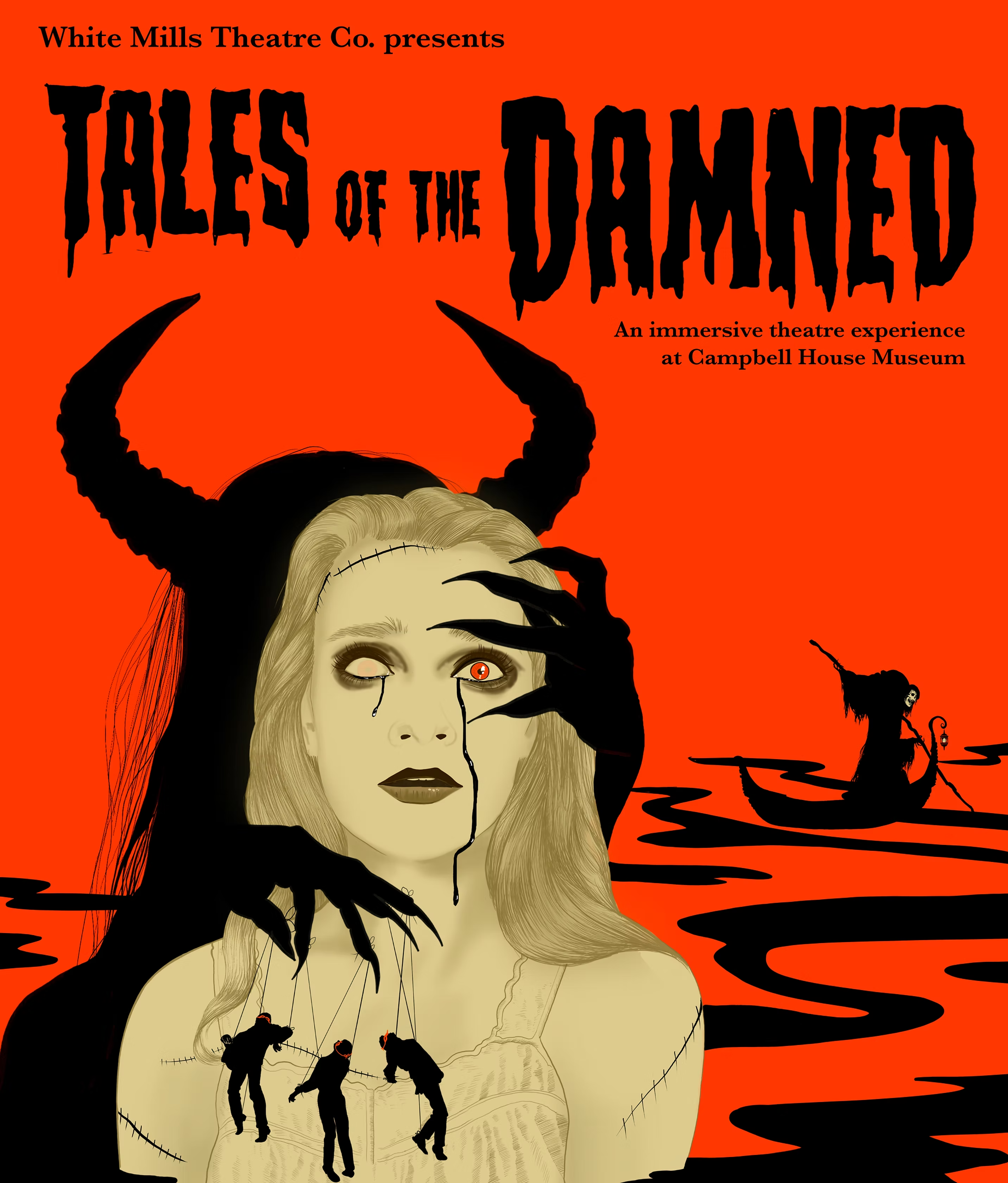
Adaptation by Brandon White
Music by Shannon Mills
Featuring Tara Baxendale, Anthony Botelho, Rob Carruthers, Michelle Danese, Scott Garland, Shelby Handley, Gordon Harper, Mona Hillis, Adrian Marchesano, Ella Mazur, Shannon Mills, Lennox Mills Salamat, Scott Moore, Michelle Piller, and Spencer Schunk
Performing from Wednesday, Oct. 14 to Sunday, Nov. 1
Location:
Campbell House Museum, 160 Queen St. W., Toronto
Performance Dates:
Wednesday, Oct. 14, 7:30 p.m. (Preview)
Friday, Oct. 16, 7:30 p.m.
Saturday, Oct. 17, 7:30 p.m.
Sunday, Oct. 18, 7:30 p.m.
Tuesday, Oct. 20, 7:30 p.m.
Wednesday, Oct. 21, 7:30 p.m.
Friday, Oct. 23, 7:30 p.m.
Saturday, Oct. 24, 7:30 p.m.
Sunday, Oct. 25, 7:30 p.m.
Tuesday, Oct. 27, 7:30 p.m.
Wednesday, Oct. 28, 7:30 p.m.
Friday, Oct. 30, 7:30 p.m.
Saturday, Oct. 31, 10 p.m.
Sunday, Nov. 1, 7:30 p.m.
Tickets:
Tickets on sale as of Sept. 16
Purchase online at https://www.whitemillstheatreco.com/upcoming-events

