A Canadian Opera review: Mozart’s comic opera turns a school for lovers into a lesson about fidelity, manipulation, and the danger of putting love to the test
By Ross
I’m beginning to see a pattern when I go to the opera. I arrive with something in my head that has very little to do with opera itself, and somehow that becomes the door I need to walk through. I am still not trained or educated about opera, with a capital O, but I am beginning to wonder whether the more I see, hear, and feel, the more it might actually enter my soul. After my very “Pretty Woman” encounter with La Traviata, I walked into the Four Seasons Centre for Mozart’s Così fan tutte carrying a very different reference point: Amadeus, both the Shaw Festival production I had recently seen and the famous film that has helped shape so much of my idea of Mozart as a character. I wanted to dive further into the work of this brilliant, complicated composer, particularly the astonishing amount he created in such a short life. What I wasn’t expecting was to walk into a production that would turn an opera about love, fidelity, and deception into something that looked very much like a classroom lesson in the psychology of the human heart.
I should probably admit something before we go any further. I had somehow convinced myself that Così fan tutte was the Mozart opera discussed in “Amadeus“, when I was actually confusing it with The Marriage of Figaro, both of which have librettos written by Lorenzo Da Ponte. My opera education clearly has some catching up to do. Fortunately, Atom Egoyan’s production gives me plenty to look at while I learn. Before the opera even begins, the stage is overwhelmingly occupied by Frida Kahlo’s The Two Fridas, an enormous image that eventually floats away to reveal a science laboratory filled with teenage students in white coats. Don Alfonso, in this version, becomes a professor, the chorus becomes a group of students taking notes, and Mozart’s comedy begins to unfold inside a strange school for lovers. The Kahlo painting immediately gives the sisters Fiordiligi and Dorabella a visual connection to the fractured heart at the centre of this story, while the school setting turns the entire wager into a lesson about love that nobody has actually asked to take. The students watch, observe, study and learn, while the adults around them behave as though human emotion can be reduced to an experiment.
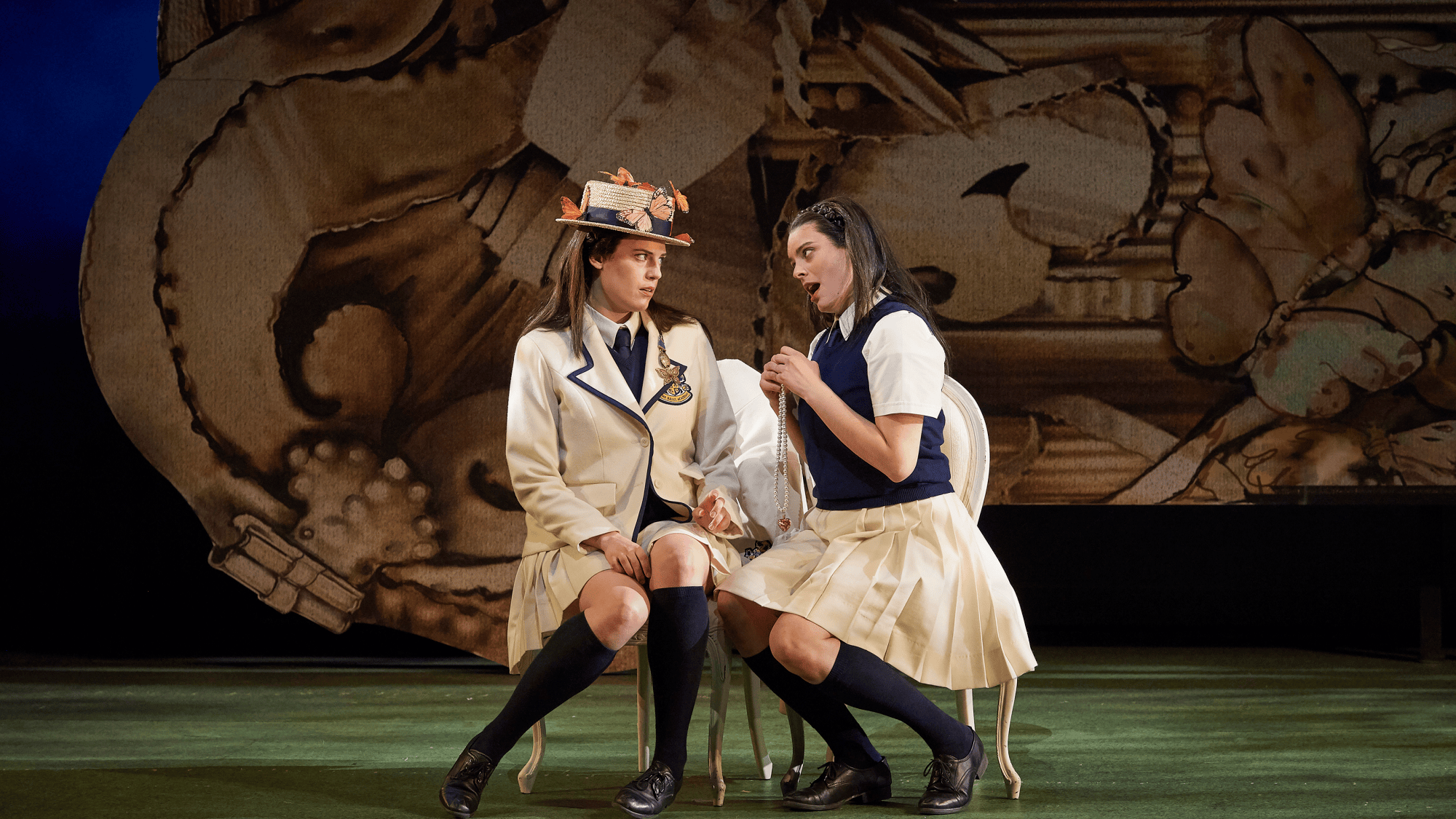
That idea becomes increasingly uncomfortable as Don Alfonso begins his wager with Ferrando and Guglielmo, insisting that their fiancées are no more faithful than any other women. “You expect women to be faithful?” he asks, setting the entire experiment into motion. Fiordiligi and Dorabella are presented as beautiful objects of devotion by their men, who gaze at them and praise their “beautiful lips” and “nobler features,” while Alfonso quietly begins constructing a test designed to prove that their belief in loyalty is merely an illusion.
The men leave for war, or so they say, returning moments later in elaborate disguises, and somehow everyone agrees to believe that these very obviously familiar men are complete strangers, a theatrical conceit that feels right at home in Shakespeare’s long history of characters changing their clothes and expecting everyone else to accept an entirely new identity. The women dutifully grieve when their fiancés depart, singing “who can love life amidst such sorrow?” and their emotional commitment initially feels absolute. The sister’s maid, Despina, and Professor Alfonso keep pushing them toward the possibility of another love, and the disguised men eventually become increasingly aggressive in their pursuit. What makes Egoyan’s framing so fascinating is that the students are watching all of this as though it were a lesson, while the audience is being asked to recognize how deeply cynical the lesson actually is. The misogyny of the original material is right there on the surface, and the production does not allow us to pretend it isn’t.
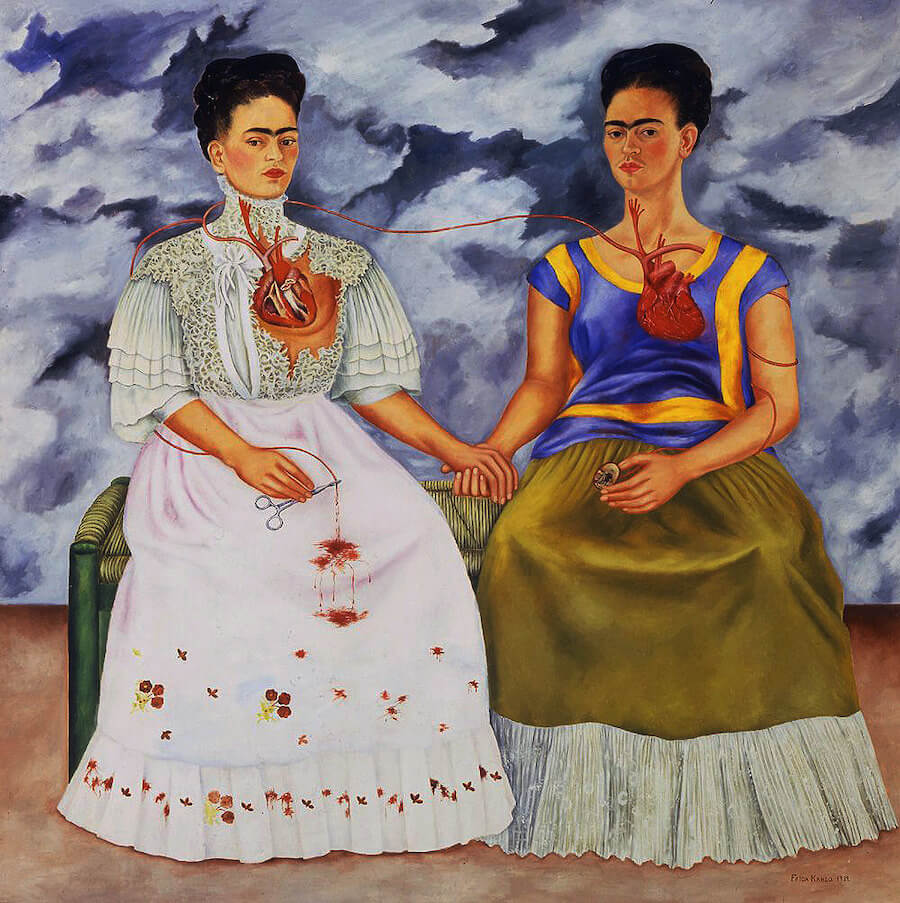
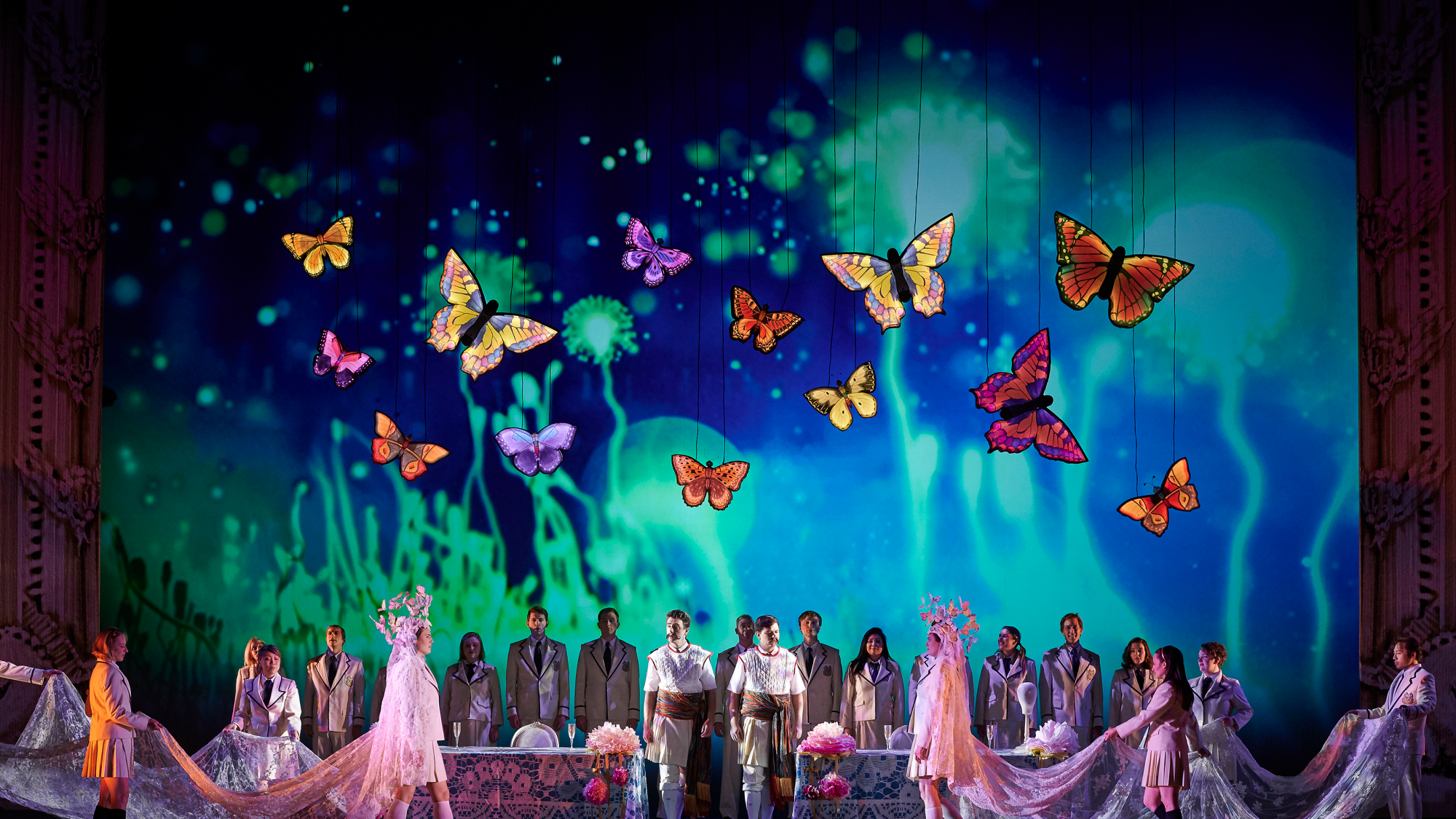
The recurring imagery of butterflies makes that idea even more pointed. Giant insects are pinned across the stage, turning delicate creatures into specimens for study, while the lovers themselves are subjected to a similar kind of examination. The men want to know whether their women will remain faithful under pressure, but the experiment says as much about the people doing the testing as it does about the people being tested. This is where the return of The Two Fridas becomes particularly powerful. Kahlo’s two figures sit beside one another holding hands, their hearts exposed, with one heart visibly wounded and bleeding. In this production, that image becomes a visual expression of the emotional danger unfolding before us. The sisters are not simply figures in a romantic comedy being pushed toward a predictable revelation. Their hearts are being opened, prodded and wounded while the people around them insist they are only conducting an experiment. I found myself thinking about something I think often in therapy to jealous or insecure patients: if you test your partner, it is you who are showing your faithlessness, not them. Così fan tutte turns that idea into an opera, then places the whole experiment in front of a classroom full of young people.
The performances make the whole elaborate scheme deliciously alive. Lauren Fagan gives Fiordiligi a remarkable emotional and vocal strength, while Martina Myskohlid brings Dorabella her own wild energy as the sisters are pushed and pulled through the experiment. Laurence Kilsby and Joel Allison make Ferrando and Guglielmo a wonderfully matched pair, with Kilsby’s honeyed tenor particularly standing out in his Act I aria. Daniel Okulitch has tremendous physical cheekiness as Don Alfonso, giving the professor an almost gleeful sense of control as he orchestrates the experiment around him. Then there is Tracy Dahl as Despina, the mastermind maid who seems to understand the entire game before anyone else does. Her comic timing is impeccable, her vocal power is extraordinary, and her interpolated high notes become another reason to keep watching her every move. The ensemble has a chemistry that allows the comedy to move quickly without losing the emotional stakes, and Johannes Debus leads the Canadian Opera Company Orchestra with an elegant buoyancy that lets Mozart’s melodies swirl around the stage with infectious playfulness.
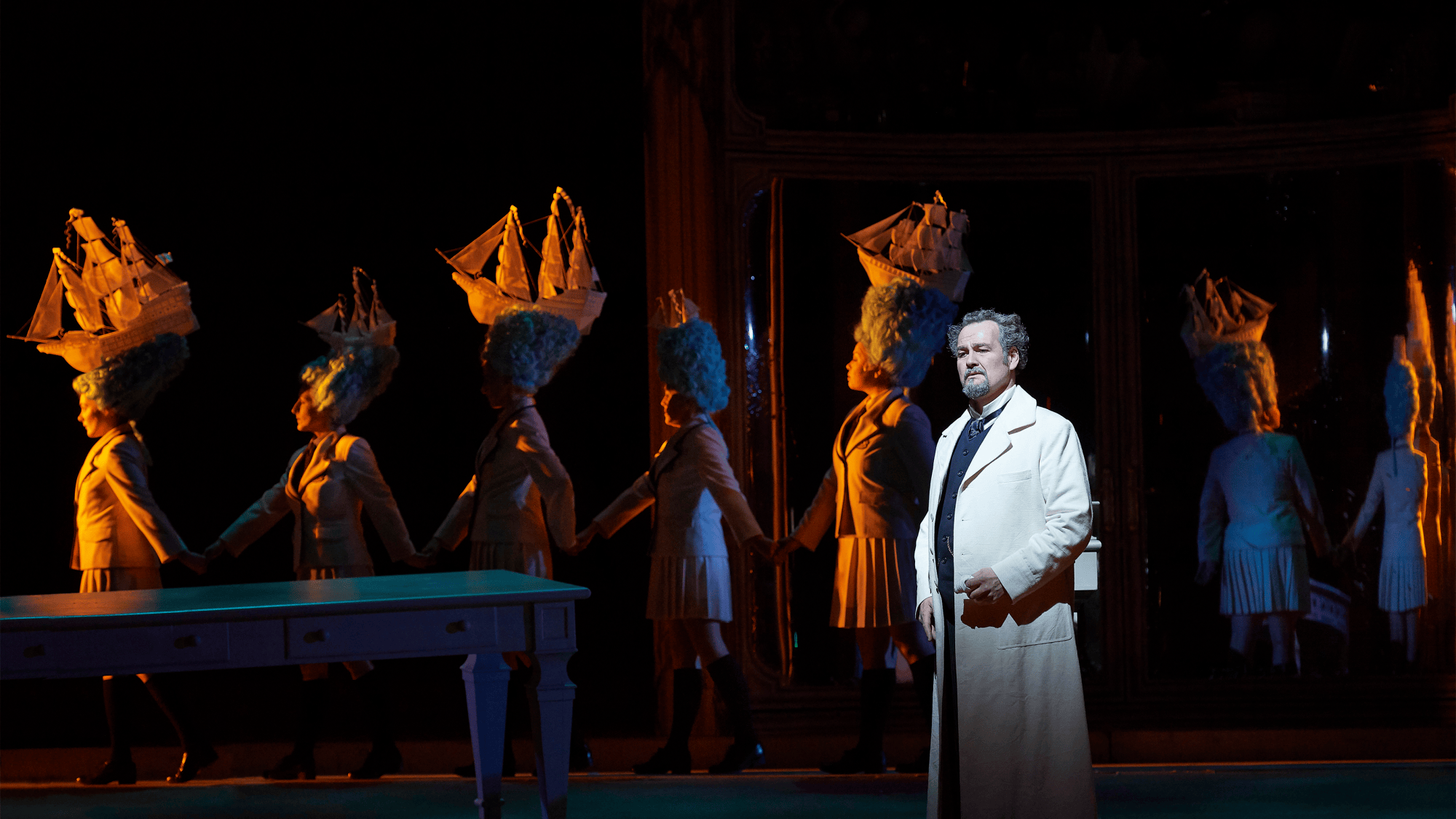
There is also something wonderfully theatrical about the way the production keeps playing tricks with what we see. The sailboat headdresses glide across the stage as though carrying the departing officers away, only for the illusion to reveal itself as another part of the elaborate deception. The science lab, the butterflies, the surgical scissors, and the giant Kahlo image create a world where love is constantly being examined, dissected, and manipulated. At one point, the production zooms directly into the tortured heart of The Two Fridas, and the image is stunning and vibrant. Then another frame descends, with the view seemingly leaving the canvas and curling itself at the characters’ feet. For me, that particular piece of design pushes the visual metaphor too far, turning something that had been illuminating into a distraction. Fortunately, it does not stay there long. Takeshi Taka’s set, together with the lighting and sound, gives the production an enormous visual and sonic life, and the recurring biological imagery keeps pulling us back toward the testing of love and devotion.
There is a delicious cruelty at the heart of Così fan tutte, and Egoyan’s production is not afraid to put it under a very bright investigative light. The comedy is physical, the music is infectious, and the ensemble is having a tremendous amount of fun, but underneath all that playfulness is a question that feels surprisingly contemporary: what happens when we decide that love needs to be tested before we are willing to trust it? The answer here is messy, painful and deeply human. Mozart gives us beautiful music with which to explore it, Egoyan surrounds the experiment with Kahlo’s fractured heart and a classroom full of observers, and the Canadian Opera Company Orchestra gives the whole thing its irresistible musical pulse.
I thought I was walking into the Four Seasons Centre to learn more about Mozart, carrying my slightly confused “Amadeus” reference point with me. Instead, I found myself thinking about something much closer to home: love is already complicated enough without turning it into a science experiment, and testing the people we love may tell us far more about our own fears than it ever tells us about theirs. Maybe that is what I was supposed to learn in this particular classroom, with Mozart providing the music, a brilliant cast conducting the experiment, and Frida Kahlo’s wounded heart hanging over all of it.

