A Toronto Theatre Review: Alice Childress’ 1969 Harlem Drama Finds the Fault Lines Between Art, Identity and Assumption
By Ross
The sounds of police and rioters outside the 70-year-old house almost overwhelm the room, yet somehow Bill Jameson is able to shut the noise out through sheer concentration on his work and a solid stance of dissociation. He isn’t one of those outside. That is clear. His ability to detach tells us this, as the phone begins to ring relentlessly, joining the noise from the street and the record spinning on his turntable. Bill barely seems to hear any of it. Almost. Until the moment the crowds get too close for comfort, and the revolution outside finally finds its way into his carefully controlled world.
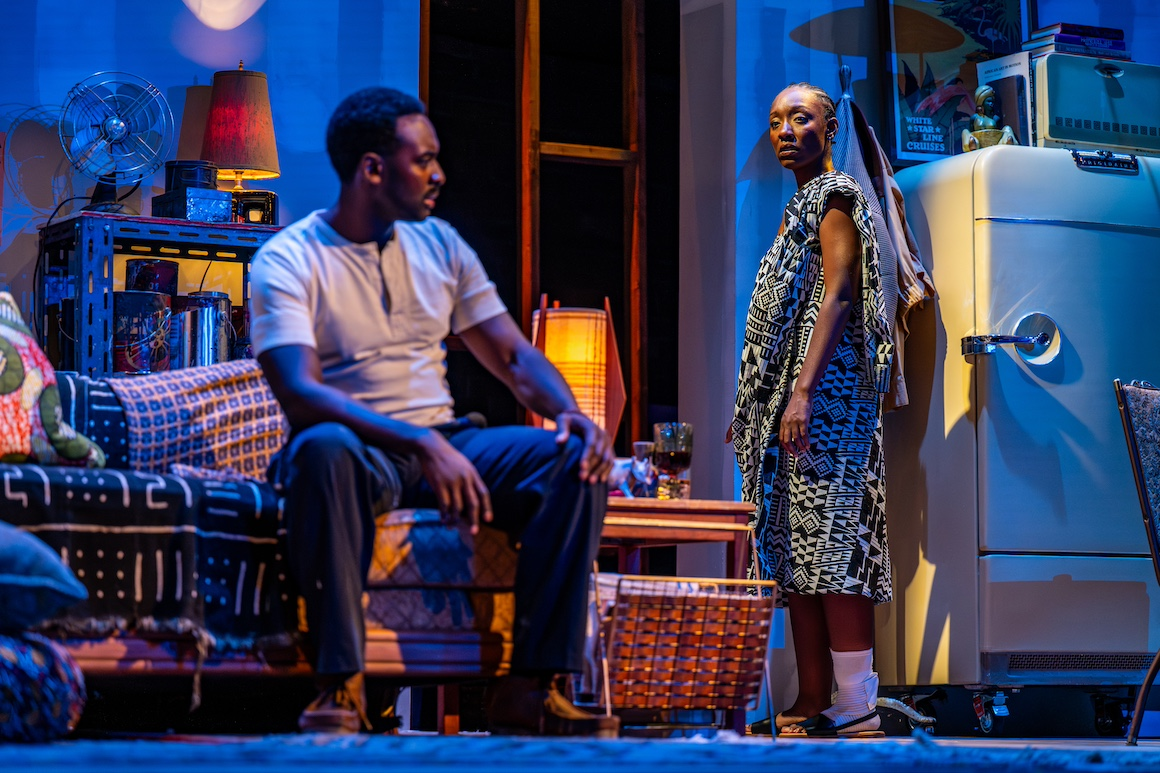
Set during the Harlem race riots of 1964, Alice Childress’ Wine in the Wilderness begins inside an apartment that feels strangely insulated from the chaos swirling around it, and that physical separation becomes an important part of the play’s emotional argument. Bill is a politically engaged Black artist who believes his paintings can uplift his community, and at first his knowledge of Black history, politics, and poetry gives him the appearance of a man who has figured out exactly what his art needs to say and what it means to his place in that world. His loft and clothes, both designed impeccably by Scott Penner, represent it all so beautifully. Then a woman arrives who has absolutely no intention of fitting into the picture he has already created in his artist’s mind for her, and because of her, that stance becomes unsteady and almost flips over.
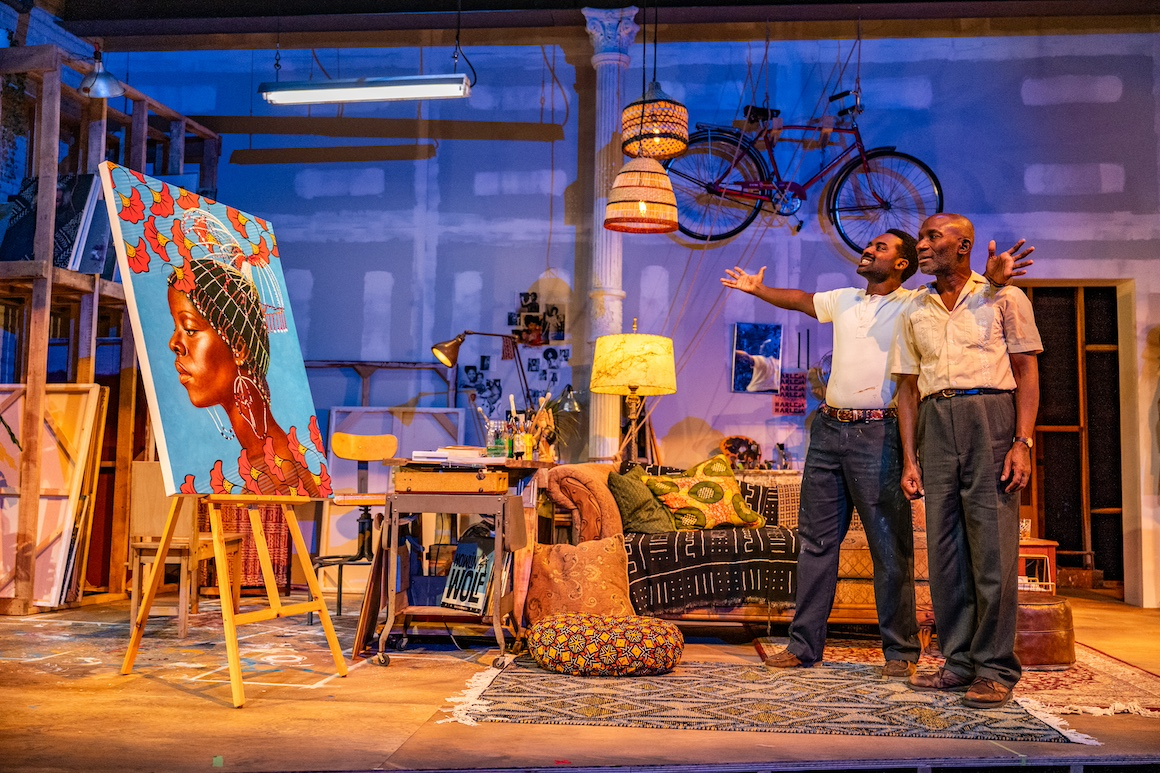
But before that internal revolution takes place, Bill’s attempt to focus on his work is interrupted by a frantic knock at the door. An older gentleman, Oldtimer, bursts into the loft looking for somewhere to hide the handful of treasures he has managed to loot, including a new suit and a bottle of liquor. As this gentle opportunist, Andrew Moodie (Tarragon’s a profoundly affectionate..) gives Oldtimer a wonderful sense of personal history beneath the stereotypical persona, and his presence immediately expands the room beyond Bill’s artistic intellectual bubble. Bill tells his Oldtimer friend that he is working on a triptych representing his idea of the three faces of Black womanhood, with two canvases completed and the third still blank.
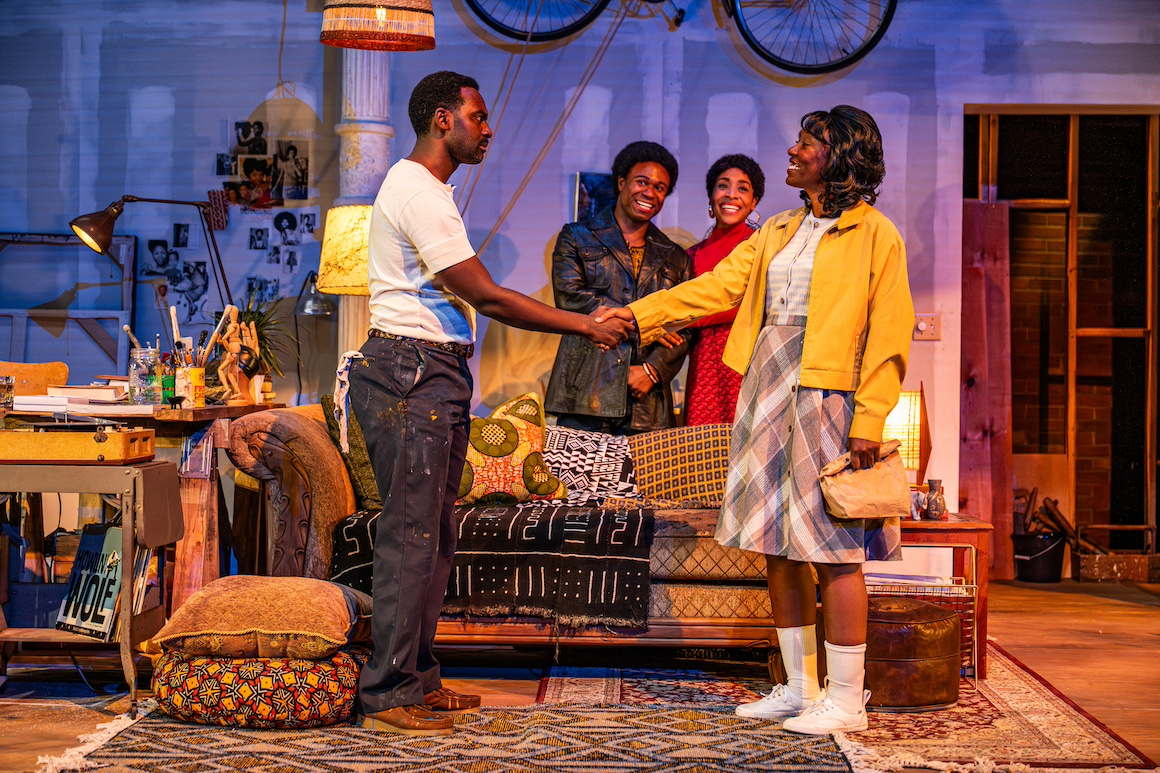
In his educational descriptive, he informs him that the first is an innocent young girl surrounded by the light of opportunity. The centrepiece is majestic and powerful, a symbol of the elevated woman in the wilderness, overflowing with pride and enlightenment. The final canvas, he tells his captive audience of one, is supposed to depict a Black woman beaten down by society until she has become, in Bill’s words, “a messed up chick,” someone he considers ignorant and beyond redemption. We feel the superiority from the moment he starts to describe this person, and it doesn’t sit well in our system. Yet, he continues, telling Oldtimer that he has been unable to finish it because he cannot find a model sufficiently deplorable to match the image in his head. When his friends Sonny-Man and Cynthia, solidly portrayed by Jamar Adams-Thompson and L.A. Sweeney, call from a local bar and tell him they have found exactly what he needs, the cruelty of the idea is almost hidden beneath their excitement.
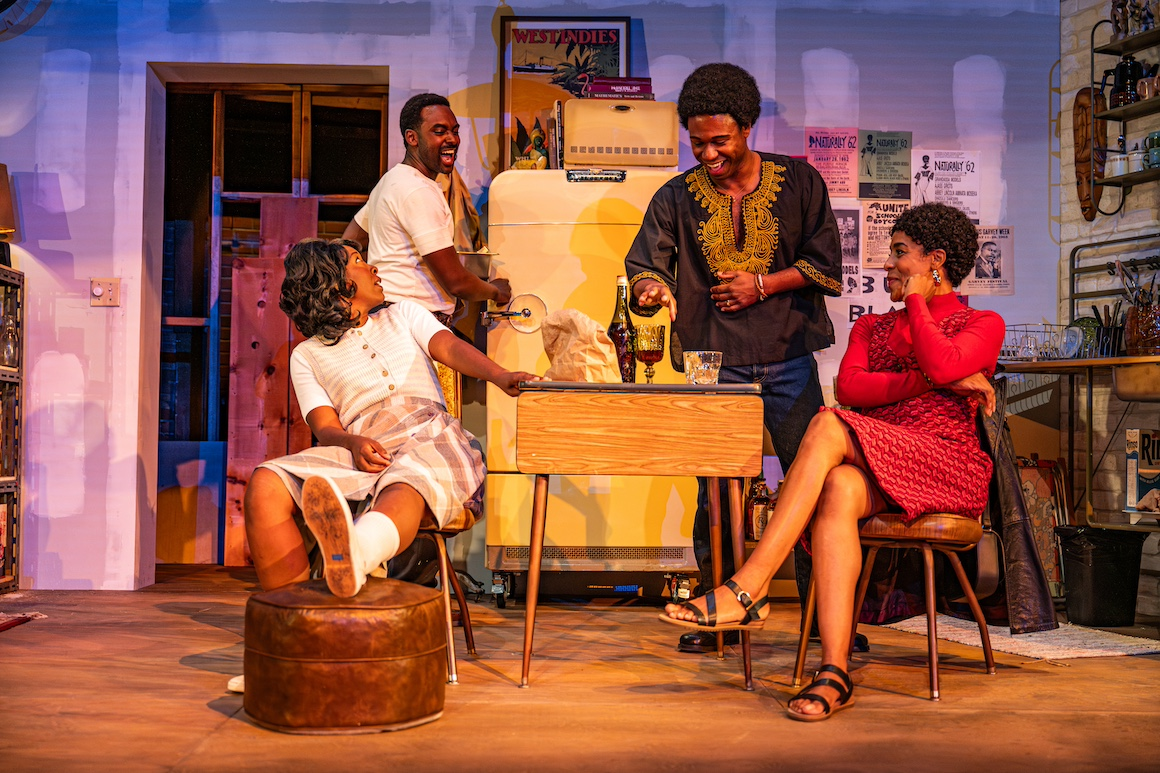
With the arrival of this real-world triptych, Tommy, portrayed powerfully and wisely by Virgilia Griffith (Crow’s Rosmersholm), changes the temperature of the room, like an energetic tornado rushing from side to side, smiling big and carrying an out-of-date look. She assuredly wears a cheap hairpiece and an attitude that immediately seems to confirm everything Bill and his friends have decided about her. They grin at each other as Tommy looks around the loft and sees something entirely different from the object of their artistic scheme. She sees an opportunity. “The riot has blown up my life,” she tells them, as Griffith gives Tommy a mixture of desperation, bravado, and comic energy that makes her impossible to reduce to the caricature Bill wants to paint. She notes all those “books, books, books” in every corner of the room, and dreams that the people surrounded by those books might be able to offer her something new. She sees elevation and security. And a way out. She wants something from this room. Yet Bill is only seeing the woman he needs for his final canvas, as Griffith keeps quietly disrupting the certainty behind that assumption.
That disruption becomes the heart of the production, and Griffith and Mazin Elsadig (CanStage’s Topdog/Underdog) build a fascinating dynamic as Tommy and Bill spend the night circling one another and evaluating. Elsadig gives Bill an intellectual confidence that can initially feel seductive. He knows his history, knows his politics, and knows exactly what he believes his art should accomplish. His “Feed you, paint you” attitude exposes the uncomfortable truth beneath that confidence, as Bill sees people through the usefulness they have to his work. Tommy gradually recognizes what he is doing, even while she is still trying to navigate the room and the people who control it. When she reveals her full name is Tomorrow, the joke lands wisely, adding another smart layer underneath it. It’s a sharp directorial moment by Jordan Laffrenier (CanStage’s Slave Play), as we engage with Griffith, who begins to reveal the intelligence that Bill has been too busy categorizing her to notice. The shift is astonishing because it does not arrive as a theatrical slap. It rolls through the room slowly, with Bill’s certainty beginning to buckle as the woman he thought he understood becomes impossible to flatten onto a canvas.
The production finds plenty of warmth in the people surrounding Bill and Tommy, even when their behaviour is deeply uncomfortable. Adams-Thompson’s Sonny-Man and Sweeney’s Cynthia bring the fashionable, politically hip energy of Bill’s circle into the loft, and their participation in the scheme makes the cruelty of the situation painfully clear. They have already decided what Tommy represents before she has had much opportunity to speak for herself. Moodie’s Oldtimer carries another history into the room, and there is something particularly telling about the fact that Bill and his friends have never even bothered to ask and acknowledge his real name. They are far too comfortable with the oldtimer role he has been allowed to play in their world. That detail explains a lot about the layer of internal prejudice that exists in that room. Those assumptions being challenged do not exist only outside the apartment. The riot may be raging through Harlem, but Childress (Trouble In Mind) has orchestrated a different kind of upheaval inside Bill’s loft, where ideas about class, beauty, respectability, and Black identity are being forced into the open.
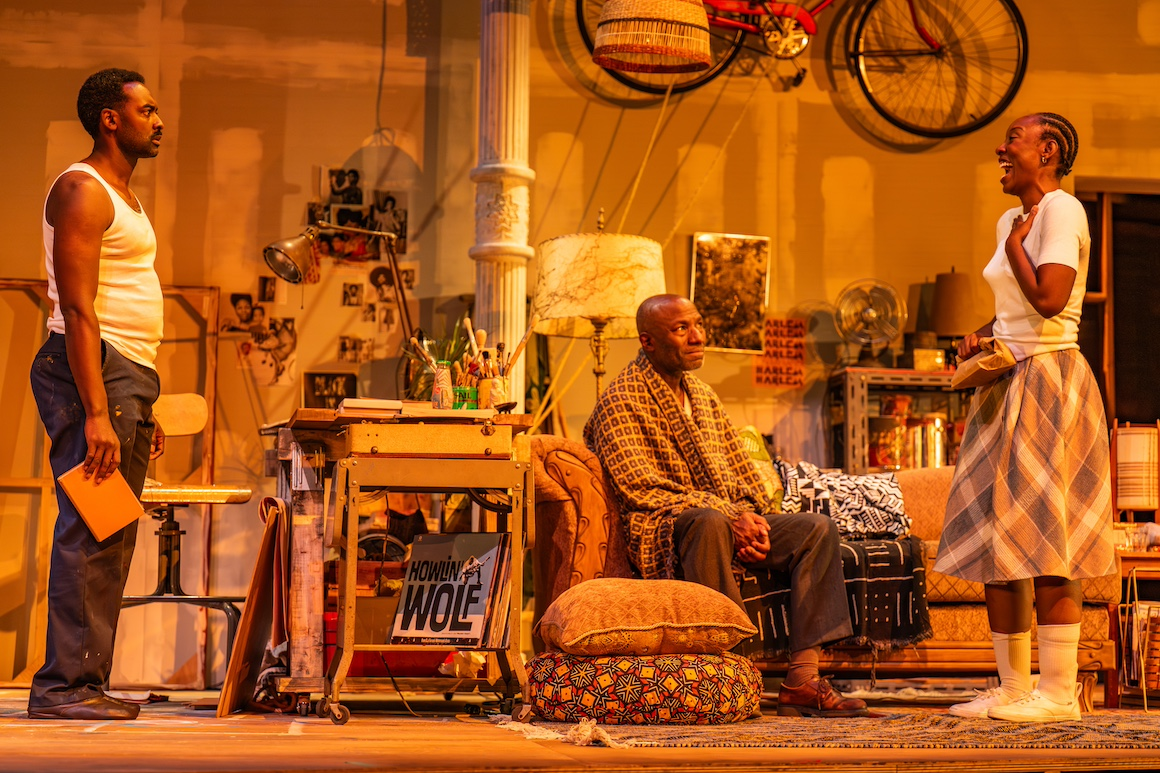
Penner’s set makes that upheaval feel contained within a fully lived-in 1964 Harlem loft, a room packed with the books, records, paintings, and personal objects that tell us exactly who Bill believes himself to be. The apartment initially feels like a refuge from the chaos outside, and Olivia Wheeler’s sound design establishes how precarious that refuge should be, with the sounds of the riot and the threat of police pressing against the walls. But that pressure doesn’t remain as insistent as it needs to. The threat of the police arriving feels immediate in those first moments of the play, yet recedes too quickly, and the destructive energy of the riot outside becomes increasingly easy to forget as the evening unfolds. Because of that, the middle of the production loses some of the spark that should keep the play’s fire burning throughout. The room becomes too safe, and we do not feel the crack and burn of the world outside distinctly enough against Bill’s carefully constructed sense of security. Daniel Bennett’s lighting moves the space between artistic sanctuary, gathering place, and increasingly uncomfortable arena, but the production needed that outside danger to keep pushing harder against the walls.
Embedded in Wine in the Wilderness, Alice Childress surrounds these characters with a world already in upheaval, while giving them room to evolve and surprise us as they attempt to create security within by making assumptions about another. Griffith is spellbinding as Tommy, finding both faces of a woman whom Bill initially believes he can understand, while Elsadig allows Bill’s confidence to crack open slowly enough for us to recognize the person underneath his certainty. The entire cast brings life to the loft, and there is plenty of humour, intimacy, intelligence and genuine tenderness in the production. Yet I wanted director Laffrenier to allow the fire outside the room to remain present enough to keep all of it under pressure. The riot should make the loft feel like a temporary refuge, never a completely safe one, and the production occasionally allows us to settle too comfortably into Bill’s world. That keeps Wine in the Wilderness from becoming the overwhelmingly powerful experience it has the ingredients to be. Outside, Harlem is burning, while inside, Bill is learning that his unfinished canvas was never simply missing a model. He was missing the ability to see the woman standing in front of him. That realization is powerful, but I wanted to feel the crack of the world around him every time that picture began to change.