A Frontmezzjunkies TIFF series review: Jamie Childs and Kat Sandler Take Me From Newfoundland’s Mysterious Waters to the Witchcraft of Vancouver Island
By Ross
One of my great personal pleasures of TIFF is how the festival can shift my perspective on people, places, and things. It can whisk me away for a few hours to the Spanish Civil War and an unlikely homoerotic romance in “La Bola Negra“, or it can make television feel like an equally engaging event. With only the first two episodes of a series, TIFF finds its way into my head, dropping us all into a world and then having the nerve to roll the credits before we have any idea how we are getting out. This year, that happened twice in two very different corners of Canada. Netflix‘s “Below” takes us into the cold, isolated waters of Newfoundland, where a struggling fishing community is already fighting to keep its sense of home before something very strange comes up from beneath the surface. Crave‘s “YAGA” flies us most willingly across the country to the forests of Vancouver Island, where the disappearance of a wealthy young man opens the door into ancient Slavic folklore, witches, and things that may have been waiting in the dense woods for a very long time. And after just two episodes of each, I had plenty of questions and absolutely no intention of looking away.
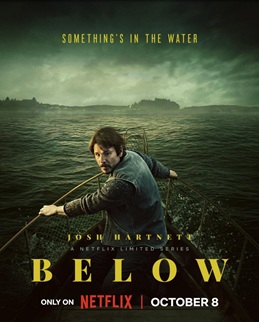
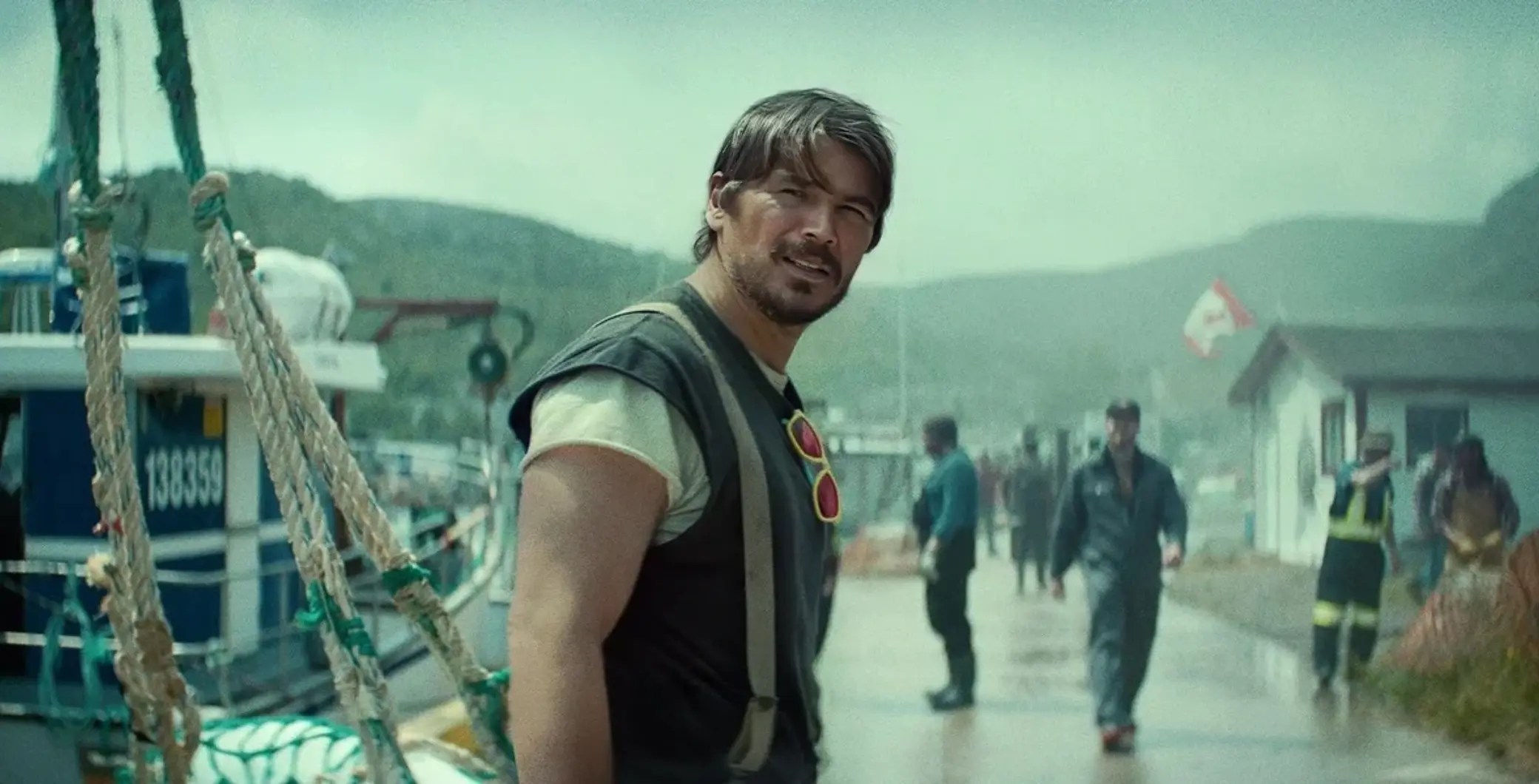
“Right before the accident, you saw something in the water,” she asks, and “Below” wastes no time giving me a reason to be nervous about what might be lurking beneath the surface. In 1986, a house is being towed across the calm waters of a Newfoundland inlet as the Canadian government relocates a fishing village whose industry has dried up. Young Calvin (Azriel Dalman) catches the eye of something staring right at him just below the surface, and then his father and their house disappear beneath the water, leaving everyone on board shaken to the core. Forty years later, Calvin Penney (Josh Hartnett) is still living in Snook’s Arm, carrying the weight of that childhood trauma while trying to keep his family and community together in the face of another relocation offer. There is something particularly unsettling about the way the series places this deeply personal loss inside a community already threatened with displacement. Before I had any real idea what was waiting in the water, I found myself hooked, line and sinker.
Hartnett (“Black Hawk Down“) gives Calvin the weary presence of a man who has spent years carrying more than he has been able to put down, and the struggle of the town becomes increasingly tangled with whatever is happening offshore. Calvin makes his living harvesting glacial ice for a local vodka maker, which sounds like exactly the kind of wonderfully specific Newfoundland detail I want from a series set there, until one caught chunk fails the purity test. And then another enormous one floats into the harbor smelling of ammonia or something similar. The ever-curious Dr. Fonda Howander, played cleverly by Mackenzie Davis (“Blade Runner 2049“), makes it crystal clear that Calvin is not dealing with an ordinary piece of ice. As the investigation deepens, Snook’s Arm’s economic desperation becomes tied to something far more unsettling, and the beautiful, isolated landscape and its coastal surroundings begin to feel like a place that might be keeping its own deep, dark secrets.
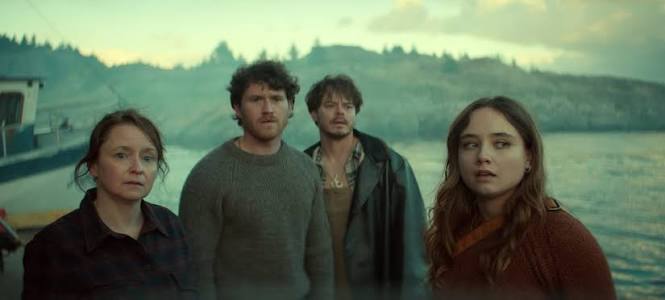
Wisely, it is the family dynamic that keeps “Below” grounded as the mystery begins to spread through the community. Calvin’s children return for the annual townie festival, while his youngest son Wade, played by Charlie Heaton (‘Stranger Things’), has remained behind, helping his father however he can. He’s an engaging, quirky young man, one that we want to know more about even as we see something unsettled inside him. After a disturbing encounter connected to the strange ice, Wade becomes desperately thirsty, marks begin appearing on his back, and the atmosphere around him grows increasingly unnerving. Something has happened, but the series is in no hurry to tell us exactly what it means. Meanwhile, the disappearance of two outsiders near the shore adds another troubling thread to a community whose everyday life still revolves around salt beef, Screech rum, and the familiar rhythms of Newfoundland. That ordinary texture makes the strange events feel all the more unsettling, as though something inexplicable has begun slipping into their world that should be perfectly recognizable. But it’s clearly not.
The atmosphere does an enormous amount of work. Director Jamie Childs and cinematographer Adam Newport-Berra surround Snook’s Arm with mist, water, ice, and enormous stretches of landscape, creating the sense that the community is engulfed by something much bigger than itself and more dangerous. Mark Korven’s score adds another layer of unease, with the composer behind The Witch and The Lighthouse clearly understanding how much horror can be created before anything actually appears. Karen Walton’s script, meanwhile, keeps the threatened community at the centre of the story, giving the government resettlement and the collapse of the fishing industry a very real urgency. And even though the pace in those first two episodes takes its too-sweet time getting to the threat, watching a community grappling with the potential loss of their home and town gives the series an emotional undercurrent that runs strong beneath every supernatural disturbance.
And that is where “Below” had me. I went in expecting strange water and whatever creature might be responsible for making people disappear or behave strangely, but after two episodes I found myself thinking more about the people who have spent their lives in Snook’s Arm and what happens when the town and its inhabitants are threatened. Then TIFF whisked me from the water into the woods, where “YAGA” lit a match and drew me into a very wild and wicked decision, one I suspect I won’t regret.
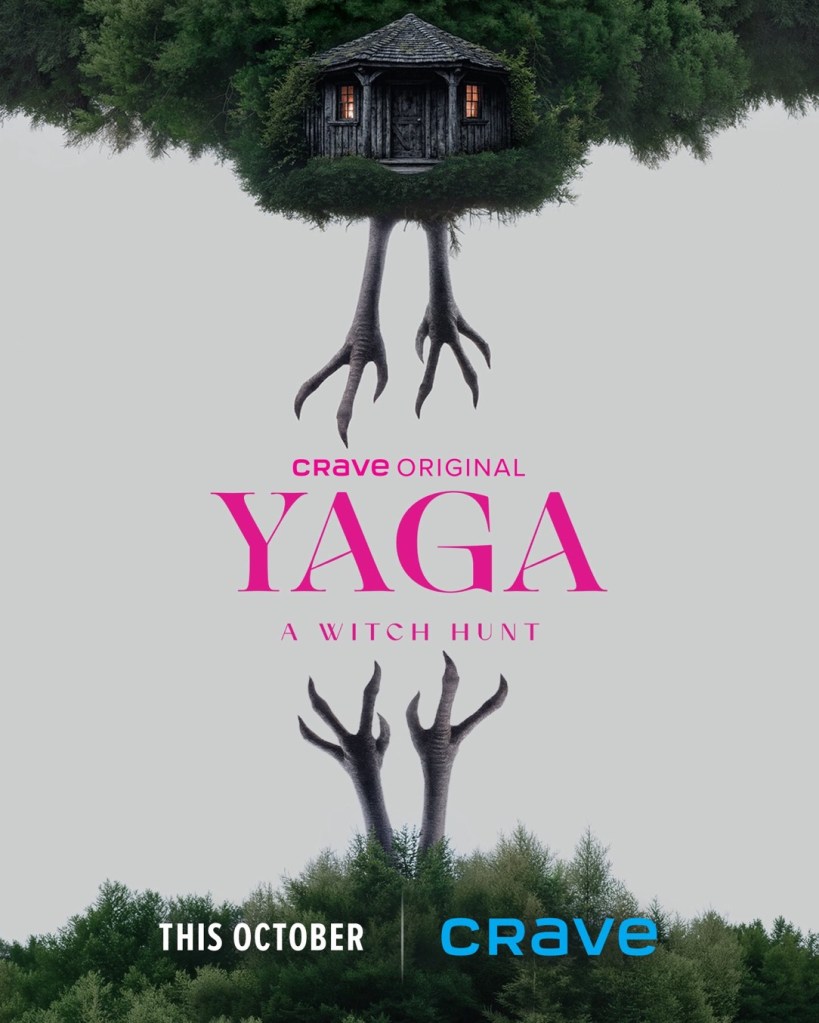
“Must be the season of the witch,” they tell us straight up, as the camera moves through the dense, mysterious woods of Vancouver Island and settles on a startling image on fire, like a witch being burned at the stake, that immediately makes me uneasy. Writer and showrunner Kat Sandler (StratFest’s Anne of Green Gables) knows how to make the prospect of entering those woods feel like a questionable decision. Adapted from Sandler’s acclaimed stage play, “YAGA” begins with the disappearance of Henry Park (Hudson Williams), a wealthy fishery heir and local party boy whose family brings in Rapp (Noah Reid), a private investigator and family friend, to help find him. Reid (“Schitt’s Creek”) gives Rapp a swaggering, bemused energy that doesn’t sit particularly well with Clark Backo’s local detective, Carson, whose weary protectiveness comes with a hint of sexual tension between them. Then there is Carrie-Anne Moss (“The Matrix“) as an enigmatic osteology professor, whose presence suggests that the investigation may be moving into territory where conventional explanations won’t be enough. After only two episodes, I am still trying to work out who knows what, who is telling the truth, and why I have the feeling that the disappearance is only the beginning of something considerably stranger.
The first two episodes of “YAGA” have the disturbing quality of a very dark fairy tale, the kind where you know perfectly well that the woods may not let everyone walk back out. That opening fly-over sweep across Vancouver Island’s dense forest gives the series a landscape that seems to have a life (and death) all of its own, while the coastal community below it is filled with people who appear to know things they are reluctant to share. The disappearance becomes a whodunnit, but ancient Slavic witchcraft and folklore begin to surface in tantalizing fragments, leaving us unsure how much of what we are seeing belongs to the investigation and how much might be something far older and harder to explain. Even the introduction of Henry’s roommate, also played by Williams (‘Heated Rivalry‘), who bears a startling resemblance to the missing son, gives us another puzzle to sit with rather than an answer we can confidently interpret. I keep finding myself leaning closer, waiting for the pieces to connect, while suspecting that I may not have been given enough yet to understand what kind of picture they are trying to form.
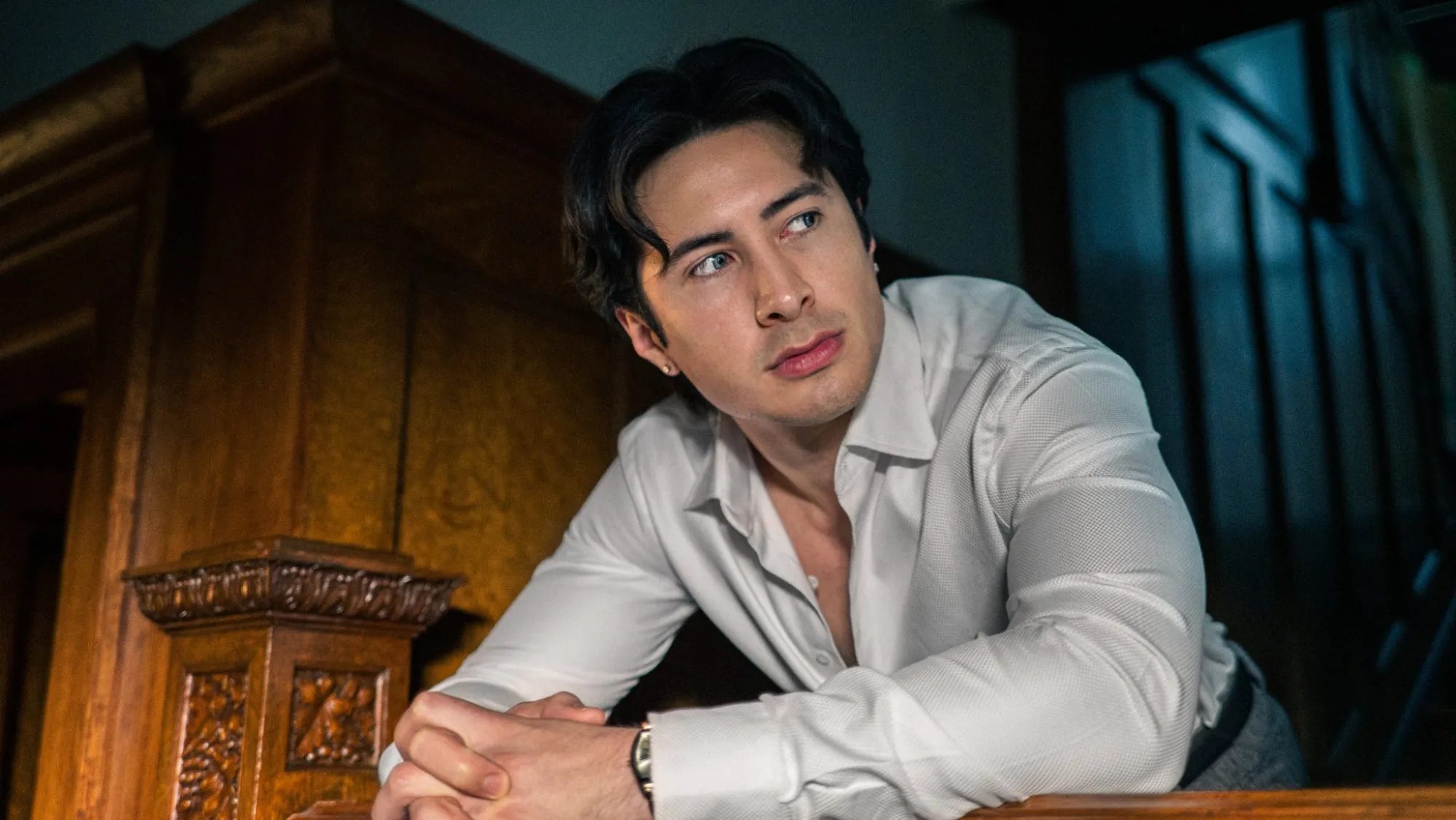
Running through the mystery, there is a smart, cheeky, and wicked sense of humour, with Reid and Backo finding an intriguing rhythm as Rapp and Carson circle the disappearance from very different positions. Moss brings a more mysterious, sensual energy to the story, implying that the supernatural elements are not simply decorative or academic. The erotic charge that hangs in the air, sometimes almost too comically, doesn’t completely arrive in these opening episodes, although there are certainly signs that it is coming. But wisely, the slow burn gives the characters plenty of room to establish themselves before the mythology takes over.
“YAGA” certainly knows how to lure me into the woods and fire up my interest. I get the sense that Sandler is using ancient magic and Slavic folklore to explore the modern myths people create, the reasons those stories survive, and the people who find it useful to believe in them. Adapted from her stage play, the series lets the forest and the coastal setting become part of the unease, rather than simply the backdrop to a missing-person investigation. But with only two episodes behind me, I am reluctant to draw firm conclusions about what the show is ultimately saying or how its various strands will connect. There are hints of something uncanny, flashes of humour and sensuality, and characters whose motives remain difficult to read. For now, we’re left following the trail, much like Hansel and Gretel being lured deeper into the dark forest by the promise of something irresistible.
After two episodes of “Below” and two of “YAGA,” I realize I’ve crossed Canada without leaving TIFF, travelling from the cold waters of Newfoundland to the dark forests of Vancouver Island. One has me worrying about what that strange ice has brought to Snook’s Arm, while the other has me wondering what kind of witchery is unfolding in those woods. Both series have given us just enough to start making connections, but not enough to settle on answers. TIFF has opened the doors to two very different mysteries, let us wander inside, and then left us wanting more. Naturally, I’m ready to go back.


