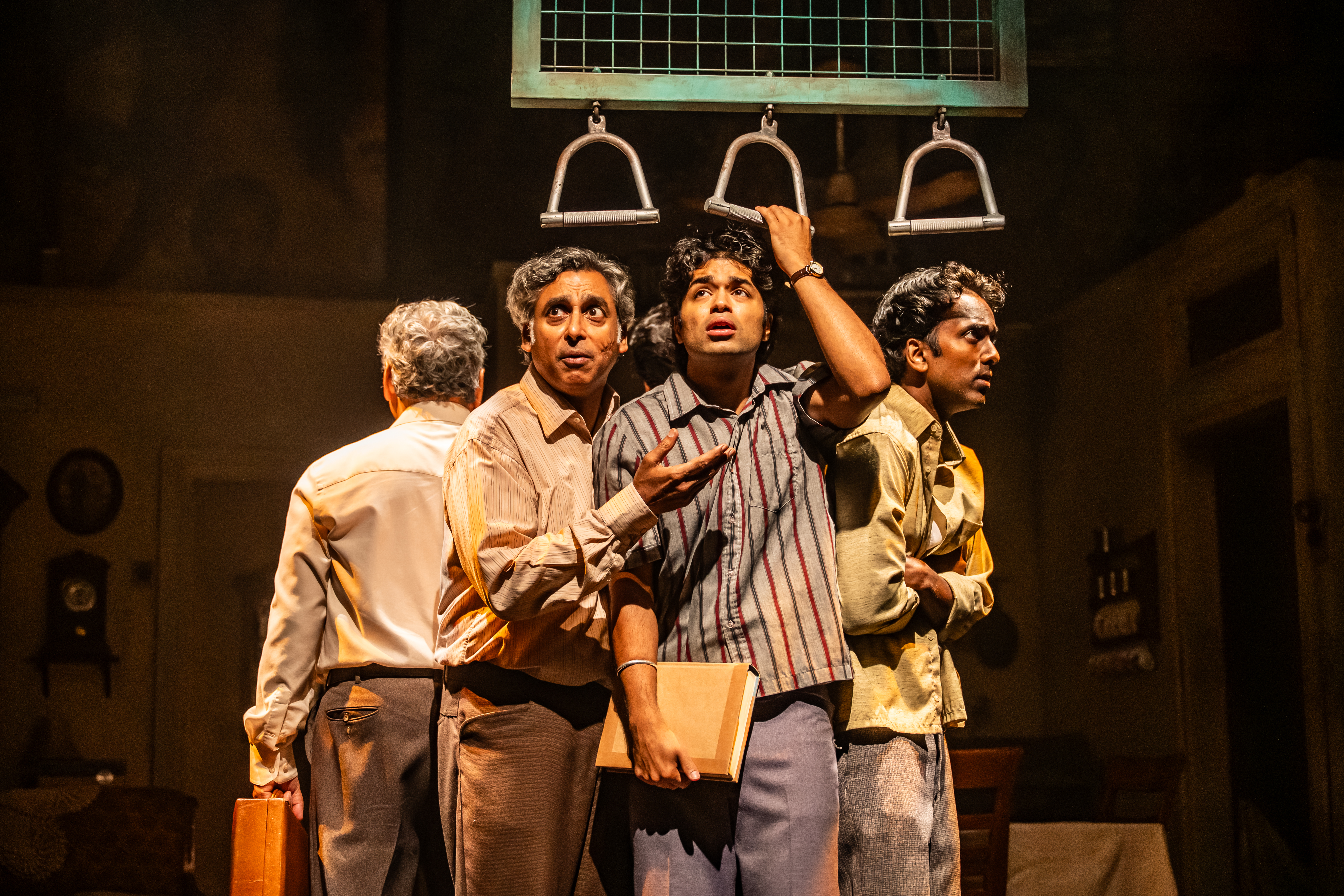
Frontmezzjunkies reports: Anosh Irani’s adaptation of Rohinton Mistry’s celebrated novel transports four lives caught in political upheaval, survival, and human connection to Soulpepper Theatre.
By Ross
“How did I not know this?” That was the question I carried away from Crow’s Theatre’s world-premiere adaptation of Rohinton Mistry’s A Fine Balance. I wrote a review of the production last month, but that question stayed with me long after leaving the theatre. Now, after an extraordinary 11-week sold-out run that has made it the bestselling production in Crow’s Theatre’s more than 40-year history, the show is preparing to reach a new audience. Crow’s Theatre and Soulpepper Theatre have announced that A Fine Balance will transfer to Soulpepper from January 14 to February 7, 2027, with the complete original cast returning. Adapted for the stage by Anosh Irani and directed by Crow’s Theatre Artistic Director Chris Abraham, the production received multiple extensions during its Crow’s engagement, with the remaining performances sold out through November 7. The transfer marks another strong collaboration between the two companies and gives audiences an opportunity to experience this ambitious Canadian theatrical undertaking.
Set during India’s 1975 Emergency, when democratic freedoms were suspended and government authority reached deeply into everyday life, A Fine Balance follows four strangers whose lives converge in a cramped Bombay apartment. Dina is a grieving widow fighting to preserve her independence and keep her small business alive. Ishvar and Omprakash are lower-caste tailors seeking work and dignity in a society determined to deny them both. Maneck, a student renting a room from Dina, is trying to imagine a future even as the world around him closes in. Their shared living space gradually becomes a place where friendship, humour, frustration, trauma, and hope are stitched together under extraordinary pressure. Anosh Irani’s adaptation of Mistry’s celebrated novel puts four such lives directly in front of us, and over the course of three hours, those lives become impossible to dismiss, forget, or keep at arm’s length. Abraham’s direction keeps the production moving with remarkable momentum, while the sound design by Thomas Ryder Payne allows the chaotic waves, background static, and the constant presence of events beyond to seep into the apartment, making the surrounding political upheaval an ever-present force in the characters’ lives.
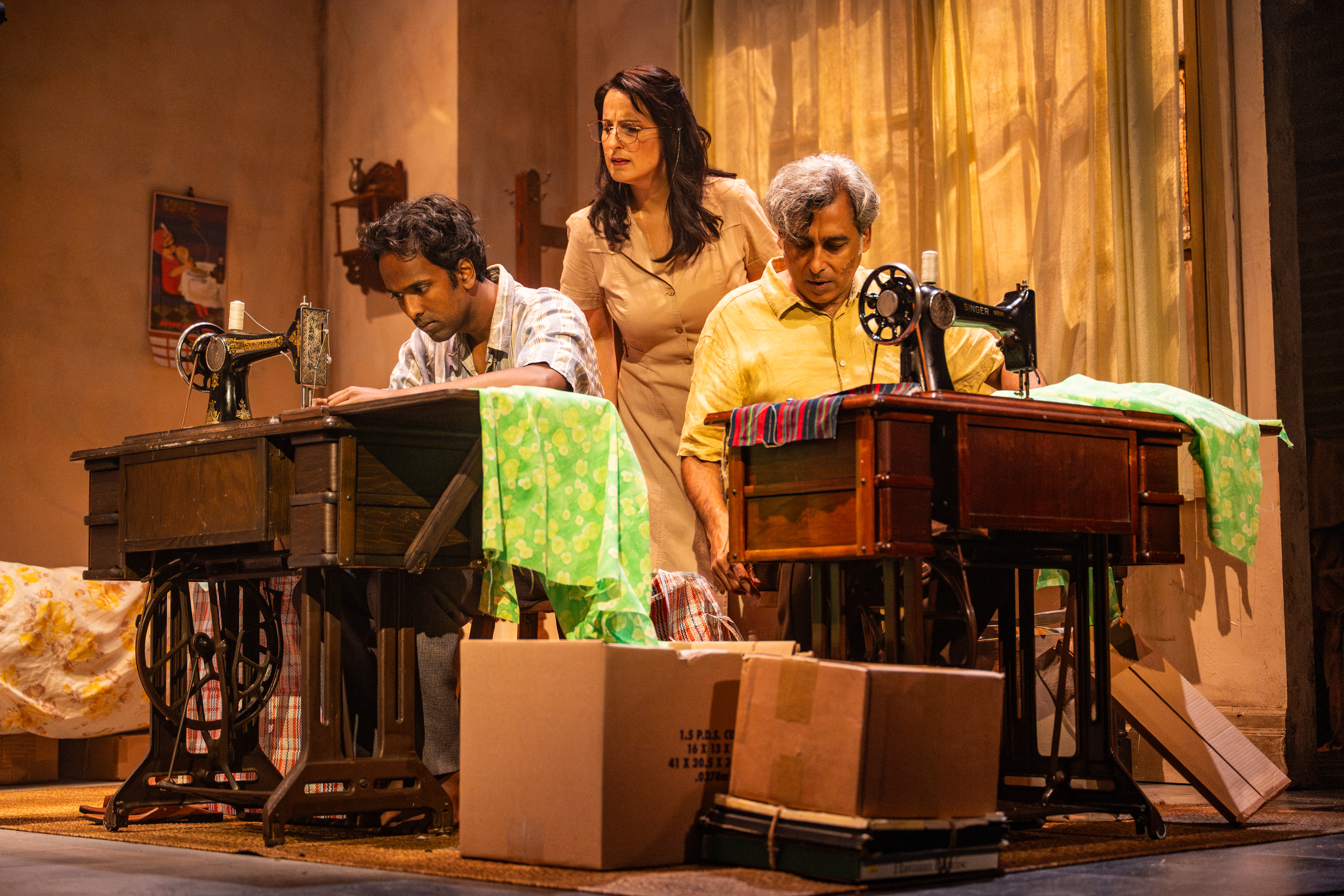
The apartment itself becomes a world of its own. Michael Gianfrancesco‘s set, with doorways rolling in and out like a train car, creates a sense of movement and confinement in a space that is both shelter and witness to everything happening around it. Ming Wong‘s costumes establish the characters’ social circumstances while giving each of them an individuality that matters as their lives become increasingly entwined, and Imogen Wilson‘s lighting allows the atmosphere to shift within those cramped walls. At the centre of it all is Zorana Sadiq‘s Dina, a fiercely independent, prickly, complicated woman whose grief and determination to maintain her independence are never far from the surface. We aren’t given an enormous backstory, but in a way, that keeps us centred on her broken soul rather than on all the difficult details that might explain her. Sadiq allows us to see the class assumptions and judgments that Dina carries while also giving us the growth that slowly emerges through her relationships with Ishvar, Omprakash, and Maneck. Anand Rajaram and Ben Yoganathan bring warmth and humour to Ishvar and Omprakash, two men whose friendship is one of the production’s most affecting threads, grounded in their shared struggle for work, dignity, and survival. Siddharth Sharma captures Maneck’s curiosity and uncertainty as he tries to imagine a future beyond the limits closing in around him, while Husein Madhavji and Sugith Varughese help bring the wider social and political world into the apartment.
The production does not soften the brutality of the system surrounding its characters. Poverty, caste discrimination, political oppression, forced sterilization, degradation, and violence become painfully immediate because we have been given time to know the people caught within them. Abraham does not turn their suffering into spectacle. The horror lands through our investment in their ordinary lives, their irritations, their humour, and their attempts to create something resembling a home. I did find the emotional groundwork for Maneck’s final decision a little loosely constructed, with the moment arriving abruptly and making it difficult for its full weight to settle. The political machinery has faces and consequences because the production has made us fully care about the people standing in its path, turning the brutality of the system into something felt through the lives it dismantles.
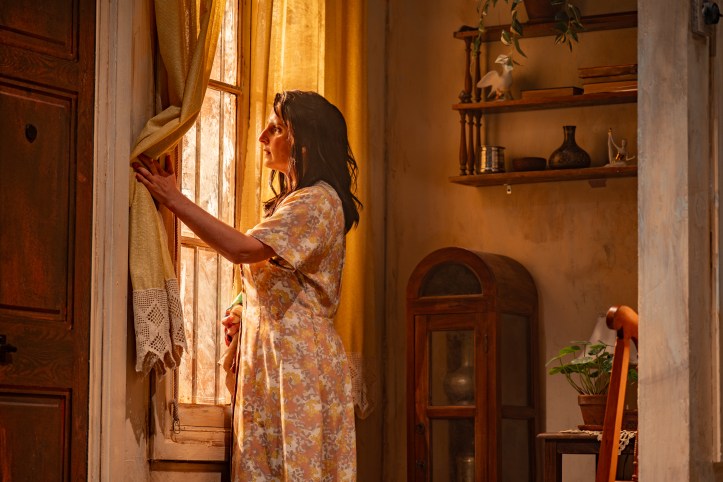
After three hours inside Dina’s cramped Bombay apartment, Dina, Ishvar, Omprakash, and Maneck felt like people whose lives I had been allowed to witness, even as the history bearing down on them remained difficult to comprehend. Now Soulpepper audiences will have the opportunity to encounter A Fine Balance for themselves, to experience their humour and frustrations, and to see the tenderness and fragile hope that persist within their shared lives. That fragile balance is what makes their story so affecting, and it is what I hope audiences carry with them when the lights go down.