Frontmezzjunkies Theatre Review: Ryan J. Haddad’s cheeky, heartfelt, metatheatrical memory play brings movie musicals, queer mentorship, and the complicated business of family to the stage.
By Ross
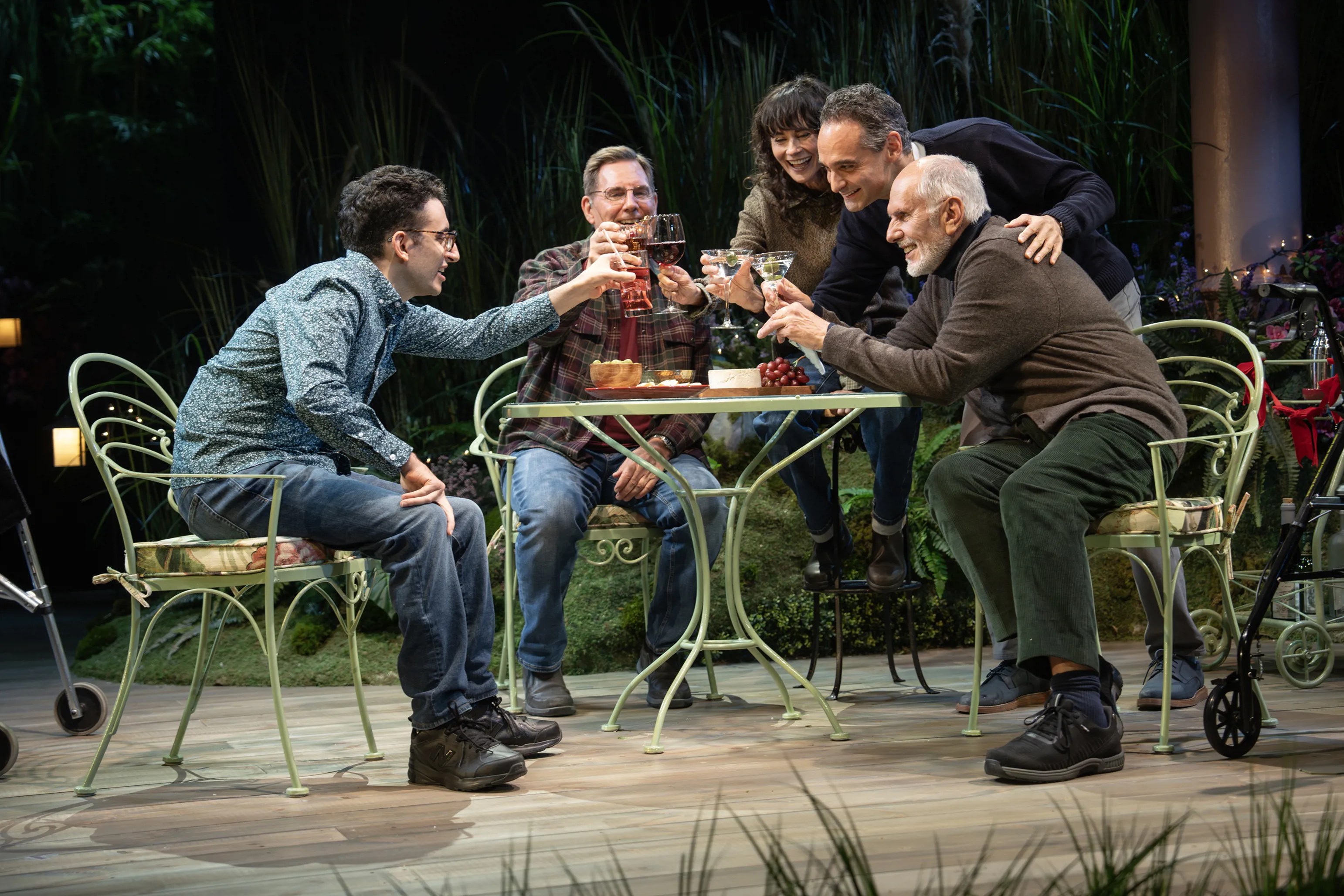
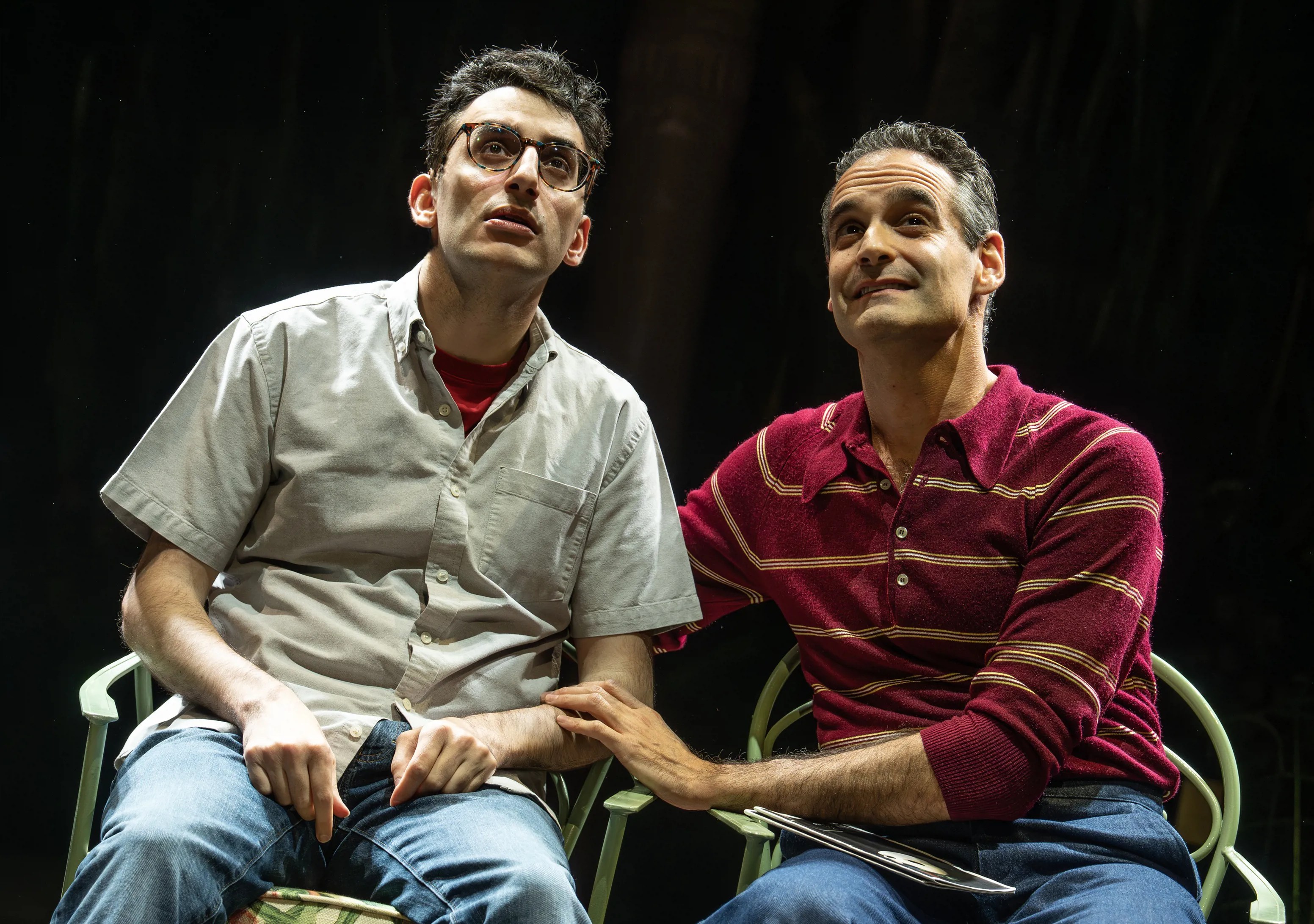
“Make ’Em Laugh” and “I Could Have Danced All Night” are the sort of movie-musical melodies that can transport us into that familiar movie-musical dream, where every backyard is a stage and every performance deserves an audience. In Ryan J. Haddad’s Good Time Charlie at The Public Theater, that dream takes shape in a lush Japanese garden, an unexpected and delightful setting for a play about the movie musicals that help shape a life. Ryan’s childhood performances at home, with his aunt and uncle taking lead roles in Brandy’s Cinderella, provide the opening scene for this tender two-act play. The Charlie at its centre is the younger Charlie, Charlie Jr., not Ryan’s Uncle Charlie, and Jonathan Raviv (ATC’s The Band’s Visit) gives him an infectious theatrical exuberance. Directed by Danny Sharron (PH’s Hold Me in the Water by Haddad), the play follows Charlie and Ryan across decades, celebrating the queer mentors who open doors to a world of show tunes, cultural icons, and the kind of education no school could provide.
Haddad is wonderfully, sometimes hilariously, aware that he is making a play, and Ryan keeps us in on the process. He addresses the audience, talks to the other actors, and tries to get everyone to perform the scenes as written, with decidedly mixed results. When Charlie launches into half a verse of “It’s Today” from Mame, Ryan interrupts to explain that they didn’t get the rights. Later, when a dysregulated Charlie no longer wants to continue a scene near the end of Act One, Ryan compassionately offers to stop the play right there, observing that “everyone loves a one act.” It’s a terrific moment of cheeky theatrical self-preservation. Haddad tells us early on that he is attempting a bigger, broader play than his usual one-person shows, and then cheerfully lets us watch him wrestle with the consequences. As Aunt Janice, Beth Malone (Transport Group’s The Unsinkable Molly Brown) gives the comedy another human centre in the LGBTQ+ alphabet, letting the humour land without making the characters feel like pawns in Haddad’s theatrical games.
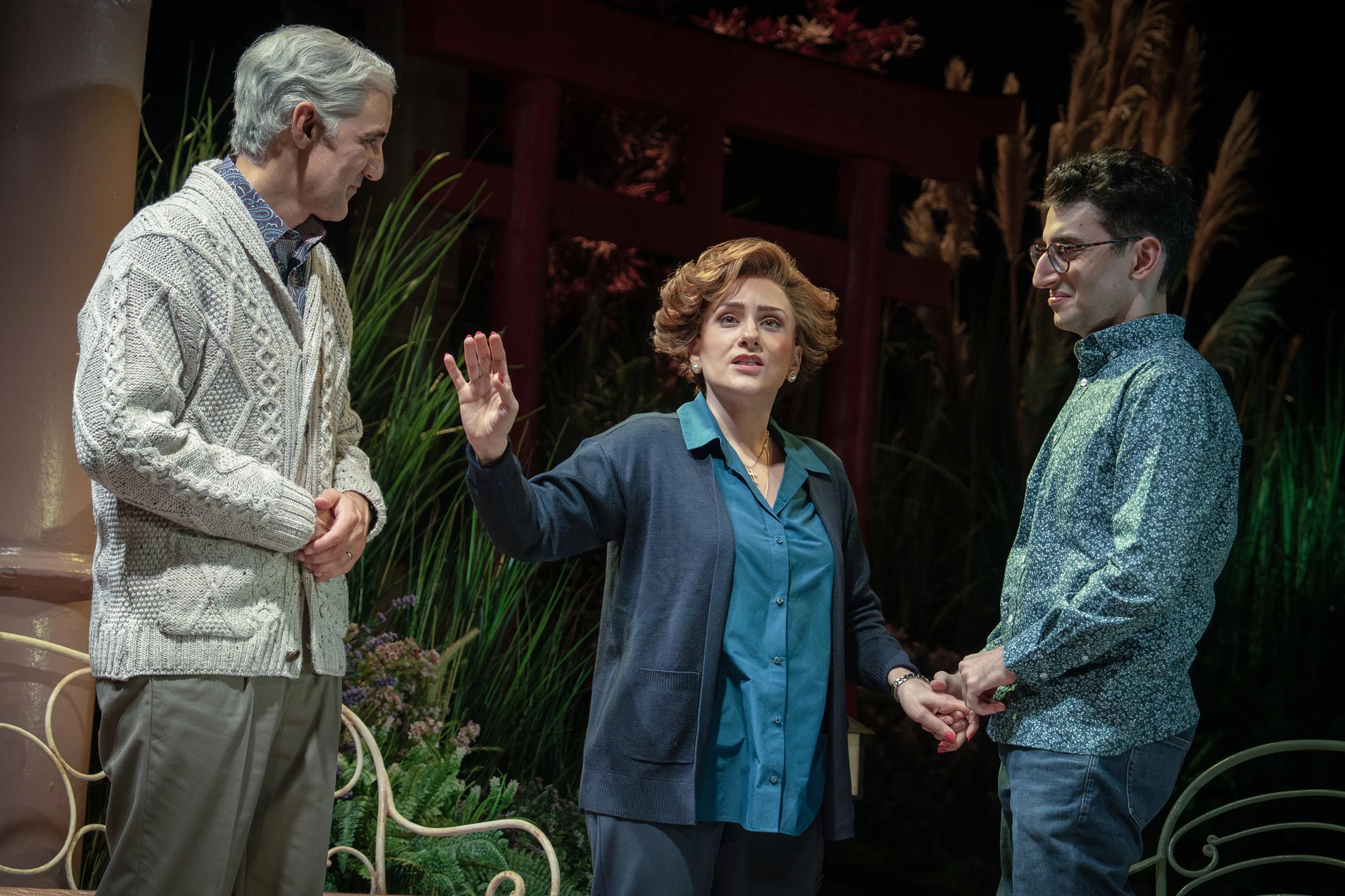
The production’s design gives Haddad’s shifting memories and theatrical interruptions a vivid visual and sonic world. The lush garden designed by Afsoon Pajoufar gives this family history an unexpectedly beautiful setting, while Enver Chakartash’s costumes help establish the people and periods the play moves through. Barbara Samuels’s lighting supports the shifts from comic recollection to the more vulnerable moments, and Ryan Gamblin’s sound design and composition help sustain a world in which movie-musical memories are woven into the characters’ lives. Jennifer Rias’s choreography helps carry the production between spoken recollection, musical moments, and Haddad’s playful interruptions. Together, these elements allow the play to move between memory, musical fantasy, and family history without losing sight of the people at its centre
Beneath all of Ryan’s theatrical mischief, Charlie’s family history delivers the play’s hardest blow. His parents repeatedly pressure him to change himself, with the rejection finally arriving in the words, “If you’re not going to change, your father doesn’t want to see you.” I find stories like this heartbreaking, particularly when rejection comes with the demand that someone change an essential part of themselves. The pain is especially sharp here because Ryan’s own coming-out experience in suburban Ohio in 2008 is relatively kind by comparison. Charlie and his partner Lou, played with grounded warmth by Tim Bagley (“Hacks“), spend years building a life together while waiting for Charlie’s family to accept them. The play gives this history the time it needs, allowing the hurt to register without rushing to smooth it over. Sheldon, played wonderfully by Michael Cristofer (Broadway’s A View from the Bridge), enters as the man who introduced Charlie, and later Ryan, to the world of movie musicals. His friendship with both men is one of the play’s most charming connections, and his love of movie musicals becomes part of the bond they share. The connection he helps create beautifully gives another important strand of family, one built through shared passions and affection rather than obligation.
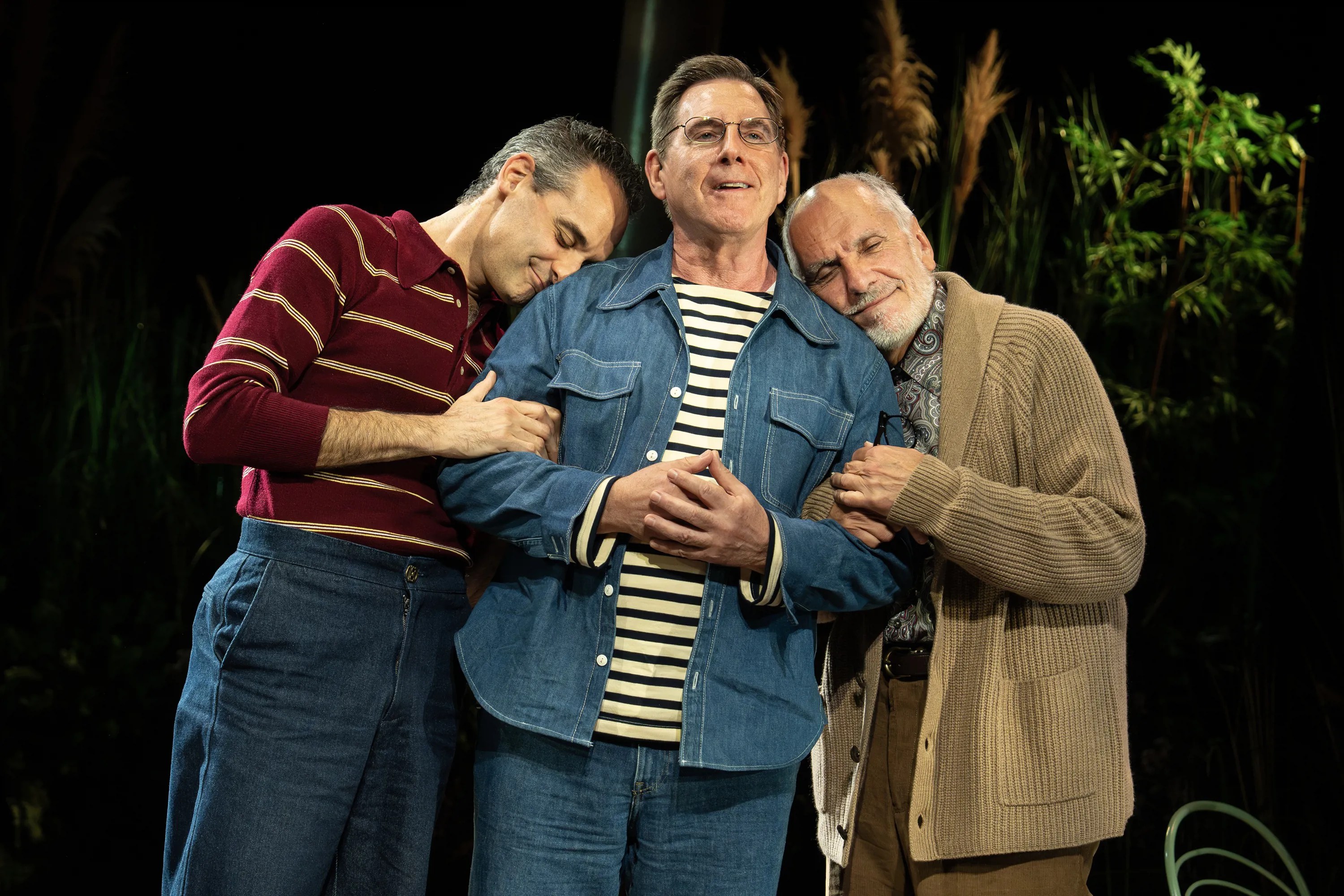
Act Two hits a little harder. Well, a lot harder. Sheldon suffers a stroke and begins using a walker, and the decline of this beloved mentor and friend changes the emotional temperature of the play. The man who helped open the world of movie musicals to Charlie and Ryan now needs care himself, and the prospect of losing him is all the more alarming because we have seen how much he means to both. Ryan, who has cerebral palsy, must confront his own discomfort and uncertainty as Sheldon’s physical needs change. Haddad allows the subject to carry humour alongside genuine unease, opening difficult questions about disability, caregiving, and what happens when the people who once guided us need our help. The well-placed line, “I wish I could change the ending,” lands with a growing sense of dread. Cristofer brings a moving gravity to Sheldon, while Nael Nacer and Artemis Pebdani help create two family dynamics whose connections extend beyond any single scene. The play also makes room for older queer characters to remain loved and essential in a culture that can place far too much emphasis on youth and physical desirability.
Haddad’s warmth and metatheatrical mischief give Good Time Charlie much of its charm, even when its ambition to turn personal memories into a broader narrative leaves the plot feeling somewhat loose. Some scenes are beautifully done, with the other characters watching from the sidelines in open adoration, and those moments allow affection to register without the play needing to explain it. The movie-musical melodies may begin by inviting us into a familiar dream, but the relationships give that dream its emotional stakes. Charlie and Ryan inherit songs, stories, and a way of seeing themselves through the people who love them. As the mentors grow older and begin to need care, we must consider what we owe the people who first opened those doors for us. It is a tender, funny, sometimes uneven tribute to the family we find through shared passions, and to the difficult work of staying beside one another as life changes.