Frontmezzjunkies Theatre Review: Ho Ka Kei’s ambitious, Shakespeare-inflected drama gives Karen Robinson a formidable role in a story of language, power, and grief.
By Ross
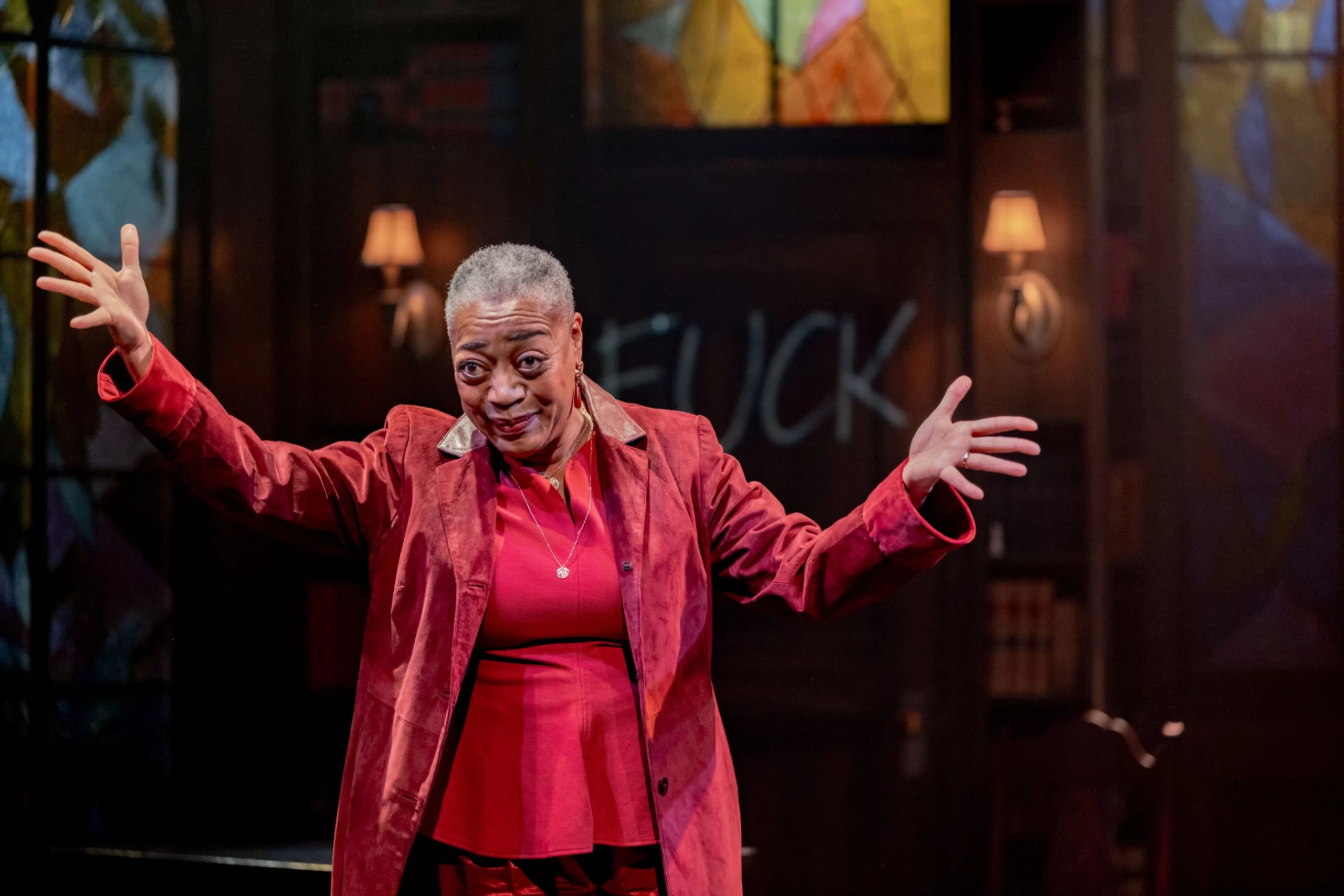
“Oh my word.” A perfect phrase to begin with as an aura of coloured images floods the stage at Toronto’s Tarragon Theatre. Karen Robinson’s Professor Margaret Anjou slowly emerges into the light, and thus begins the opening monologue of Ho Ka Kei’s Prophetess. It feels like a dream or, a better word for it, a nightmare unfolding before us through the eyes of its central character. Robinson commands the stage from her very first word, her voice carrying the terror of a woman who sees no escape from the quicksand closing around her. Declaring that there is “nowhere to run,” Margaret has been given a warning that feels both deeply personal and ominously prophetic: “beware the white rose.” The words hang in the air with the strange authority of something glimpsed in a dream and carried into waking life, and the production gives these images room to settle before the next wave of language arrives. This is an award-worthy moment, filled with deep intensity, a sense of a formidable mind attempting to impose order on a world that has begun to slip beyond her control. Robinson, known to many for her work in Schitt’s Creek, makes Margaret’s authority and fear palpable, giving each phrase a physical texture and each pause the weight of something left unsaid. We can’t help but sit back with our eyes wide open, wondering what this beginning has set in motion.
Margaret is our leader in this riddle, an etymology-obsessed academic who believes words can explain the world, shape its possibilities, and expose the people who misuse them. Her insistence that we are “better, different because of our words” gives the play its intellectual foundation. In Robinson’s hands, Ho’s writing is witty, razor-sharp, and frequently exhilarating, particularly when the politics of a university English department become a battleground for status, reputation, and competing ideas. The play draws on the bloody power struggles of Shakespeare’s Henry VI and Richard III, turning academic rivalries into a contemporary war of words. When Margaret tells the young professor Elizabeth, played with impressive strength by Natasha Mumba (Factory’s acts of faith), that she must “reevaluate your life,” the remark lands with delicious severity. I confess that the ease with which Margaret dismisses familiar phrases and repeated expressions made me wonder what she would make of this very review. I’d be terrified to find out what she would have to say to this.
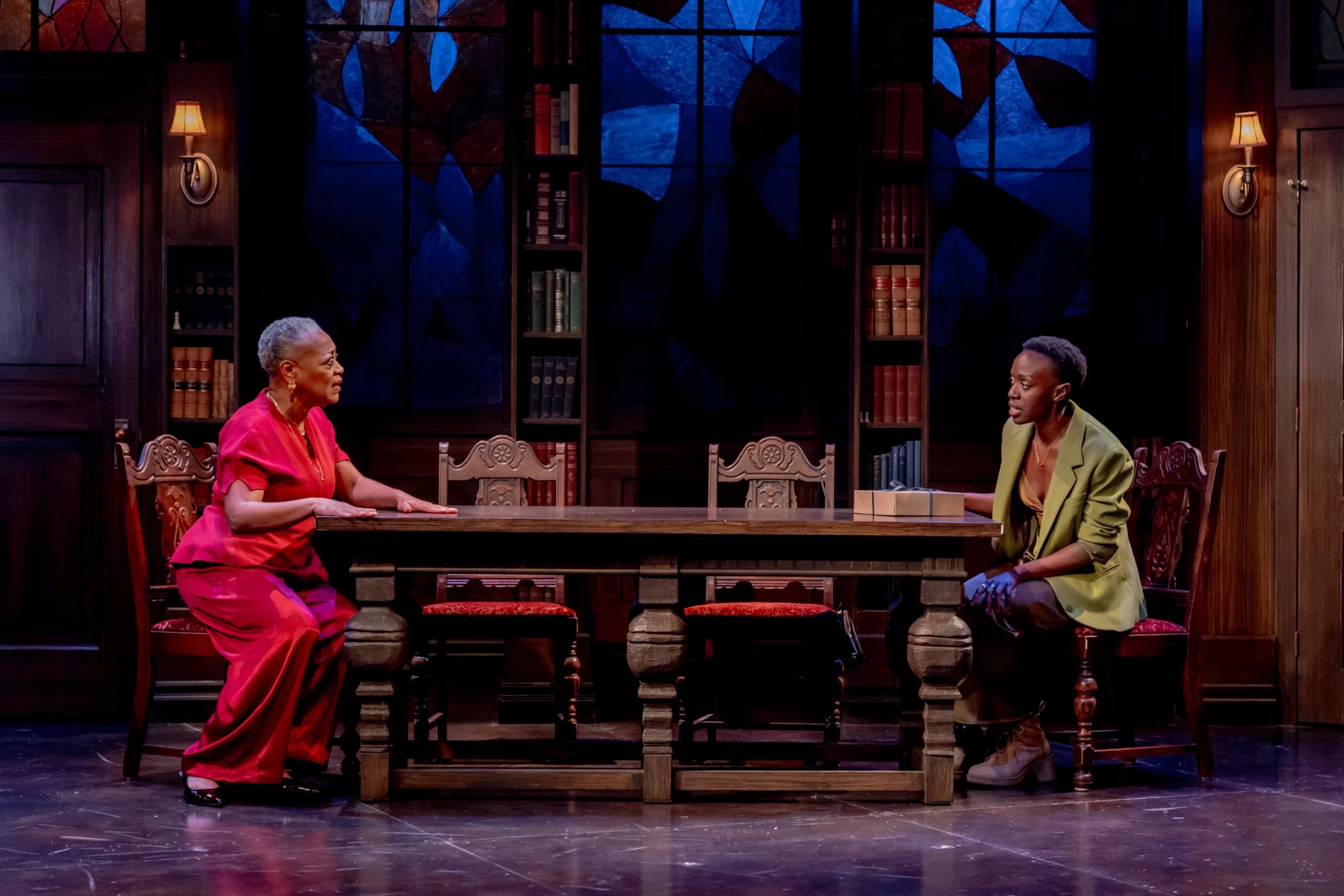
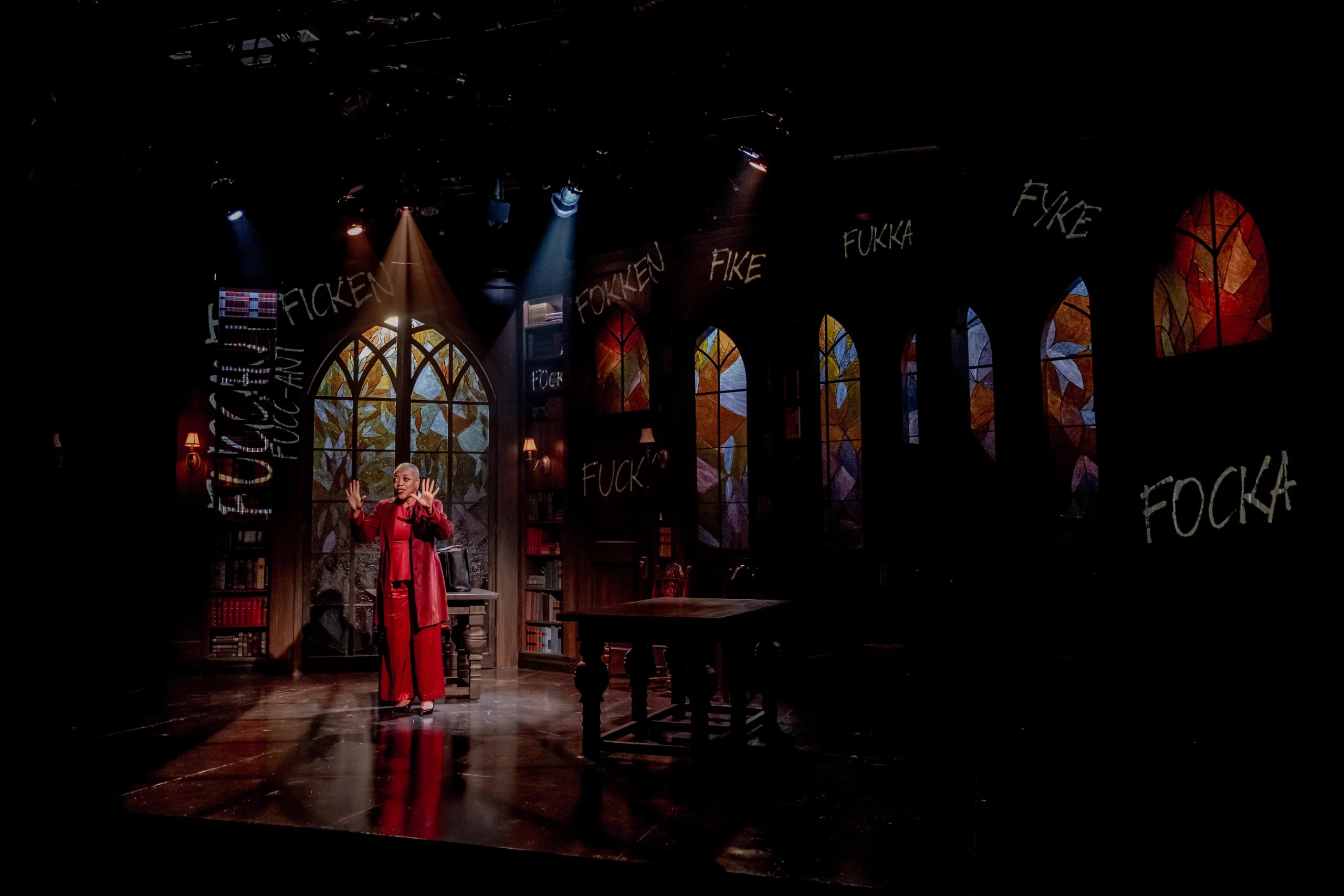
Before and after a strange, creepy-crawler encounter in a butcher shop culminates in a lunge and a slap, we get to see why Elizabeth worships the ground Margaret walks on. The full force of Margaret’s verbal brilliance erupts in the lecture that follows, as she dissects the explosive word “fuck,” tracing its etymological origins across the wall in projected chalk. She has this amazing way of delivering her findings with a torrent of profanity and gleeful precision. Language becomes a contact sport, and Robinson makes every word feel like a weapon she knows exactly how to wield. When Anne, the human resources representative, interrupts, Margaret’s emphatic “fuck off” becomes a performance in itself, a breathtaking dismissal that captures both her command of the room and her refusal to submit to institutional authority. The tight direction by Mike Payette (Tarragon/MTSC’s Craze) keeps the exchanges moving with calculated force, while Jawon Kang’s set shifts the stage between domestic grandeur, institutional chill, and the increasingly unstable spaces of Margaret’s imagination. Logan Raju Cracknell’s sharp, menacing lighting flashes give the production the atmosphere of an old-school Shakespearean tragedy, with flickering images scampering across the walls, cueing us into the haunting Margaret’s memories. The butcher shop is less successful in its staging, as the physical location remains difficult to establish, but the production’s changing visual world does effectively convey the instability gathering around a woman whose mastery of language cannot guarantee control over her own mind.
The spiders are among the play’s most persistent, frightening, yet puzzling images. Margaret remembers that her son Edward loved the creatures, and the question, “Why do weeds get to live and Edward doesn’t,” opens up a devastating line of thought about grief, injustice, and the apparent randomness of loss. The metaphor of weeds becomes a kind of war cry, with Margaret leading the battle like an admiral, armed with slaps, lunges, and a voice that seems to warn her even as it warns everyone around her. Yet the talking nightmare of spiders never really develops a sufficiently clear dramatic metaphor. They might suggest the poisonous reach of language, the tangled web of grief, or a connection to Edward that the play has not fully explored, but we stay trapped in that web of uncertainty. The sense of not knowing could be productive, but the symbolism feels underdeveloped, leaving the audience to do much of the interpretive work without enough guidance from the drama itself. Ho’s ambitions are considerable, and the ideas keep arriving, but the play occasionally crowds its own emotional landscape with images that demand attention without giving us a clear sense of where they lead.
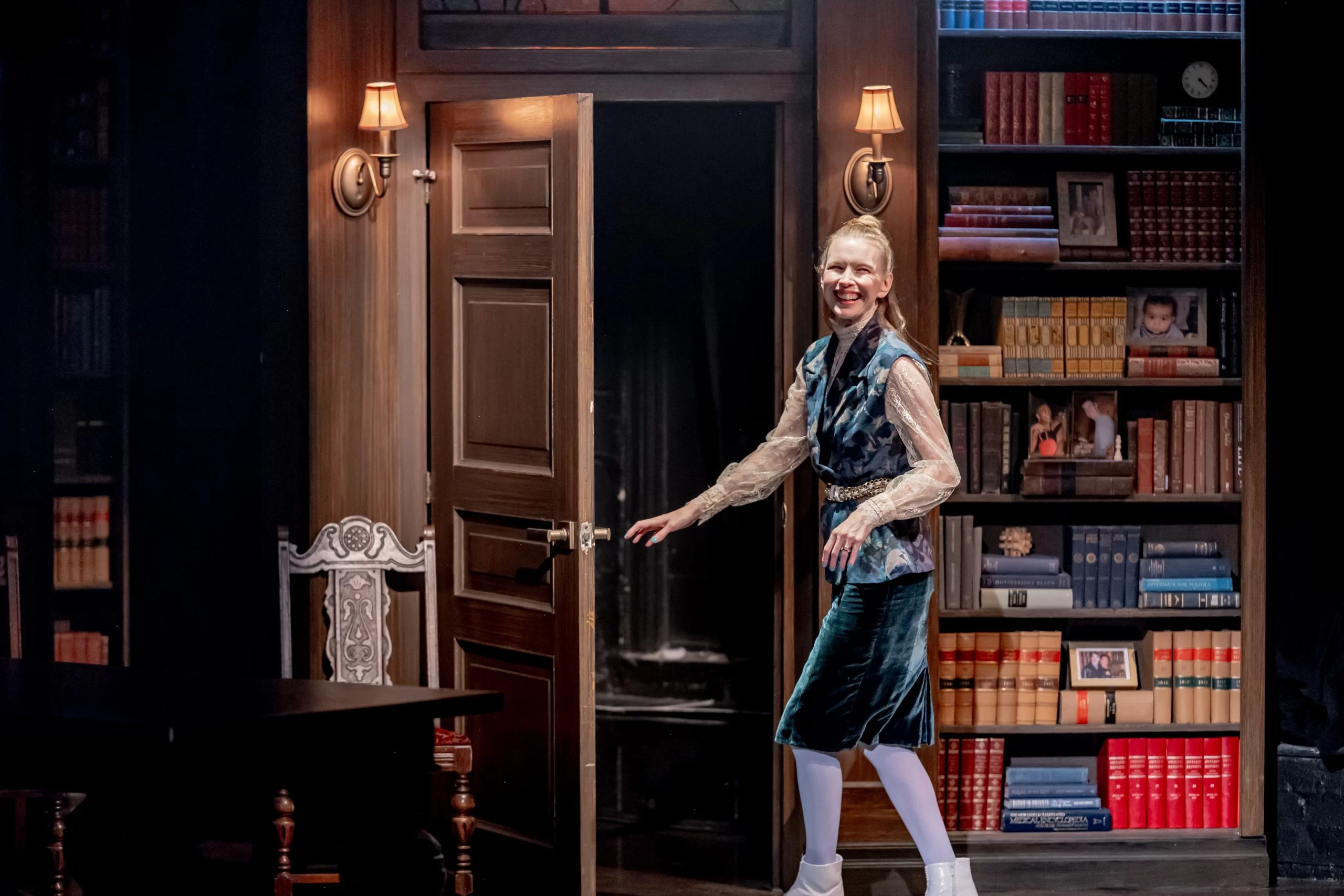
The institutional conflict, though, sharpens dynamically when Margaret faces Anne, the human resources representative played exceptionally well by Christine Horne (Coal Mine’s Infinite Life). Anne’s ruthless defence of the institution raises an uncomfortable question: when did human resources become so adept at protecting an organization at the expense of the human beings within it? Horne gives that ruthlessness a chilling clarity, supported by Christine Ting-Huan 挺歡 Urquhart‘s perfect costuming, while Rick Roberts (StratFest’s The Goat, or Who is Sylvia?) adds a peculiar comic complication through his double role as Margaret’s supportive husband Henry and the crude, floppy-haired academic Dicky. The split between the two characters is funny, and Roberts commits fully to the absurdity with aplomb, though the joke is pushed so insistently that it begins to feel like an extra flourish the production does not need. The casting choice creates a striking contrast between intimacy and institutional vulgarity, but it also illustrates a broader problem with the play’s construction: comic business, political argument, Shakespearean echoes, and nightmare imagery are all competing for space within a 90-minute work of words and ideas. At times, the characters explain their philosophies at length when the dramatic situation has already made the point, allowing the momentum to dissipate just as the conflict should be gathering force.
The play finds its deepest emotional force when Margaret’s grief moves to the foreground, and Robinson gives it a devastating physical presence. Five years of loss have shaped the way Margaret inhabits the world, and Robinson reveals that pain through minute changes in her expression and vocal tone before allowing the full force of her anguish to break through. “I have gifted you my oxygen, my words,” Margaret says, capturing the intimacy and the cost of what she has offered Elizabeth. When the second reveal deepens our understanding of what Margaret has been carrying, Robinson (Soulpepper’s Pipeline) makes the emotional consequences tangible and devastating, giving the scene a rawness that the writing does not always sustain. Her grief gathers the play’s many ideas about language, power, and academic allegiance into something painfully human: the vulnerability of loving someone, the weight of what we give to others, and the impossibility of finding words adequate to loss.
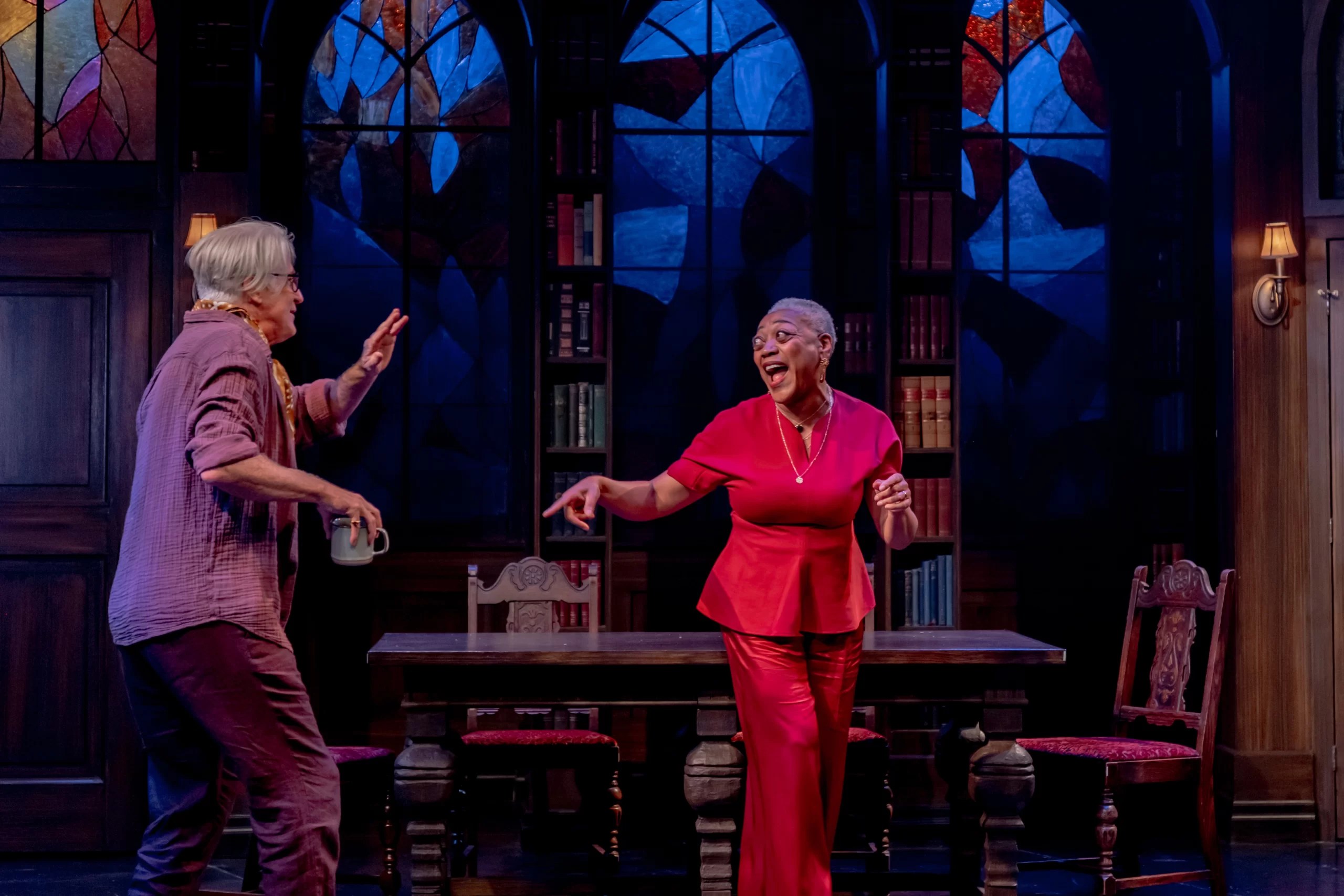
At Toronto’s Tarragon Theatre, Prophetess is an ambitious, occasionally overburdened play, but Karen Robinson gives Margaret Anjou a ferocity and fragility that make her struggle with grief impossible to dismiss. Ho’s language can be thrilling when the academic battles erupt into Shakespearean invective, and Natasha Mumba’s final monologue gives Elizabeth a formidable voice of her own as she sees through the political games being played by Anne and Dicky and makes clear that she will not forget what has happened. Mumba’s performance almost rivals Robinson’s extraordinary lecture in its command of language, but Elizabeth’s power comes from the discovery that she can no longer afford simply to admire Margaret’s authority from a distance. Robinson embodies a woman who has spent years wielding words as instruments of power; Mumba gives us the younger professor discovering how to wield them for herself. Together, these performances bring the play’s concerns with language, ambition, and institutional cruelty into sharp focus, as Elizabeth’s warning makes clear that those who manipulate the rules of power may eventually find themselves answerable to someone who has learned to see through them. The spotlight figure who first emerged from a nightmare now shares the final space of the story with a woman who has found her own voice. Margaret’s grief cannot be argued away, and Elizabeth’s awakening cannot be undone.