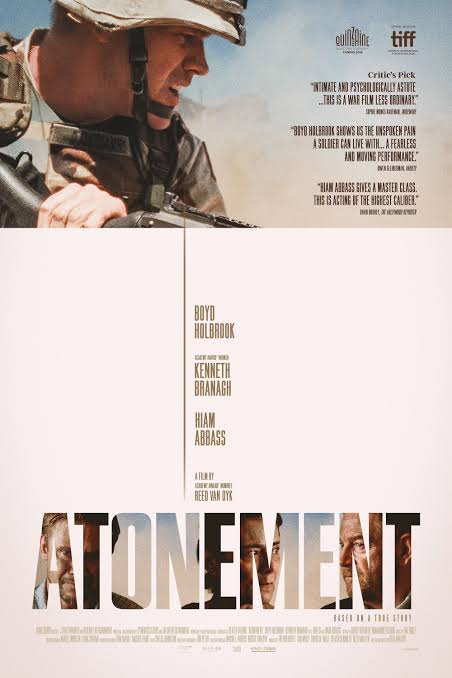
A Frontmezzjunkies TIFF film review: Reed Van Dyk examines the lasting trauma of the Iraq War and the painful, uncertain pursuit of accountability and forgiveness.
By Ross
A car ride to safety can become a road to unimaginable loss in a matter of moments, and Reed Van Dyk’s “Atonement” begins with the terrible consequences of that uncertainty. In Baghdad in 2003, US Marine Lou D’Alessandro (Boyd Holbrook) and his unit open fire on two vehicles they believe pose a threat, killing three members of a civilian family before the truth becomes clear. The tragedy unfolds amid the confusion and terror of war, where fear can make irreversible decisions feel necessary in the instant they are made. Yet the question that hangs over this searing drama is not confined to the deaths themselves. How do you grieve for three people whose lives were taken in a moment of chaos, and how do those who survive begin to live with what happened? Based on Dexter Filkins’ 2012 New Yorker essay, Van Dyk’s feature debut turns its attention to the psychological wreckage that remains long after the shooting stops.
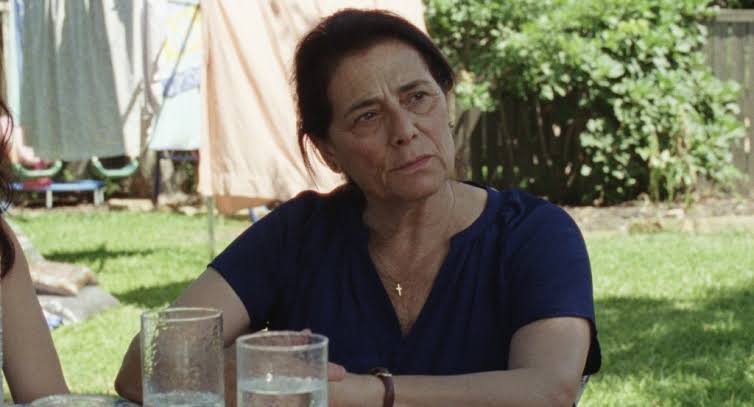
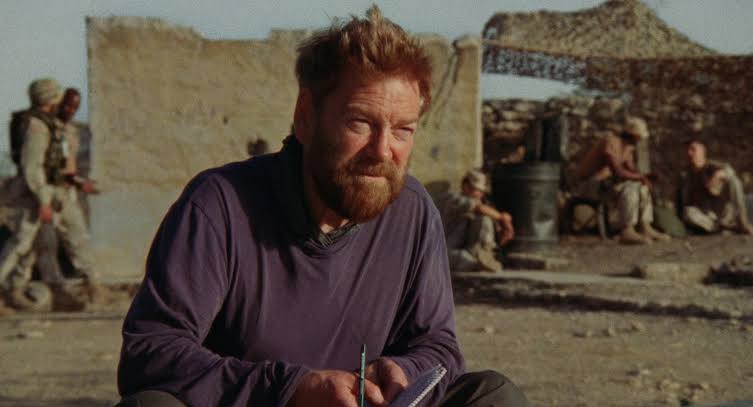
A decade later, Lou is back in San Diego following a dishonourable discharge, haunted by the incident and struggling with the effects of post-traumatic stress. Boyd Holbrook (Netflix’s ‘Narcos‘) gives a compelling performance as a man hollowed out by guilt and shame, leaving him stuck, unable to reclaim the life he once expected to have. Just north of his home, Mariam, powerfully portrayed by Hiam Abbass (“The Visitor“), the matriarch of the family destroyed by that day’s violence, is trying to build a future with her daughter’s young family in Glendale. Abbass is beyond astonishing, bringing a profound tenderness and an almost majestic composure to a woman whose grief cannot be measured by the passage of time. Kenneth Branagh (“Belfast“; Off-Broadway’s King Lear) portrays New York Times journalist Michael Reid, who was also in Baghdad when the tragedy unfolded. When Michael agrees to arrange a meeting between Lou, Mariam, and her daughter, the film draws its characters toward an encounter filled with dread and uncertainty, with wounds that may be reopened and no guarantee of comfort.
The meeting is the film’s emotional centre, and Van Dyk (“DeKalb Elementary“) handles it with an intimate, sober attention to the difficulty of accountability. Lou arrives at Mariam’s table and sits with the two women whose lives he has altered irrevocably, drinking tea while attempting to explain himself. I found myself wondering what he truly hopes to receive from this encounter. Is he asking for forgiveness because he has finally understood the depth of the damage, or because he can no longer bear the weight of his own guilt? The distinction matters, especially when the person seeking relief is also the person who caused the harm. Branagh brings nuance to Michael, the journalist caught between the need to tell the story and the responsibility of facilitating a meeting that may offer no comfort to the people involved. The performances give these questions their full weight, allowing the film to explore the tangled relationship between remorse, compassion and the desire to be released from the past.
Van Dyk keeps the focus on the intimate consequences of the Iraq War, leaving broader geopolitics largely out of frame. The fractured narrative moves through distinct chapters, following the characters as they try to build lives around an event that refuses to stay in the past. The chapters contain moments of startling emotional power, though the transitions between perspectives do not always hold together, and some narrative gaps leave connections frustratingly incomplete. I occasionally found myself searching for a clearer path through the film’s different strands. Yet its reluctance to offer emotional closure feels integral to the questions the film raises. Forgiveness cannot be summoned on demand, and a meeting cannot restore the people who were lost or erase the years of suffering that followed. The film’s quiet intensity comes from understanding that accountability may be necessary even when it cannot provide the resolution everyone hopes to find.
For all its structural gaps, “Atonement” left me deeply moved by the unresolved conflict between guilt and grief. Holbrook, Abbass, and Branagh anchor the film with performances that resist easy answers, while Van Dyk keeps his attention on the people who must continue living after a single terrible moment has divided their lives into before and after. The film does not offer a neat path toward healing, and I was left wrestling with whether Lou’s need for atonement can ever be reconciled with Mariam’s right to grieve on her own terms. Perhaps that uncertainty is the most honest response to a tragedy of this magnitude. The search for forgiveness may begin with Lou sitting across a table from the person whose life has been shattered, but the person who has suffered the loss must remain free to decide what, if anything, can come next.