A Frontmezzjunkies TIFF film review: Anton Corbijn turns Patricia Highsmith’s meeting with a young publisher into a seductive game of murder, deception, and blurred identities.
By Ross
Patricia Highsmith has spent a lifetime inventing characters capable of terrible things, so watching her confront a visitor who may have arrived with more than a book proposal in mind is unsettling, especially after we were given a glimpse of an unhinged man being dragged through a train station by police. We might not get the connection between the man at the station and Edward Ridgeway, talking to his home office on the phone, but we soon shall. In Anton Corbijn’s fascinating “A Talent for Murder“, Edward, a publishing house representative, travels to the Swiss Alps on a work-related mission: to persuade the celebrated crime novelist to write one final instalment in her Tom Ripley series.
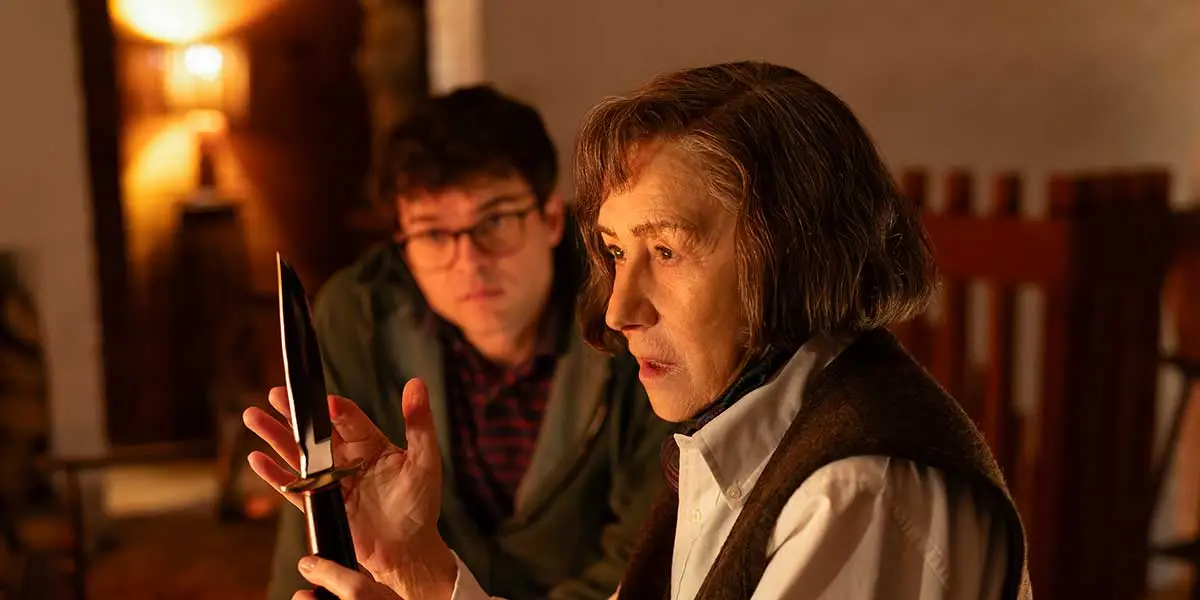
Highsmith, played hypnotically by Helen Mirren (“Goodbye June“), is introduced sitting facing a blank page, a feeling I know all too well. Alden Ehrenreich (2ST’s Becky Shaw) gives Edward an eagerness edged with uncertainty. His meeting with the prickly author initially appears to be a straightforward, albeit hostile exchange between a reluctant writer and a young professional desperate to prove himself. But the film quickly makes clear that Highsmith has little interest in playing the role of a cooperative literary legend. She wants to be amused, intrigued, and surprised. When Edward initially fails to satisfy her expectations, she sets him a challenge that turns their meeting into a seemingly sinister game with increasingly dangerous implications. Adapted by screenwriter Joanna Murray-Smith from her play Switzerland, the film finds its captivating energy in the unsettling possibility that Highsmith has discovered the raw material for her next story sitting directly across from her.
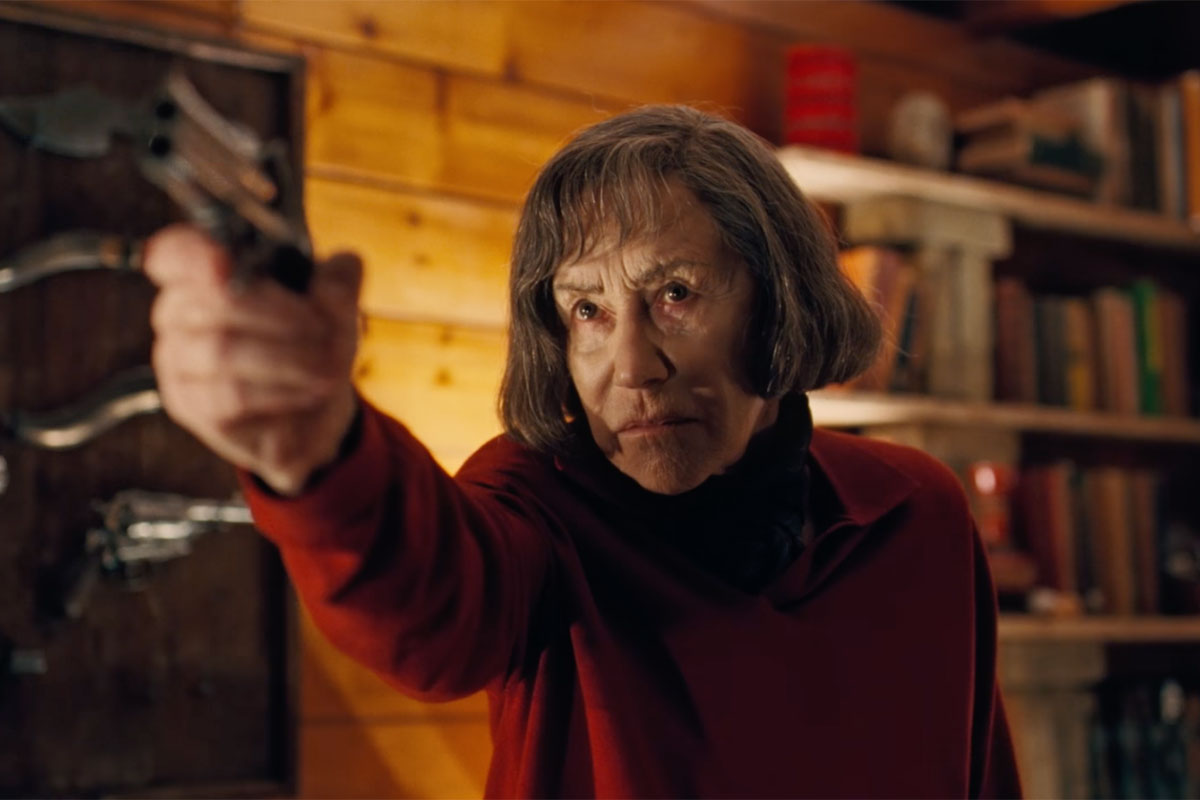
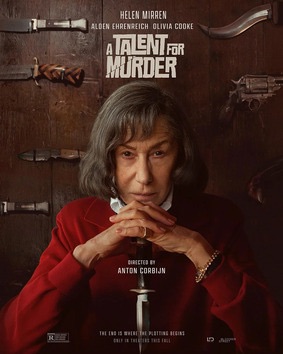
The always fascinating Mirren makes Highsmith a deliciously difficult presence to pin down. She is all sharp looks, wicked smiles, poisonous traps, and a mind that seems to be working several moves ahead of everyone around her. Her collection of antique weapons and shelves of poisons lend the chalet a threatening air of isolated intimacy, like a private laboratory for murder. Her remarks about the dark side of human nature reveal the fascination that has fuelled her work. “We all have a dark side,” she says with that devious twinkle in her eye, and Mirren delivers the observation with a mischievous certainty that makes it sound like both a philosophical position and a private joke. Ehrenreich’s performance keeps us alert to the shifts in his character, particularly as the mild-mannered publishing representative begins to resemble the calculating figure he and Highsmith are attempting to create. Their exchanges are funny and tense, with each trying to discover how much the other is willing to reveal.
The film becomes increasingly inventive as its fictional murder plot begins to absorb the events unfolding around Edward. His encounters with Clementine (Olivia Cooke) and a wealthy aunt (Juliet Stevenson) add new threads to a story that keeps changing shape. As Edward and Highsmith develop their Ripley murder plot, the resemblance between the men becomes impossible to ignore, and the act of creating a character begins to resemble the act of uncovering one. With Robbie Ryan’s clever cinematography, Corbijn (“The American“) gives the Alpine landscape and European interiors a crisp, watchful quality, their carefully composed stillness suited to Highsmith’s fascination with concealed motives and managed appearances. When she asks Edward to tell her how a woman in their co-created story is killed, the invitation becomes a turning point in their relationship. The question is no longer simply whether Edward can deliver a compelling story, but whether he is revealing something about himself in the process.
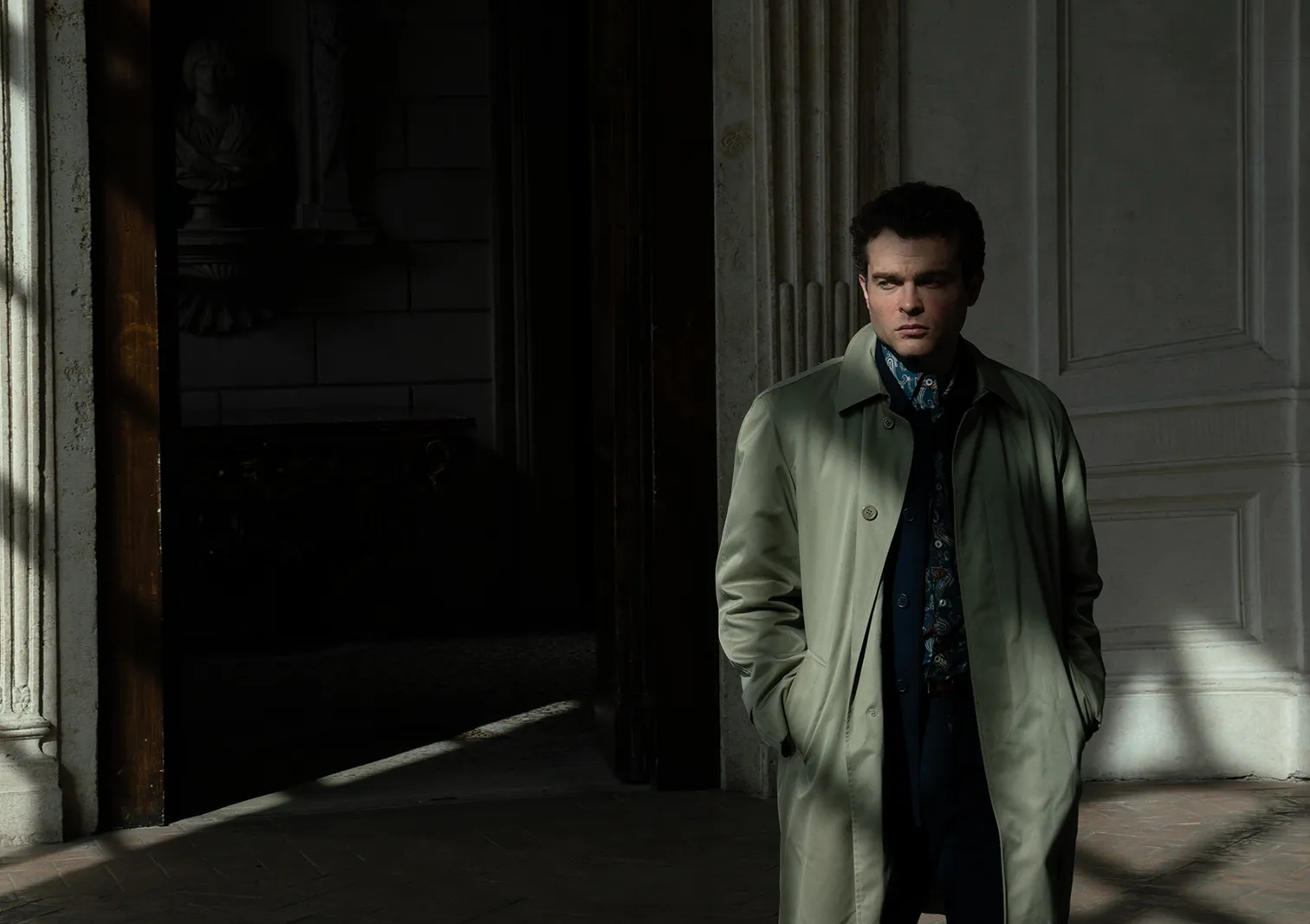
Inside the film’s growing uncertainty is a hypnotic energy, much like the Ripley books. Here, in “A Talent for Murder“, its two narrative strands begin to reflect and distort one another, drawing us deeper and deeper into its sinister spell. The distinction between what is happening and what the characters are inventing becomes increasingly difficult to maintain, and the film invites us to play inside that confusion. There is real pleasure in following the clues and reconsidering what we thought we knew, with Mirren and Ehrenreich giving the shifting power dynamic enough life to sustain our curiosity. Still, the intricate plotting comes at a cost. The middle section loses momentum as the story branches outward, and the psychological contest at its centre sometimes gets buried beneath the machinery of a plot that asks us to accept some difficult points of entry. Cooke (“House of the Dragon“) gives Clementine a welcome spark and an intriguing duality, but the narrative underuses her as it becomes more concerned with its own elaborate design. The final stretch delivers an ambitious, meta-fictional turn that I admired for its ingenuity, though its deliberately ambiguous payoff did not quite deliver the jolt I had been anticipating.
“A Talent for Murder,” a Bleeker Street film, is most engaging when it explores the unsettling intimacy between a writer and the person she invents. Highsmith’s fascination with murder gives her a language for understanding the world, while Edward’s growing involvement in her game raises the possibility that fiction can expose impulses its creator may not fully understand. Corbijn clearly enjoys the slippery space where history, imagination, and performance begin to merge, and Murray-Smith’s adaptation supplies a sharp framework for exploring that territory. The film, however, struggles to sustain the claustrophobic tension suggested by the play’s chamber setting. The pacing falters when its plot becomes too pleased with its own complexity, but its central performances keep the game alive. Highsmith asks to be surprised, and the film is determined to honour that request. I left wishing the ending had delivered a more satisfying jolt, while still appreciating the strange pleasure of watching a story turn back on the people who thought they were writing it.