
A Frontmezzjunkies TIFF film review: One of my favourite visually poetic films at TIFF 2026, Serville Poblete’s “Sunburn” finds tenderness, humour, and the rhythms of a Toronto neighbourhood under a summer blackout.
A cockroach crawls across him, but he only twitches in his sleep. A fan blows as a young man wakes from what must have been a pretty wild dream. “Are you good?” Three teenagers sit in a row on the couch, a brother, his best friend, and his younger sister, their faces illuminated by the glow of their phone screens as they try to decipher an unanswered message and the delicate art of knowing when to send another. “Miss u” is typed, reconsidered, and deleted. The advice is simple: take things slowly, be steady, and resist the urge to overdo it. Then the power goes out, and the heat settles in over St. James Town. The familiar routines of a high-rise neighbourhood begin to spill onto the streets.
After winning the prestigious Best Canadian Feature Film Award at TIFF 2026, Serville Poblete’s “Sunburn” shines hot and bright, unfolding one sweltering day in Toronto’s St. James Town, where a power outage sends the rhythms of everyday life spilling out onto the streets. That day belongs to best friends Shay (Joshua Obra) and Vince (Dashawn Blackwood), along with Shay’s younger sister Cee Cee (Arianna Shannon), who venture outdoors in search of relief, diversion, and whatever the day might bring. We also see a young teen waiting what feels like a lifetime for the elevator to take him up to his high-rise apartment. His reluctance to climb the stairs earns him some teasing, but he steps inside, and the day carries on. Like the teenagers around him, we give him no further thought. There are ice cream trucks to chase, water balloons to contend with, crushes to discuss at length, and friendships to test through the teasing that only close friends can get away with.
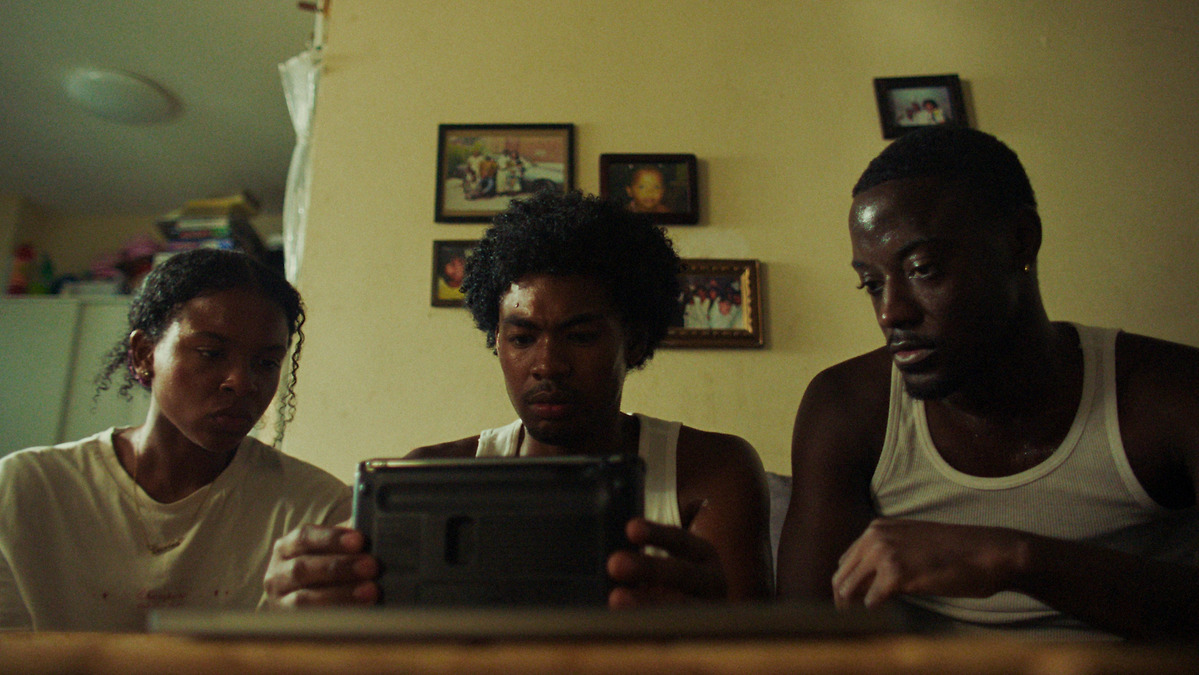
Writer and director Poblete (“In the Morning Sun”) has a wonderful eye for the small details that give a place its own pulse, lingering on faces, objects, and the textures of everyday life with an attention that makes even the simplest moments feel charged by the heat. The teenagers philosophize about staying or leaving, about being someone’s best friend or a dependable wingman, and about the uncertain prospect of becoming the people they imagine themselves to be. They dream of getting rich and having a dog, while the pigeons around them remain the “scrappy survivors” of the streets. The phrase feels perfectly suited to a place where everyone is finding their own way through the day, and into adulthood.
Obra (“The Fence“) and Blackwood (“Scaring Women at Night“) give Shay and Vince a natural, lived-in ease. Their exchanges are full of the affectionate insults and quick shifts in mood that make teenage friendships so recognisable. Of all the films I saw at TIFF 2026, “Sunburn” was one of my favourite visually poetic experiences, with cinematographer Christian Bielz (“Out Come the Wolves“) giving the film a dreamy, tactile beauty through close-ups that draw us towards the smallest gestures and fleeting expressions, allowing a shift in feeling to register before anyone is ready to put it into words. Cee Cee’s affection for her older brother is present even in her annoyance with him, just as his own care for her sits beneath the ways he pushes her away. The film’s attention to these everyday exchanges gives their relationship room to reveal itself gradually.
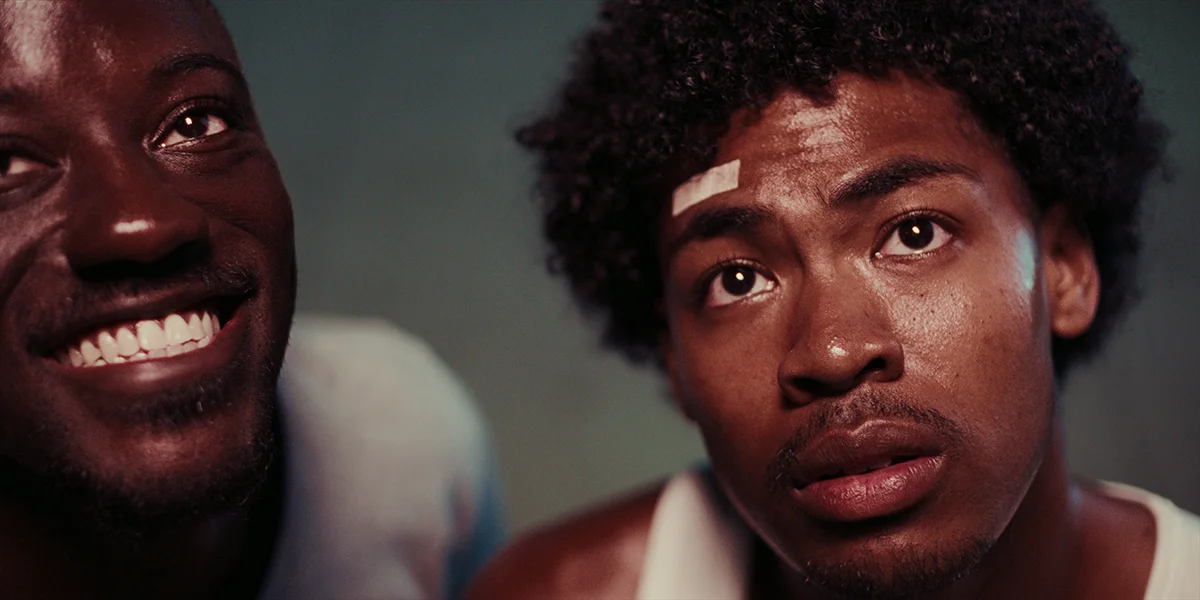
The oppressive heat becomes part of the film’s rhythm, shaping the pace of the conversations and the way the teenagers move through their surroundings. St. James Town’s high-rise buildings, home to people living on tight budgets, sit alongside pockets of greenery, sidewalks, and rooftops that form a shared world. People keep crossing paths, offering advice, trading jokes, and finding brief moments of connection. The neighbourhood feels alive with its own personalities, routines, and small dramas, and Poblete finds an engaging visual language for the community that emerges when the usual boundaries of home are disrupted.
There is a wistfulness beneath the film’s humour, particularly in the conversations about where home is and what it means to belong somewhere while imagining a life beyond it. The teenagers may spend much of the day looking for ways to escape the heat, but their wandering opens up questions about the places that shape us and the friendships that make those places feel like home. Poblete keeps the storytelling loose enough for these thoughts to surface through the characters’ encounters, although some of the deeper conflicts in their lives remain at the edges of the film’s sun-drenched observations. I found myself wishing for more time with those questions, even as the film’s dreamy visual world and unhurried attention to everyday life make its moments of connection feel quietly meaningful.
The day moves towards its fireworks, and the film’s small acts of care begin to feel especially tender, from friends applying sunscreen to one another to the closeness that can emerge after hours spent sharing the same heat, jokes, and uncertainty. Then the power returns, and the young man in the elevator reappears, the one we watched enter and promptly forgot. When the doors finally open, he tumbles out, looking as though he cannot quite tell whether he has arrived in heaven or finally made it home. It is a brief, wonderfully absurd moment that catches us out, too. We have forgotten him just as readily as everyone else, caught up in the lives unfolding around him. His sudden return is funny, disorienting, and quietly uncomfortable, a small reminder of how easily someone can slip from our attention. Cee Cee has spent the day loving her older brother even when he pushes her away, their affection tangled up in the familiar irritations of being siblings. When she finally wraps her arms tightly around him in front of a mother who seems surprised to witness the moment, she lets that love show without embarrassment or hesitation. In this sweltering, dreamy corner of Toronto, “Sunburn” finds its most moving expression of growing up in the courage to hold someone close, and the quiet hope that we might learn to see one another more clearly.