A Frontmezzjunkies TIFF film review: Hur Jin-ho examines the cost of challenging an official narrative, bringing a gripping political conspiracy thriller I knew nothing about to the screen.
By Ross
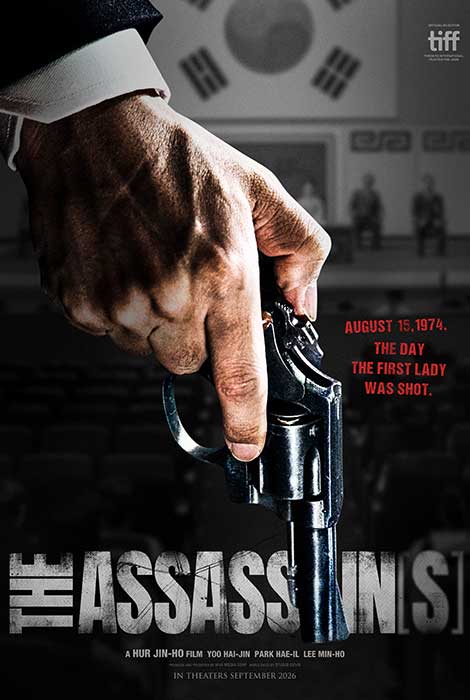
A radio announcement takes us back to 1974, nine days before the events that would change everything. As I did while watching a few other films at TIFF, including “Being Heumann,” I wondered how a story this extraordinary could have remained outside my awareness for so long. Directed by Hur Jin-ho, “The Assassin(s) (암살자들)” takes us into the political turmoil surrounding the attempted assassination of South Korean President Park Chung-hee on August 15, 1974, when gunshots rang out during the president’s Liberation Day speech. Park survived, but First Lady Yuk Young-soo and a young girl were killed. The captured assassin, Mun Se-gwang, was quickly presented as a lone radical, yet the official account contained an extraordinary discrepancy: six shots had been fired, while his pistol held only five bullets. Where did the missing bullet go, and who benefited from keeping the answer buried? That question opens the door to a conspiracy that threatens everyone determined to uncover what actually happened.
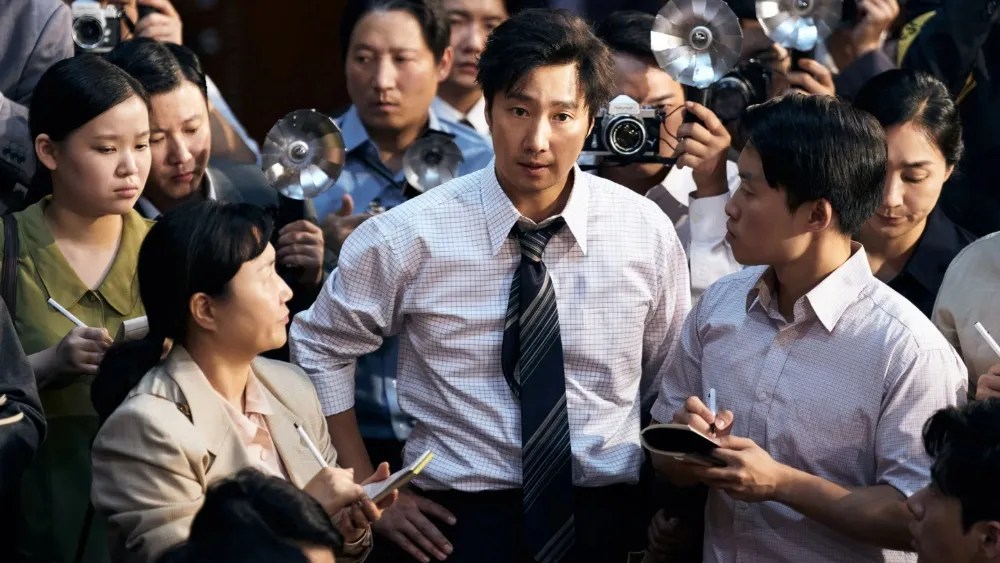
Hur builds the film as a gripping procedural, following a senior police inspector, Cheol-gu (Yoo Hae-jin), veteran newspaper editor Jae-hwan (Park Hae-il), and rookie reporter Young-il (Lee Min-ho) as they begin pulling at the threads of an account that the authorities are determined to protect. Each man comes from a different level of society, and those differences shape the vulnerabilities and obstacles he faces as the investigation moves forward. The pressure increases every time they pursue a question they have been instructed to leave alone. Journalists are accused of being communists, a familiar political tactic used to discredit anyone who threatens the accepted narrative, while police officers encounter obstruction from within the very institutions they serve. Yet all three men share a moral code grounded in the same conviction that the truth matters, and someone has to be willing to pursue it. Yoo, Park and Lee give the investigation its emotional weight, bringing distinct personalities and perspectives to a story in which perseverance is a requirement along with considerable personal courage. Hur steadily layers those discoveries, threats, and reversals into the investigation, creating the tension of a high-stakes journalistic thriller in which even the smallest inconsistency could expose an entirely different version of events.
What gives The Assassin(s) its particular force is the way it examines the relationship between political power and the information available to the public. The official report is treated as something that must be accepted, even as the evidence begins to raise questions, and anyone who challenges it risks being branded a threat to the state. The film’s passionate defence of a free press is woven into the actions of its central characters, who understand that their responsibility extends beyond publishing an approved version of events. They have to keep asking questions, follow the evidence, and bring to light the information those in authority would prefer to suppress. Hur, working from a screenplay by Gwen Gi-jun and Lee Ji-min, builds this historical incident into a multi-layered conspiracy, giving the journalists and police officers a shared purpose rooted in the belief that the public deserves to know what happened. The film occasionally pushes its message towards melodrama, particularly as the stakes rise, but its underlying argument has considerable urgency.
There is a reason I wanted to write about this film on Election Day in the United States. The historical events in South Korea belong to their own time and political circumstances, but the questions raised by Hur’s film reach well beyond 1974. The habit of throwing the word “communist” at anyone you want to silence is an old political tradition, one that has found renewed life in the United States during this election. The accusation is designed to discredit the person asking the questions before anyone has to deal with the questions themselves. What happens when journalists are discouraged, threatened, or discredited for asking questions, and when the institutions meant to protect the public are themselves caught up in the effort to control information? A free press needs independence, and that independence becomes especially important when political and financial power are concentrated in the hands of those with an interest in shaping the story. The film’s examination of authoritarian control and the suppression of uncomfortable information gives its historical subject an uncomfortable relevance today, without requiring us to forget the particular people and events at the centre of the story.
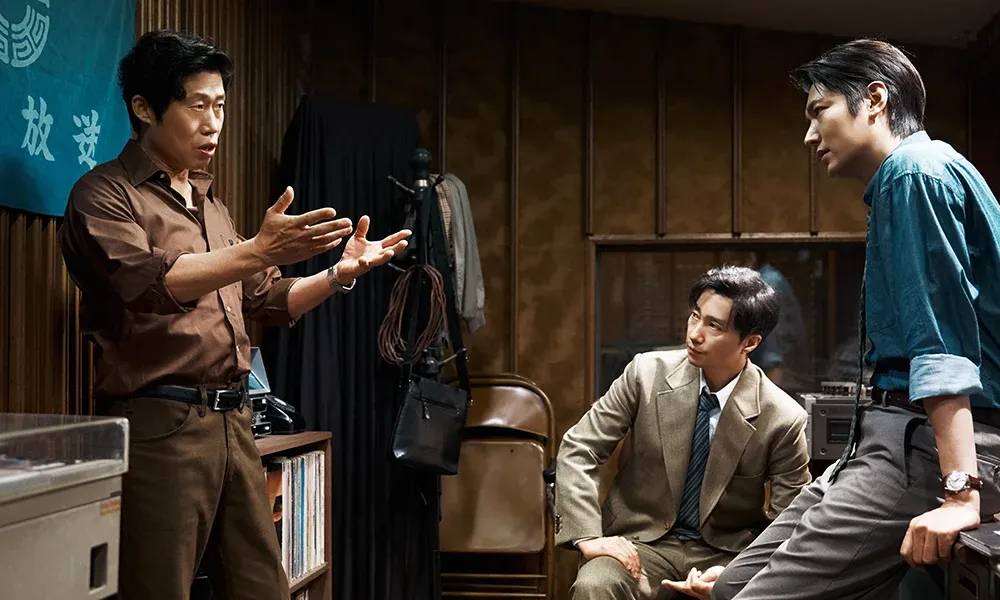
What happens when the official account becomes the only account the public is allowed to hear? The final act leans heavily into its message, and I would have welcomed a little more nuance in some of its dramatic declarations (although anyone who knows me also knows that restraint isn’t my middle name, especially when it comes to politics). Cinematographer Lee Mo-gae pulls us deep into the drama, using the film’s rooms and enclosed spaces to heighten the tension and electricity surrounding the assassination attempt and the dangerous fallout of standing up to authority. Yet the performances, the carefully constructed investigation, and Hur’s command of the film’s accumulating tension keep the story compelling throughout.
The Assassin(s) is ultimately about the people who refuse to accept that an official explanation should end the conversation. Cheol-gu, Jae-hwan and Young-il put their careers, their safety and their futures at risk because they believe the truth matters, even when the cost of pursuing it becomes frighteningly real. Watching them, I was struck by the importance of people who are prepared to stand together, keep asking questions, and insist that those in power answer them. On a day when so much attention is fixed on the democratic process in the United States, Hur Jin-ho’s film makes a powerful case for the independent press and for our shared responsibility to protect the space in which the truth can be heard.