A Frontmezzjunkies review: A Gothic masquerade of opera, vengeance, and literary monsters returns in White Mills Theatre Company’s immersive horror experience
By Ross
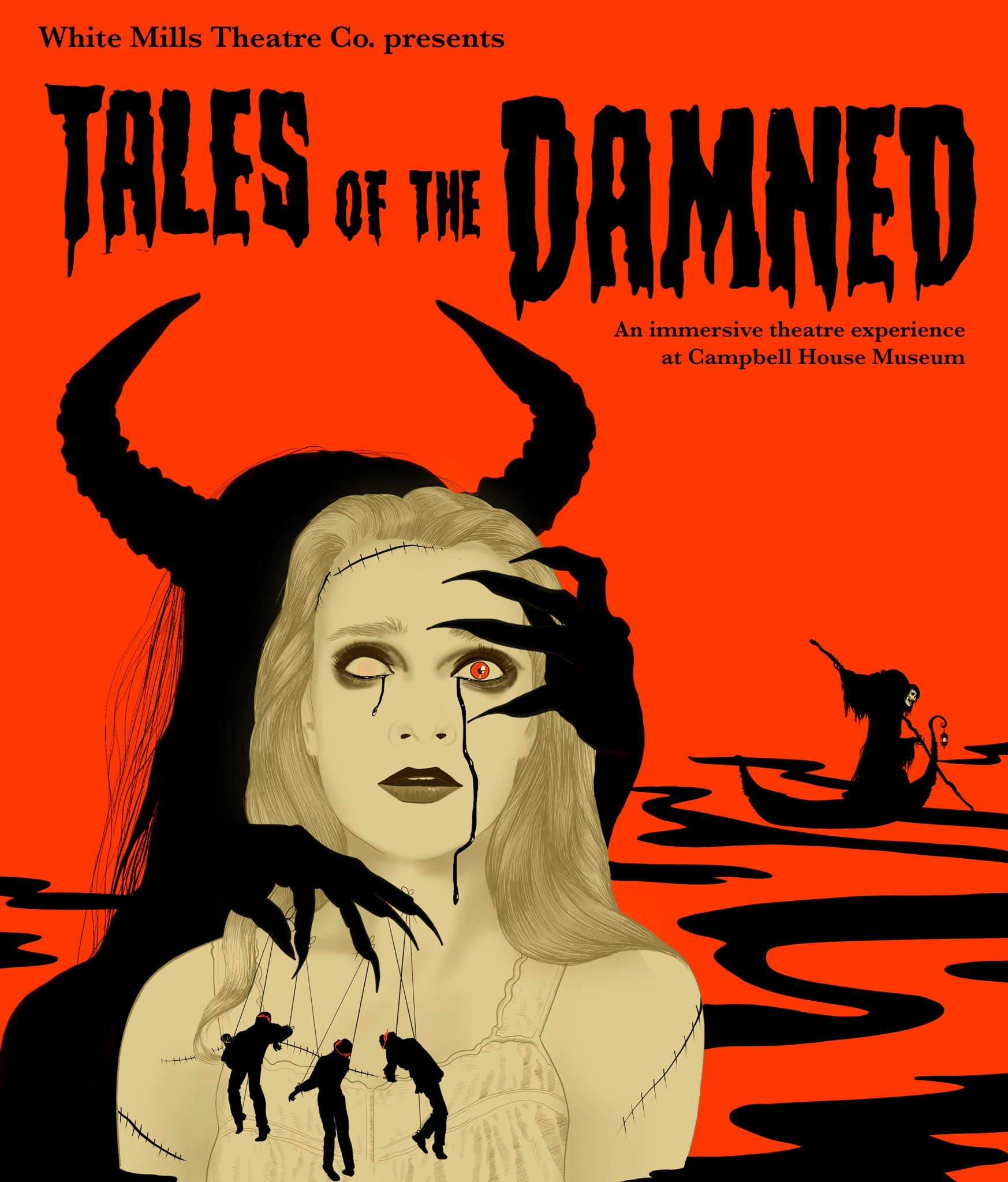
Halloween in Toronto has gorefully delivered one of its most deliciously wicked traditions, and I was thrilled to have the chance to step back through the grand front doors of Campbell House Museum for another invitation to dance with the devil. White Mills Theatre Company has returned with Tales of the Damned, its immersive horror opera inspired by the legendary Mary Shelley, Robert Louis Stevenson, and Oscar Wilde, and this year’s remount feels tighter, smarter, and spookier, with the historic house itself once again becoming an accomplice in the marvelous mischief-making. The welcome begins with bewitching beckoning, filled with music and dance. Three ballerinas are poised on the winding staircase, gracefully moving to the cello being played at its base. Then the horned Lady in Red takes them by the throat, one by one, freezing them as if the life has been throttled out of them. But before we have time to settle into the unease, we are confronted with a most foreboding ledger bound in blood-red leather, and once one unfortunate soul is selected to sign on our behalf, the three demons answer with a laugh so perfectly horrific that the evening’s intentions are unmistakable. This is a house with rules and dues, and the devil has already begun collecting.
“This way“, we are told, as the first gathering in the grand dining room establishes the production’s wicked theatrical grammar. Masked men perform a silent dance of menace while a smiling figure studies his reflection in a mirror. Two sharp bangs from the staff of the room’s most imposing presence unleash the unsettling sound of fingernails scratching across the table, and we tense our bodies for what may come next. The masks come off, and a startling scream brings the audience into complete submission. The opening sequence is a masterclass in theatrical tension, delivered with a slyly confessional wickedness and remarkable control. The performers clamp their hands over their ears, trying to drown out the maddening songs, as fear, grief, and the anger of revenge build. “Let the devil take me” is the chilling declaration that seems to summon the vengeful storm, and from there, we are swept into the most decadent masquerade imaginable at Black-Mail House.
It is in this dance that Miss De Lacey delivers a terrible “black” accusation concerning Justine’s death, and it is her curse that summons three horned creatures from the other side. The trio of women is worthy of Macbeth, as their voices possess the beauty of angels and the menace of the infernal, bringing a deliciously operatic wickedness to the proceedings. Their laughter cuts through the room, their music tightens its grip, and their arrival signals that vengeance has entered the house with a purpose. Time shifts and scenes are repeated in ways that enlighten and darken the edges of this tale. And within that dance, heartbreak and pain become external as a beast pounds at the door ferociously.
The genius of Tales of the Damned lies in the way it braids three Gothic classics into a single, devilishly decadent triptych, with the three demons hovering around the rooms and stories as embodiments of sin, appetite, and retribution. The audience knows these literary monsters, or thinks it does, but adaptor Brandon White finds fresh hunger and fear in the material, while Shannon Mills’s music gives those connections an otherworldly pulse. In my conversation with the two creators, White described the adaptation as a process of identifying shared themes across the source texts, including innocence, yearning, and mourning, while Mills explained how the music became a bridge between the stories and a means of asserting the Devils’ supernatural control. That creative conversation is vividly present throughout the production. Operatic voices fill the rooms, classical music drifts through the mansion’s shadowed corners, and the soundscape draws us further into the house’s web of destruction. Daniel Tofach’s sound design and Rob Carruthers’s musical arrangements help build an auditory environment that makes every turn through the mansion feel charged with unseen forces. The music may be heavenly, but the consequences are hellish, and we find ourselves rooting for these agents of vengeance as they turn their attention towards the privileged men who believe they can abuse the women of Black-Mail House with impunity.
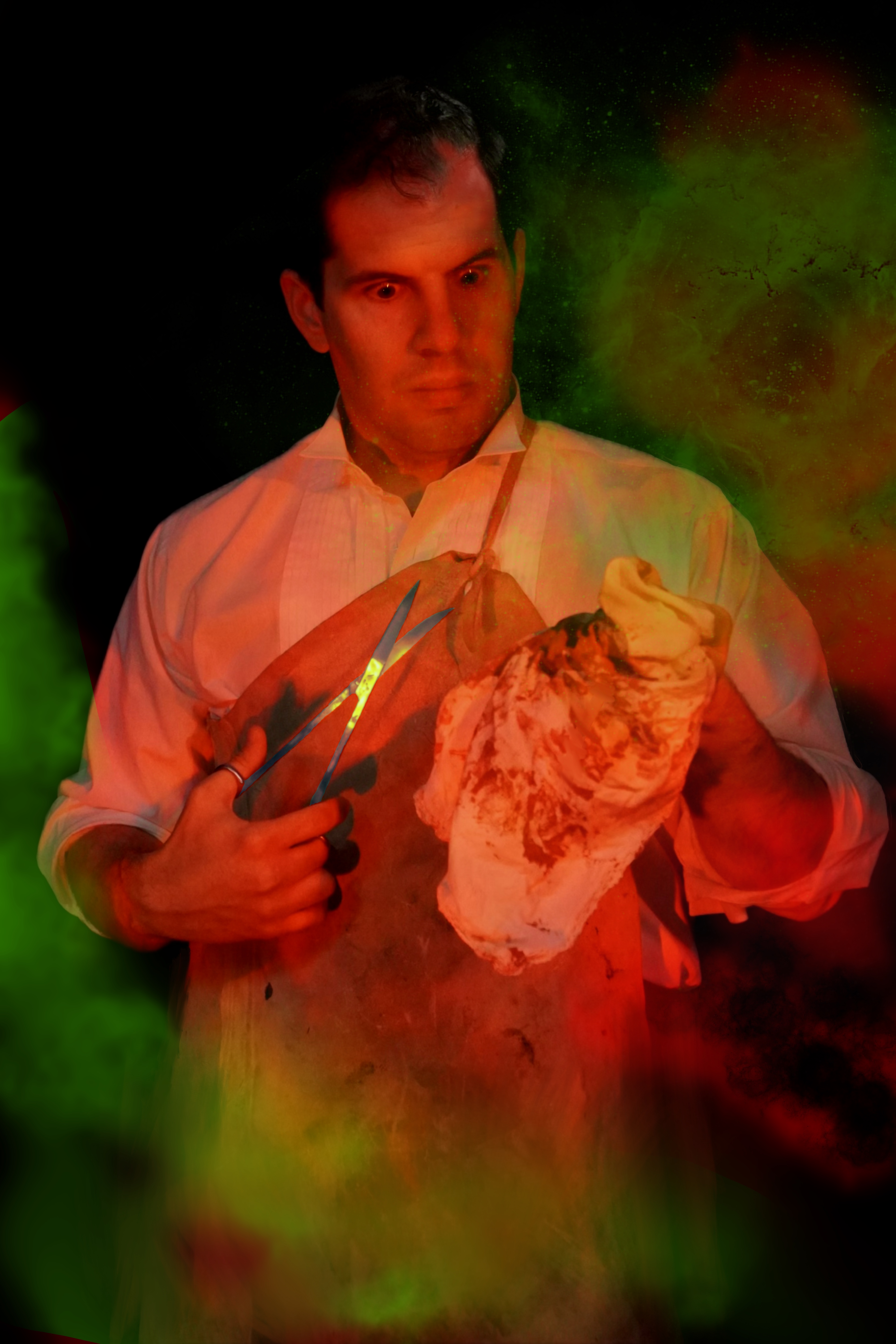
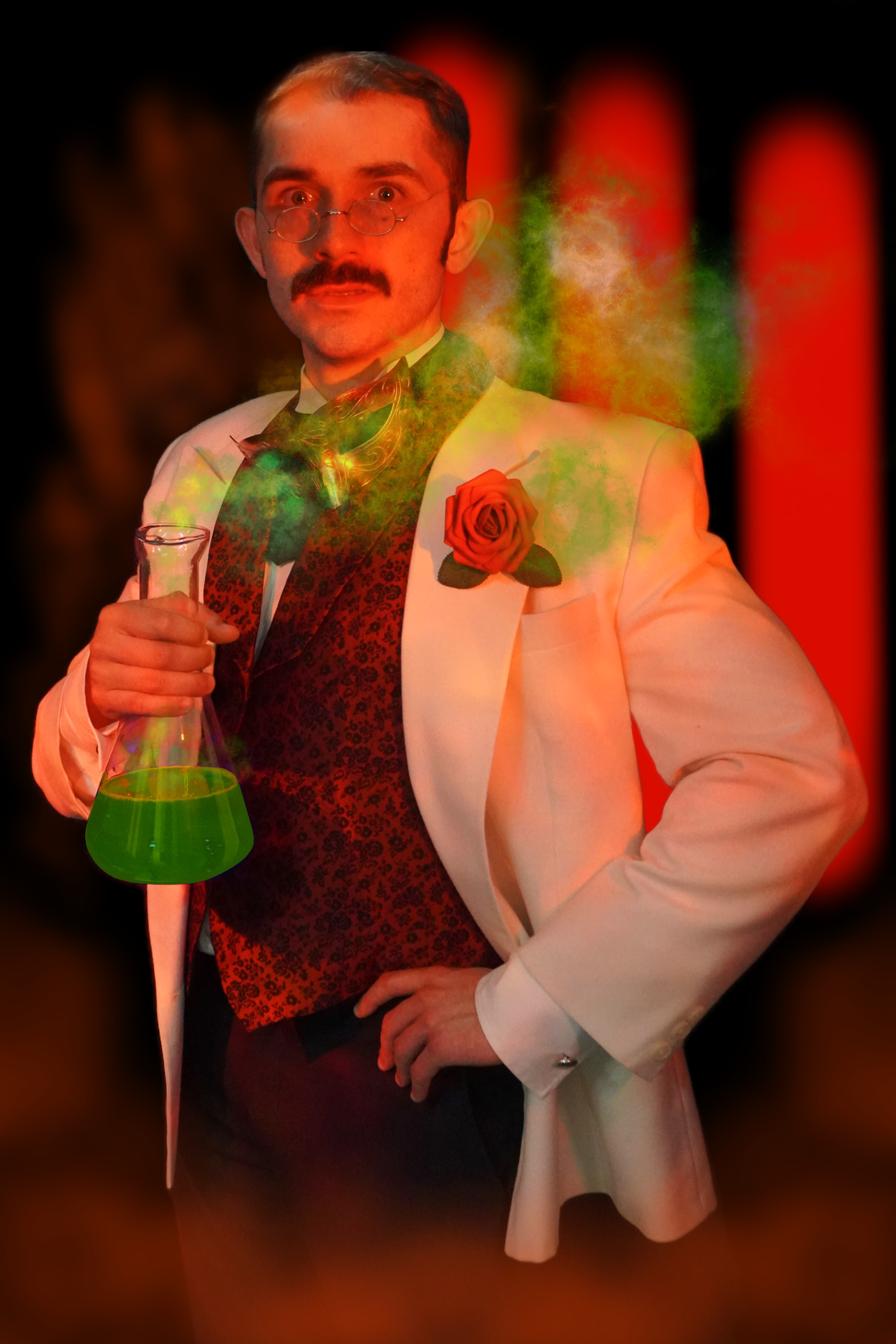
The ensemble gives this dark fantasy its human urgency. “Quickly, quickly,” we are told as we are pulled from room to room, through hallways under the threat of violence and death. Shelby Handley lends Agatha De Lacey fierce power and compelling compassion, giving the piece much of its emotional force and anger, while Tara Baxendale’s determined Madame Ricarda Enfield adds a commanding presence that sharpens every scene she enters. Anthony Botelho brings a masterful, tormented grace and power to his Victor Frankenstein, while Spencer Schunk’s dynamic Henry Jekyll and Scott Garland’s chilling Edward Hyde form a mirrored dance duet of precise psychological horror that’s both grotesque and mesmerizing. Adrian Marchesano’s Dorian Gray is all pompous vanity and moral decay, delivering a portrait of youth rotting beautifully from within. Their performances give the three stories a shared current of vanity, torment, and moral corruption, with each man carrying his own particular brand of destruction.
The performers’ close proximity and interaction make their confessions and transformations feel immediate, while Ella Mazur’s choreography sharpens the production’s surreal physical language, from the opening ballet to the unsettling movements that thread through the house. Campbell House is essential to this spell. The candlelit rooms, the mirrors, the winding staircase, and the mansion’s period atmosphere create a world in which the past seems to have acquired a pulse, and the audience’s movement through that space becomes part of the storytelling. The lighting deepens the shadows and reveals the collisions between characters, while the costumes lend the masquerade its decadent glamour and its streak of decay. The result is an experience that knows precisely how to play with our nerves, particularly when we are left alone in Dr. Jekyll’s room, waiting for something to happen and discovering that the nervous giggles around us are every bit as infectious as the fear itself.
“Each of us has heaven and hell in us,” we are told, and the production gives that thought a room-by-room life of its own. The house is thick with “so much evil“, blurring the lines of right and wrong as we watch vengeance take down those who deserve it. We are ushered onward with the instruction “to the devil I go,” moving quickly through the mansion in search of the murderer who lurks in its darkest corners, while the story keeps shifting our sympathies and unsettling our certainty about who deserves punishment.
White also spoke about pushing the production’s surreal physicality further this year, deepening the connections between movement and sound while turning the horror inward towards human grief. That ambition gives this remount its particular bite. The scares are delicious, the opera is transporting, and the literary architecture is steeped in the grand theatrical language of period melodrama. Yet the most disturbing questions belong to the human beings at the centre of the nightmare and the damage they can inflict, the suffering they leave behind, and the darkness they carry within themselves. White Mills Theatre Company has created a Halloween experience that is haunting, lavishly theatrical, and wickedly alive, transforming the Campbell House Museum into a place where literature’s monsters walk among us, and the devil always seems to know our true nature. Tales of the Damned isn’t simply a Halloween immersive experience; it’s a living, breathing séance of literature and theatre. It may not haunt your nightmares, but it will leave you thinking about the monsters we carry within ourselves