The Toronto Theatre Review: Talk Is Free Theatre’s inventive new Canadian musical serves up a wonderfully strange debate about poetry, craft, masculinity, and the meaning of art.
By Ross
With cows mooing in the background, setting the Mooooo-d hilariously well, this miraculous piece of musical theatre begins with the unmistakable sound of a knife being sharpened. It establishes the rhythm and movement almost immediately, as Anton, dressed in lab-coat white, changes his pose with each ringing of the bell. Each ding signals the shifts dramatically, as my brain begins to work overtime, especially when Ben Page’s All the Cows Are Dead starts playing with the very idea of what it means to be an artist. This original Canadian musical, produced by Talk Is Free Theatre, sent my mind spinning gloriously in several directions at once. Echoes of Stephen Sondheim’s Sunday in the Park with George and Sweeney Todd run through the music, both in tone and construction, bouncing around inside this wonderfully peculiar butcher’s shop. It is almost as if George Seurat and Louis the Baker from Sunday have wandered into a heated debate with Sweeney Todd and Mrs. Lovett about the value of artistic expression, the demands of making a living, and whether the things we create can ever be separated from the people we are. Following its world premiere in Barrie in January 2026, makes a wonderfully unusual Toronto entrance, taking up shop in an intimate, site-specific staging at Soul Provisions in North York, where two men, an artisan butcher and his petulant nephew, find themselves wrestling with a question that reaches well beyond the business of preparing meat. Can a butcher be an artist? Can a poet be a butcher? And what happens when the two turn out to have more in common than either is prepared to admit?
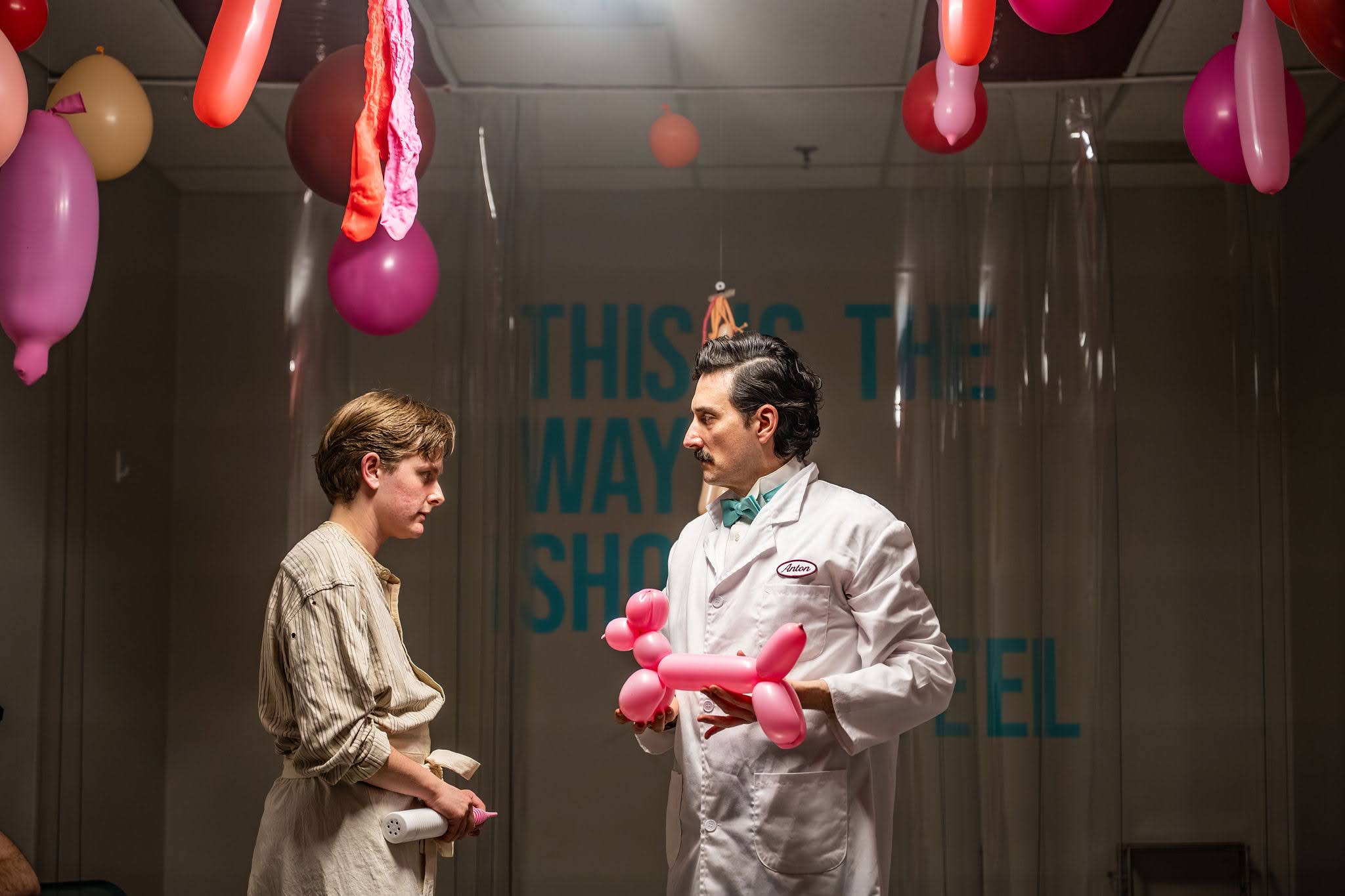
The setting announces its wonderfully offbeat sensibility before the first word is spoken. Audiences enter to find balloons of varying shapes and sizes hanging from the walls, standing in for the meat that might ordinarily fill a butcher’s shop, with a stainless steel table positioned behind a curtain of plastic freezer-strips. Seated mere feet from the performers, the whole arrangement creates an immediate, slightly unsettling intimacy. The sound of the bell and the flicking of the lights, expertly handled by stage manager Sabrina Weinstein, signal the shifts in action with almost musical precision. Alessia Urbani‘s set, costume, and props design makes remarkably inventive use of the space itself, turning a handful of carefully chosen objects and materials into a world that is deeply unsettling and frequently hilarious. The balloons are an inspired touch, their absurdity sitting perfectly alongside the very real threat of the metal knives that will become part of the action.
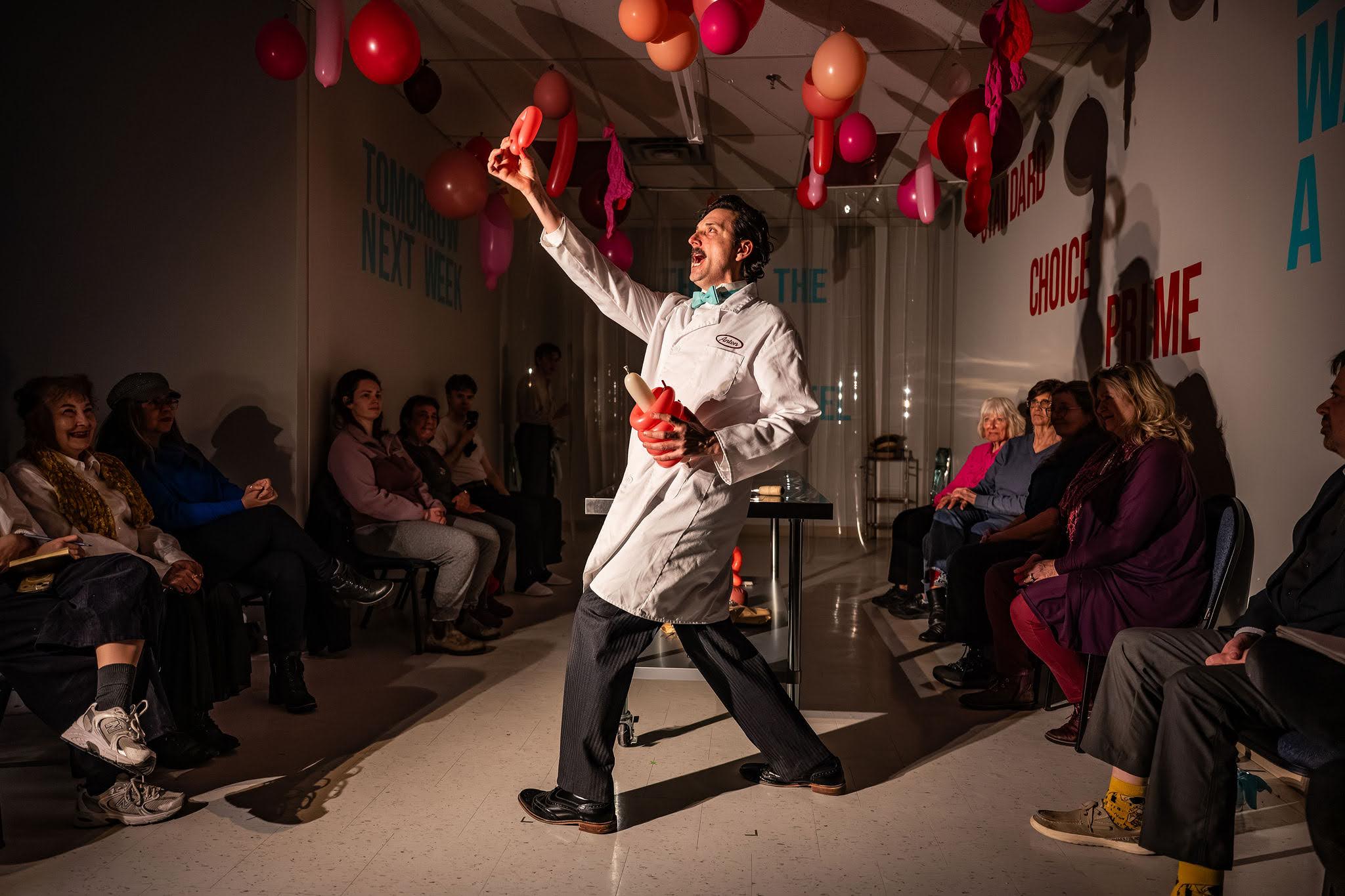
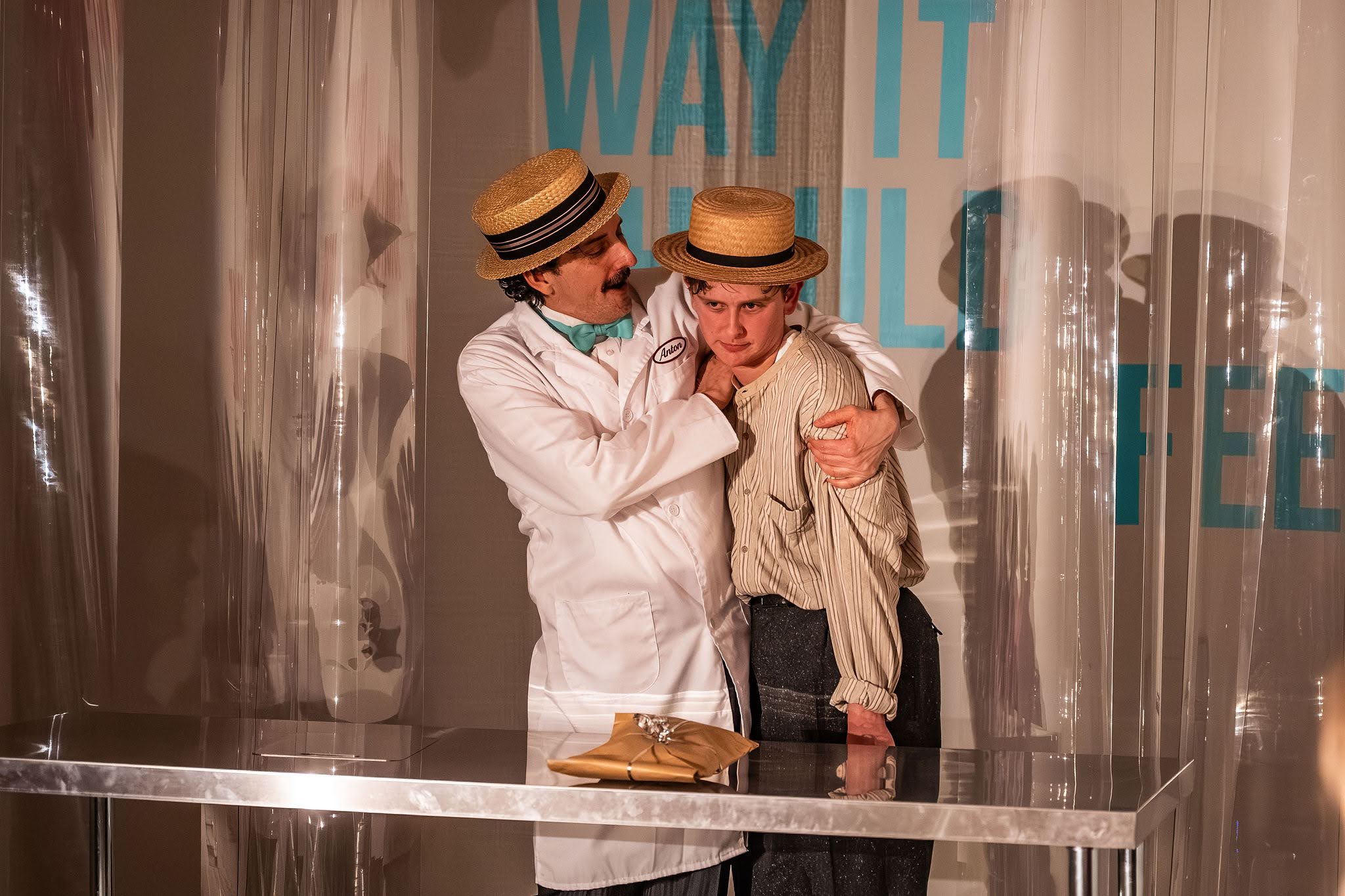
“I’d like to be a poet, I think,” Louie announces steadily and unsteadily all at the same time. He is a young man with few prospects and even fewer apparent ambitions beyond his own particular brand of creative misery. His uncle Anton is willing to take him in and teach him the family trade, provided he gives up some of that youthful folly and applies himself to the serious business of becoming a butcher. Mike Nadajewski cuts a commanding presence as Anton, holding us firmly in his twisted grasp with the same dark authority that makes Sweeney Todd such a compelling figure. His powerful singing voice carries the authority of a man who has devoted himself to the mastery of his craft, carving out a genuine reverence for the art of butchery, even as his instruction comes wrapped in a harsh, sometimes borderline abusive manner that makes the relationship between the two men distinctly uncomfortable.
Taylor Garwood‘s Louie makes an ideal foil for this bullying butcher, bringing a wonderfully naïve and careless disposition to the role, blinking as though the harsh light of the shop is almost too much for his eyes. He clings stubbornly to his own definition of what it means to be a poet, and his commitment to misery is particularly amusing, even as his growing interest in the art of sausage-making begins to introduce a little joy into his otherwise determined unhappiness. These two men are cut from the same cow, but have arrived at their ideas about life from very different sections and directions, and the pleasure comes from watching those convictions collide sharply.
Page clearly has Sondheim on his mind, and the score is filled with the kind of complex, conversational musical exchanges that turn a philosophical disagreement into a complex concert of its own. I heard echoes of Sunday in the Park with George in the musical discussion of artistic purpose and the struggle to make a living from one’s work, while the butcher’s particular view of craftsmanship brought Sweeney Todd into the room with its own darkly comic associations. There were also little flashes that made me think of two other iconic Sondheim masterpieces, Follies and Company. The music begins with discordant, combative harmonies that capture the distance between uncle and nephew, gradually finding moments of musical agreement as their relationship develops. Anton’s song about being a butcher is especially effective, bringing the debate about poetry to a temporary halt through the sheer force of his conviction. Louie isn’t even permitted to hold on to his rather empty notebook, a gesture that made me think of George’s sketchpad and pens in Sunday in the Park... Imagine someone taking those away from George. It would be like taking away the very means through which he understands and expresses himself. Page understands that an artistic identity can be deeply personal, and the musical finds a great deal of energy in the battle over who gets to define it.
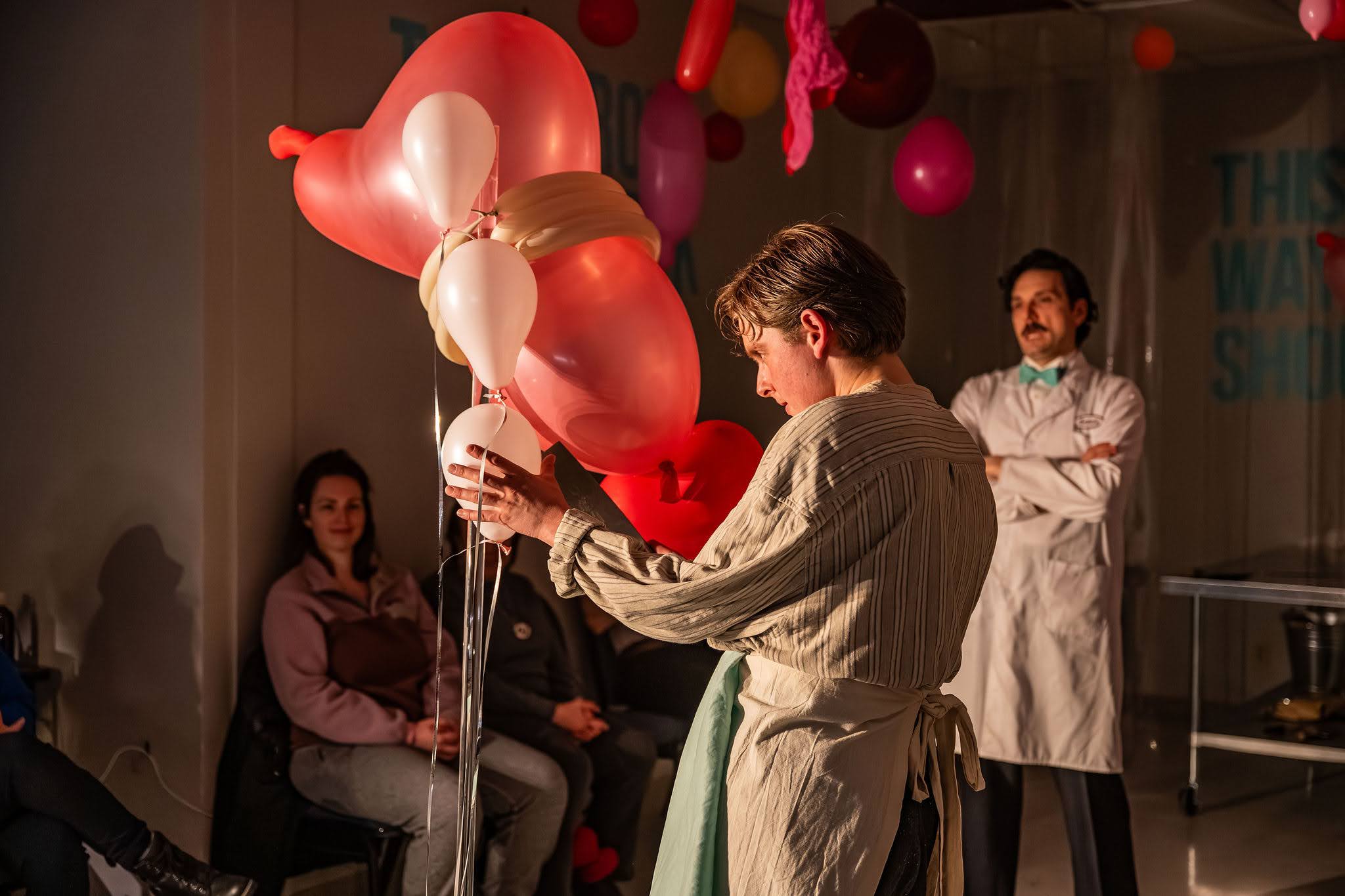
The two men are both artists, each working with different materials and different expectations of what their work should accomplish. Anton has his knives, his cuts, and his carefully honed expertise, while Louie has his notebook and an idea of poetry that seems to have very little connection to the practical demands of life. “La la la la la,” Anton sings, determined to bring his nephew into line, while Louie finds other ways to resist, cleaning everything with the same favoured rag and insisting that he isn’t really a butcher inside. There is a delicious little musical and verbal playfulness in the writing, including the line “Sour grapes envious of the sweet cherry,” which captures something of the jealousy and frustration running between them. The suggestion that these men have no muse, only moos, is another cheeky little pleasure, especially in a world where romance seems to have been pushed aside by the business of survival. Anton may know how to charm the “pretty girls” who come into his shop, but the emotional landscape remains stubbornly focused on work, even as Louie struggles with the lonely existence Anton seems to have accepted and prescribed for him. Louie still believes in something greater than this, something that might give his life a meaning of its own. Nadajewski and Garwood handle these exchanges with a lively understanding of the comedy and the heartbreak underneath, while the intimate staging makes every shift in attitude and every physical gesture feel immediate and emotionally exposed.
The central proposition of All the Cows Are Dead, that the butcher and the poet are ultimately one and the same, is a wonderfully meaty idea, and Page has turned it into one of the most inventive new pieces of musical theatre I’ve encountered in a long time. I was completely taken with the ambition of the piece, its brain-tickling score, and its willingness to find such rich philosophical questions inside an unlikely butcher’s shop. Nadajewski and Garwood give the argument two engaging and often hilarious human faces, while William Dao‘s direction makes excellent use of the close quarters and the production’s unusual theatrical vocabulary. My one reservation is that the writing needs a little more connective tissue as the two men move toward their eventual realization, with a deeper exploration of the similarities in their temperaments and a clearer path to the emotional resolution. The argument is compelling, but the final movement doesn’t quite deliver the satisfying discovery I was hoping for. Still, I love the audacity of the question Page has placed at the centre of this musical. Anton has his knives and Louie has his notebook, as both men search for something that gives their lives meaning. Perhaps they have been working toward the same artistic truth all along, even if neither is quite ready to admit it.