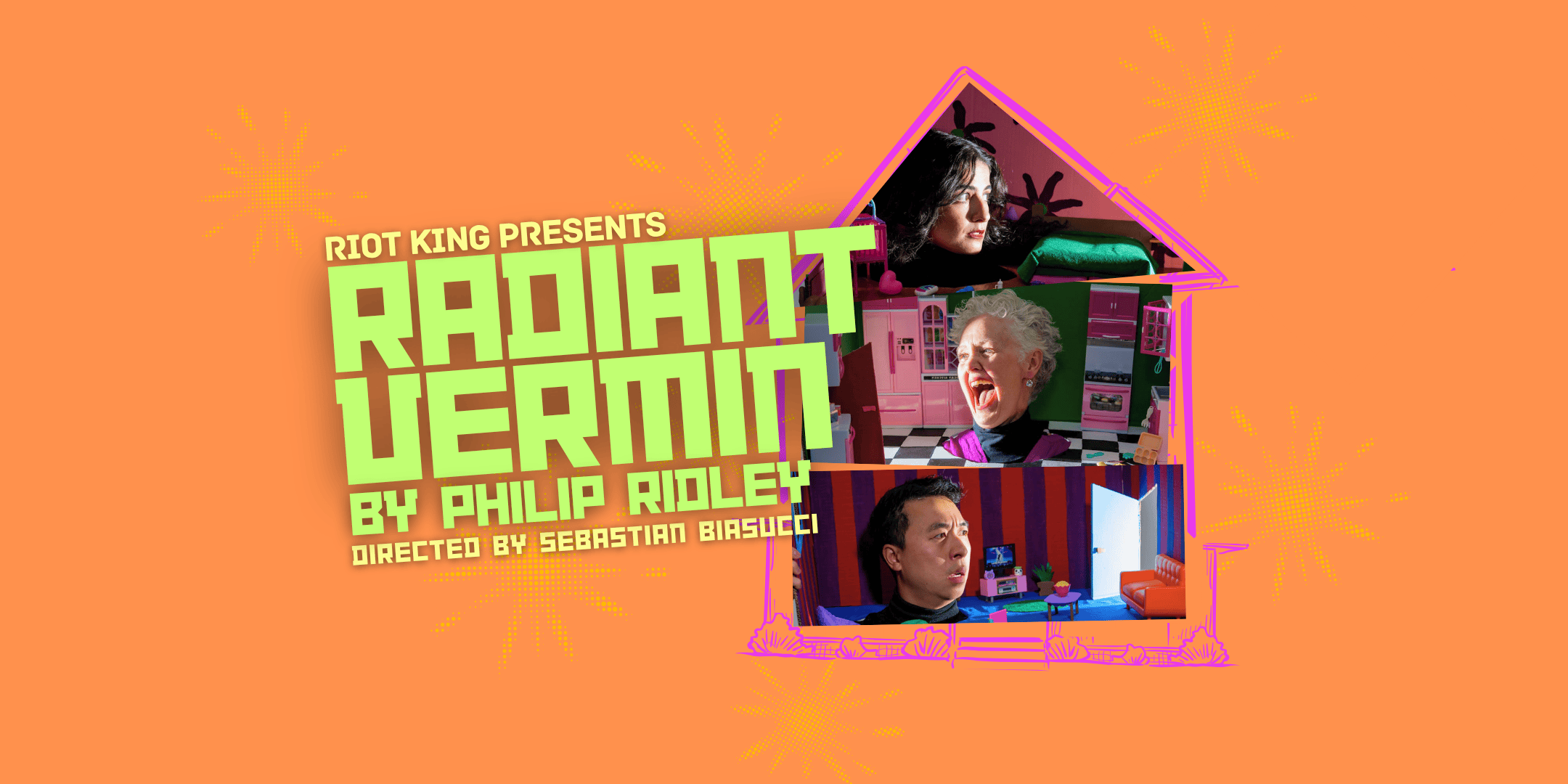
A Toronto Theatre Review: Riot King’s dark and delightfully demented comedy of dream homes, dirty deeds, and the very steep price of getting ahead.
By Ross
There’s no possible way I could forget seeing Philip Ridley’s Radiant Vermin at 59E59 Theatres in New York as part of Brits Off Broadway. The details of that production have slightly blurred a wee bit over time, but I do remember the dizzying, devilishly entertaining sense of mischief built right into its dream home walls. Returning to the play at Toronto’s Red Sandcastle Theatre on Queen East, I was thrilled to discover that its wicked little engine still runs beautifully. Under director Sebastian Biasucci (Decapod Media’s Up Against Everyone), this Riot King production embraces the play’s delightfully demented premise with an infectious sense of theatrical mischief. When Ollie and Jill, our seemingly sunny young couple, announce that “some of the things we’ve done are horrible, maybe even shocking,” before insisting that “we did it all for the baby,” we know we are being invited into a confessional that comes with a rather elaborate set of excuses. Their story sparkles like a deadly designer treasure, with each gruesome turn bringing Ollie and Jill closer to the glossy dream home of their decorating-magazine fantasies. It’s propelled by a deliciously dark sense of humour and a plot that takes a sharp turn from domestic bliss into something grotesquely glorious and unhinged.
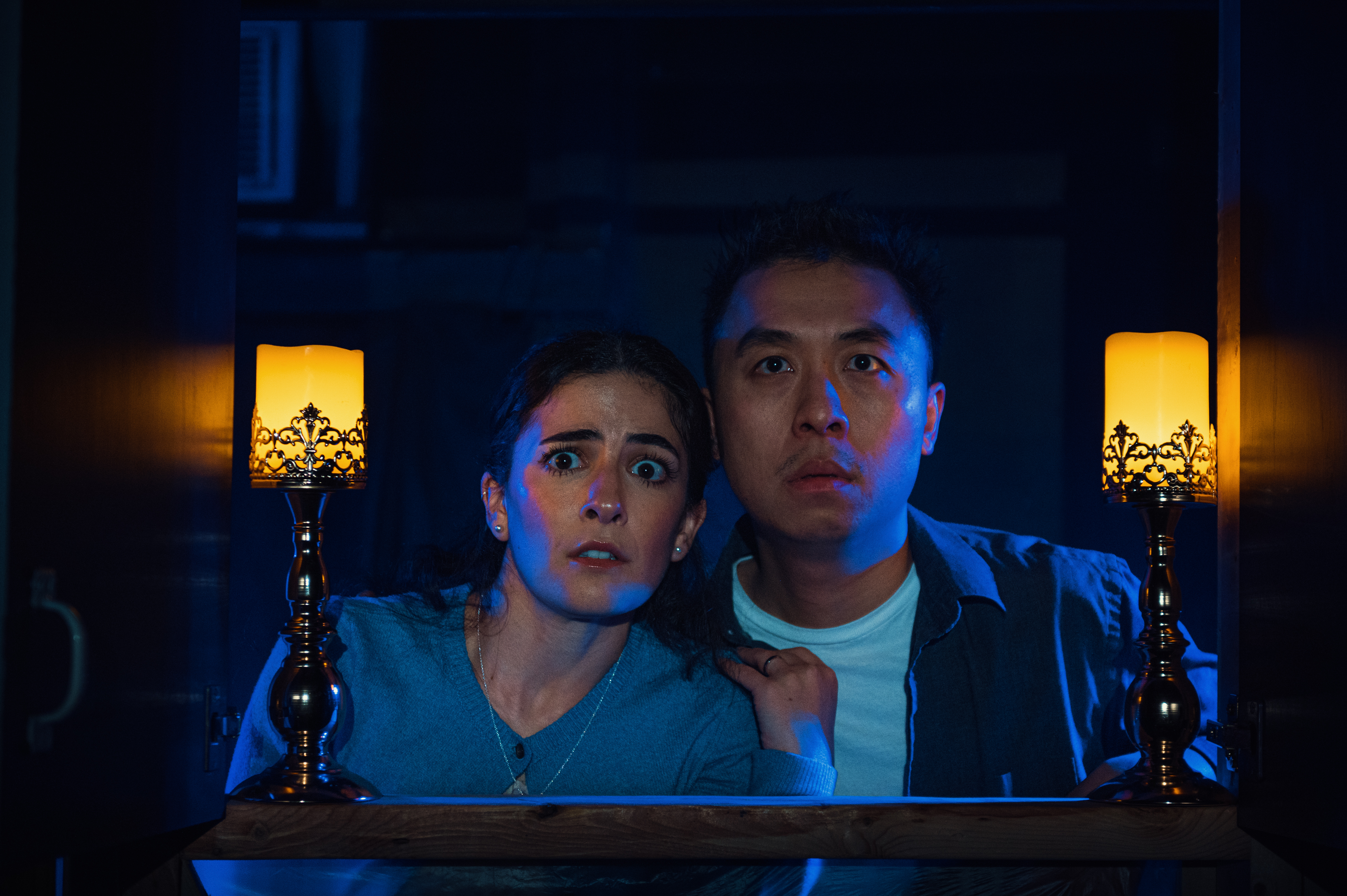
Ziye Hu and Katherine Cappellacci make an instantly engaging pair as Ollie and Jill, carrying a baby basket onto the stage and instantly breaking the fourth wall to bring us into their story. They want to walk us through how they got their dream home, and, more pointedly, they want our understanding, our sympathy, and perhaps a little absolution. Their seemingly innocent charm is precisely what makes them so engaging, and so dangerous. They are so open and disarming as they recount their adventure that we find ourselves listening with a surprising amount of goodwill, even as the diabolical details of their decisions become increasingly difficult to excuse. Their question about what we might be willing to do to own a home has an uncomfortable resonance in a city where the housing crisis continues to shape so many lives. Playwright Ridley gives us a couple whose desperation to build a better future for their family becomes an increasingly elaborate exercise in justifying the unjustifiable.
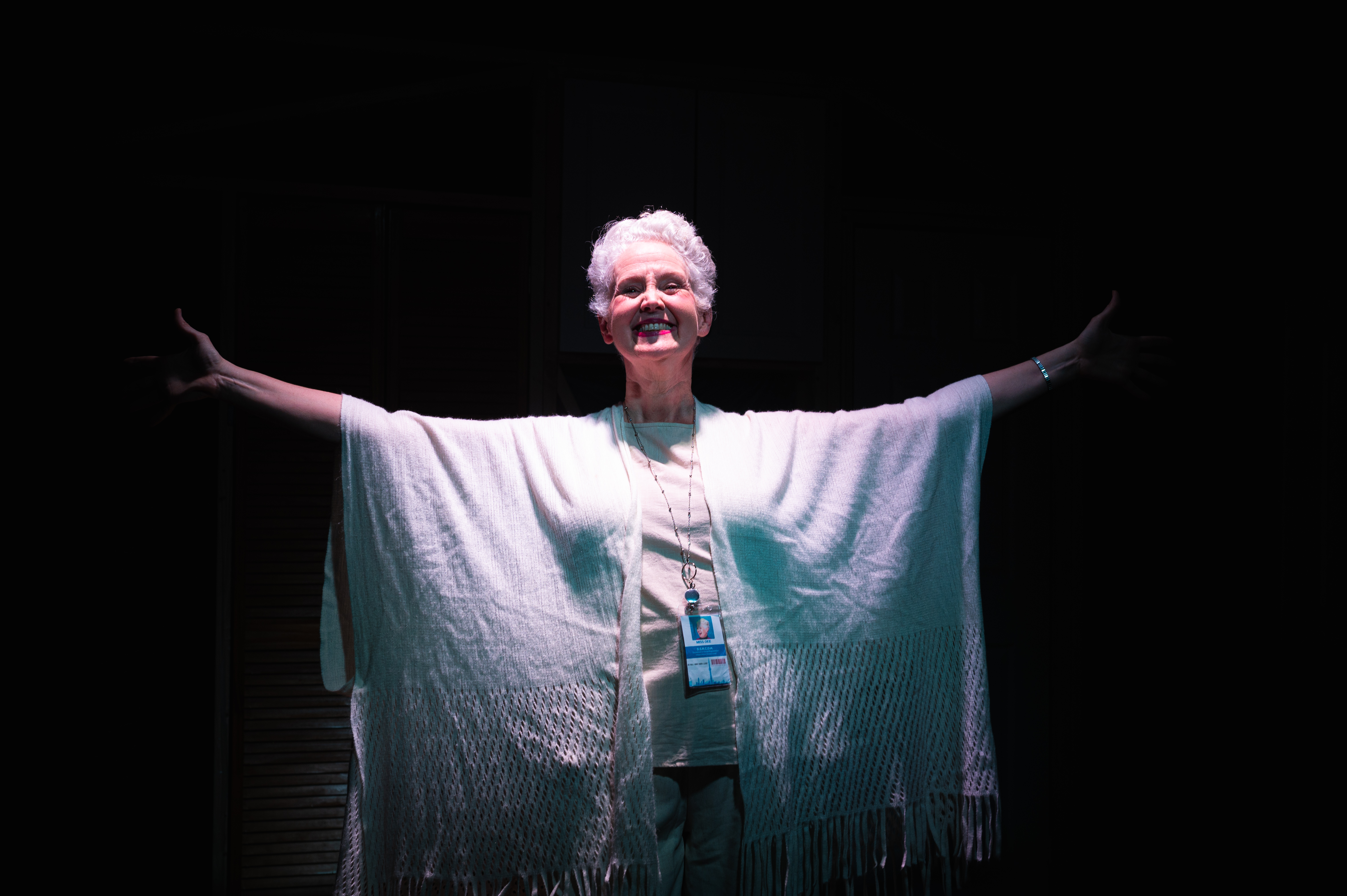
With the sweetly ringing assurance of “Miss Dee, that’s me,” Lisa Horner (Musical Stage’s Grey Gardens) enters flamboyantly as Miss Dee, arriving like a genie summoned from a bottle, ready to grant an unspoken wish. And, more importantly, she knows precisely how to get those signatures on the required dotted line so that this little government project can get underway. This isn’t the first time she has granted wishes, as Horner gives Dee a wonderfully sunny presence with just enough questionable twinkle in her eyes and in her inflections to suggest that something rather unusual is tucked between the lines of that contract. The offer is almost impossibly generous, and the warning signs are there if anyone cares to look. Soon enough, the mysterious banging downstairs turns out to be no fox, but a moral conflict that seems to have taken up residence in the kitchen cupboards, searching for something to eat. The premise is wonderfully absurd as we watch our lovely couple try to work out exactly what to do when an intruder intrudes, and what this means for their carefully imagined sense of security. And in that morality marsh, the production gleefully lets us in on the twisted joke, even as its gruesome implications begin to sink in.
The production’s compact staging at the Red Sandcastle Theatre works surprisingly well, with Amelia Mielke-O’Grady’s set and costume design helping create the dream home under construction that becomes the centre of Ollie and Jill’s increasingly troubled existence. The exposed beams and assortment of doors initially make the space feel decidedly bare-bones, hardly the dream home material we might expect, but Natasha Rotondaro’s creative use of colour and light transforms the sparse playing field, taking us from living room to garden-party glamour, although the second floor never quite materializes for me. Biasucci’s direction gives the production its zippy physical rhythm, allowing Hu and Cappellacci to command the space as they move rapidly between the many characters who populate Ollie and Jill’s expanding story, keeping the comic machinery running at full tilt. Zach Parsons’s sound design helps shape the shifts in atmosphere and the escalating chaos, while the actors navigate the rapid changes with impressive precision. The creative team knows we need to buy into Ollie and Jill’s vision board of domestic perfection, imagining this little dream home as somewhere we might actually want to live, even as its moral architecture begins to collapse around its owners.
What makes Jill’s renovation journey particularly fascinating is the speed with which she shifts her Christian principles to rationalize the choices that bring her closer to the life she wants. Watching her good-hearted values bend under the pressure of opportunity is astonishing, particularly when the simple justification of “we should at least try” becomes a convenient route around the question of whether they should. There is an uncomfortable political echo in the way this couple talks themselves into their decisions, conveniently ignoring the wrong in pursuit of all the expensive things they want. The parallels with the greed and moral evasions we’ve been seeing south of the border give the satire an added sting. Jill’s eventual declaration, “Hell, I still want more,” captures the appetite that has taken hold, with civilization and chaos sharing an increasingly uneasy space. The two keep telling themselves that the consequences will be quick and painless, but the backyard birthday party and those two annoying twins from next door make it increasingly difficult to maintain the illusion. The more the story spirals, the more the play asks us to consider what happens when the desire for a better life becomes an excuse for almost anything.
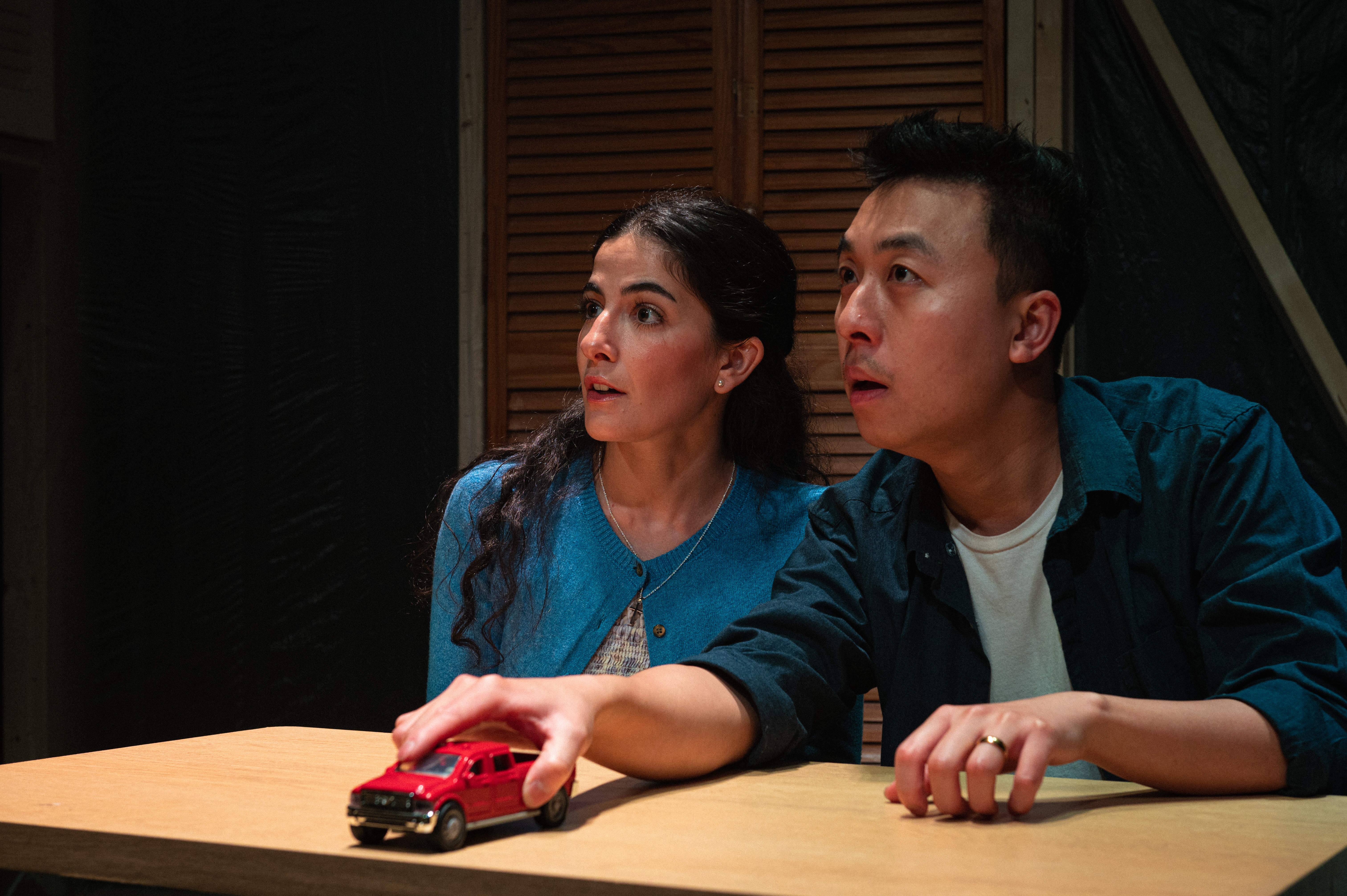
That birthday party is where the production begins to lose a little of its momentum. The twists and rotations of characters start to feel prolonged, and some of the satirical punch that has carried the evening so enjoyably begins to dissipate around two-thirds of the way through. This is a pacing issue, though, rather than a question of commitment from Hu and Cappellacci. The two performers throw themselves into the physical demands of the piece, moving between characters and situations with such speed and conviction that even the occasional chaotic stumble or spill barely interrupts their rhythm. They keep driving this runaway sports car faster and faster, and their skill makes it easy to stay invested in the ride, even when the party itself feels as though it has gone on a little too long.
Ridley’s final question, “What do we value the most? Property or life?”, brings the evening’s moral argument into sharp focus. It’s a pointed question for a play that has spent so much time making us laugh at a couple determined to create a beautiful home and a future for their child, even as their choices become increasingly difficult to defend. I remember being blown away by the audacity of Radiant Vermin when I first encountered it in New York, and this Toronto production delivers plenty of that same wicked pleasure, even if the birthday party eventually overstays its welcome. Ollie and Jill may have found their way to a bigger and better dream home, but Miss Dee has one final offer to make. And when she turns her attention to us, the question suddenly feels a little too close to home.