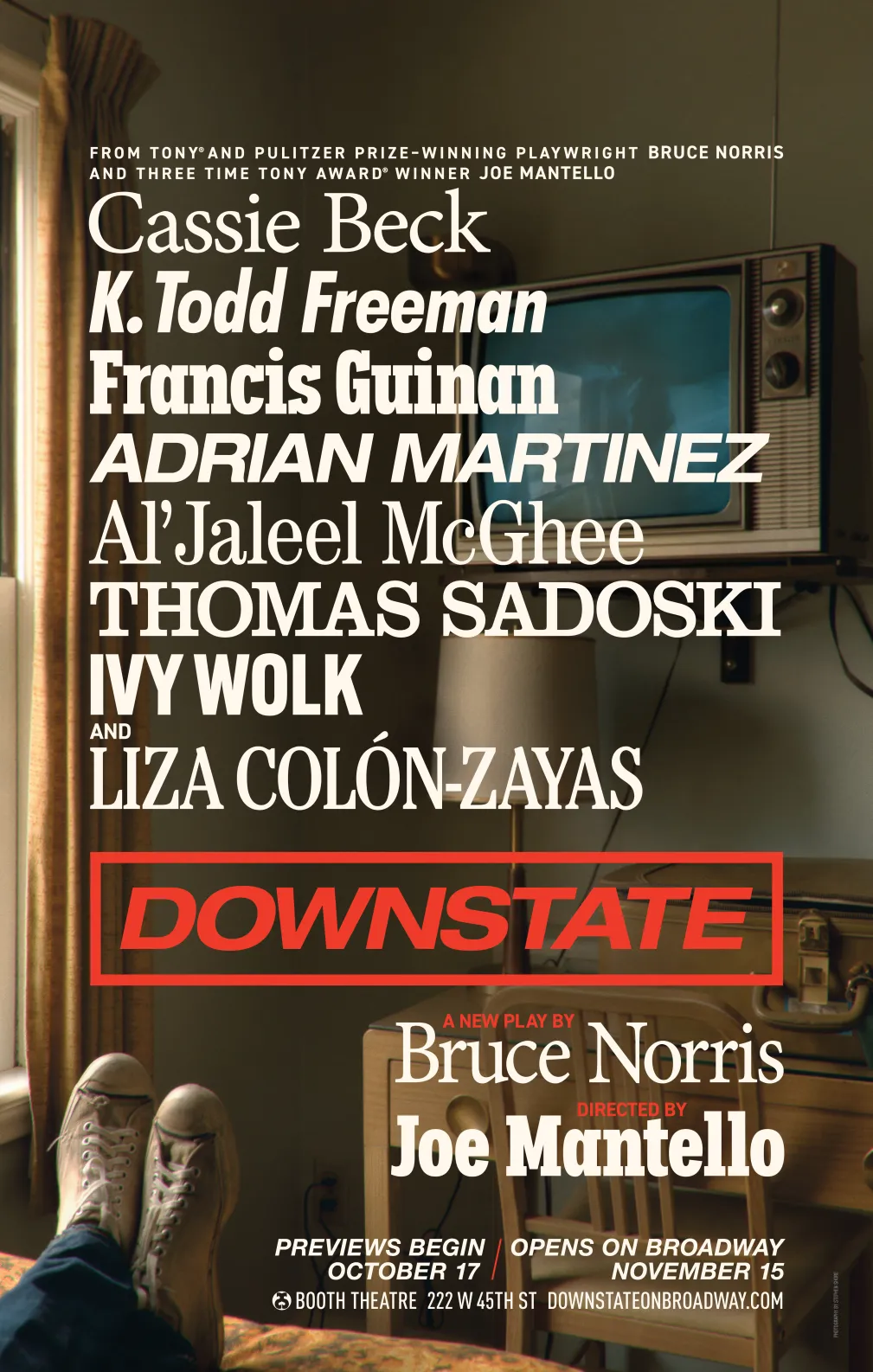
Frontmezzjunkies reports: Bruce Norris’s unsettling exploration of punishment, remorse, and compassion arrives at the Booth Theatre.
By Ross
“Ready? Take your time.” Some plays refuse to leave quietly, and Bruce Norris’s Downstate has followed me from the National Theatre in London in 2019 to Playwrights Horizons Off-Broadway in 2022. Both encounters drew me into its examination of punishment and survival, and of what justice means when a prison sentence has been served but freedom remains frustratingly out of reach. Now, with its Broadway opening last night at thee Booth Theatre, I hope I’ll have another opportunity to step inside that difficult house. Set in a state-sanctioned group home in downstate Illinois, the play brings four men convicted of sexual offenses against minors into a confrontation with the past when a survivor arrives to face the man who abused him. Norris brings anger, denial, compassion, and arguments that resist comfortable answers into that house, creating a harrowing theatrical experience that asks us to consider the uneasy space between accountability and the possibility of understanding.
The Broadway production, written by Pulitzer Prize and Tony Award winner Bruce Norris, is directed by three-time Tony Award winner Joe Mantello. The company features Cassie Beck, K. Todd Freeman, Francis Guinan, Adrian Martinez, Al’Jaleel McGhee, Thomas Sadoski, Ivy Wolk, and Liza Colón-Zayas. Particularly meaningful is the return of Guinan and Freeman, who originated their roles in the 2018 Chicago production at Steppenwolf Theatre Company. When I saw the play at Playwrights Horizons, I was struck by Guinan’s portrayal of Fred, whom I described as being played with “penitent perfection.” Freeman’s Dee was equally commanding, a character whose anger, certainty, and deeply troubling understanding of his own past make him one of the play’s most difficult figures to sit with. Freeman’s performance reached up to “the stellar skies,” and the prospect of seeing these actors bring those characters to Broadway gives this production a particularly compelling connection to the play’s beginnings.
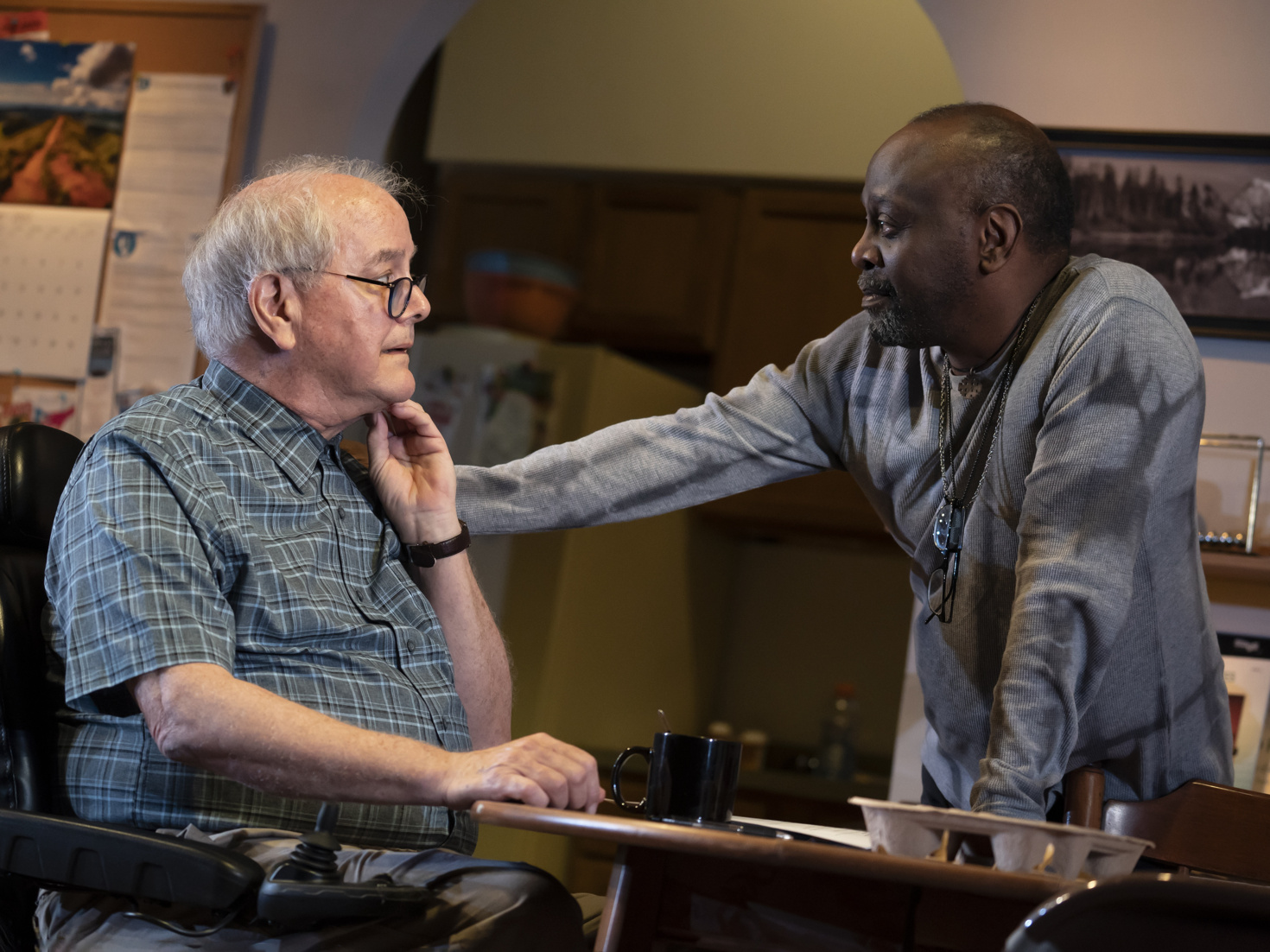
I first encountered the play during a 2019 London Theatrical Trip, when a visit to the National Theatre left me shaken by its complicated portrait of men who have served their sentences yet remain confined by a life of restrictions, suspicion, and punishment. “It’s my house, and I live here,” Fred declares, a line that captures the strange contradiction of a home that offers its residents a place to live while keeping the outside world firmly at a distance. When I returned to the production at New York’s Playwrights Horizons three years later, its emotional and moral complexities pulled me back in. I described that production as having “ventured strongly up and into our collective faces, digging deep inside this controversial and dynamically real argument about punishment and survival in a morally ambiguous dimension.” The play offers no easy answers, and its characters are never reduced to convenient explanations. Their histories, their justifications, and the consequences of their actions sit together in a room that becomes increasingly difficult to leave.
What makes Downstate so challenging is the way Norris allows moments of humanity to exist alongside anger, denial, and the damage that cannot simply be undone. My 2022 review described the play as “showcasing the superbly presented complexities surrounding those lost in the sex offender swamp of a broken punitive system.” I was also struck by the way compassion can emerge without erasing responsibility, a tension that remains at the heart of the work. As I wrote then, “It ain’t an easy play to watch, but it’s a powerful piece to sit all the way through and find something inside akin to compassion.” With Mantello now guiding this Broadway staging and Guinan and Freeman returning to the roles they helped establish, Downstate has opened the doors of the Booth Theatre to a new audience and another round of difficult questions. I know the journey will be uncomfortable. But I’m ready to enter that house again, to listen carefully, and to sit with the deeply unsettling humanity that Norris places before us.