A Toronto Theatre Review: Icarus Theatre wonderfully wrestles with Liliana Padilla’s provocative exploration of the contradictions of consent, desire, and self-preservation.
By Ross
“What’s the difference between sex that is a surprise, and assault?” It’s a question that lands like a jab in Liliana Padilla’s How to Defend Yourself, and one that keeps opening up uncomfortable territory long after it has been asked. In Icarus Theatre’s production, now playing at The Theatre Centre, a gaggle of college students gathers for a do-it-yourself self-defence workshop following the violent sexual assault of a sorority member by two frat men known to all of them. The young woman at the centre of the incident never appears, yet her experience hangs over every conversation, every tentative connection and every attempt to establish a sense of safety. These students are only a handshake, a date, or a party away from the people and circumstances surrounding the assault, and that proximity gives the play its unsettling charge. Padilla, whose writing won the Yale Drama Series Prize, has built a fascinating tangle of questions around sexual freedom, consent, complicity and self-preservation, with a sharp sense of humour running through some deeply disturbing material.
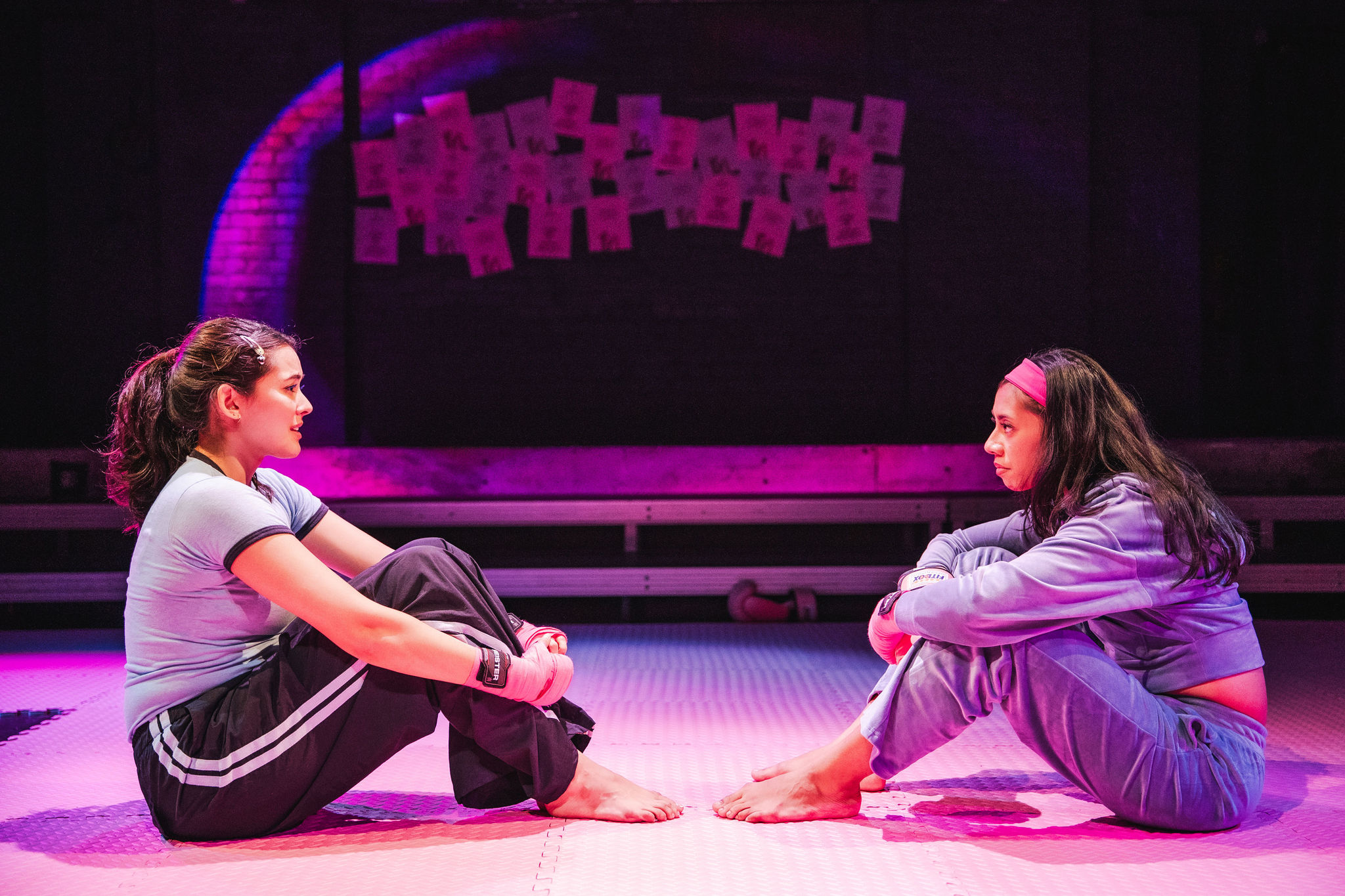
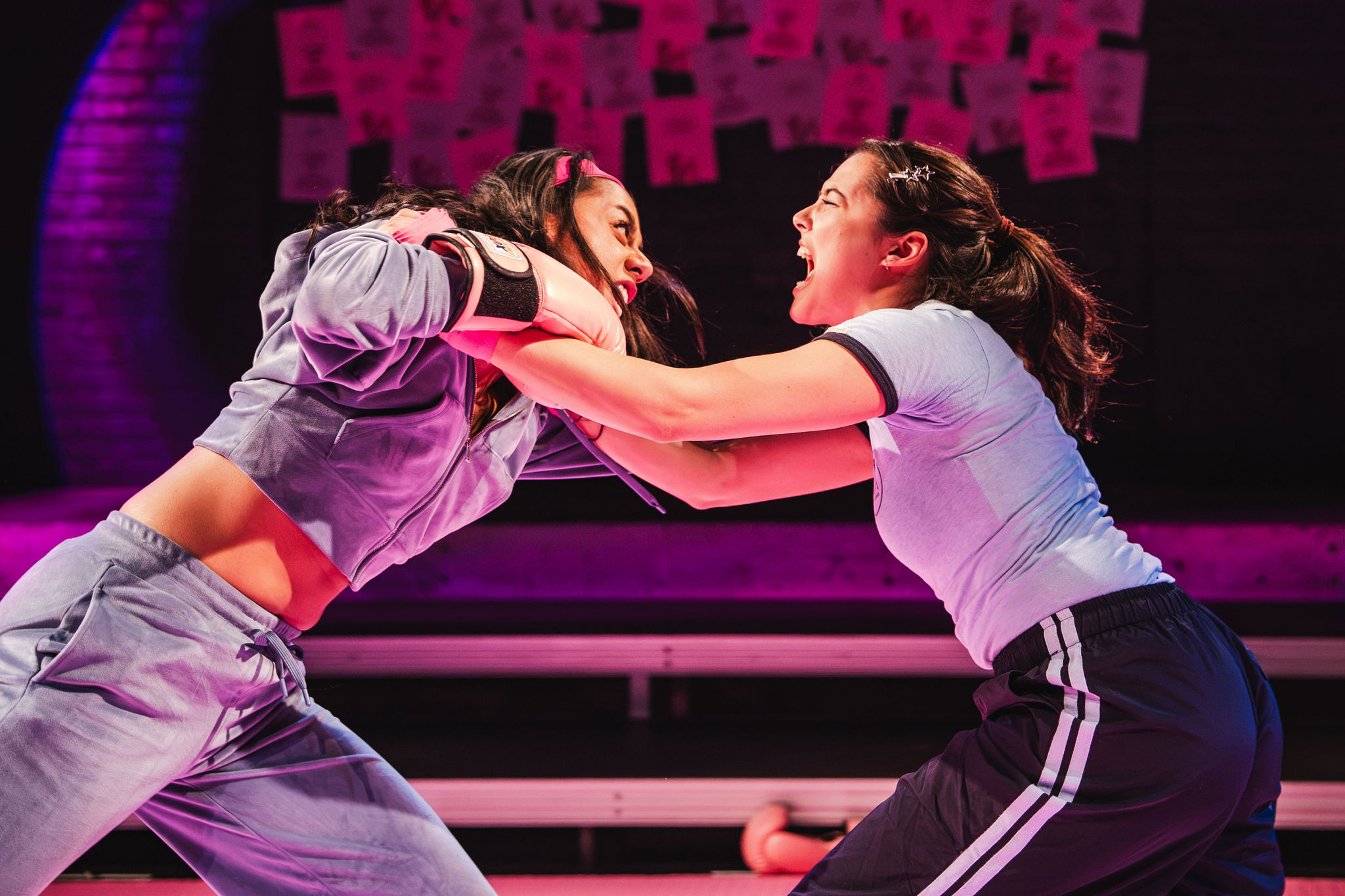
The opening scenes establish the emotional and social pressures already at work among the women, particularly Diana and Mojdeh, played with considerable assurance and openness by Paula Goldie and Parastoo Amanzadeh. Their conversation moves freely through attraction, social acceptance, and the curious fiction of safety that can exist within a sorority, where the promise of belonging offers little protection from the realities of sexual vulnerability. Goldie gives Diana an appealing sense of guns-a-blazing bravado, while Amanzadeh finds the uncertainty and searching beneath Mojdeh’s outward composure. Their exchanges feel intimate and unforced, and Padilla’s writing lets humour and genuine tenderness surface in the same breath. The arrival of Brandi, played by Kaeley Jade Wiebe, and Kara, played by Donnon Root, shifts the room into workshop mode, adding friction at every turn. Brandi’s pasted-on confidence as a self-defence instructor comes with a persistent need to correct the other women, even when there is little need. Wiebe gives her an almost compulsive determination to take charge of the lessons, and those little acts of authority reveal an insecurity beneath the bravado. “Wow, gender, right?”. Root gives Kara a breezy nonchalance that is meant to avert our eyes from her own complicated guilt and discomfort. The friendship between them appears firmly established, until it isn’t, as the tensions beneath that alliance begin to show their cracks.
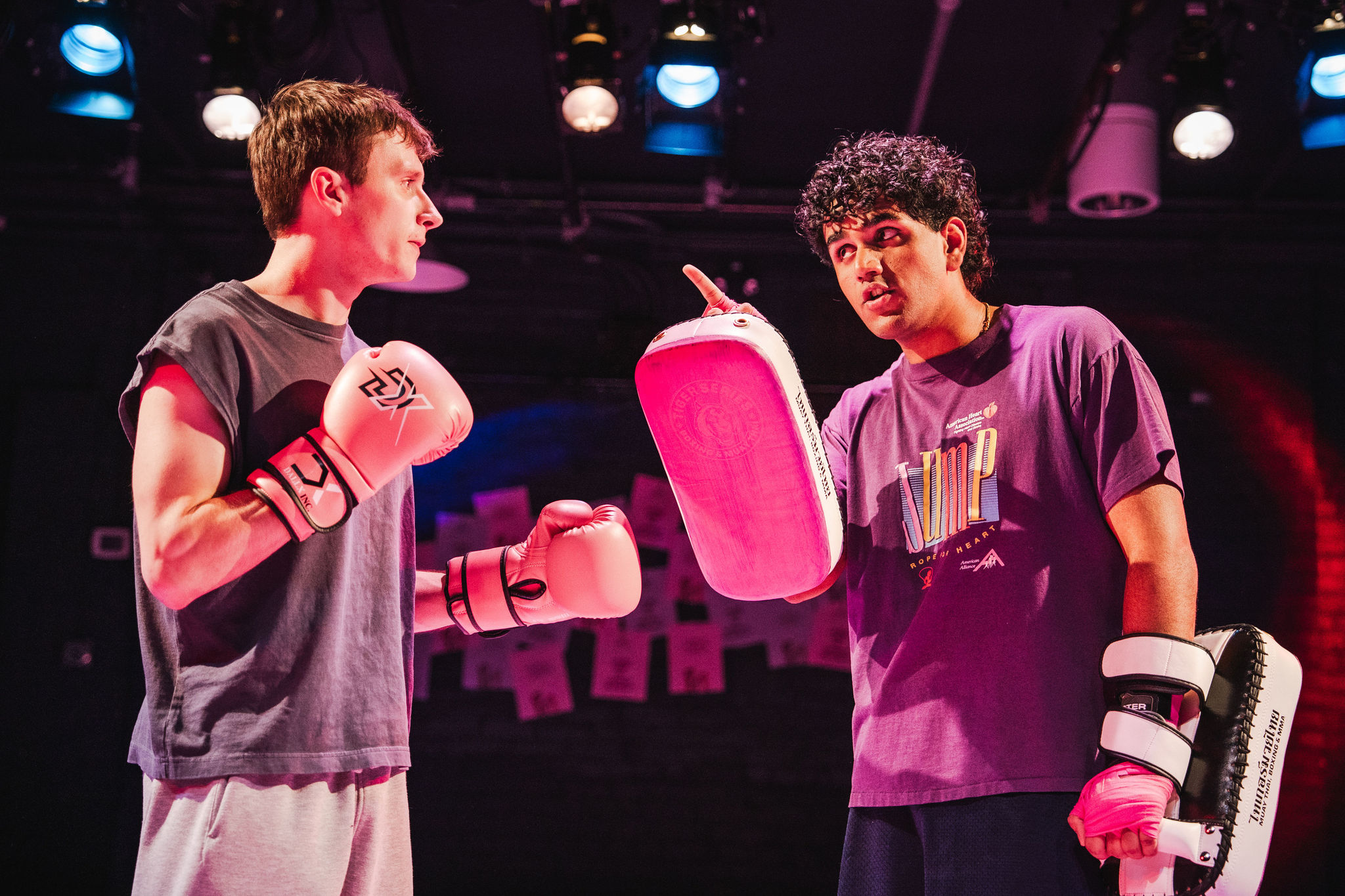
The production finds an especially compelling centre with the arrival of Nikki, played by Sasha Khan, whose awkwardness and palpable anxiety give the gathering a new emotional center to swirl around. Khan makes Nikki’s uncertainty affecting, conveying the difficulty of entering a roomful of strangers where trust is being offered, at a time when the world around her feels profoundly unsafe. Her pulled-in energy gives the workshop an immediacy that sharpens the questions already circulating among the group. Then Andy and Eggo show up, bringing another set of complications packed messily inside their gym bags. And then comes the detail that really lands with a thud. The same fraternity is throwing a party almost immediately after the assault, with the theme ‘Workout Bros and Yoga Hoes,’ a title that smacks us all down with its implications. Played by Anthony Goncharov and Samel Sunil, the two men may be saying they want to learn. But the party announcement makes the distance between their stated intentions and the culture they inhabit impossible to ignore, raising questions that the play is wise not to settle too quickly. Goncharov gives Andy the familiar swagger of a ‘privileged frat guy’ who believes he understands the problem, even as his own behaviour exposes some of the contradictions in that position. Sunil’s Eggo is particularly engaging as someone genuinely unsettled by the conversation, trying to work out where his own understanding of sex and consent fits into the discussion. Kara’s line, “Maybe I desire to be used,” adds one of the more complex framings in the play about what a person can want from sex, raising the question that Eggo finally addresses head-on. His question about the difference between surprise and assault becomes one of the play’s most pointed moments, delivered with a mixture of confusion and real apprehension.
Under Emily Anne Corcoran’s direction, the workshop becomes a place where the characters’ personal histories and public positions continually collide. Corcoran also oversees the props and costume design, giving the group a recognisable contemporary college identity while keeping the practical business of the self-defence exercises firmly within the action. Lilian Adom’s lighting establishes the classroom atmosphere and accommodates the shifts in mood, while Erik Richards’s sound design solidly helps carry the movement between conversations and more physically charged passages. The central playing space keeps the ensemble in close proximity, allowing the audience to feel the friction as alliances form, falter and reform. Padilla’s dialogue is the production’s driving force, moving through pop-cultural references, dark humour and sudden flashes of anger with an appealing unpredictability, even when the anger doesn’t exactly register as fully earned or lived-in. The physical work adds another dimension to that conversation, although some of the stylistic interruptions, including the ballet-class sequence, feel less fully integrated into the dramatic action.
What makes the play so engaging is its refusal to let anyone settle comfortably into a position of moral certainty. The women are trying to claim authority over their own bodies and choices, while the men are attempting to demonstrate that they understand the stakes and can be trusted. Yet good intentions do not automatically translate into an understanding of consent, and the characters repeatedly expose the distance between the values they want to embrace and the choices they make. Even Diana, with all her confidence and determination, is still working through what a genuine yes or no means within her own sexual life, a position that feels particularly unsteady given the vague clues we are offered by her best friend. Goncharov and Sunil give the male characters enough awkwardness and contradiction to keep them from becoming simple caricatures, while the women’s differing responses to the workshop create a lively and often uncomfortable exchange.
Padilla is particularly good at allowing a funny line or a shift in power dynamics to open a door onto something disturbing, and the ensemble handles those tonal shifts with conviction. The production does, however, lose some of its focus as it approaches the conclusion. A few of the more stylized choices never quite establish their purpose within the larger dramatic argument. The gradual pulling up of the floor, one square at a time, carries the suggestion of something being dismantled, but the image never finds its payoff or develops enough force to make its meaning resonate. The ballet-class sequence and the final youthful gathering around a younger self’s birthday party also introduce ideas and emotional metaphors that the production doesn’t fully bring together. These moments seem to reach for a larger symbolic statement about vulnerability, memory, and the selves the characters carry into adulthood, yet the connections remain elusive. The script itself seems to pull back just when its most difficult territory is within reach, leaving the conclusion feeling rushed and somewhat underpowered.
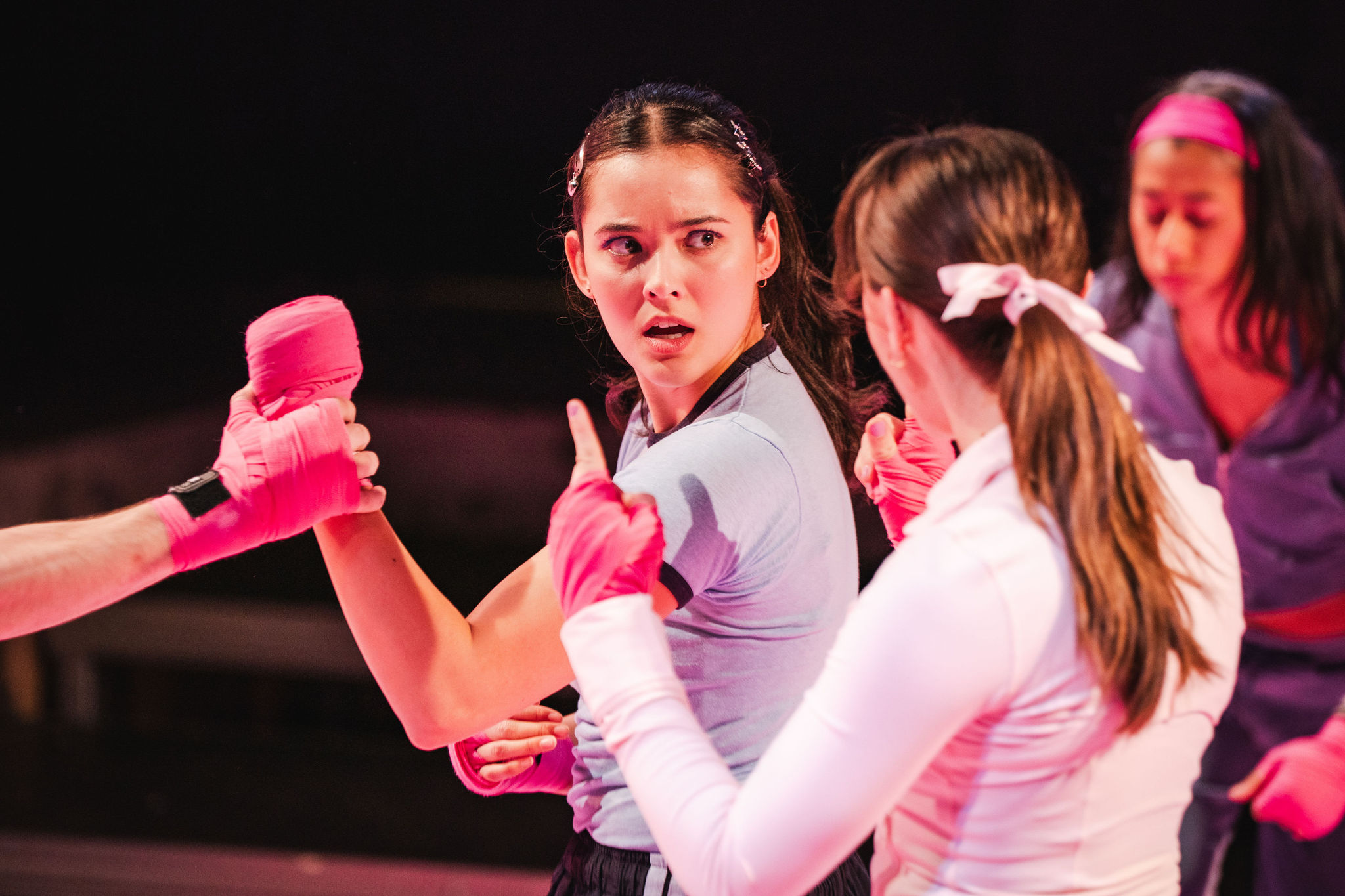
Icarus Theatre’s production of How to Defend Yourself gives Padilla’s challenging writing a compelling and often fiercely engaging life on stage. The walls don’t literally come tumbling down with the same force they did when I saw this play at New York Theatre Workshop, but the play and its performers find plenty of solidarity in the strength of their voices. Working as a unified ensemble, the cast gives the workshop the quality of a ritualistic gathering, with each character bringing fears and choices that none of them can fully understand. When Nikki comes face to face with the possibility of being assaulted herself, the fragile belief that she can learn to protect herself from it seems to disappear in an instant. Khan makes that collapse of confidence astonishingly powerful, exposing just how little control any of these young women can truly claim over the violence they fear. I wanted the final moments to strike with the same force as the questions that animate the play, and the production doesn’t quite get there. But the central challenge remains powerful. Learning to defend yourself can begin with a few practical moves, yet the harder work involves knowing whom to trust, how to establish your own boundaries, and how to make your voice heard when the people around you have already decided what they want to believe. In a room full of young people trying to work that out, Padilla gives us plenty to wrestle with.