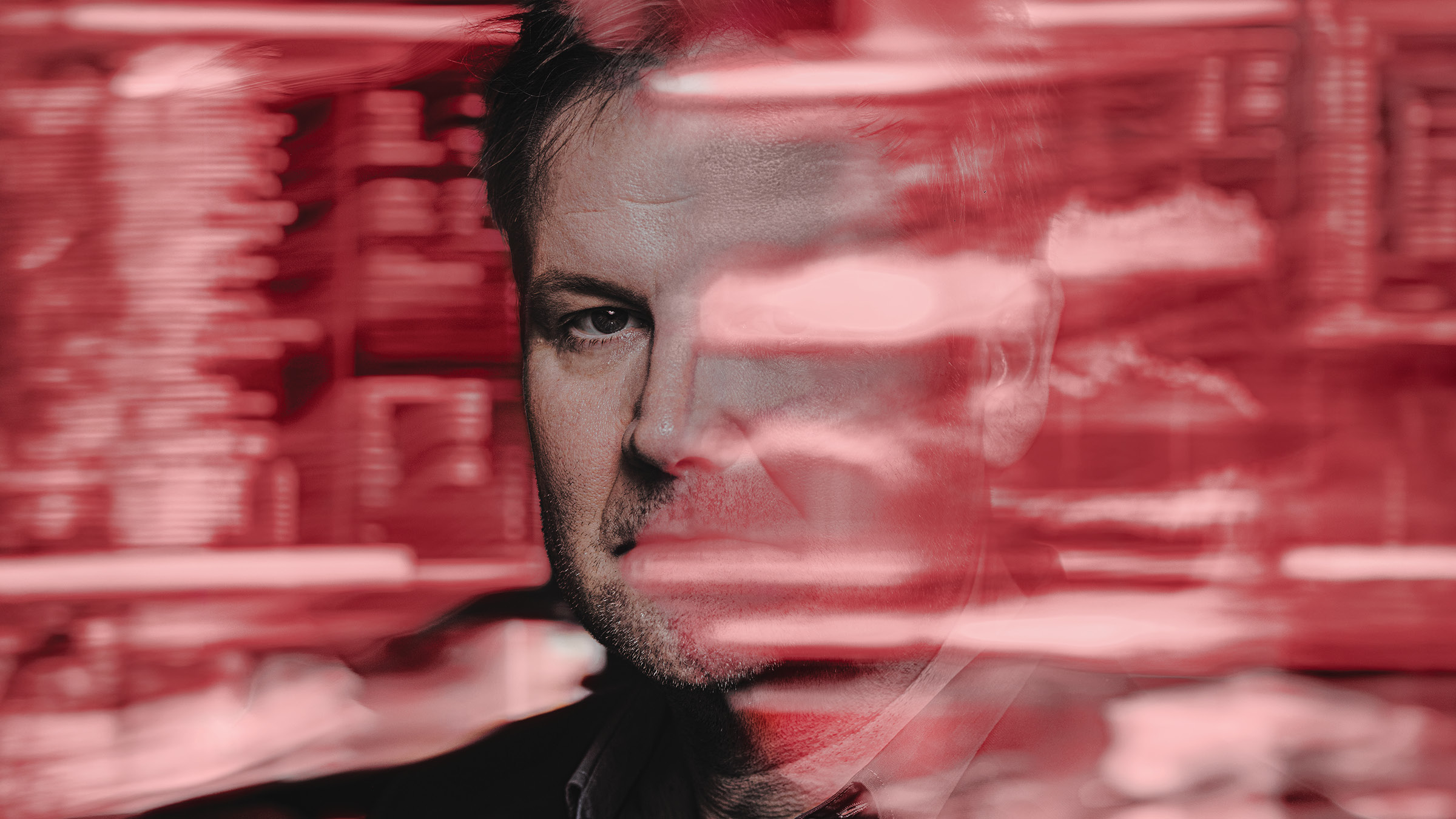
A Toronto Theatre Review: Evan Buliung’s formidable solo performance wrestles with the seductive dangers of artificial intelligence and the shifting identities within Shakespeare’s tragedy.
By Ross
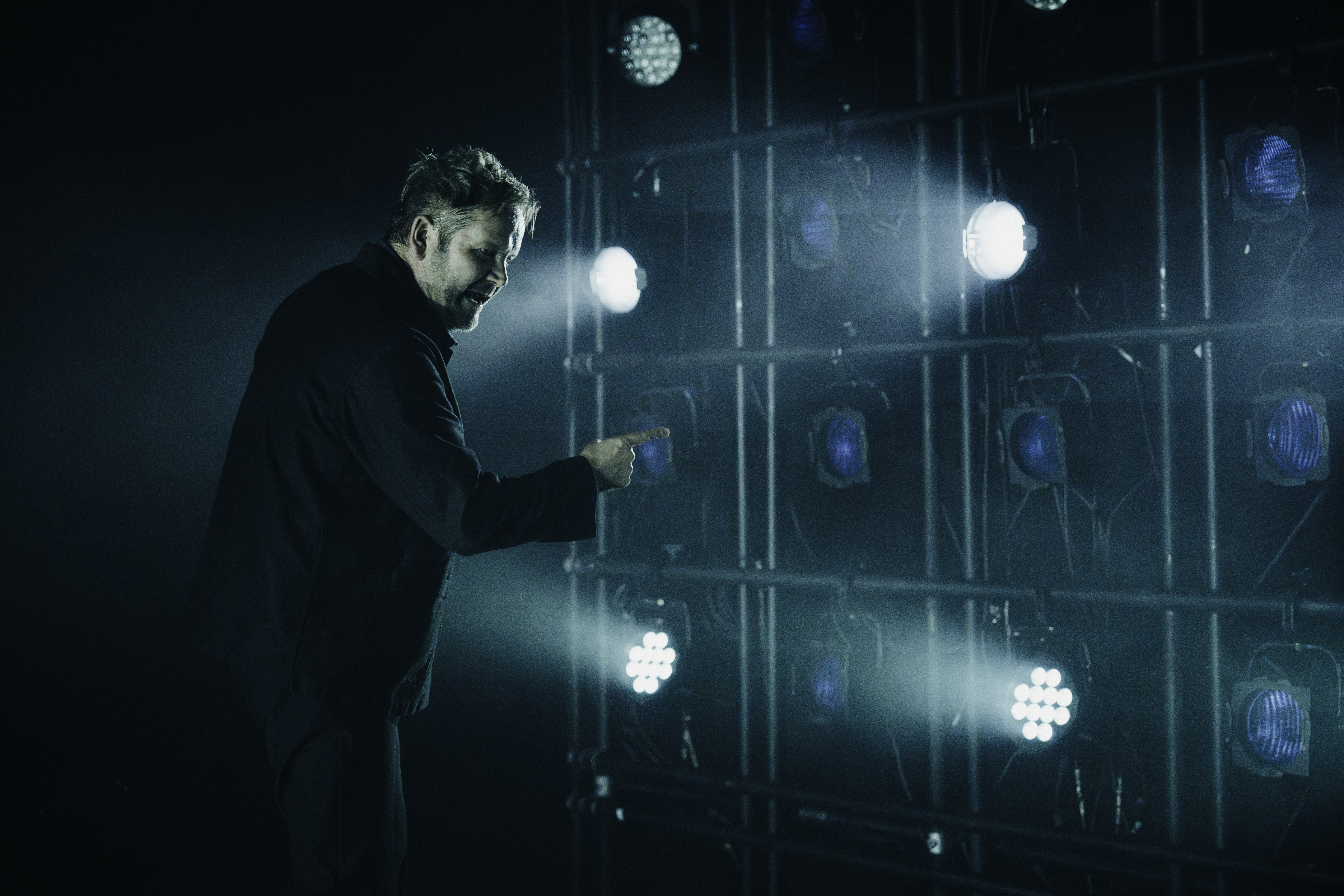
“Oh, God, Shakespeare, show me.” It is an intriguing and surprising way into the idea of Macbeth, with a modern-day man reaching out to an AI chatbot for guidance on a rough day in corporate America. Before he can even wrap his head around using Shakespeare to understand his own drive for greatness, something that naturally took me back to the corporate workshop in “Slings and Arrows,” where key Shakespearean characters are enlisted to discuss leadership skills, he finds himself pulled deep into the world of ambition, corruption, and supreme tragedy. The three witches bang in brilliantly, aligning themselves with bars of white and red light flashing in the foul, foggy air of Crow’s Theatre’s intimate Studio Theatre. Co-created by director Christopher Manousos and the production’s star Evan Buliung, this 85-minute solo production gives the witches a contemporary identity as sycophantic AI voices, leading our increasingly unsettled protagonist through the play and its prophecies. The approach has an immediate chill to it. There is an uncomfortable pseudo-intimacy in the chatbot’s encouragement, its insistence that he is doing a wonderful job, and its gentle nudging toward a world of delusion. The suggestion that someone might turn to this technology for therapeutic reassurance is unsettling in itself, particularly when the voice on the other end seems so eager to tell him exactly what he wants to hear.
Buliung (StratFest’s Othello) is brilliantly focused throughout, running circles around the playing space. Scott Penner’s spare design gives him nowhere to hide, as he unpacks Shakespeare’s language with remarkable dexterity and physical stamina. He plays musical chairs with himself, moving between characters with a nimble shift of posture, voice and presence, while the chatbot periodically chimes in with its approving little reassurances. The repetition can become a bit much, although that particular brand of relentless encouragement is recognisable enough from actual interactions with AI. Buliung’s transitions are often spectacular, with sharp flashes of humour cutting through the mounting unease. His delivery of the Porter scene, complete with the incessant “knock knock knock,” is pretty darn perfect, and the simple act of putting on glasses to become Malcolm is both funny and mesmerizing. He finds distinctive physical positions for each character, occasionally leaning into accents and vocal mannerisms that signal who is speaking without always making an emotional connection to the person beneath the voice. The result is an impressive display of theatrical control, even when the character work feels a little too demonstrative.
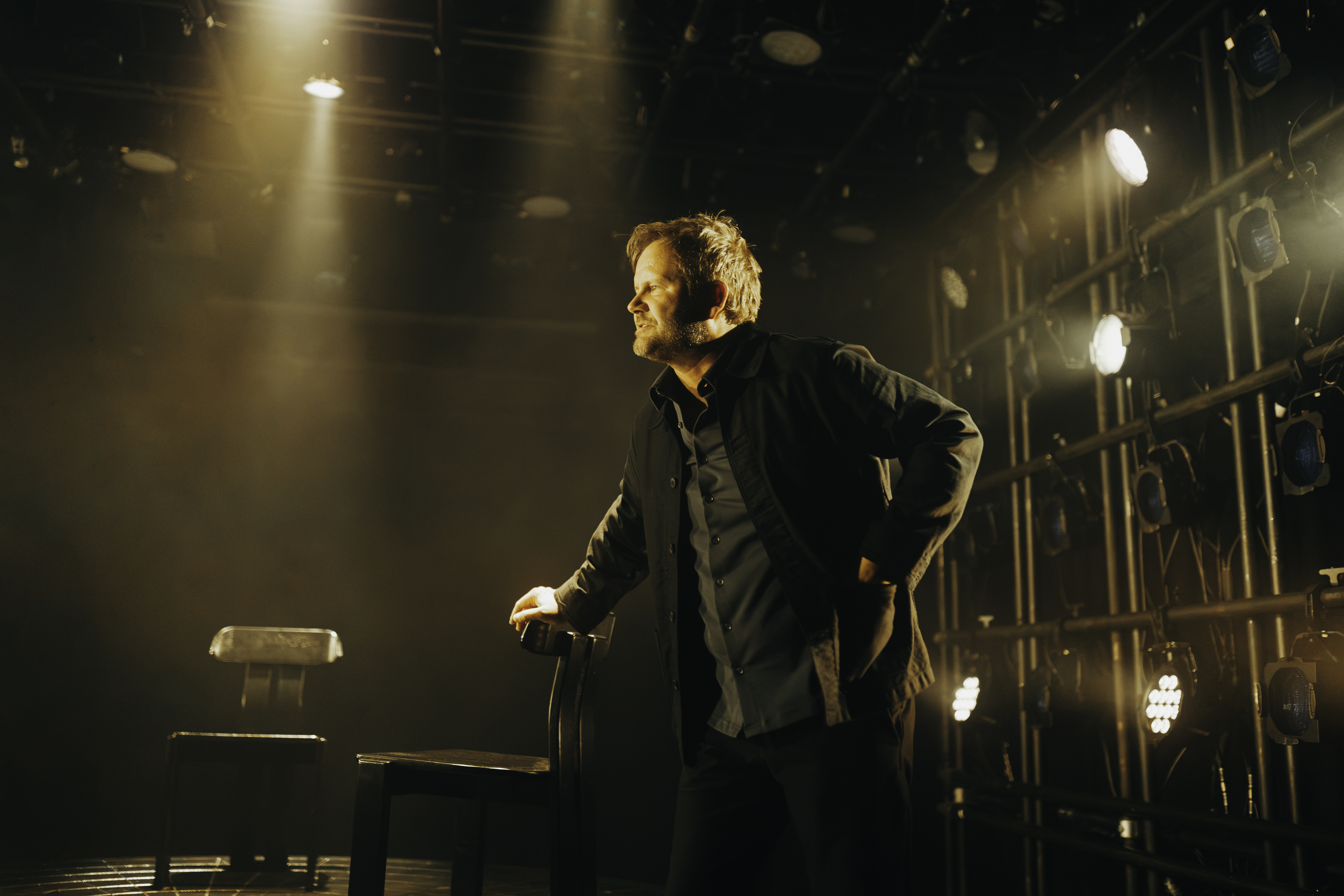
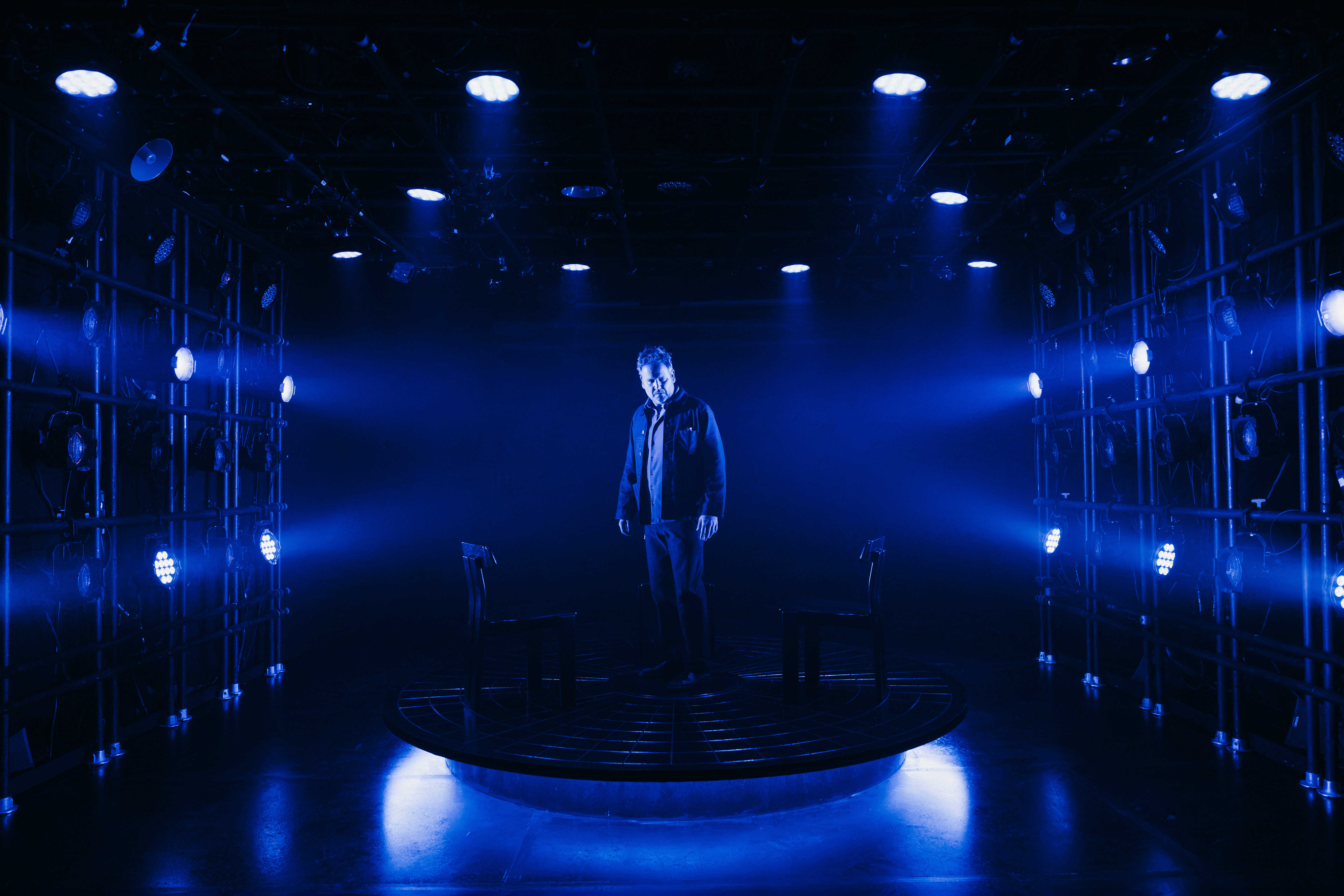
The visual and aural world surrounding Buliung is a major part of the production’s appeal. Chris Malkowski’s lighting transforms the circular black platform into a shifting psychological landscape, with the haze and sudden flashes of colour giving the witches a force and fury that reach well beyond their recorded voices. The dagger soliloquy is particularly well constructed, with the lighting carving out the space before Buliung in a breathtaking display that draws the audience into his fixation. Thomas Ryder Payne’s sound design brings its own eerie pressure to the room, most memorably in that wonderfully sustained knocking of the Porter scene and the ominous, almost otherworldly atmosphere of all things sinister. The sparse set leaves Buliung exposed, while the limited costume changes keep the action moving at speed. That economy has a cost, however. With so many male characters passing through the same body and so little visual distinction between them, the plot can become difficult to follow for anyone who does not already know the play. There are moments when a recorded voice takes over from Buliung’s live performance and then switches back again, including one moment with Lady Macbeth, and those shifts can be disorienting. The production is clearly interested in the unstable relationship between the man, the text, and the voices guiding him, but the mechanics do not always make that relationship easy to read.
The AI premise is the production’s most intriguing concept, but it also feels like a trap, a pretty apt description of AI in general. The chatbot is introduced with considerable theatrical promise. Its voice carries a deliciously sinister quality, suggesting the possible presence of a fourth witch, or perhaps a contemporary version of Hecate, the goddess of witchcraft who directs the weird sisters and encourages Macbeth’s dangerous confidence. The bot’s reassuring insistence that everything is going well begins to sound like a particularly effective instrument of manipulation, feeding the very certainty that will lead to destruction. I kept waiting for that connection to be explored with greater precision, but the idea remained lost in the mist. The production also makes some interesting choices about which parts of Shakespeare’s play to retain and which to remove, a debate, I must add, that comes with almost every production of Macbeth, solo or not. The drawn-out murder of Macduff’s family is given considerable attention, as is Malcolm’s testing of Macduff, which is played out in full. Yet the production surprisingly cuts the third apparition of the crowned child holding a tree and the procession of eight kings revealed through Banquo’s ghost. I missed those prophecies and images, particularly the Birnam Wood prediction, whose eventual fulfilment is one of the play’s great theatrical turns. The selection of material feels uneven, with some passages held tightly in place while other significant pieces of the dramatic architecture disappear. I realize this is a somewhat personal, purist response, but these omissions registered while the drama was unfolding, rather than only afterward, and that says something about the degree of detachment I was beginning to feel from the story being told.
In Hamlet (solo), the recent solo production I saw at Theatre Passe Muraille, the gentle vocal quality given to the women worked within that production’s particular approach, largely because of who those female characters are. Here, however, that same approach raises some serious questions about Lady Macbeth, one of Shakespeare’s most psychologically complex creations. Buliung’s portrayal gives her an unusually delicate quality, and the deliberate softness of the voice never quite connects with the force, ambition, and unnerving resolve I associate with this character. My brain went sort of wild in that moment, making me wonder what this creation might sound like in the hands of a female performer, and how that shift in perspective might change the place these women, and everyone else in the story, occupy. Beyond those character choices, the staging occasionally tips into campiness, and Banquo’s murder fails to deliver the impact the moment needs. As the action moves toward its climax, the production maintains its atmospheric hold on the room, but never quite finds the feverish intensity the material seems to demand. “The greatest is behind” feels like an oddly apt phrase to have in mind, as the final stretch stays solidly in the mist without fully gathering the force of the tragedy.
Buliung’s achievement is considerable, and there is plenty to admire in the physical intelligence, vocal range and sheer commitment he brings to this solo undertaking. Manousos and Buliung have created a production with striking theatrical images and an intriguing contemporary entry point into Shakespeare, even if the AI framework never develops the specificity needed to make its full dramatic case. I left thinking about that chatbot voice, so eager to praise, reassure, and guide its user, while quietly steering him toward a terrible understanding of his own invulnerability. The witches, with Hecate often removed from the picture in productions of the play, have always known how to make a person hear what he wants to hear. Giving them such a compelling voice through modern AI is a sharp, clever notion, with a little “by the pricking of my thumbs, something wicked this way comes” thrown in for good measure. It could have opened up some wonderfully disturbing territory on that heath. In this production, the invitation is there, and the danger is audible. I only wish the final encounter had carried that promise all the way through.